Projects centred on knowledge exchange bring academic expertise into dialogue with LVMH to develop design-led projects that prototype regenerative practices and explore new approaches to circularity, materials and ecosystem restoration.
Weaving Paths for Regenerative Crafts in the Bolivian Amazon
A UNESCO - LVMH Amazon Biosphere Reserves project, in collaboration with Maison/0, Central Saint Martins UAL, and the Estación Biológica del Beni and Pilón Lajas Biosphere Reserves in Bolivia.
Since 2022, we have collaborated with a team of researchers - social scientists, agroecologists and designers to explore ways to restore local biodiversity with regenerative craft practices within biosphere reserves in Bolivia.
Project Partners and Objectives
Maison/0 develops practice-led research projects to explore and advance knowledge in regenerative design and is aligned with the LIFE 360 environment strategy at LVMH. This includes a key focus on biodiversity restoration.
Since 2019 LVMH has been a partner in the UNESCO MAB (Man and the Biosphere) program to support the restoration and protection of biodiversity in the Amazon region (focus of the 2019-2025 partnership).
Weaving Paths for Regenerative Crafts in the Bolivian Amazon brings together LVMH, UNESCO MAB and Maison/0 to explore the potential of regenerative design principles for the benefit of human and non-human communities in the Bolivian Amazon.
The UNESCO Man and Biosphere programme is ‘an intergovernmental scientific programme that aims to establish a scientific basis for enhancing the relationship between people and their environments’. (https://www.unesco.org/en/mab).
Together with the UNESCO MAB and the LVMH project teams, we identified two biosphere reserves in Bolivia where communities needed support to further develop their local craft practices in harmony with Nature as well as to preserve their cultural heritage.
Project aims:
- To explore the integration of regenerative design principles in UNESCO MAB biosphere reserves via two case studies located in Beni and Pilon Lajas in Bolivia, part of the LVMH Amazon project.
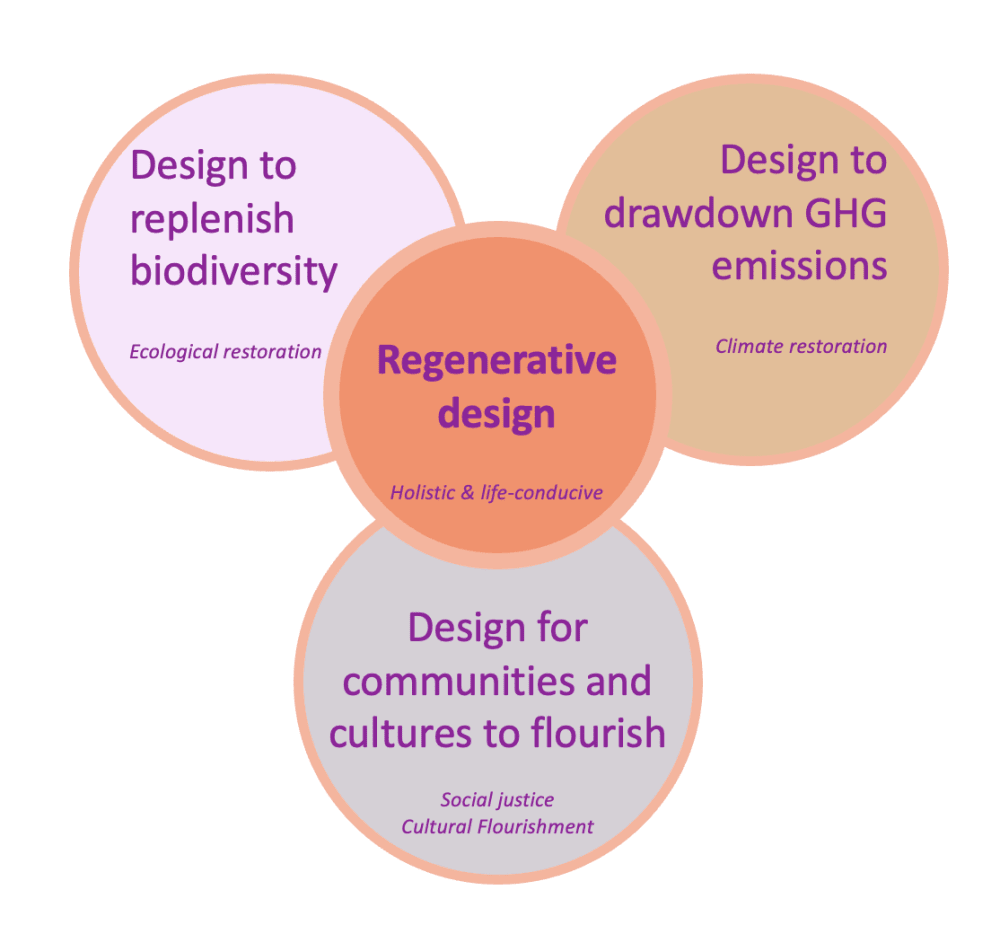
- To develop a regenerative framework and methodology for MAB biospheres to integrate a regenerative design toolkit and foster the holistic regeneration of biodiversity, climate, culture & social justice via creative practice.
The methodology is directly informed by the framework for Regenerative Design developed by Maison/0.
Regenerative Design Framework, Carole Collet, Maison/0
Developing a regenerative design brief with the Galilea Community, Beni Biosphere Reserve
Learn more about the Beni Biosphere reserve characteristics on UNESCO's website.
The Galilea community is located in a village near the main Trinidad- La Paz central road, one hour drive from San Borja. Women produce woven artefacts such as fans and hats, using Jipi Japa, a local palm dyed with synthetic colourants. They were first introduced to this practice via a workshop led by a third party more than 20 years ago.
When we first met them in 2022, we identified four core challenges and opportunities:
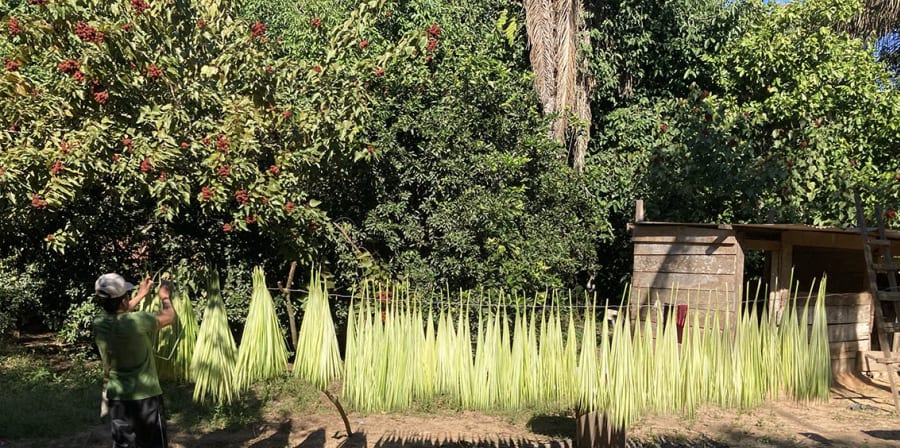
- Sourcing Jipi Japa had become challenging due to over harvesting, flooding and wildfires. Until then, the harvest was mainly done by hiring someone to forage young Jipi Japa leaves in the wild.
- The use of synthetic dyes: there are no safe ways to dispose of the waste water. There is little to no knowledge of natural dyes or their potential use with Jipi Japa in the community.
- Abundance of plastic pollution: There are no infrastructure for plastic waste collection locally. Some bottles are reused, but in the area most plastic waste is either burnt or left on the ground where it spreads in natural habitats and impacts on local biodiversity and human health.
The local economy is very limited, with little tourism and no easy access to main urban centres to sell artefacts and generate income. The quality of the current craft products is excellent, but they are sold sporadically via a third party with very small profits generated despite a labour-intense process.
In response to the above we co-developed a design proposal following a regenerative design framework:
Design to restore biodiversity (ecological restoration)
- Increase the amount of Jipi Japa grown in the village in agroforestry system to halt over-foraging and provide easier access to the core raw material.
- Harvest local plastic waste to use as a coloured material and replace the need for synthetic dyes – this removes two toxic waste streams from natural habitats and benefits biodiversity as well as human health.
Design to drawdown Greenhouse Gas Emissions (climate restoration)
- Plant Jipi Japa palms in agroforestry systems within the village bounds to add carbon capture capacity without impacting on the savannah and forest.
- Optimise the use of plastic waste for craft production to reduce the amount of waste burning and greenhouse gas emissions.
Design for communities and cultures to flourish (social justice, cultural heritage and flourishment)
- Time and cost saving: a village-based agroforestry system for Jipi Japa means it is more convenient for women who can now directly harvest locally without relying on hiring someone to forage for palm leaves in the forest.
- Address the current low level of local economic activity by liaising with contemporary craft stores in Santa Cruz and La Paz to develop a more resilient business plan for the community as well as a brand positioning strategy.
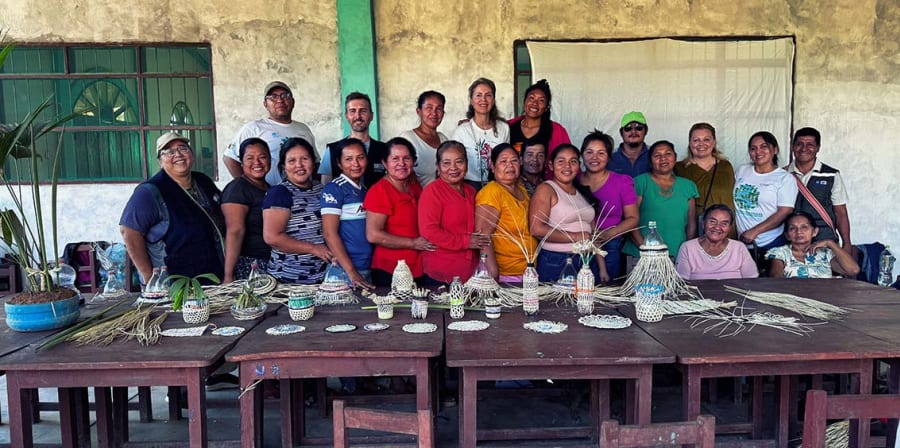
First prototypes for a new craft collection were developed by the Maison/0 design team to prepare for a two-day workshop in July 2025. The workshop combined discussions around environmental challenges, the value of preserving biodiversity, the challenges of selling craft artefacts locally and the potential to use plastic waste with Jipi Japa weaving.
The workshop facilitated by Maison/0 and the UNESCO MAB teams introduced new practices such as making a yarn from plastic waste. The key objective was to prototype ideas for a new craft collection made with agroforestry-grown Jipi Japa and plastic waste recovered from local ecosystems.
-
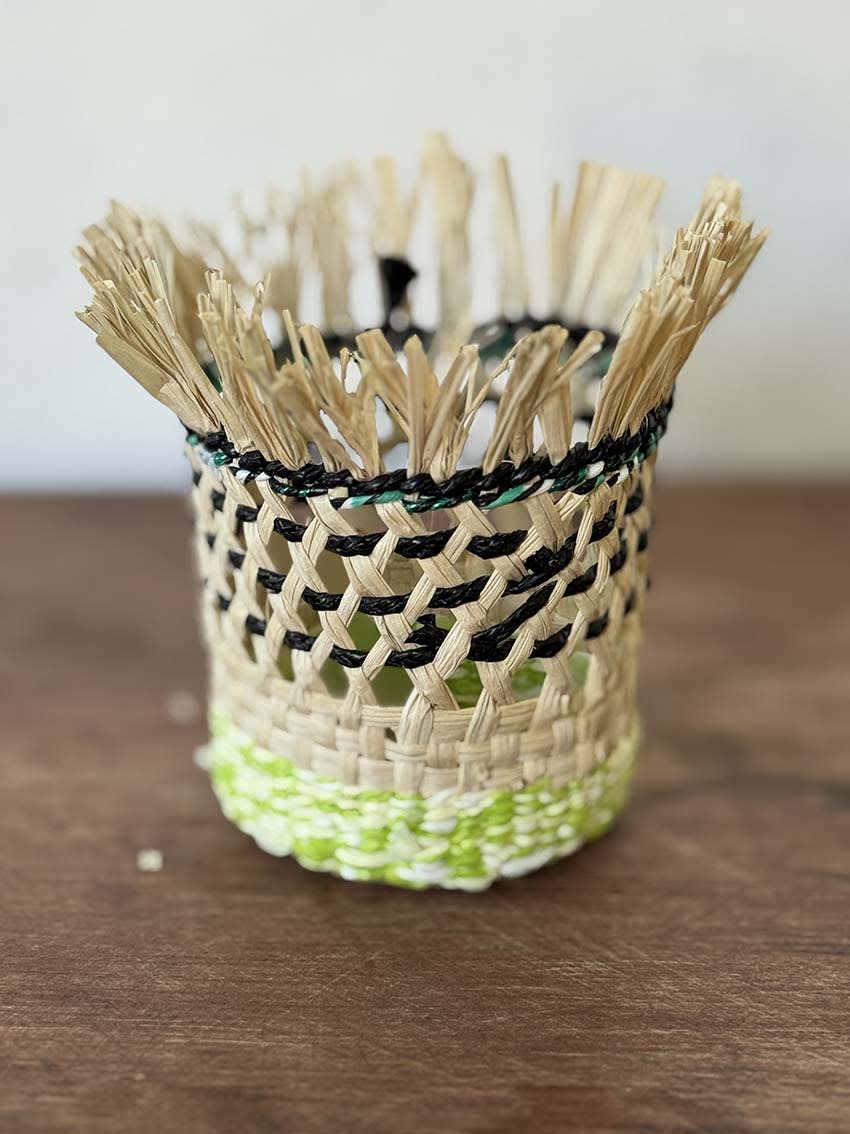
Prototype plant pot woven from jipi japa and waste plastic. Image credit Maison/0 and UNESCO.
-
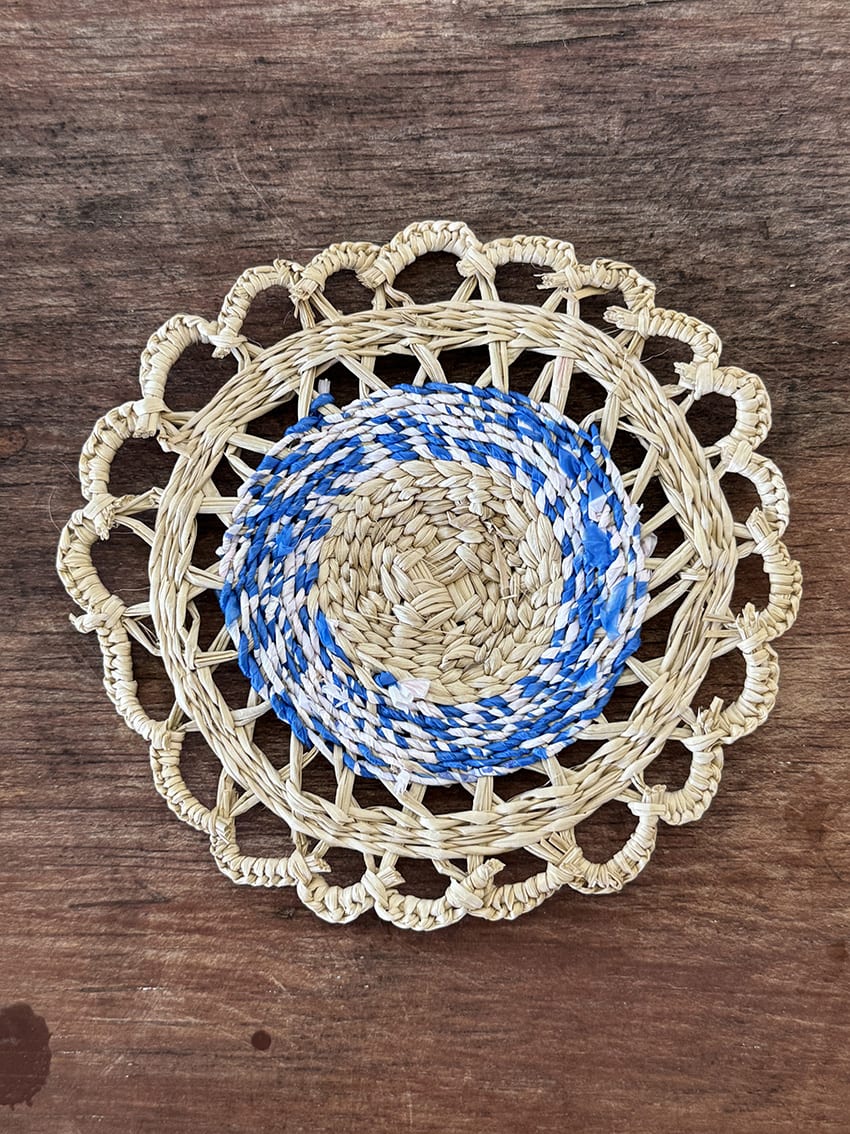
Prototype coaster woven from jipi japa and waste plastic. Image credit Maison/0 and UNESCO.
-
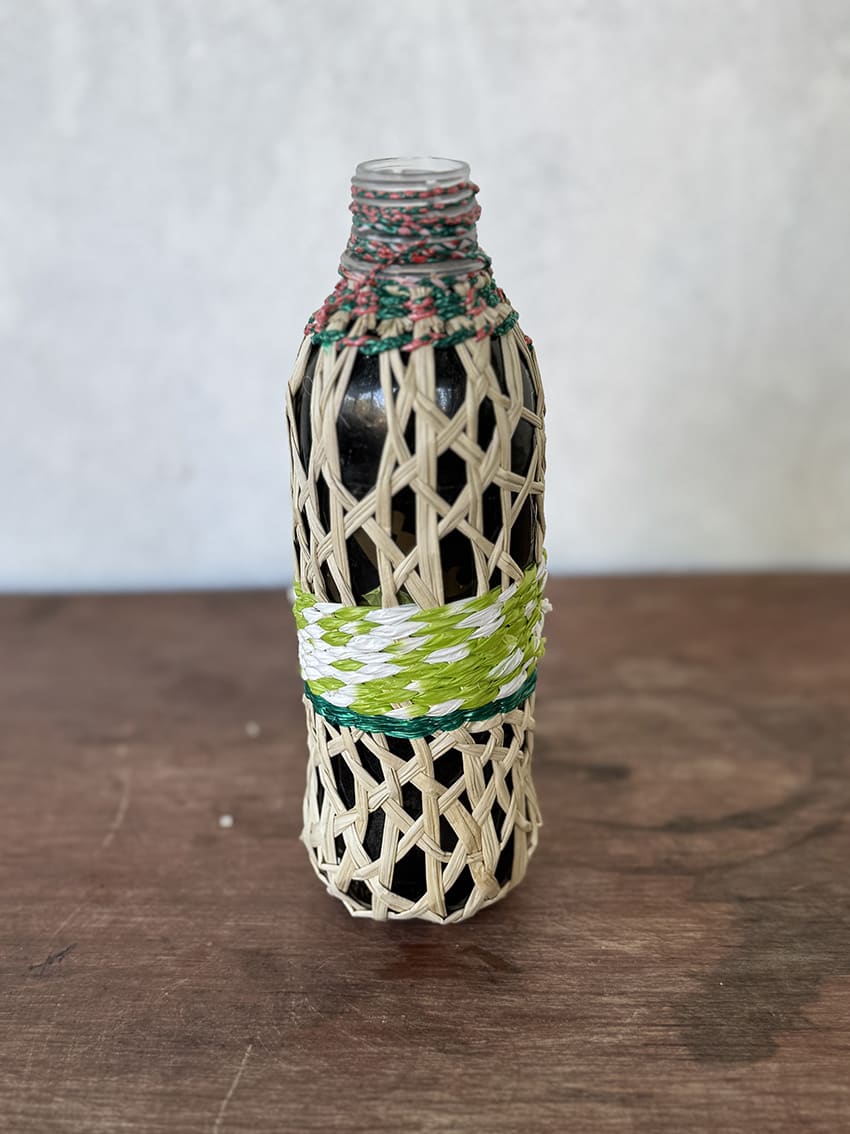
A prototype vase with a woven Jipi Japa covering. Image credit Maison/0 and UNESCO.
-
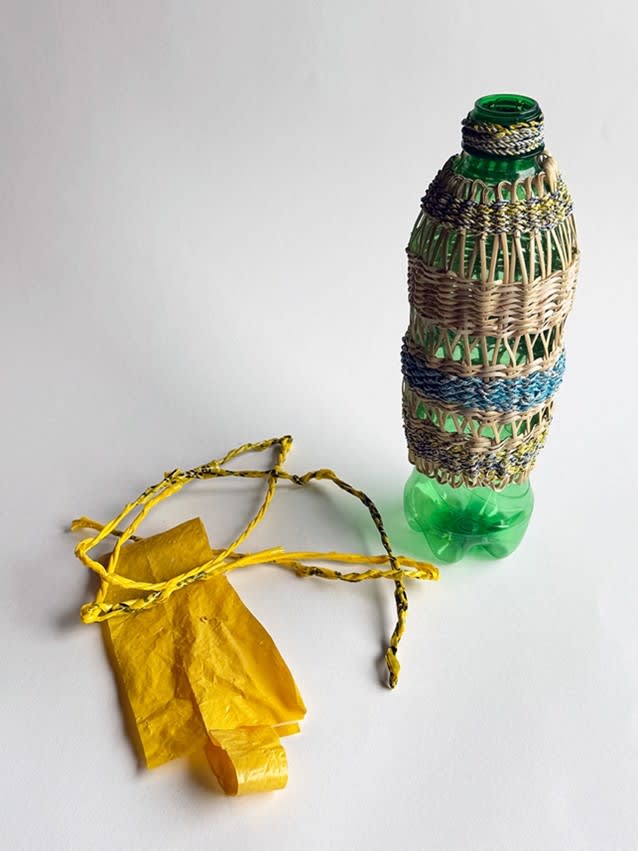
Prototypes for the Maison/0 Weaving Paths project. Image credit Maison/0 and UNESCO.
Next steps
We are now working with the community to develop a business plan. Agroforestry planting continues to progress and following the workshop, the villagers decided to bring back local species of plants that can be used for natural dyes.
-
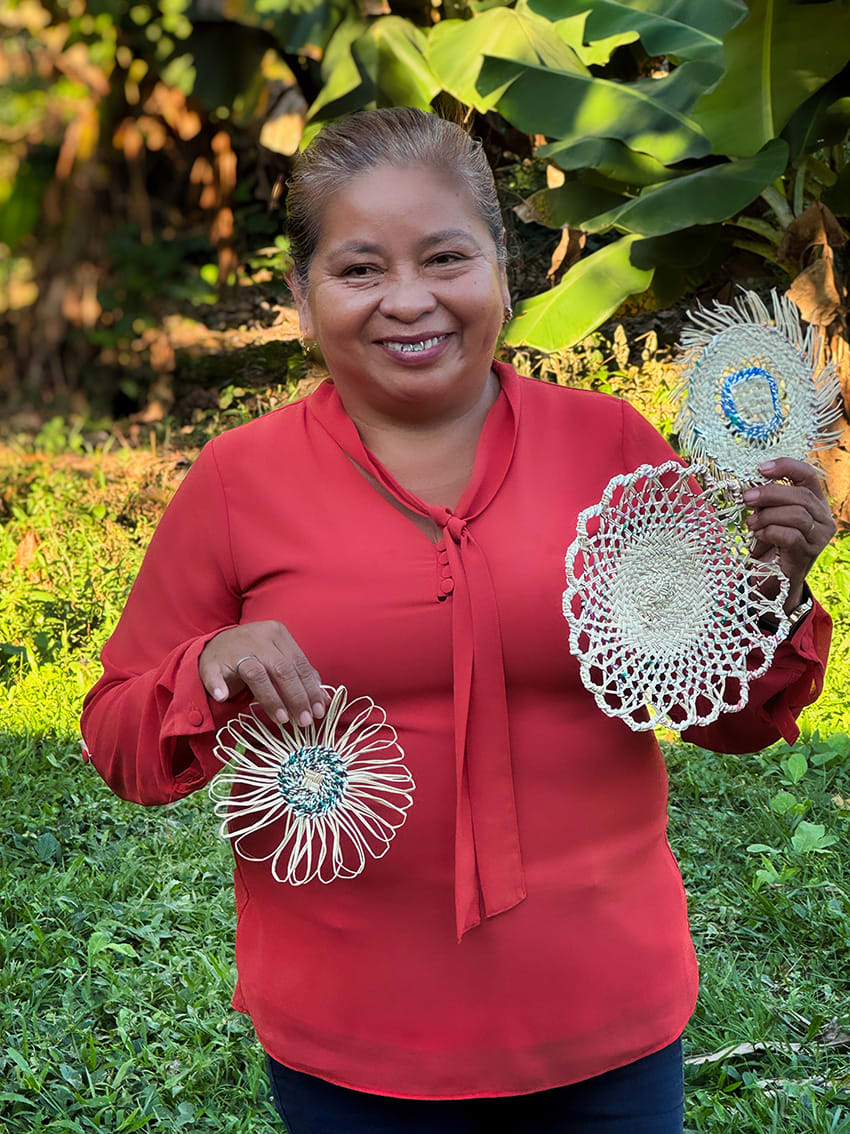
A weaver from the Maison/0 Weaving Paths project. Image credit Maison/0 and UNESCO.
-
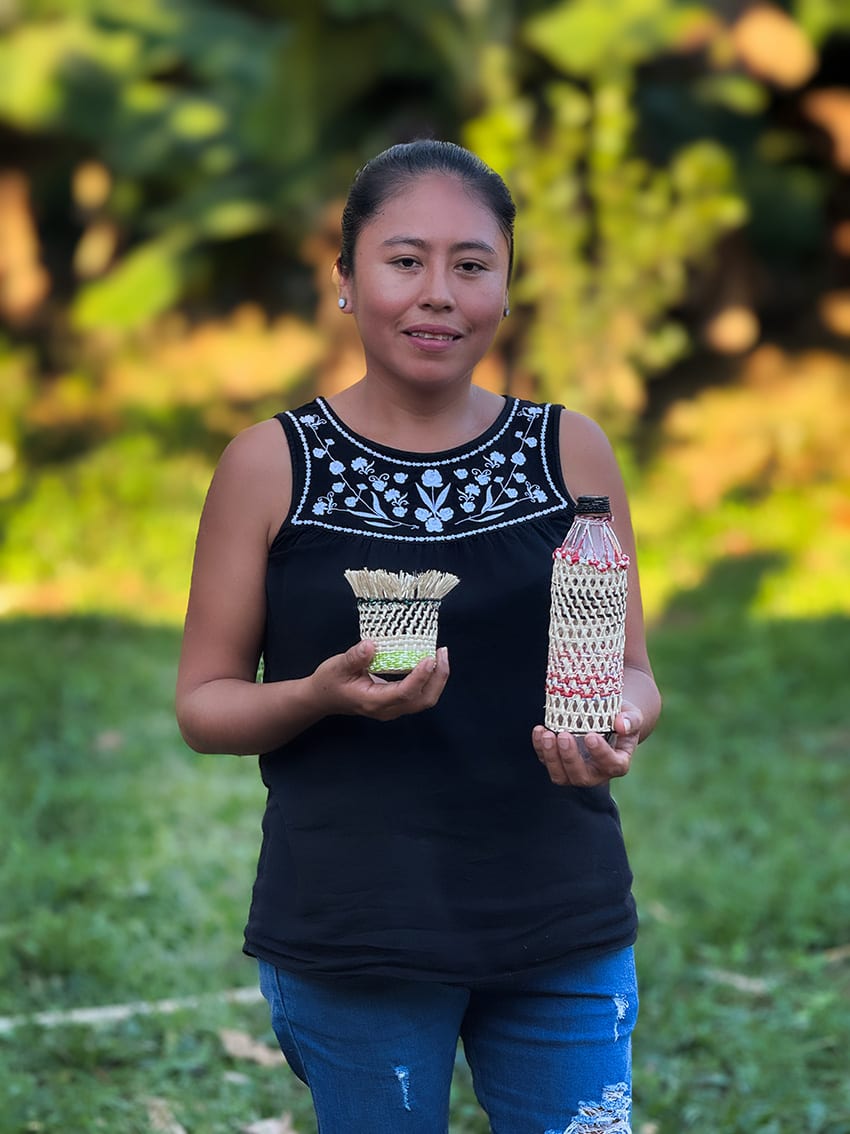
A weaver from the Maison/0 Weaving Paths project. Image credit Maison/0 and UNESCO.
-
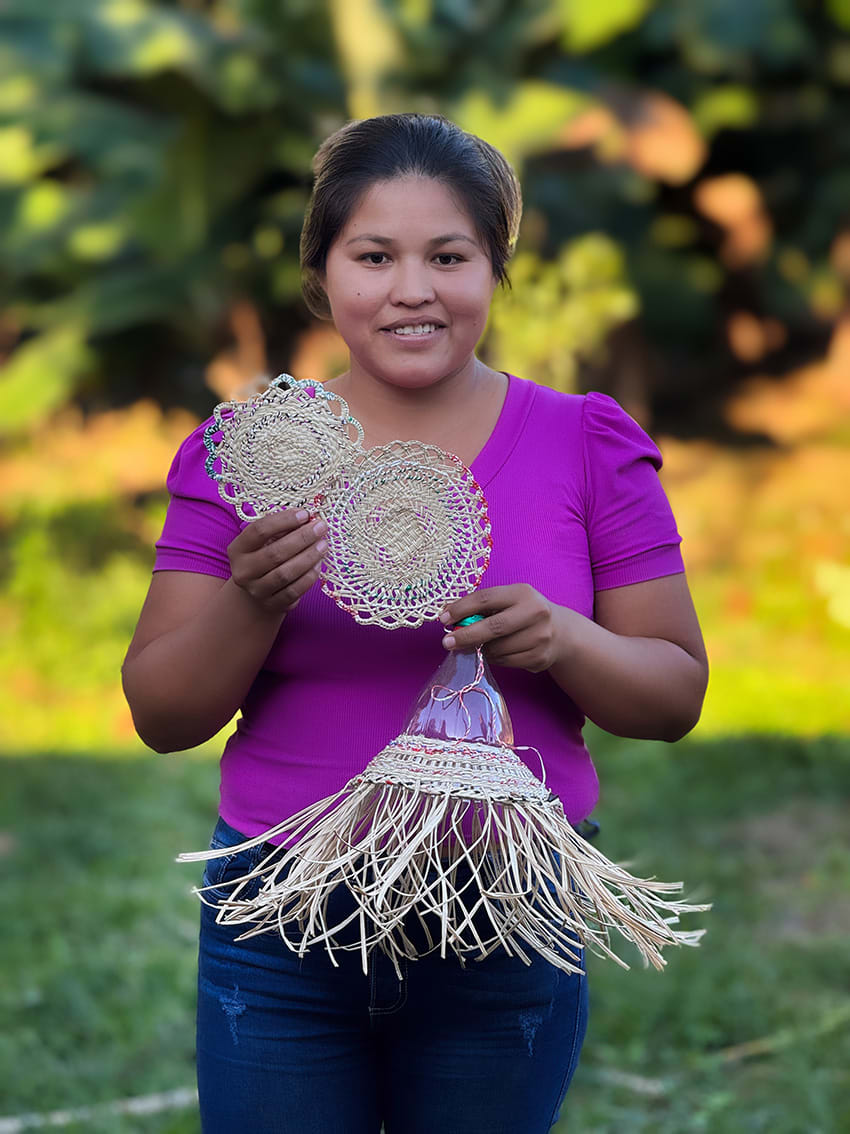
A weaver from the Weaving Paths project. Image credit Maison/0 and UNESCO.
-
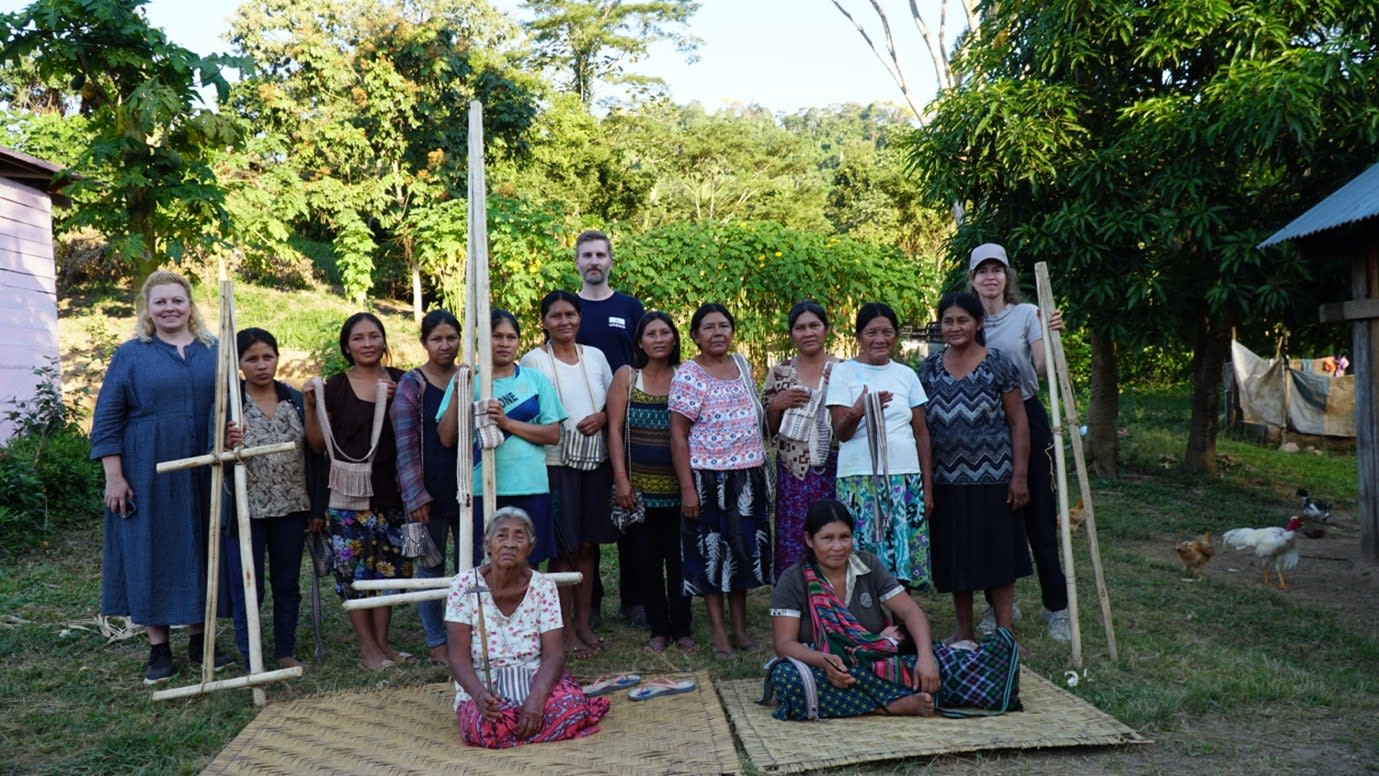
Weavers from the San Jose de Canaan community with UNESCO and Maison/0 workshop facilitators. Photography Harold Cespedes.
Developing a regenerative design brief with the San Jose de Canaan Community, Pilón Lajas Biosphere Reserve
Discover more about the Pilón Lajas Biosphere Reserve characteristics on UNESCO's website.
The Pilón Lajas biosphere is located on the far eastern side of the Andes, where the village of San Jose de Canaan is home to an indigenous Tsimane community. Impacted by wildfires, illegal expansion of cattle ranching, the community lives off agroforestry products: cacao, avocado, banana and oranges.
-
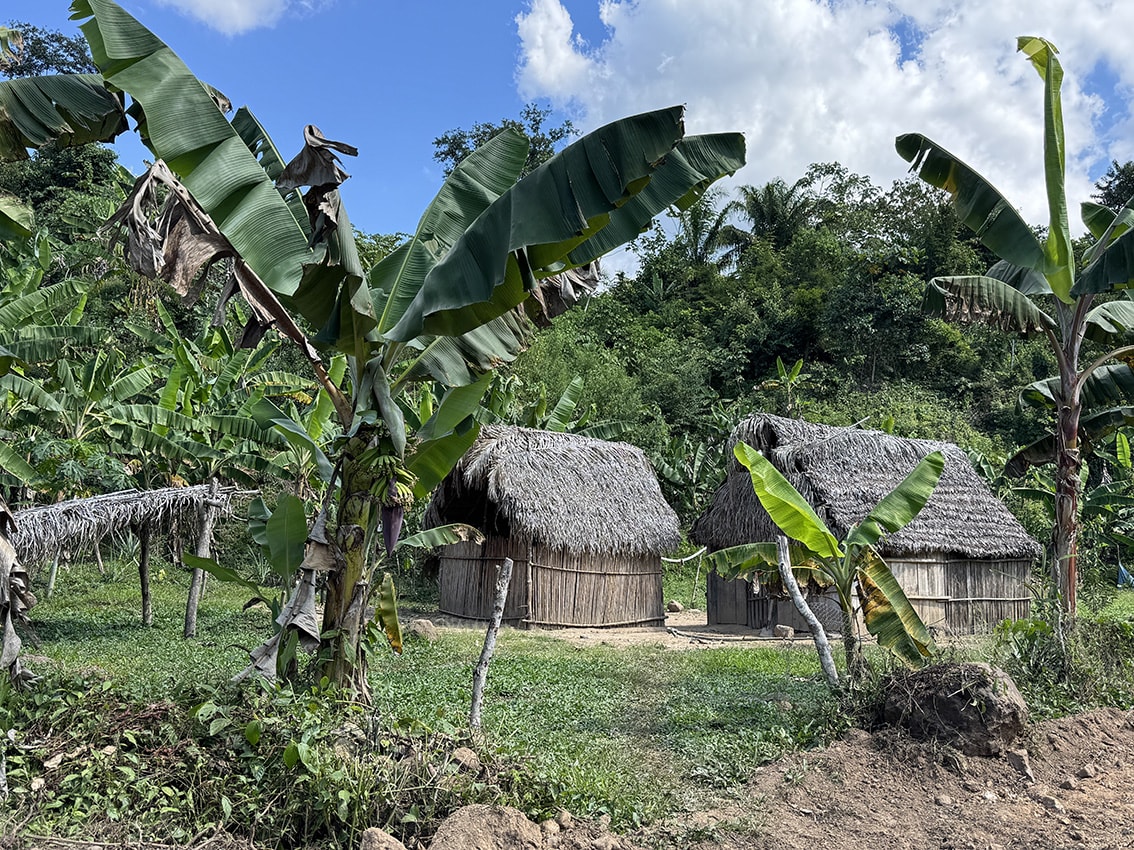
San Jose de Canaan Tsimane village. Photography Maison/0 and UNESCO
-
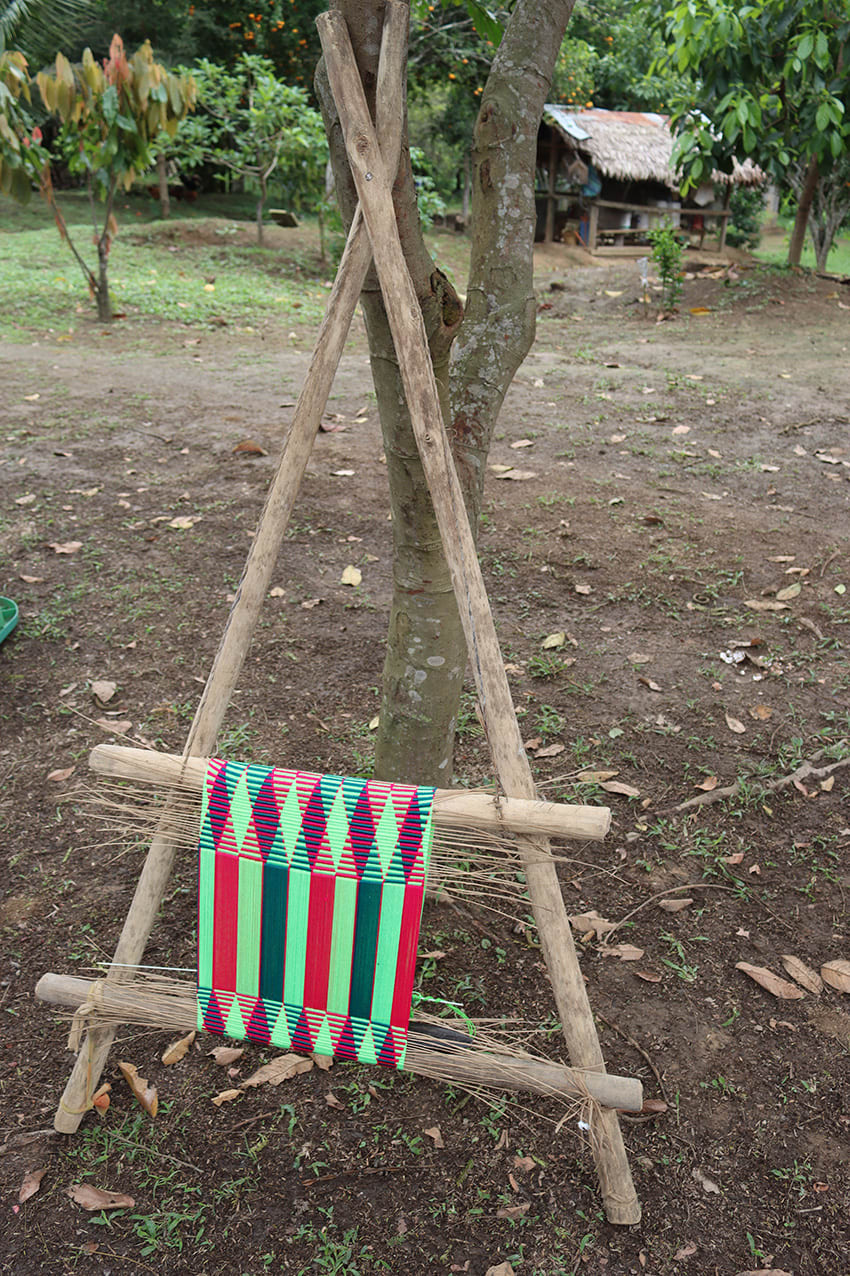
Traditional Tsimane loom, San Jose de Canaan, Pilon Lajas Biosphere Reserve. Photography Maison/0 and UNESCO
-
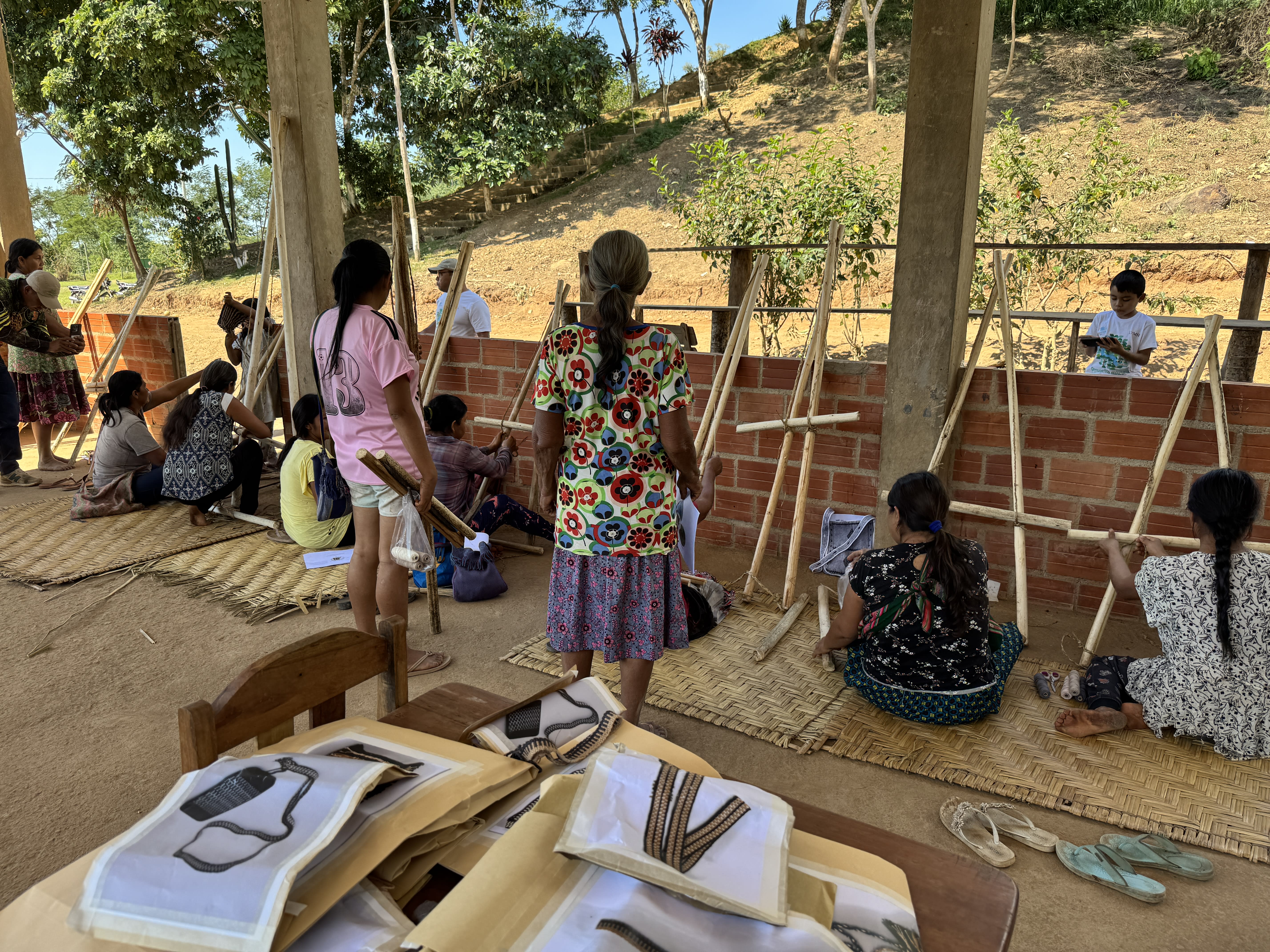
Regenerative craft workshop, Galilea Community, Beni Biosphere Reserve, July 2025. Photography Harold Cespedes
In a first field visit in July 2022 we identified a series of challenges and opportunities for the San Jose de Canaan Community:
- Heritage: Whilst traditional Tsimane weaving is still practiced, the use of natural dye has disappeared. The traditional use of village-grown white cotton is replaced by the use of synthetic dyed wool purchased on markets.
- Agroforestry: there is a strong commitment to agroforestry production for food, and a clear potential to develop agroforestry practices for textile fibres and colours.
- Species: The Tsimane literature refers to a brown-coloured cotton, but the plant has disappeared from the community.
- The closest market town (2 hours by car) is Rurrenabaque, where imported ‘made in China’ products prevail, with little promotion or interest for traditional Tsimane weaving. Women produce a few bags sporadically at very low price despite a labour-intensive process.
In response to the above we co-developed a design proposal following a regenerative design framework:
1. Design to restore biodiversity (ecological restoration)
- Source seeds of brown cotton from neighbourhood communities and expand agroforestry plots in the village to include brown cotton. This will promote genetic biodiversity
- Explore the introduction of local plants species for natural dyes and fibres as part of the agroforestry system.
- Introduce the community to new ways of using food waste as a resource for textile dyes and fibre production (with waste avocado skin for dye and pineapple leaves for fibre)
2. Design to drawdown Greenhouse Gas Emissions (climate restoration)
Agroforestry systems within the village bounds contribute to carbon capture capacity and can be developed where land has been impacted by wildfires.
3. Design for communities and cultures to flourish (social justice, cultural heritage and flourishment)
- Address the current low level of local economic activity by liaising with contemporary craft stores in Santa Cruz de la Sierra and La Paz to develop a more resilient business plan for the community
- Promote the value of Tsimane heritage by exploring the potential for textile teaching tours, publications and exhibitions
- Promote an intergenerational knowledge exchange within the community to preserve the Tsimane textile heritage
- Liaise with the Tsimane’ Mosetene Regional Council (CRTM) and the Tsimane’ Grand Council (GCT) to develop the project further.
First prototypes for a the new regenerative craft collection were developed by the Maison/0 design team to explore the use of Tsimane weaving techniques for contemporary products. Using organic white and brown cotton, as well as natural dyes, a series of artefacts were developed in preparation for a two-day workshop with the community in July 2025, they include bags, water bottle holders, phone straps.
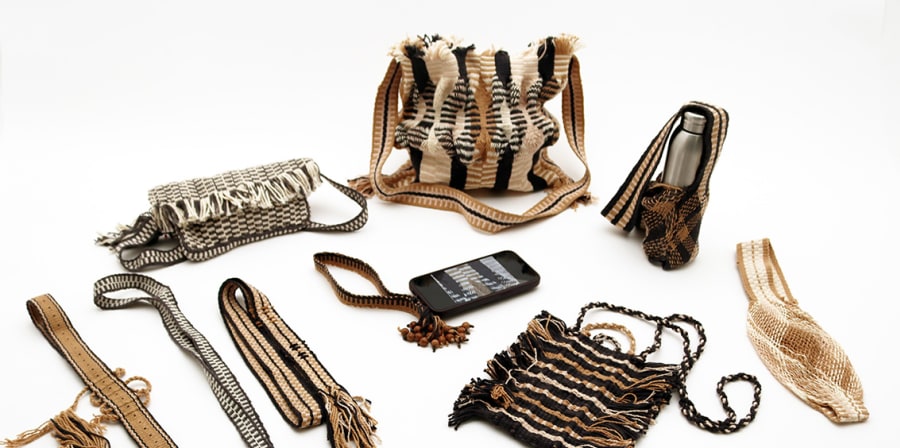
These prototypes were introduced at the beginning of the workshop and used as a prompt for discussion around the value of traditional Tsimane weaving and how to cost a product for a contemporary craft market. We discussed the potential development of agroforestry plots for brown and white cotton as well as for natural dyes plants.
Next steps
The community has replanted brown cotton seeds for a first harvest in July 2026. They continue to explore new ideas for craft artefacts that valorise traditional Tsimane weaving but relate to a contemporary market. The local UNESCO team is liaising with craft stores in Santa Cruz de la Sierra and La Paz to evaluate and price the products. The first collection fully made from agroforestry-grown white and brown cotton will be developed in July 2026.
Follow us on @MaisonZero instagram to see updates about this project.
Credits
Research team
UNESCO: Maximilien Guèze, Ana Catarina Luz, Carola Vaca, Rolvis Pérez Ribera, Edwin Mendoza, Mauro Ruiz, Alba Gareca, Tomas Huanca, Esther Conde.
Maison/0, Central Saint Martins UAL: Carole Collet, Stephanie Rolf, Michaela Johnston, Loula Guarin Figueroa, Paola Mogli, Florence Hawkins with the support of Lucy Bolland.
Workshop Participants
San José de Canaán: Agustina Canchi, Catia Lero Muchario, Daysi Pache Lero, Eva Pache Lero, Faustina Pache Canchi, Guillermina Pache Canchi, Guillermina Vie Durvano, Lucia Canchi Moye, Marisabel Tayo Canchi, Natalia Pache Caimani, Vaca, Veronica Lero Pache, Viviana Pache Canchi.
Galilea: Bella Justiniano, Betai Rivero, Carmelo Yohin, Danina Mascaya, Diana Ciani, Elisa Escalante, Enrique Pérez, Eroldena, Flora Guardia, Heidy Hortado, Jovita Isita, Lorpia Mojica, Lucina Vargas, Luisa Escalante, Mabel Yhiri, Mayto, Moreya Isita, Navaije Lucero, Reinaldo Moito, Roxona Guardia, Sarife Veimtemillas, Sheila Rivaro, Viaria Isito, Zelena Hustado.
Local coordination team
Álvaro Segovia, director of the Pilón Lajas Biosphere Reserve, and his team; Rolando Sánchez, director of the Beni Biological Station Biosphere Reserve, and his team; Amazon Conservation.
Film direction
Director: Roberto Navia
Director of photography: Harold Cespedes
Production manager: Karina Segovia
Sound production and post-production: Andrés Navia
Video post-production: Andrés Navia
Acknowledgements
Alexandre Capelli, LVMH; Elsée Ekambi Eyoum, LVMH; Álvaro Báez, MAB focal point at the Directorate-General for Biodiversity and Protected Areas; Tsimane’ Mosetene Regional Council (CRTM); Tsimane’ Grand Council (GCT); Meriem Bouamrane, UNESCO
Projects archive
-

Maison/0 Regenerative Table Landscape project, 2024, Central Saint Martins, UAL| Photograph: Paul Cochrane
-
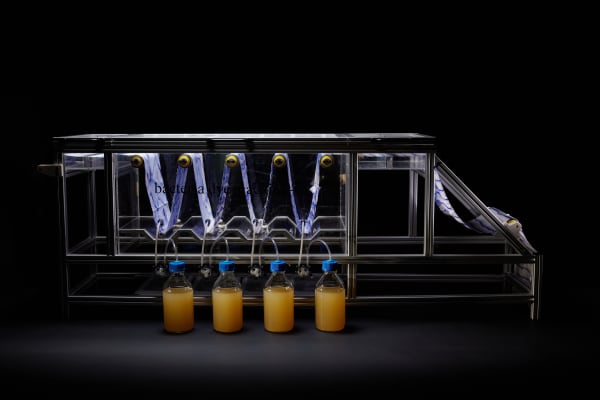
Bacterial Dye Machine- Automating Violacein- Charlotte Werth 2023 - photography Paul Cochrane for Maison 0
-
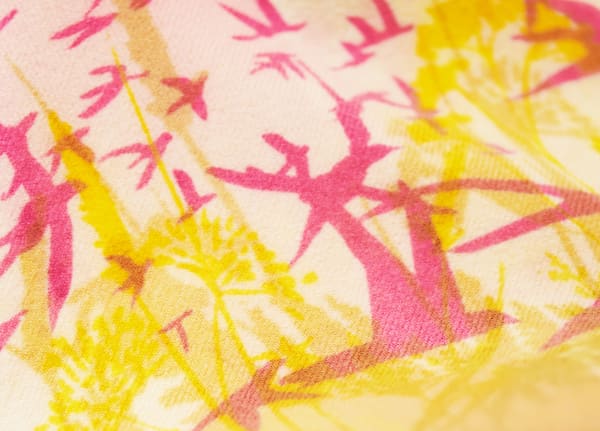
Rewilding Textiles Collection 6
-
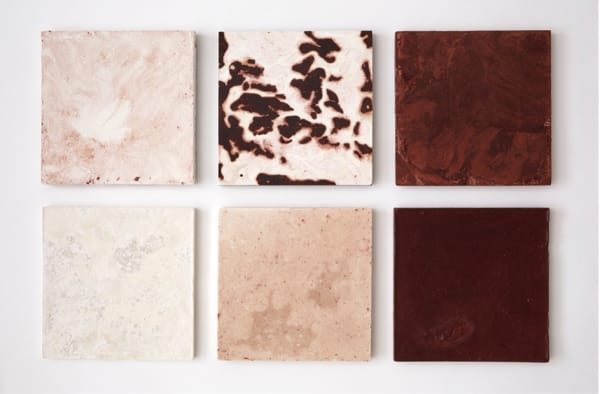
Photo: Paul Cochrane