
LCC Film & TV grads triumph at RTS Awards 2025
LCC BA (Hons) Film & Television graduates won the Undergraduate Factual: Short Form category at the 2025 Royal Television Society (RTS) Student Television Awards for ‘Outsiders’.

Sound has the power to reshape how we understand the world, and for 20 years, CRiSAP has been at the forefront of that revolution.
Creative Research in Sound Arts Practice (CRiSAP), based at London College of Communication, University of the Arts London, is one of the world’s leading centres for artistic research in sound and listening. Since 2005, its artists, students and researchers have transformed the way we hear, creating works that move between gallery and street, radio and performance, archive and workshop.
To mark its 20th anniversary, CRiSAP launched a month-long programme of celebrations. It began with a headline event at London’s iconic Cafe OTO and the release of a specially commissioned anniversary booklet followed by a takeover of the digital broadcasting platform Resonance Extra with 20 new broadcasts throughout October 2025.
For LCC students, CRiSAP is more than a research centre, it’s a living laboratory that feeds directly into courses such as BA (Hons) Sound Arts and MA Sound Arts, and supports PhD study in sonic practice. This anniversary not only celebrates a remarkable legacy but also opens new doors for the next generation of sound artists and researchers to step into.
To reflect on CRiSAP’s past, present and future, we spoke with Dr Mark Peter Wright, artist, researcher and Director of the Centre.
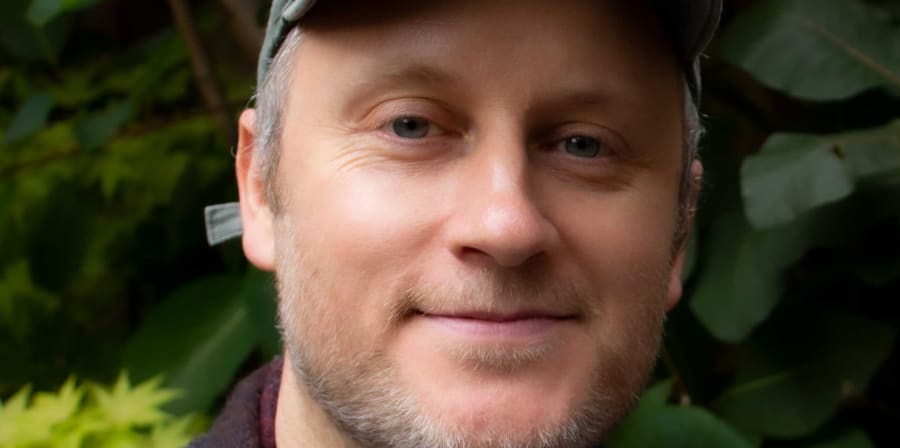
We’ve contributed a lot! Two specific examples really stand out. One is the research project ‘Sound Gender Feminism Activism’. It brings together academics and artists that share perspectives from feminism and queer theory to challenge orthodoxies in sound arts, music, and technology. For well over a decade CRiSAP has hosted global symposia and events, produced publications, and helped to build inclusive networks worldwide.
The other major contribution is our work on sound and the environment, a cross-disciplinary inquiry into how artists and researchers listen, record and represent landscape and place. Our most recent symposium, in 2024, brought together over 80 global contributors and welcomed around 400 attendees. This field keeps shifting in response to contemporary ecological, political, and social challenges and CRiSAP is at the heart of it.
Sound is an incredible medium and material for numerous reasons. It can act as evidence or a record of culture in the same way a visual object or artefact can. Its temporal nature demands sustained attention, and with that comes many different ways of listening. In that sense, sound can be a teacher or mentor, personally, collectively, creatively, or critically. It also matters for orientation, for how we locate ourselves in space and with others, and it plays a vital role in mental health and memory.
It’s important to say we’re not sound-centric at CRiSAP. In fact, being sensitive to sound means being aware of aural diversity — every listener experiences difference in what’s heard or not heard. There is always more to sound than what we hear.
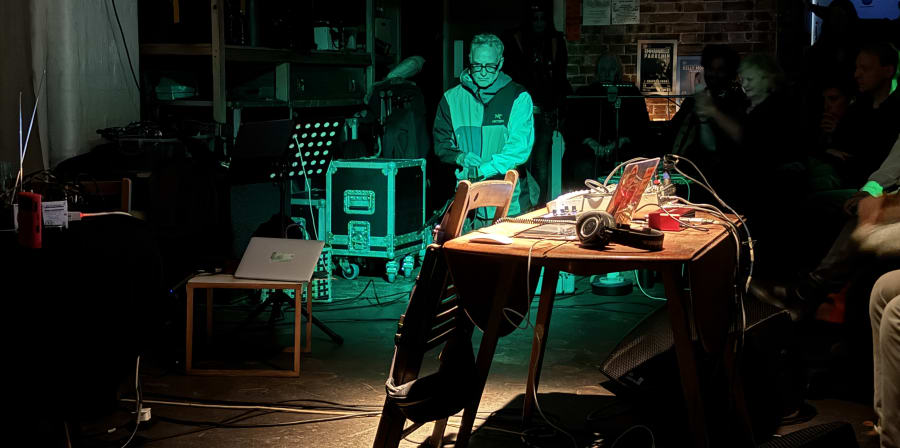
Cafe OTO in Dalston is such an iconic space for experimental music and sound practices — it felt like the natural home to celebrate 20 years of CRiSAP. The night was a sell-out and brought together alumni, staff, researchers, and specially commissioned new works, so there was this sense of looking back and looking forward at the same time. I felt very humbled and proud seeing that breadth of practice gathered under one roof. We also launched our anniversary booklet created by sound artist, researcher and educator Hannah Kemp-Welch, which traces CRiSAP projects over the years.
It’s actually very hard to pick — there’s just so much! I’ve already mentioned a couple of projects, so I won’t repeat those. But on reflection, Salomé Voegelin’s 2010 publication, ‘Listening to Noise and Silence’ was a big moment, not only for us but for sound arts more widely. It really helped shape the field into its own arena of philosophical and aesthetic debate.
Amongst the many projects, I’d also point to our Sound Arts Guest Lecture Series. It might be easy to overlook because it happens every week, but it’s been running for years, bringing leading sound artists to share their work. It’s now curated by CRiSAP member Annie Goh, and its influence has been phenomenal for students and staff alike.
And I have to mention the students! They’re such a vital part of CRiSAP, not just in what we’ve done, but in what we’ll go on to do. Our close ties with the undergraduate and postgraduate courses mean that research and teaching constantly feed one another. We’ve got a brilliant cohort of PhD researchers too, who keep us on our toes, and we all learn from each other. This exchange is special, and you see the ethos of CRiSAP carried into the world through our alumni, who are doing extraordinary things globally.
Radio has always been central to CRiSAP, it’s live and experimental, which makes it such a powerful medium for research. It allows ideas and practices to reach wider and sometimes unexpected audiences, and it transforms listening in to a collective, real and imaginary act. Resonance FM — London’s pioneering arts radio station — and its digital sister platform Resonance Extra have been key partners for us for two decades, so it felt fitting to celebrate through 20 broadcasts across the month of October (2025). Each day offers something different from publications to archives; curation, art practice and student takeovers. I think it is one of the most exciting things we’ve done!
It means students have direct contact with leading researchers and artists, and they can see research and teaching feeding into one another. They’re exposed to real-world projects, exhibitions, and broadcasts, which helps them understand how ideas move beyond the classroom and into public space. It also creates a clear pathway from undergraduate study through to PhD and beyond, many of our students continue to work with us long after graduation. And just as importantly, we learn a huge amount from our students. They constantly surprise and challenge us, bring fresh ideas and perspectives. They are part of what keeps CRiSAP urgent and evolving and that exchange is what makes this community so special.
CRiSAP has always treated sound as an artful, critical and political practice — our projects move across activism, ecology and social justice, and we’ve continually reframed listening in relation to power and aesthetics.
Looking ahead, the contexts we work in – social, political, technological, and ecological, are only becoming more complex. That will demand deeper cross-disciplinary approaches. Our research into sound, conflict and trauma will sadly remain urgent, while questions around ethics, voice and copyright are bound to resurface particularly as technological change continues to accelerate. We’re also committed to global projects that decolonise euro-centred knowledge, and I'm curious about how archival work will develop: in an age of endless data, what new tools and methods will the sonic researcher need to navigate the sounds of the future?
No matter the question, context, or research subject, CRiSAP celebrates sound practice through experimentalism, community, and critical debate. These are at the heart of what we do and will continue to guide us. We are a small team, united by a discipline, and I’m proud that we do extraordinary things because of this focus. New areas may appear that take us further into emerging technologies and AI, ecological and environmental research, and global collaborations, always underpinned by listening as an act of care, resistance and imagination. I feel very proud of what we’ve achieved over the past 20 years, and I'm excited to see how these commitments carry us forward into the next 20.
CRiSAP at 20 serves as both a celebration and a provocation: a reaffirmation of listening as a creative, critical and transformative practice. Two decades on, this sonic revolution continues to gather momentum, driven by a new generation committed to reimagining and reshaping the world through sound.
LCC BA (Hons) Film & Television graduates won the Undergraduate Factual: Short Form category at the 2025 Royal Television Society (RTS) Student Television Awards for ‘Outsiders’.
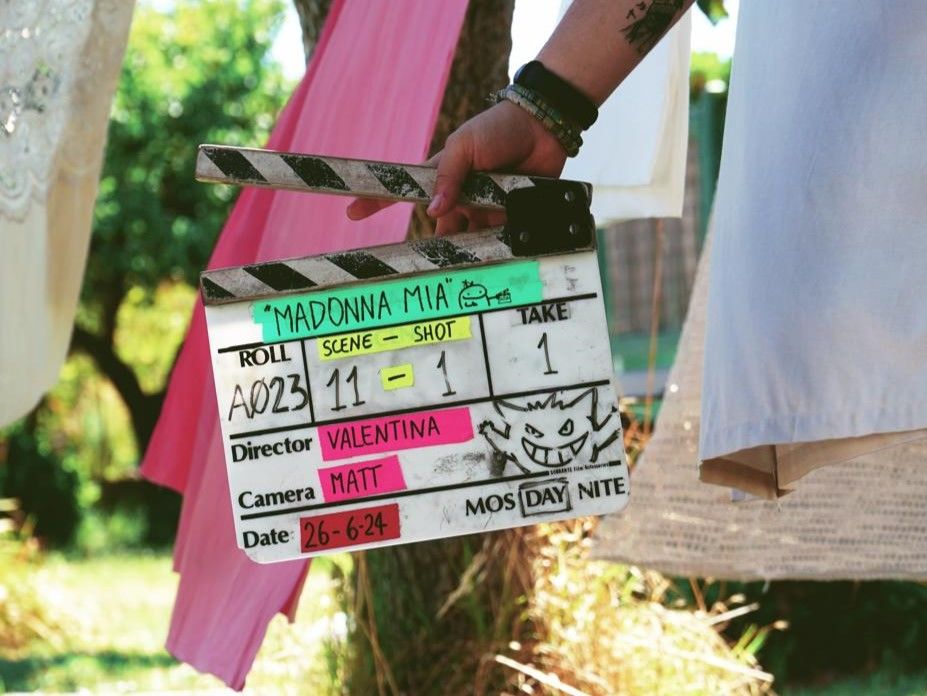
MA Film graduate Valentina Garrett recently won three NAHEMI National Student Film Awards for her final project at London College of Communication, Madonna Mia.

We caught up with BA (Hons) Interaction Design Arts students Megan Tan and Shao Xuan Tan to talk about their recent success at i Light Singapore — Asia’s leading light festival.

LCC students from MA Virtual Reality and MA 3D Computer Animation won multiple awards at this year’s Innovate UK Immersive Tech Awards.