The current CSM Museum & Study Collection Window display celebrates the centenary of the Scottish artist Eduardo Paolozzi (1924-2005), who taught at the Central School of Arts and Crafts between 1949 and 1955, several decades before its merger with St Martin’s School of Art in 1989.
Presenting Paolozzi’s work at Central Saint Martins marks the important role that the Central School played in the early development of Paolozzi’s career as well as the significant contribution that he made to the culture of experimentation, collaboration and cross-disciplinary practice that flourished at the art school after the Second World War.
Despite being an artist who had recently trained at the Slade School of Fine Art and who was better known as a sculptor and draughtsman, when he joined the Central School in December 1949, Paolozzi took up a post as a tutor in Textile Design. This unlikely appointment proved critical for the formulation of his thinking and practice during the post-war years.
-
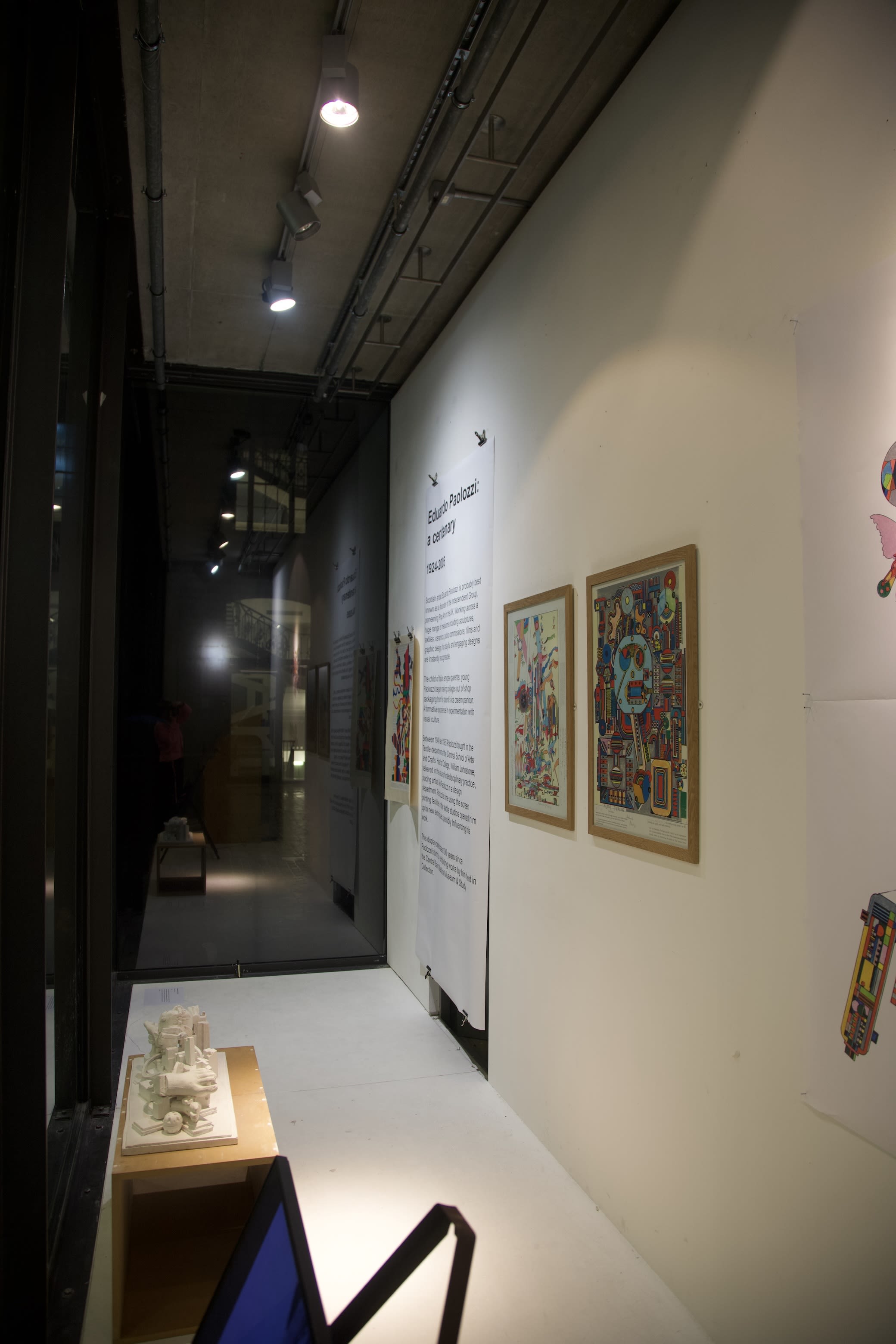
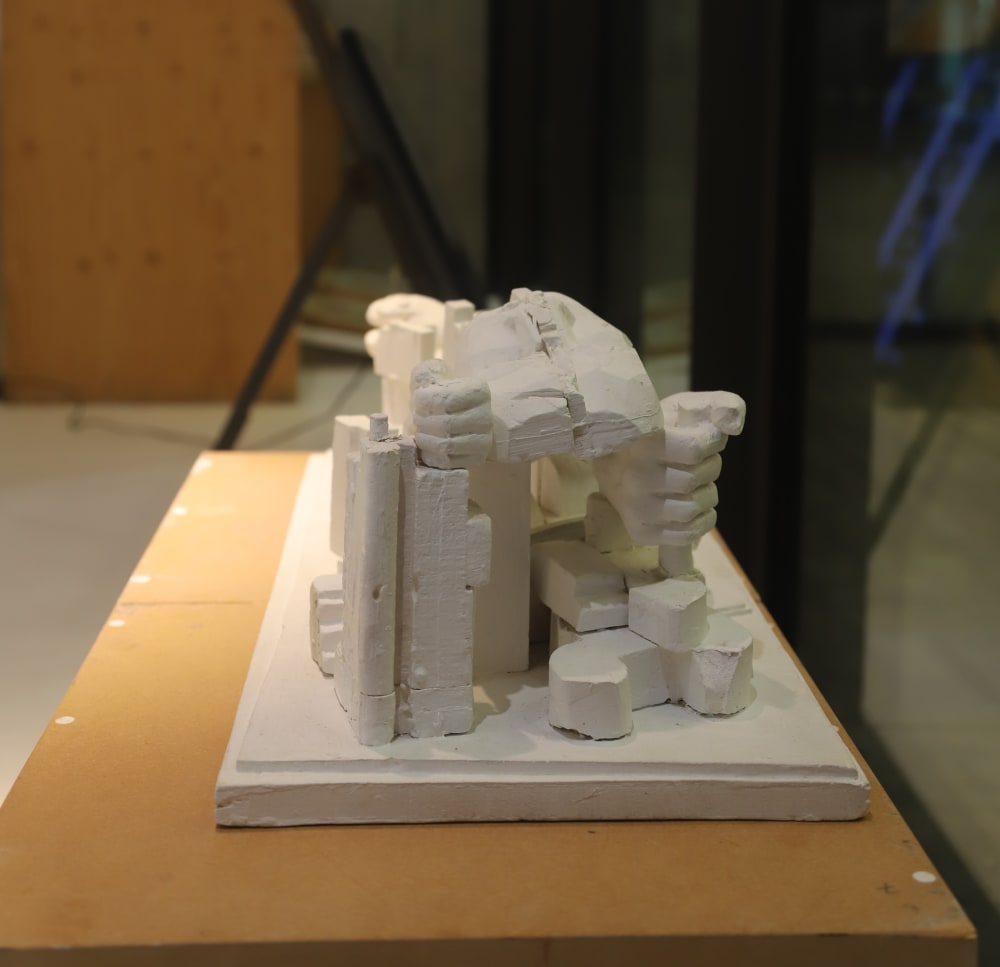
Eduardo Paolozzi display, photo: Dayna Tohidi
-
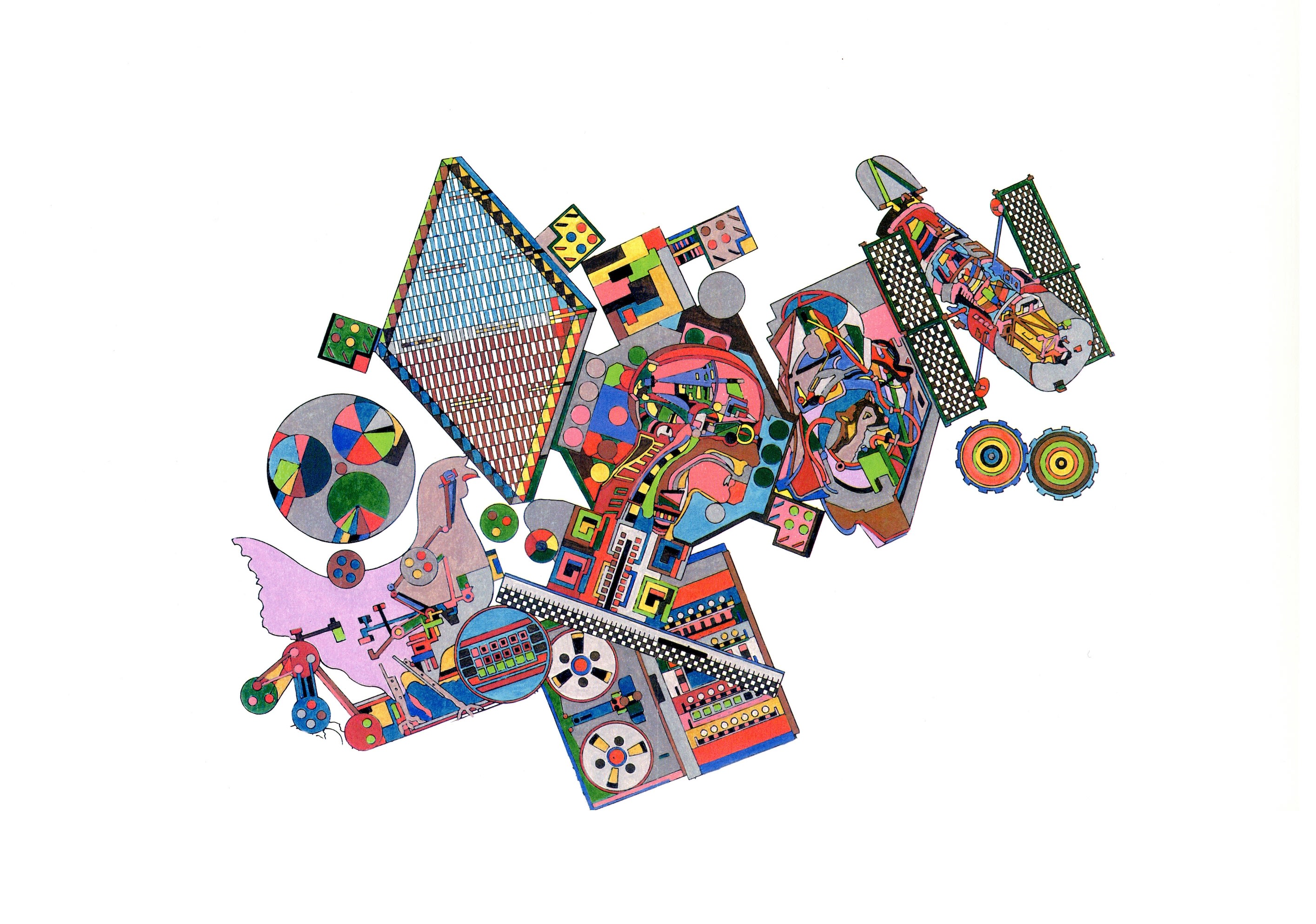
Eduardo Paolozzi, courtesy of CSM Museum & Study Collection
In the workshops of the School of Textiles, Paolozzi was exposed to new printing methods, approaches to pattern-making, and theories of design, which he drew hungrily into his work. What is more, given that he was just 25 years old when he first joined the staff, the Central School provided Paolozzi with ready access to equipment and materials, as well as a much-needed source of income. Often, he would stay in the building late into the evening after his classes had ended, using the art school as a kind of expanded studio in which he could roam freely between the textile workshops and the pottery kilns.
The proximity of the different departments and the ability of staff and students to move between them was a vital aspect of Principal William Johnstone’s vision for the Central School at the time, which he imagined as an ‘integrated unity’ in which a wide range of disciplines, practices, technologies, crafts and artforms could work in synergy. Experimentation and collaboration across departments were actively encouraged. In many ways, Johnstone envisioned the Central School as a kind of successor to the Bauhaus in Britain, where the creative energy of young artists such as Paolozzi could be harnessed for industry and oriented toward the urgent task of post-war reconstruction.
Paolozzi found this environment intensely stimulating. Outside his scheduled teaching, he would meet with colleagues across the art school to learn new skills and to exchange and test ideas. Perhaps most significant among the connections that Paolozzi made at the Central School during the period, was his friendship with the theorist and dye technician Anton Ehrenzweig, who studied the application of psychoanalytic thinking to modern art. Employed as a tutor in Fabric Printing, Ehrenzweig taught Paolozzi to superimpose silkscreen designs by using multiple screens at different orientations, thereby creating multilayered compositions. The impact of this discovery can be seen most clearly in Paolozzi’s silkscreen printed designs from the early 1950s, and more subtly in several of his collage works and sculptures from the post-war era.
While he was working at the Central School, Paolozzi also became affiliated with a somewhat nebulous cohort of artists, designers, architects and theorists, who became known as the Independent Group. Between 1952 and 1955, they convened a programme of discussions and organised several exhibitions at the newly formed Institute of Contemporary Arts (ICA). This was where Paolozzi staged his infamous Bunk! presentation of collage imagery drawn from contemporary vernacular culture and projected somewhat clunkily through an epidiascope machine. Although delivered with little explanation and received with a mix of confusion and consternation at the time, this presentation is now seen as a landmark moment in the emergence of pop art in Britain, with Paolozzi identified as one of its key progenitors.
While the Independent Group is primarily associated with the ICA, the Central School provided a vital context for its early formation and development. Crucially, many of those affiliated with the group were also teaching at the Central School, mostly outside of the fine art department. This included artists Nigel Henderson, William Turnbull and Richard Hamilton, and architect Peter Smithson. For these practitioners, the Central School offered a context alongside the ICA in which they could put their ideas into practice by testing out new kinds of technologies and working across practices and disciplines. Peter Smithson and his wife, collaborator and fellow architect Alison later described the Central School serving as an ‘initial, informal […] nucleus’ for the Independent Group.
Throughout his career, Paolozzi continued to demonstrate a relentless appetite and enthusiasm for working experimentally, for testing out new technologies and methods, for drawing on theoretical and critical ideas from across disciplines, and for engaging with contemporary visual and vernacular culture. This innovative form of practice was profoundly shaped by his time at the Central School.
Dr Rosie Ram,
Course Leader, MA Culture, Criticism and Curation
-
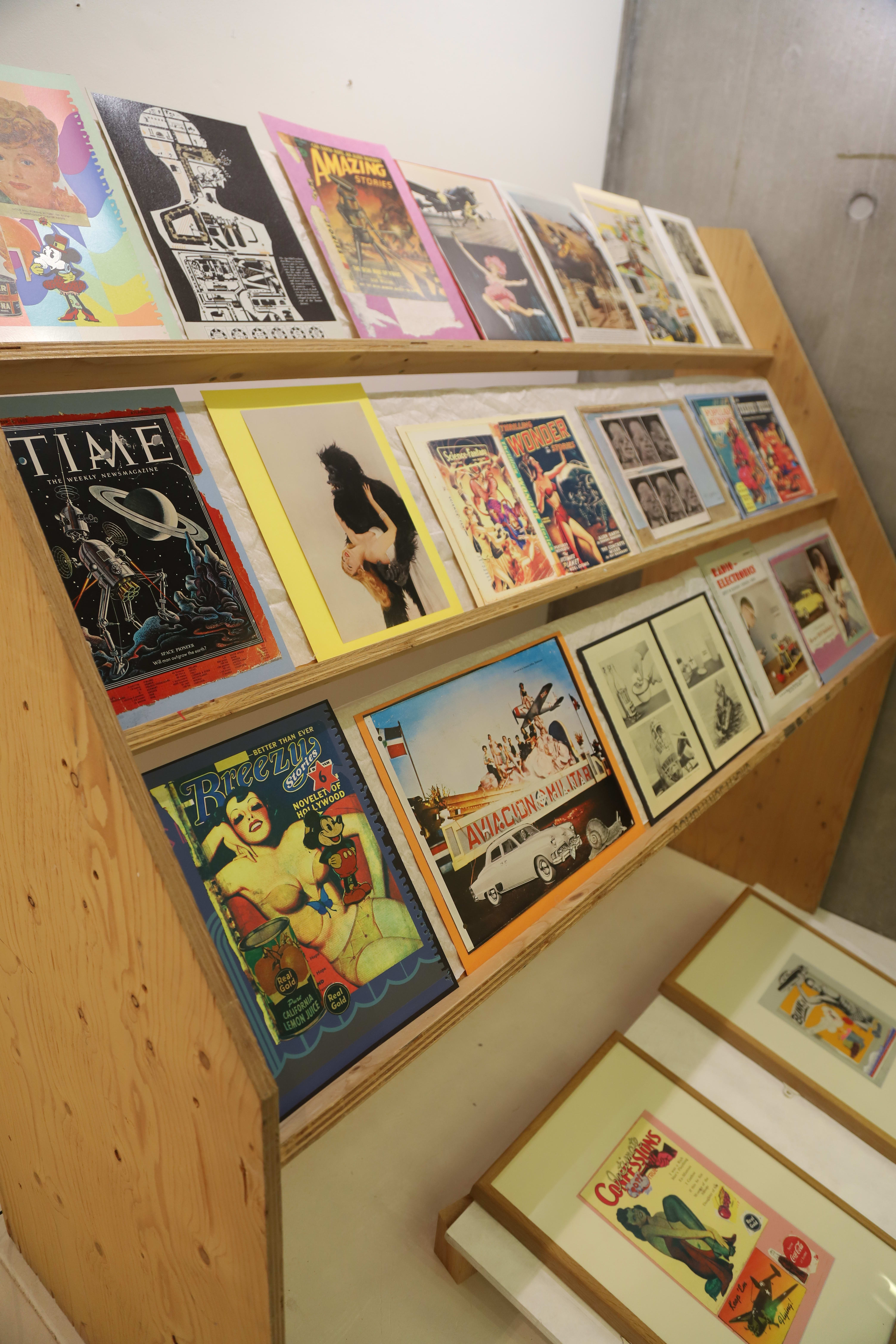
Photo: Dayna Tohidi
-
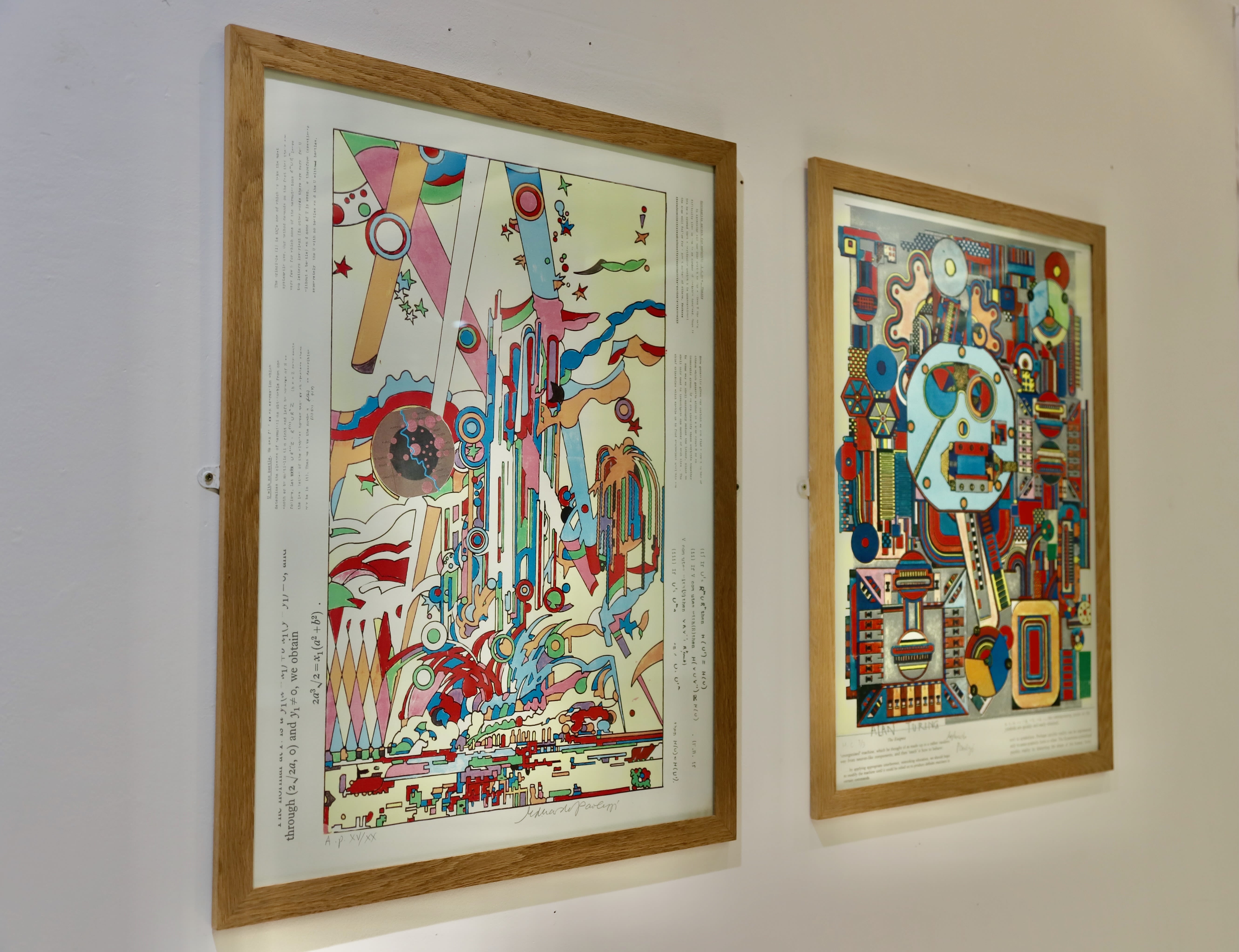
Photo: Dayna Tohidi
-
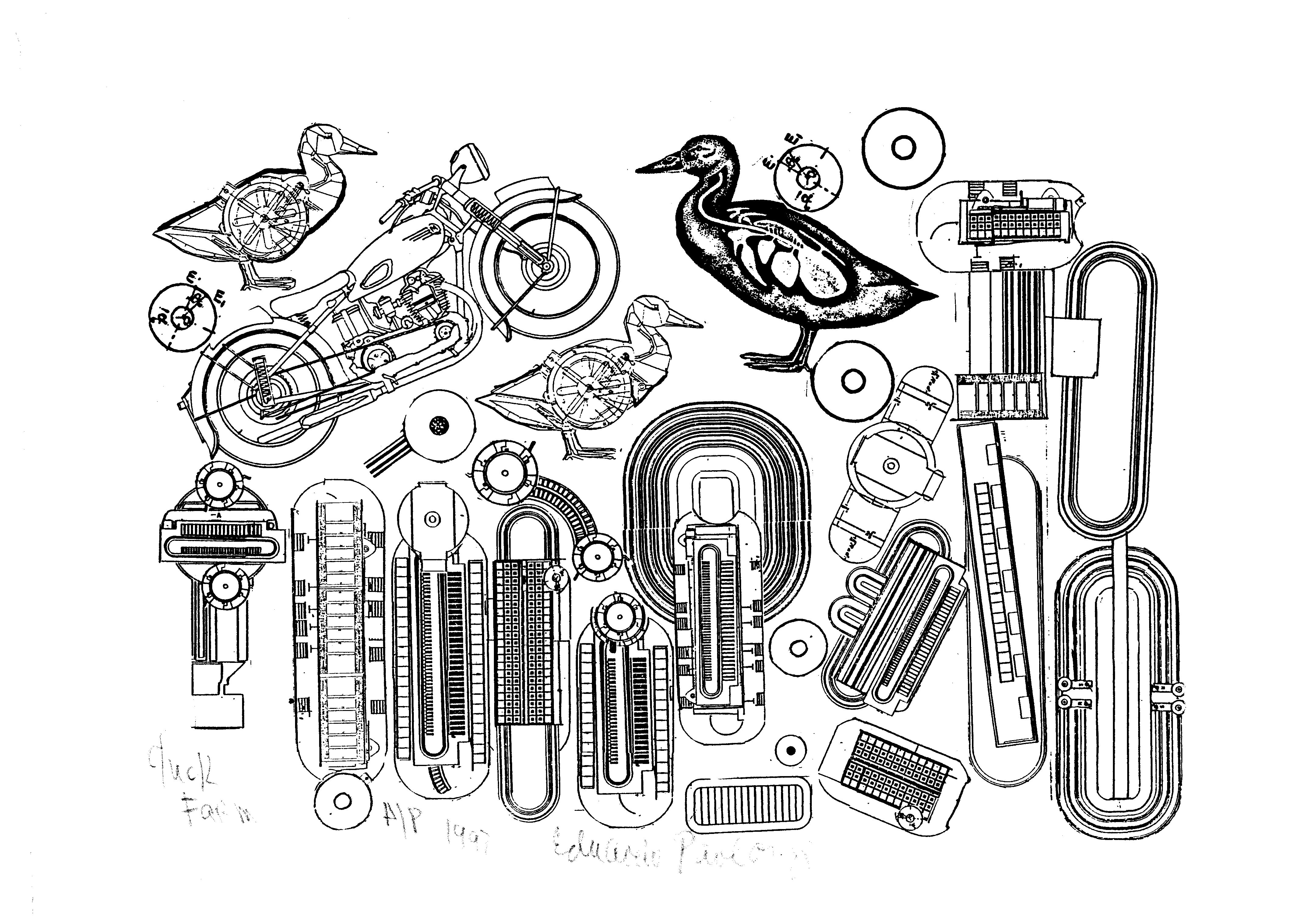
Eduardo Paulozzi, courtesy of CSM Museum & Study Collection
More
-
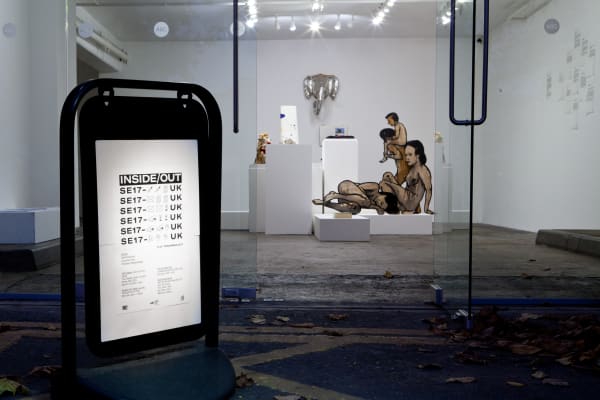
Inside/Out exhibition in various Walworth locations, South London. This was part of a student project with Artists Studio Company, November 2017). Photo: Glenn Michael Harper