Ugonna-Ora Owoh is a journalist and editor whose work examines contemporary African culture across art, fashion, politics, film, design, and architecture. His reporting has appeared in leading global publications including The New York Times, Vogue, The Guardian, Wallpaper* and others.
Last year, a small experiment in making quietly took place at Central Saint Martins. Developed by Berni Yates, a senior lecturer and knowledge exchange leader at the school, in collaboration with Spring Studios, the programme was introduced under the theme “The Ghana Project.”
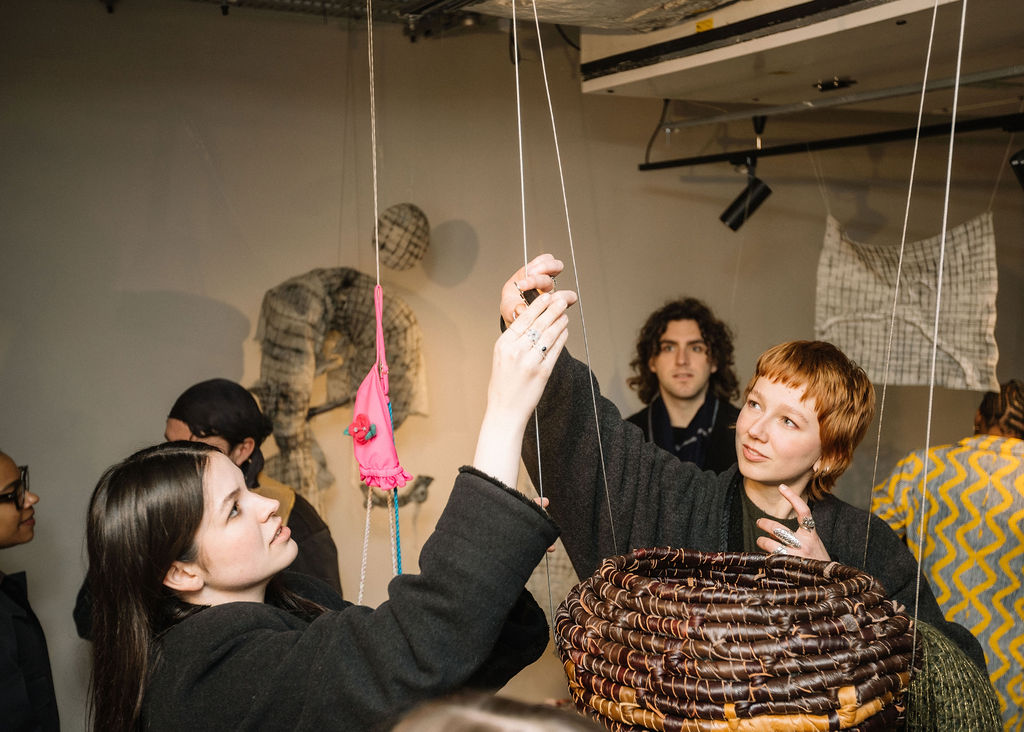
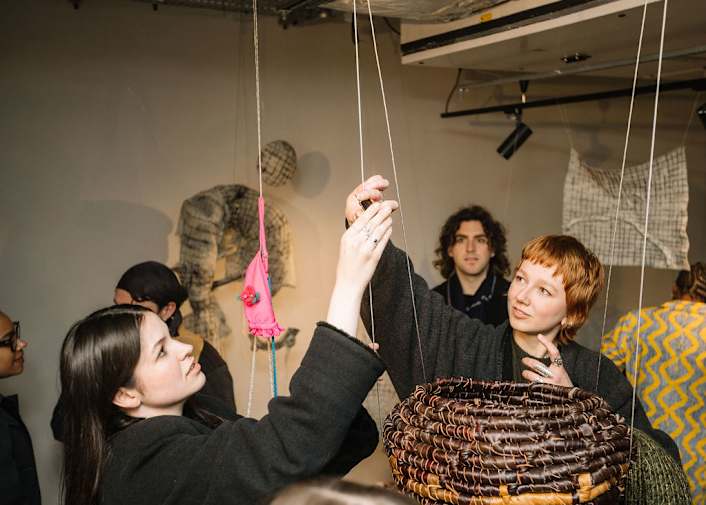
This year, it returned with a wider cultural focus. Partnered and hosted at Mason & Fifth from 2–13 March, Makers Camp: The West Africa Project expanded into an eleven-day programme that blended workshops, conversations and experimentation. Throughout the camp, artisans and tutors led sessions introducing students to a range of techniques including embroidery, leather craft, coiling, macramé, crocheting, spinning and weaving.
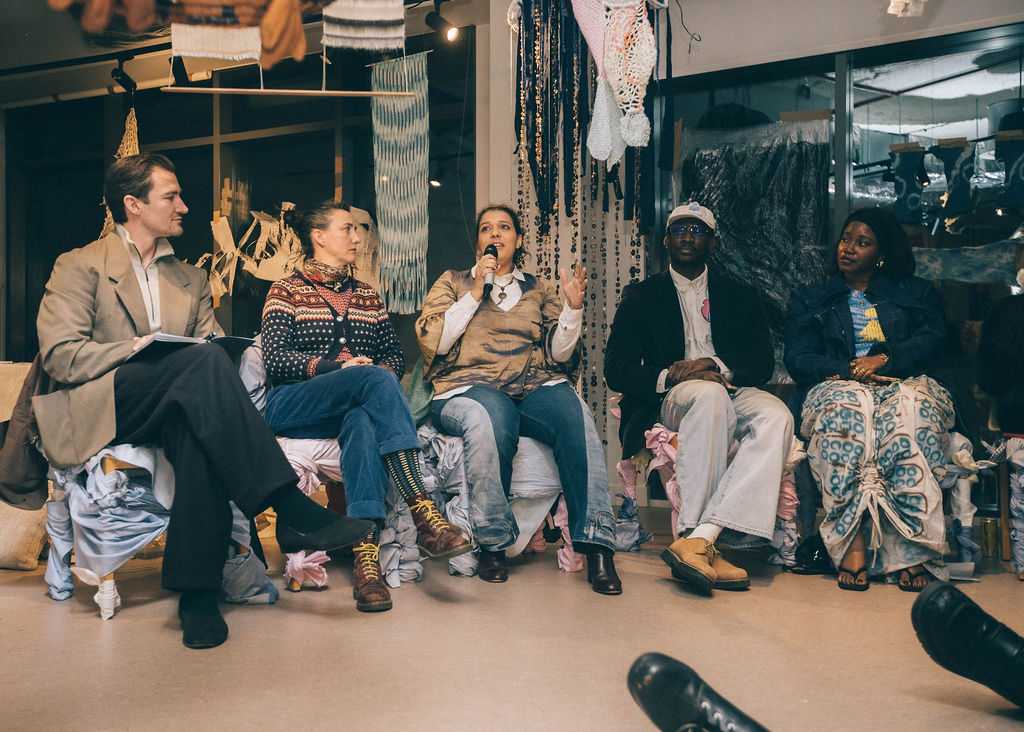
Part of this year’s cultural programme invited two designers from West Africa whose practices already engage with questions of craft and sustainability. Nigerian designer Peter Acha, founder of the Lagos-based label Pettre Taylor, joined the programme to speak about his design journey and his brand known for its nomadic ethos that fuse Nigerian culture with other cultural aesthetics. Also joining the programme was Ghanaian designer Travis Obeng Casper, founder of Ajabeng and renowned for exploring the purity and vibrancy of African culture that infuses post-colonial optimism with a pan-African spirit.
“What really stood out at Makers Camp was the profound curiosity about the process of making rather than just the final result,” says Travis Obeng-Casper. For him, it was less about the intent and more about exploring the origins of materials, production and the deeper meanings behind making which he admits is a level of inquiry that is often overlooked in the fast pace of today’s fashion environment. And he assures he would apply what he has learned to his brand AJABENG.
While their presence helped frame a wider conversation around sustainability within African fashion, it also added to the conversation that Africa in many ways has long practiced sustainable production. Traditional fabrics are created by artisans using techniques that have existed for centuries.
-
Credit to Elvis Adjei @elvisadjei_
-

Credit to Elvis Adjei @elvisadjei_
Evenings at the Listening Room
Beyond the daytime workshops, the programme stretched into the evenings at the listening room inside Mason & Fifth.Several conversations brought together creatives from different industries. DJ and music producer Eliza Rose spoke about her creative path and what shaped her career. BAFTA-winning costume designer PC Williams reflected on storytelling through costume, chef Ed Tejada discussed sustainable food practices, while Peter Acha spoke about the development of his brand. Other nights were spent in quieter moments: listening to jazz & poetry readings, while exchanging ideas among the participants.
Making with discarded materials
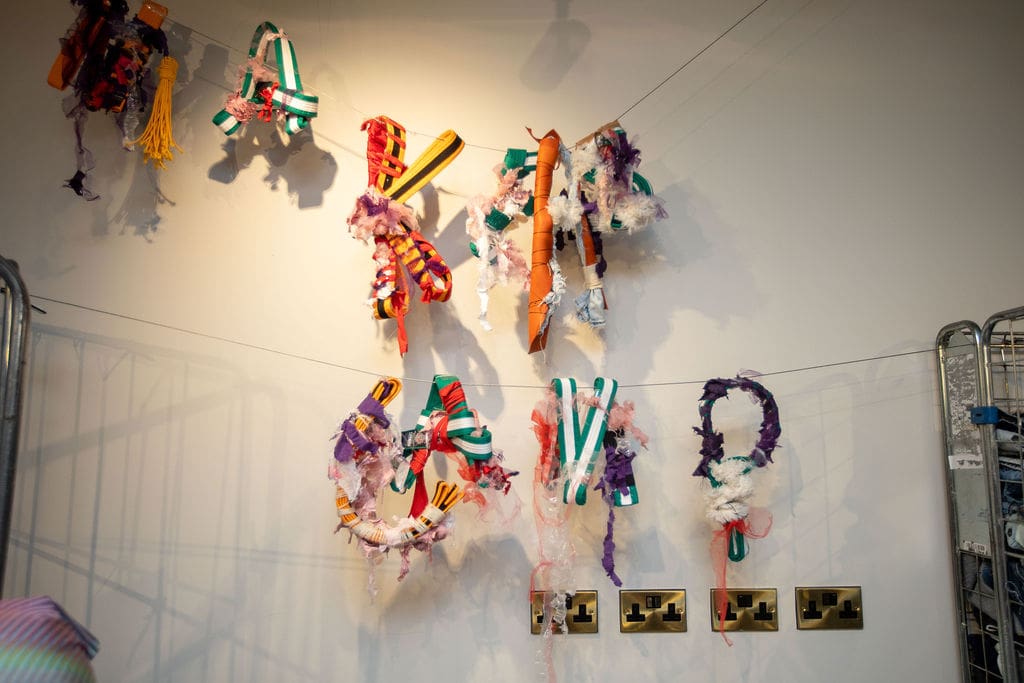
During the second week, the focus shifted from learning to making. Students were asked to select materials from a large heap of discarded textiles donated by the p fashion com. Using techniques introduced during the first week, they were challenged to transform these materials into garments or sculptural pieces. The exercise was made to push participants to rethink the idea of waste. Shredded wool was shaped through felting techniques into faces and sculptural objects. One designer used coiling techniques to construct a stool from a red cotton shirt, supported by twisted yarn and stacked Gucci perfume bottle caps. A leather jacket was constructed from pieces of stitched white wool, while another group produced a knitted cardigan entirely from reclaimed yarn.
The exhibition
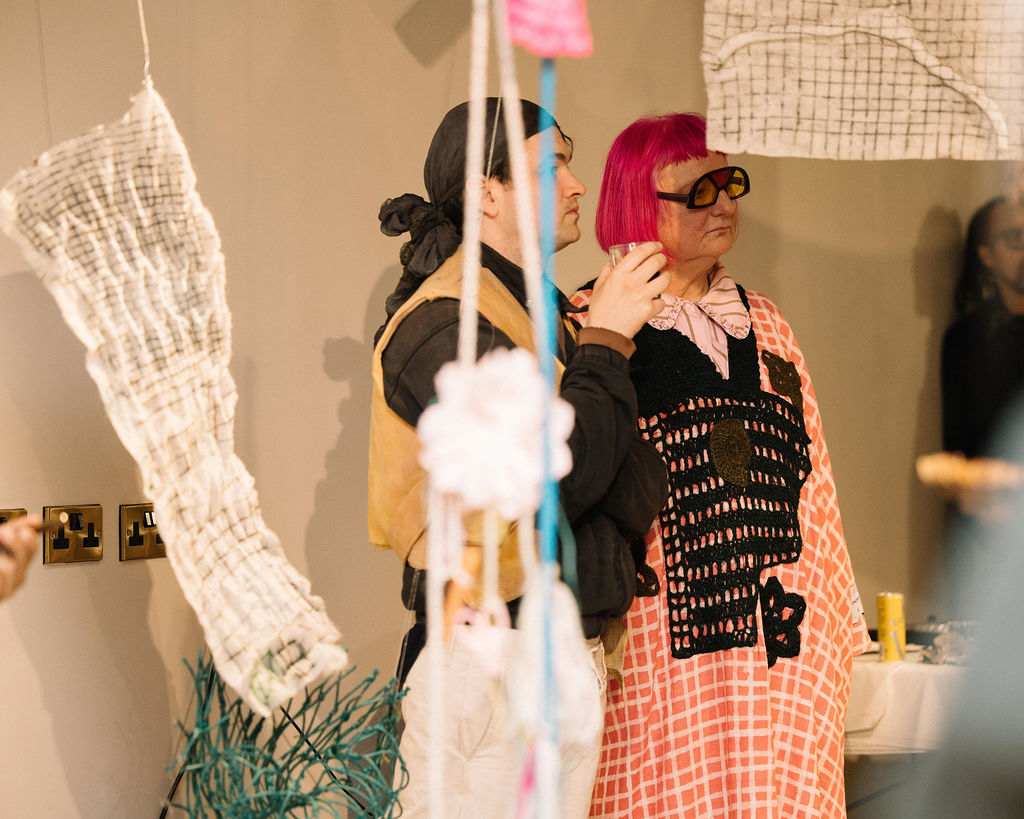
Friday marked the end of the Maker’s Camp with a public exhibition. Hundreds of creatives across London visited the space to see the results of the two-week programme. The exhibition presented a range of installations, garments and sculptural works created from recycled materials. One striking piece was a large pink octopus-shaped sculpture made from fishing nets and stuffed clothing. Another installation resembled a tree constructed from layered nets.
Alongside the exhibition, a panel discussion explored the global perplexity of textile waste. Speakers discussed how large quantities of clothing produced in Europe are exported to African markets, particularly Ghana. The conversation highlighted how organisations such as the Or Foundation are working to reshape this system by reimagining and repurposing discarded garments through the idea of a cloth passport, a concept that traces the life cycle of garments and the artisans involved in producing them.
-

Credit to Elvis Adjei @elvisadjei_
-
Credit to Elvis Adjei @elvisadjei_
An Alternate Translation in Lagos, Nigeria
While the Makers Camp unfolded in London, conversations were already turning toward its next chapter. The programme is set to travel to Nigeria in April, 2026, forming part of the Woven Threads at Lagos Fashion Week, an initiative that explores sustainability within African fashion.
It’s a sustainability-focused initiative within Lagos Fashion Week, founded by Omoyemi Akerele. The programme highlights designers working with environmentally conscious production methods, artisan-led textile practices and circular design systems. Working with fashion showcases, exhibitions and conversations, it explores how African designers address sustainability through local craft traditions, reuse and community-based production, while positioning the continent’s fashion practices within wider global discussions on responsible design.
The upcoming Lagos activation will extend the ideas explored during the Makers Camp. Instead of ending as a London-based workshop, the project will take on a new context, one that sits closer to the artisan communities and textile traditions that inspired much of the conversation.
“The conversation and knowledge exchange between West Africa, Central Saint Martins and the UK is really important at this particular time in the industry,” says Berni Yates. “Many brands are looking back in order to move forward. The question is: what are we looking back at? What have we lost that we can preserve, bring back and amplify? And how can we use that to support young people and build real life skills? That’s why it’s important to continue this conversation, including through platforms like Woven Threads. It allows us to keep exchanging ideas, not just with emerging designers, but across the wider industry. These conversations are already happening globally, but they need to be amplified across Africa, and the camp is one way to do that.”
As part of this exchange, Central Saint Martins is expected to bring a group of students to Lagos during Lagos Fashion Week in October. The visit will expose students to a different design ecosystem, where sustainability is often rooted in necessity and community-based production.
The hope is that this exchange will not only allow students to learn from local practices but also contribute to a deeper understanding of how sustainability is already embedded in many African fashion traditions.
-

Credit to Elvis Adjei @elvisadjei_
-
Credit to Elvis Adjei @elvisadjei_