Prachi Pansare
Profession
MA Narrative Environments alum
College
Central Saint Martins
Person Type
Alumni
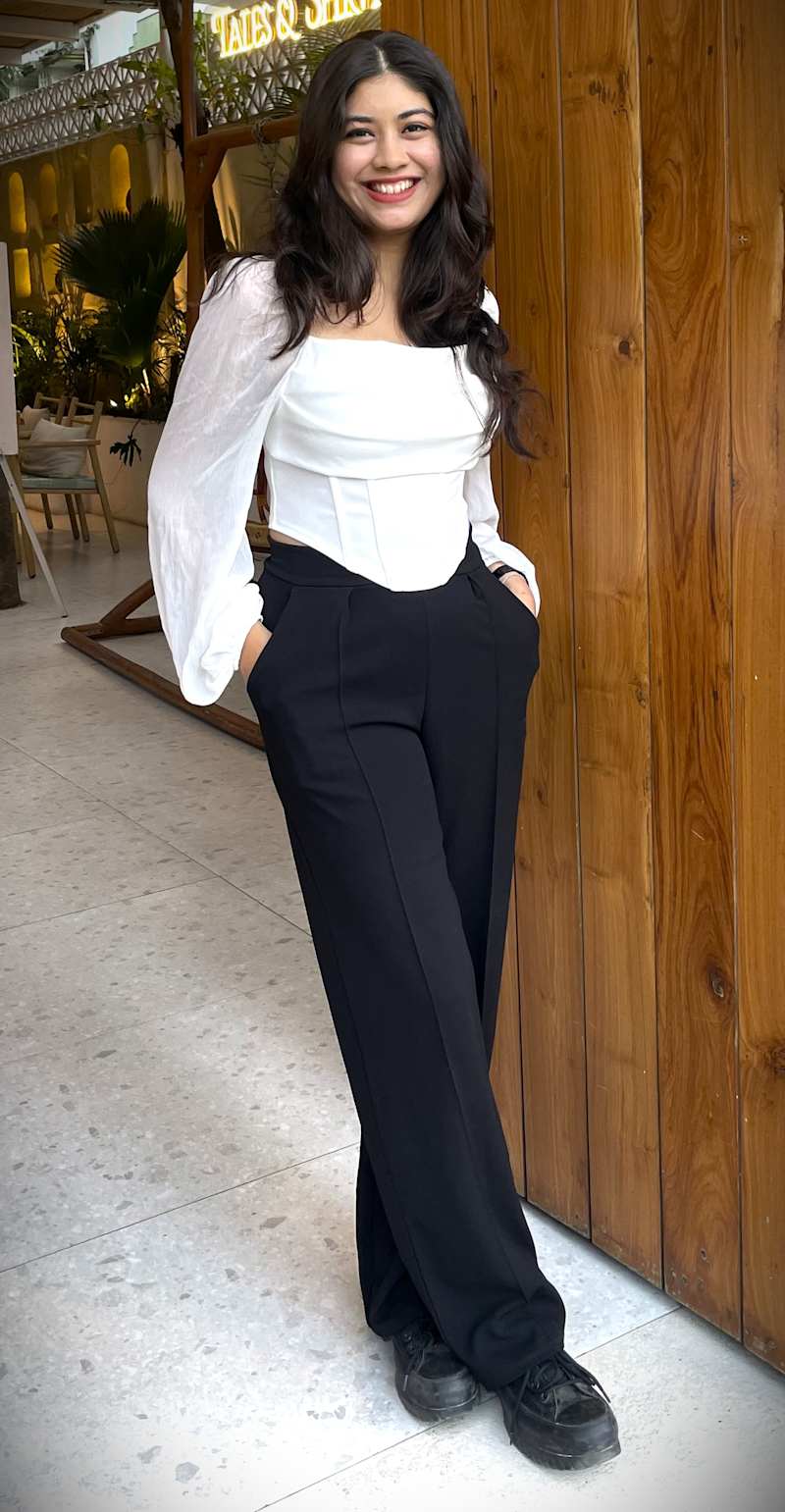
Prachi Pansare studied MA Narrative Environments at Central Saint Martins, graduating in 2025. An architect and multidisciplinary designer, her practice bridges production design, art direction and spatial storytelling, with a focus on how environments communicate beyond function.
Please can you tell me a little bit about yourself?
Prachi is an architect and multidisciplinary designer with a background in production design and art direction. Passionate about crafting immersive experiences through the fusion of art, architecture and narrative. Across architecture, set design, and exhibition curation contexts, her work explores how spatial design shapes human experiences.
Why did you choose to study MA Narrative Environments at Central Saint Martins (CSM)?
After graduating in architecture, I worked across architecture, urban design, and later moved into set design and art direction. Through professional practice, I began to recognise the importance of expanding my architectural training within a more experimental, interdisciplinary environment. It also made me realise that I wanted to explore space beyond function, as something that communicates stories, values, and emotions.
MA Narrative Environments offered a unique opportunity to investigate spatial storytelling that extends beyond the human centred perspective, encompassing relationships with living and non-living entities alike. It allowed me to question how environments are experienced rather than simply how they are built. I was particularly drawn to the course’s emphasis on storytelling, research, and critical thinking, alongside an academic internship. The course encouraged me to think critically about human behaviour, memory, and perception, and to experiment freely across disciplines. The guest lecture series at CSM further broadened my perspective, helping me understand where my skills could be applied across different creative industries. The course aligned closely with my interests and allowed me to deepen my theoretical, humanistic, and design-based approach to space.
What have you been working on since graduating?
Since graduating, I have been freelancing across art direction, production design, and curation. I worked as an Art Director for a local magazine based in Belsize Park, London. I am currently working as an Assistant Production Designer on feature films in both Mumbai and London. Regardless of context, whether film, exhibitions, or architecture, creating spatial experiences remains central to my practice.
What was the most interesting project you worked on during your time in the course?
Two projects were particularly influential. The first was the New Balance project, a collaboration with MA Industrial Design, which taught me how to work within multidisciplinary teams and negotiate ideas across different design languages.
The second was my Major Project, Slow Blooming: Stories of Female Workers in Kew Gardens. Through research, storytelling, and spatial experimentation, this project helped me understand the power of narrative in shaping spatial experiences. During this time, the seeds of my growing interest in exhibition design as a career were initiated.
What important piece of advice would you give to students thinking of studying this course?
MA Narrative Environments offers far more than conventional design learning. From collaborative projects to the freedom to express and test ideas, it prepares you for diverse professional conditions. My advice would be to fully embrace everything the course offers — work hard, stay curious, and be kind to the people around you. Design is not a linear or formulaic process; it requires research, exploration, and resilience. Be prepared to carve your own path and trust the process.
What was the highlight of your Central Saint Martins experience?
The time during the prototyping for the major project and the Work in Progress Show. During this time, I spent much of my time on intense experimentation and prototyping — translating conceptual ideas into tangible outcomes through techniques such as projection mapping, physical model-making, and digital-to-physical workflows. Spending time testing, refining, and understanding the details of execution was both challenging and deeply rewarding.
What is the most important thing you learnt on the course?
I learnt that design has the power to shape culture, society, and future narratives — but it cannot exist in isolation. Meaningful design requires a holistic understanding of context, people, process, and collaboration. The course reinforced the importance of thinking critically, working across disciplines, and grounding creative ideas.