

On 20 January 2026, Central Saint Martins welcomed colleagues and students from the Institute of Science Tokyo for Creativity Moves - a day of workshops, dialogue and experimentation that brought together design, science and embodied practice in a shared space of inquiry.
The Science Tokyo delegation included twelve representatives from Japanese companies currently enrolled in the Hybrid Innovation program, the executive training course delivered by CSM and Science Tokyo for Japanese industry partners - shortlisted last year for the UAL Staff Knowledge Exchange award.
Rather than a conventional academic exchange, the event unfolded as a live demonstration of how creative practice operates at CSM: not simply as output, but as method, as research, and as a catalyst for transformation.
A workshop-led encounter
Creativity Moves sits within a longer trajectory of collaboration between Central Saint Martins and the Institute of Science Tokyo, through their joint initiative STADHI (Science/Tech and Art/Design Hybrid Innovation) active since 2019 and recently formalized by a MOU between our institutions.
The event included the first pilot collaboration between the Hybrid Innovation industry representatives, PhD students from Science Tokyo and students from MA Industrial Design (MAID) This highlighted that the exchange wasn’t just a teaching activity, but a shared space where research, student work and industry perspectives came together, reflecting the Knowledge Exchange at the heart of the project.
The day began with a tour of CSM facilities, followed by a presentation by Jesús Felipe Querol and MAID students. The afternoon was structured around participatory workshops that foregrounded doing, sensing and testing ideas in real time.
Dr Anna McDonald, Reader in Movement, led an embodied session exploring the conditions that shape our creative ‘elbow room’ - the invisible forces that either restrict or expand how we think and make. Participants from across disciplines engaged physically with a series of prompts, using movement as a tool for sensing space, embodiment and reflection.
“I was struck by the generosity and insight with which participants engaged,” she noted. “It is a bold step to bring dance into dialogue with science and design, and one that opens up new ways of understanding creative practice.”
Richie Manu, Programme Director of Creative Enterprise, facilitated an interactive workshop titled ‘Being Curious’. Using evocative objects that participants had been asked to bring with them the session invited the audience to reflect on curiosity as both a mindset and a method for innovation.
Delivered with live translation, the event unfolded in deliberate fragments - a pacing that, rather than slowing the room, deepened engagement.
-
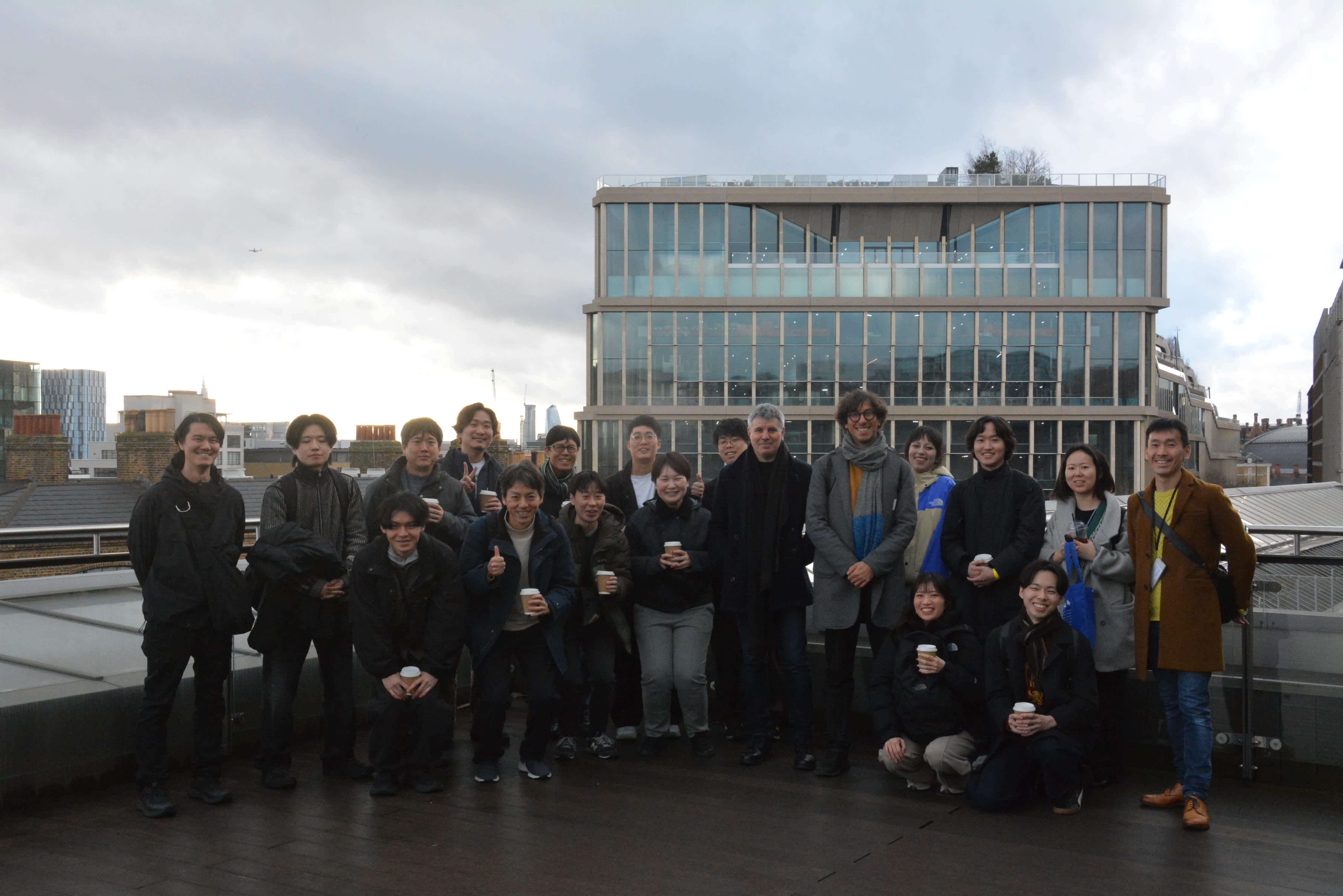
Image courtesy of TiTech x CSM STADHI
-
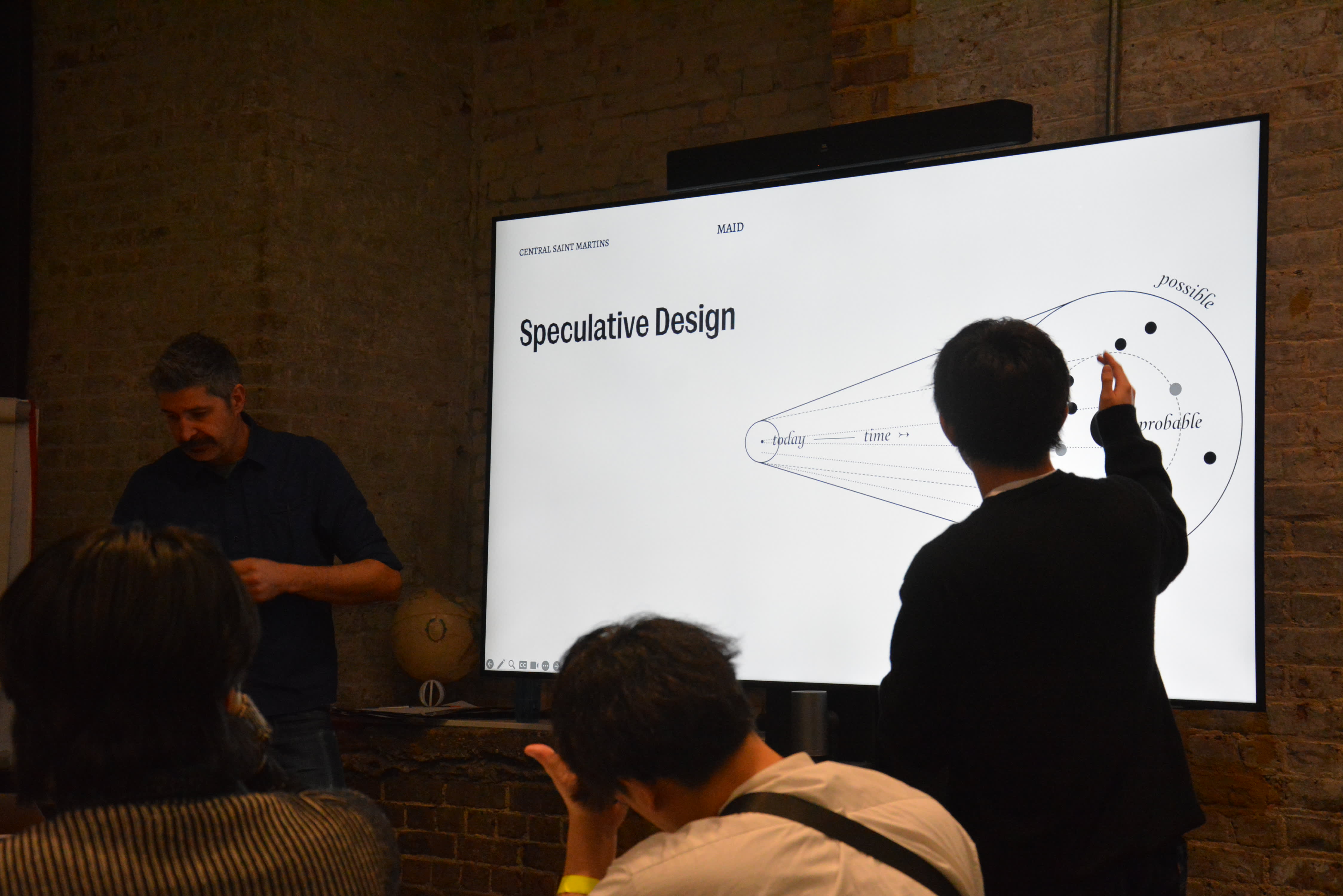
Image courtesy of TiTech x CSM STADHI
Creative translation and a shared ecosystem
Professor Kayoko Nohara, STADHI director,described this partnership as rooted in ‘creative translation’ - a practice that moves beyond language to operate across disciplines, cultures and forms of knowledge. Rather than reproducing meaning, creative translation re-articulates it. It embraces friction, difference and even discomfort as necessary conditions for learning and innovation.
Over nearly a decade, this collaboration has grown into a transdisciplinary ecosystem encompassing design projects, residencies, academic research and industry engagement -
With the Institute of Science Tokyo’s recent designation within Japan’s Universities for International Research Excellence (UREx) programme, and the launch of its Visionary Initiatives — a vision-led, cross-disciplinary framework designed to integrate education, research, and societal application, the partnership is entering a new, more expansive phase, opening up significant opportunities for deeper collaboration, experimentation, and impact.
Student collaboration and exchange
Alongside staff-led sessions, MA Industrial Design students played a central role in the exchange, engaging directly with their counterparts from Tokyo and industry partners.
Jesús Felipe Querol reflected on the significance of this interaction: “What felt most rewarding was seeing our students confidently positioning themselves as designers who can actively contribute to projects being developed by Tokyo’s students in the knowledge exchange context of Hybrid Innovation.”
For the students themselves, the experience was both creatively and culturally generative. Elizabeth Maggio-Kotkowska highlighted the challenge and richness of communicating across languages while tackling complex global issues, while Lara Potma noted how live translation shaped a “unique exchange” that deepened the collaboration.
Rafi Shaikh reflected on the encounter as an opportunity to see familiar design questions reframed through fresh perspectives: "engaging with speculative approaches to wellbeing that challenged conventional methods and opened new directions for his own practice".
-
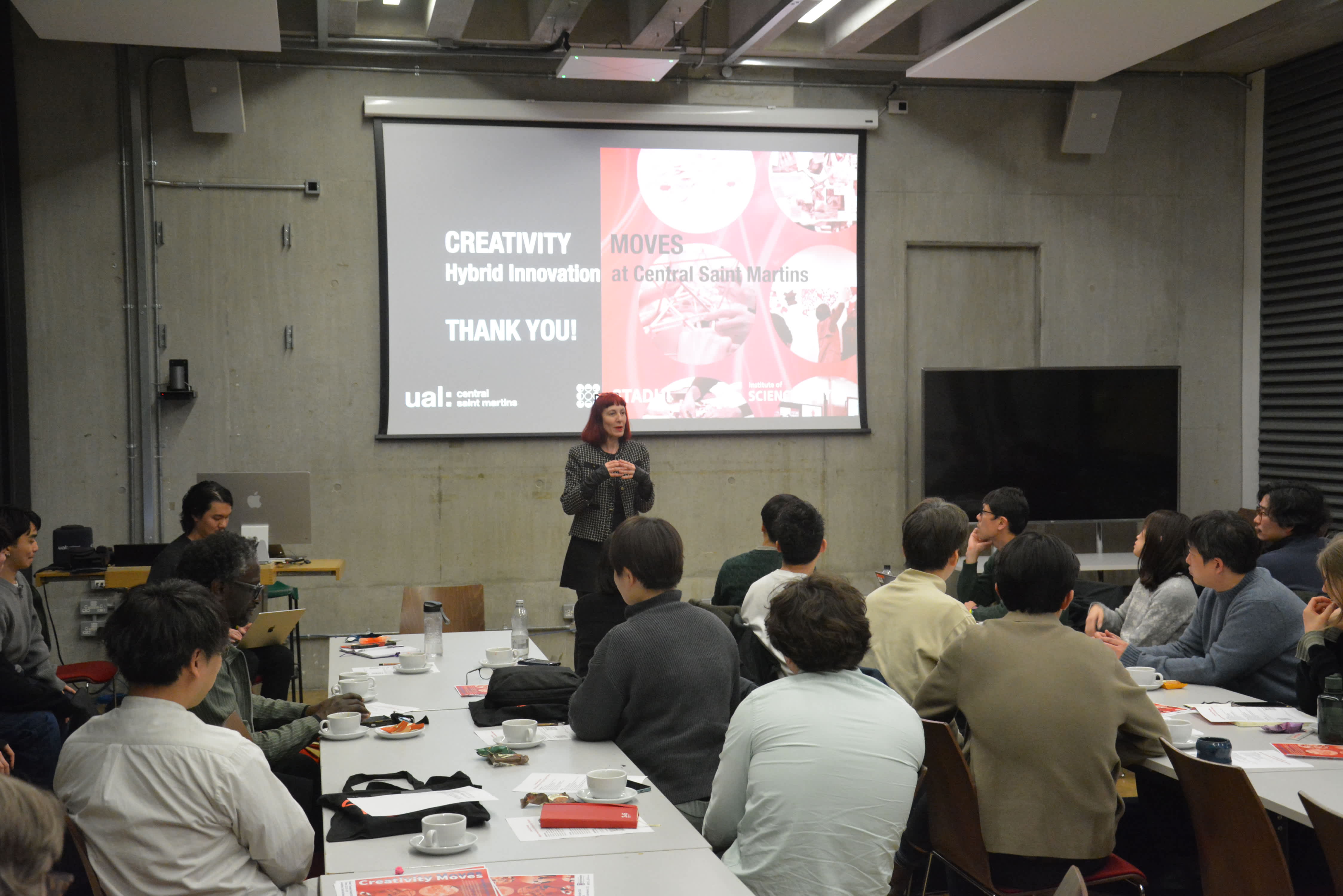
Image courtesy of TiTech x CSM STADHI
-

Creativity Moves: Hybrid Innovation. January 2026. Photography by Joy Kirigo.
Building futures through practice
Creativity Moves ultimately demonstrated that transdisciplinary collaboration is not a fixed model but an ongoing practice - one that requires time, trust and a willingness to remain open to uncertainty.
By foregrounding workshops, embodied inquiry and student exchange, the event made visible the processes that underpin meaningful collaboration between disciplines, institutions and cultures.
As this partnership continues to evolve, it offers a compelling model for how design education can respond to increasingly complex global challenges: not by simplifying them, but by creating the conditions to think and make across differences.
Danielle Knight, Knowledge Exchange Manager, expanded this conversation by situating creativity within CSM’s wider ecosystem of partnerships:
“We work with local laboratories, charities and community hubs, national forests and museums and build international research and innovation networks shaping the future of craft, hospital design and the footwear industry. Everyone we work with has valuable insights to share based on their own lived experience.”
For Dr Betti Marenko, Reader in Design and Techno-Digital Futures and organiser of the event, the workshop format was essential.
“At a moment when ‘transdisciplinarity’ is often invoked as a buzzword, it felt vital to show what it actually looks like in practice: slow, negotiated, sometimes messy, always relational.”
Rather than seeking alignment, the event created a “charged space of encounter” where difference was not smoothed over but actively worked through. This approach reflects a broader ethos within CSM - one that values process, trust and complexity over speed or easy resolution.
-

Creativity Moves: Hybrid Innovation. January 2026. Photography by Joy Kirigo.
-

Creativity Moves: Hybrid Innovation. January 2026. Photography by Joy Kirigo.