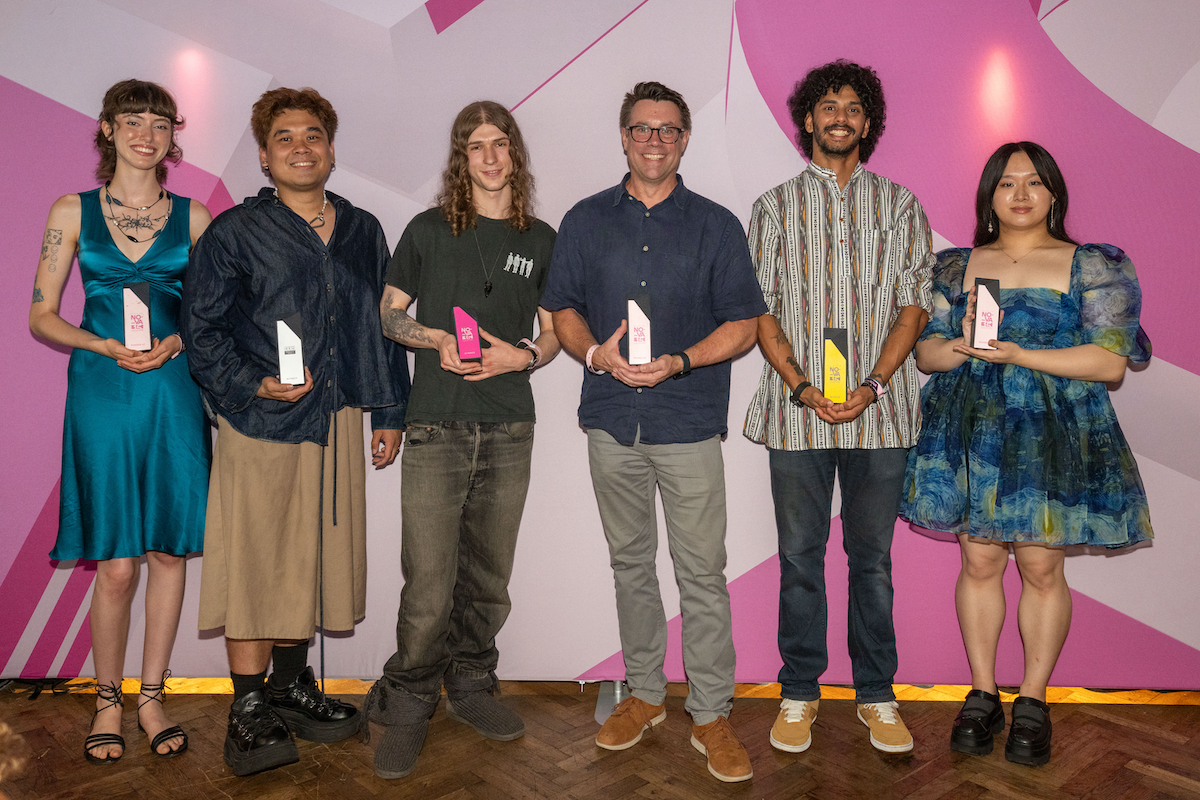
Six graduating students spanning Industrial Design, Character Animation, Architecture, Regenerative Design and Material Futures are recognised with MullenLowe NOVA Awards for their final projects at Central Saint Martins.
The winning projects explore the impact of AI on craft in the digital age, in a fashion influenced by British designer, William Morris’ socialist and ecological ideals. A three-and-a-half-minute animation that tells the timeless story of the courage it takes to be ourselves in a world which wishes to define us. A machine that re-valorises urine by growing the superfood spirulina with it. Self-decomposing ink born from fungi-based pigments and bacterial spores. Delicate replications sketching out what a community-owned, community-led epicentre for collective spatial stewardship and active participation in urban governance, could look like. And stickers that make snow, providing mountain sports enthusiasts and locals with a passive solution that helps regenerate natural precipitation patterns.
NOVA Award winner
Max Park, MA Industrial Design, Prompting Nowhere
YourNOVA People's Choice
Tanay Wadodkar, MA Material Futures, Snow Seeds
Runners up
Felix Cheng, MA Character Animation, Doll Searching
Beth Gavine, BA Architecture, The Palatial Commons
Mark Hester, MA Regenerative Design, re:SOURCE – Redefining our Place in the Nutrient Cycle by Re-valorising Urine
Country & Townhouse Regeneration Award
Peerasin Punxh Hutaphaet, MA Material Futures, GROWinK
NOVA WINNER 2025
Max Park, MA Industrial Design, Prompting Nowhere
The designer, poet, activist, and author William Morris published News from Nowhere in 1890, imagining his romantic vision of a future Britain rooted in socialist and ecological ideals. In Nowhere, there is time for everything; people approach life and work as artists and craftspeople. Morris argues that the world becomes not only more just but also more beautiful as a result. This vision stood in stark contrast to the Victorian London he was witnessing during the height of the Industrial Revolution—and to the London we see today.
Like Morris, I found myself yearning for this seemingly lost future and the freedom to craft. My initial intention was to imagine myself as an inhabitant of Nowhere, practising what I thought to be crafts: weaving, printing, and woodworking, to name a few. But when faced with the realities of modern production and consumption, this idealised approach felt both futile and privileged. My research shifted towards interrogating not simply the technologies that shape us, but rather the environments they create in our collective consciousness.
-
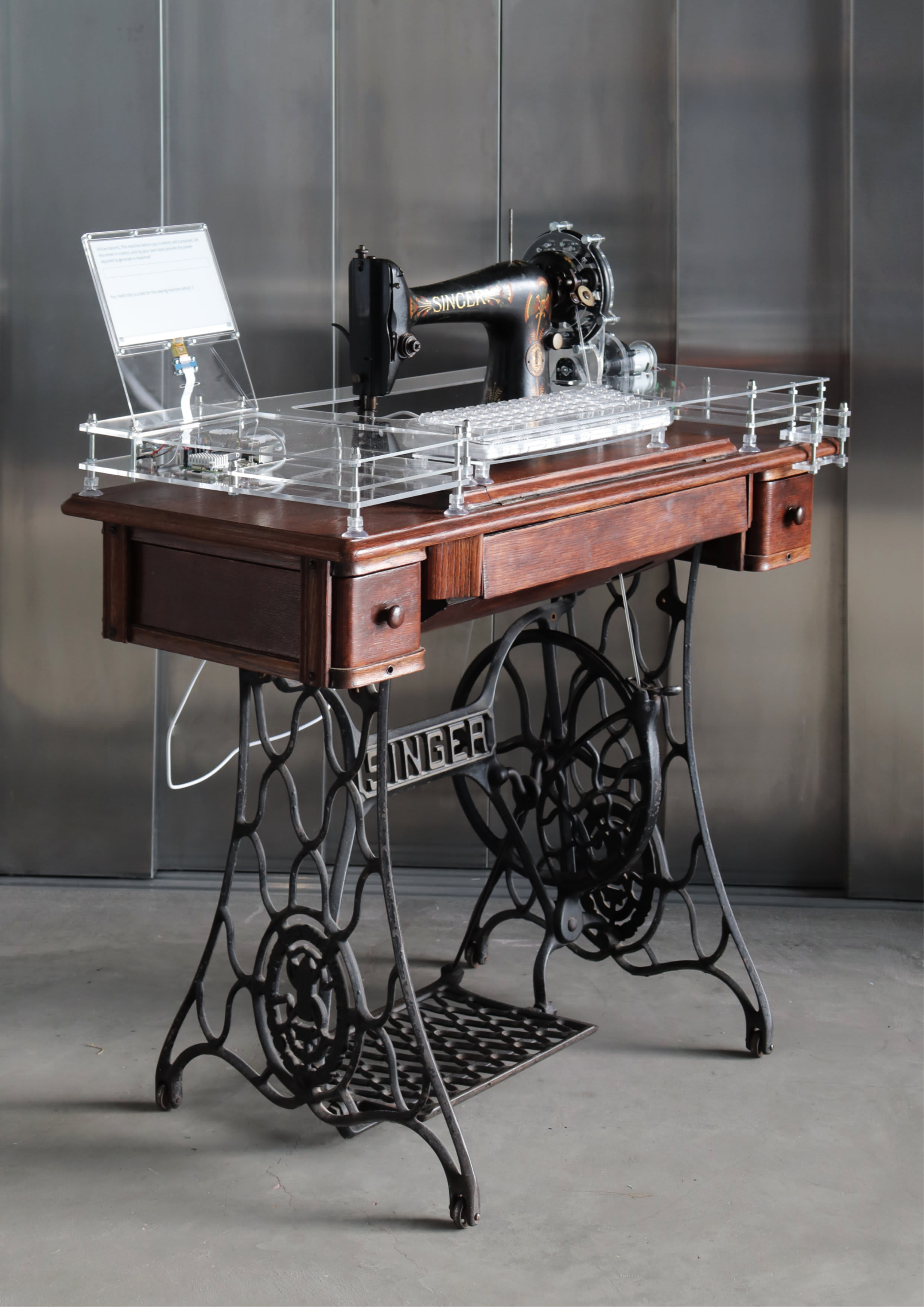
Prompting Nowhere. Max Park, MA Industrial Design
-
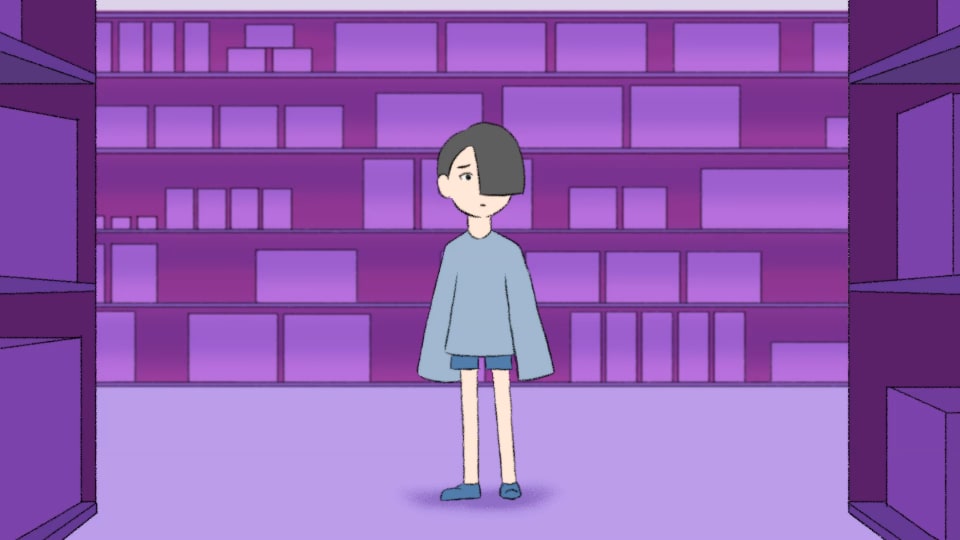
Still 2 Felix Cheng
-
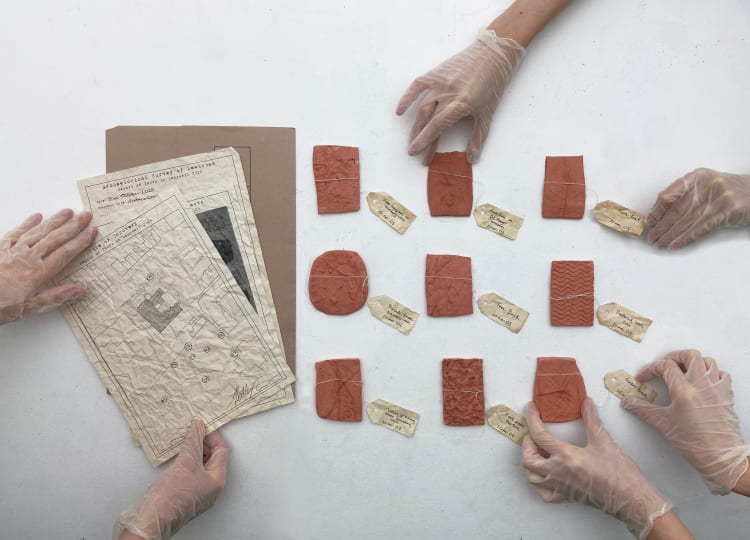
Site exploration - Beth Gavine
-
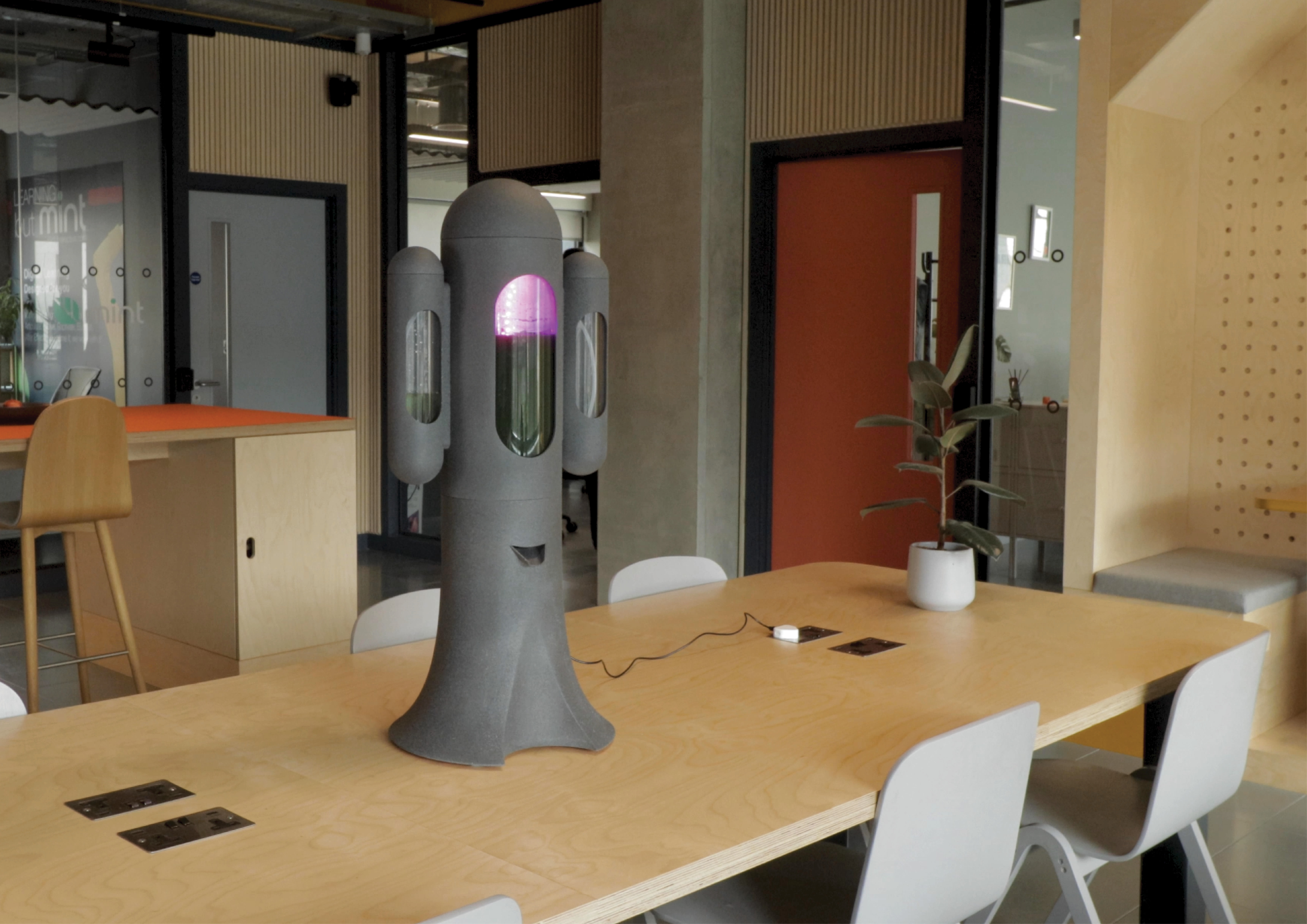
re:SOURCE - Redefining our Place in the Nutrient Cycle by Re-valorising Urine. Mark Hester, MA Regenerative Design
-
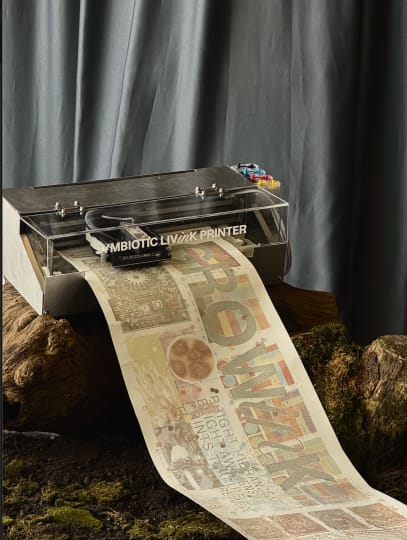
Outcome 4 - Peerasin Hutaphaet
-
Runners- up
Felix Cheng, MA Character Animation, Doll Searching
A three-and-a-half-minute animated film that tells the story of a boy going into a toy store and trying to find the perfect thing to play with, which in the end is a doll.
This film was inspired by my own experience as a boy wanting to buy a toy doll when I visited the shops. While making the film, I reflected on how I felt at that time and how I acted when trying to sneak a look at the doll aisle. I remember the anxiety I felt when people were watching me, but also the excitement when I finally got my hands on the dolls. There was a rush of awe as I looked at them, completely enthralled and lost in my own world.
Beth Gavine, BA Architecture, The Palatial Commons
The project suggests a marriage of disorderly forms and emergent architecture designed in correspondence with local networks to establish relationships of mutual aid and exchange. Giving grandeur and regality back to the ordinary and everyday, The Palatial Commons imagines a community-owned, community-led epicentre for collective spatial stewardship and active participation in urban governance.
London’s social and cultural infrastructure is at risk and has been disappearing rapidly in recent years. The decisions around what architecture deserves value and should be protected do not often lie with the people who actually need and use these spaces. Through witnessing the urban issues in Lewisham of glossy, ridged new skyscrapers which create a closed and exclusive public realm, alongside derelict abandoned buildings that have been left to rot, it felt that the people who lived there did not have much of a say as to how their neighborhoods developed around them. It was in the hands of investors and developers who often show a disconnect from individuals' genuine needs.
Mark Hester, MA Regenerative Design, re:SOURCE – Redefining our Place in the Nutrient Cycle by Re-valorising Urine
re:SOURCE explores a regenerative future where nutrients from human urine are re-valorised into useful products rather than being flushed away. At the heart of the project is a machine that grows the superfood Spirulina using urine, inviting people to explore their own relationship with the nutrient cycle.
Most people don’t realise that their urine is a powerhouse of nutrients like nitrogen and phosphorus, which get there through the food we eat. That food was grown using fertilisers made with those very same nutrients. In the case of phosphorus, fertiliser manufacturers source it by mining finite rock formations in a handful of geopolitically unstable regions, creating a vulnerable supply chain. At the same time, the phosphorus in our pee gets into the environment through leaky wastewater treatment systems, where it builds up in excess and contributes to mful algal blooms.
YourNOVA People's Choice Award winner
Tanay Wadodkar, MA Material Futures, Snow Seeds
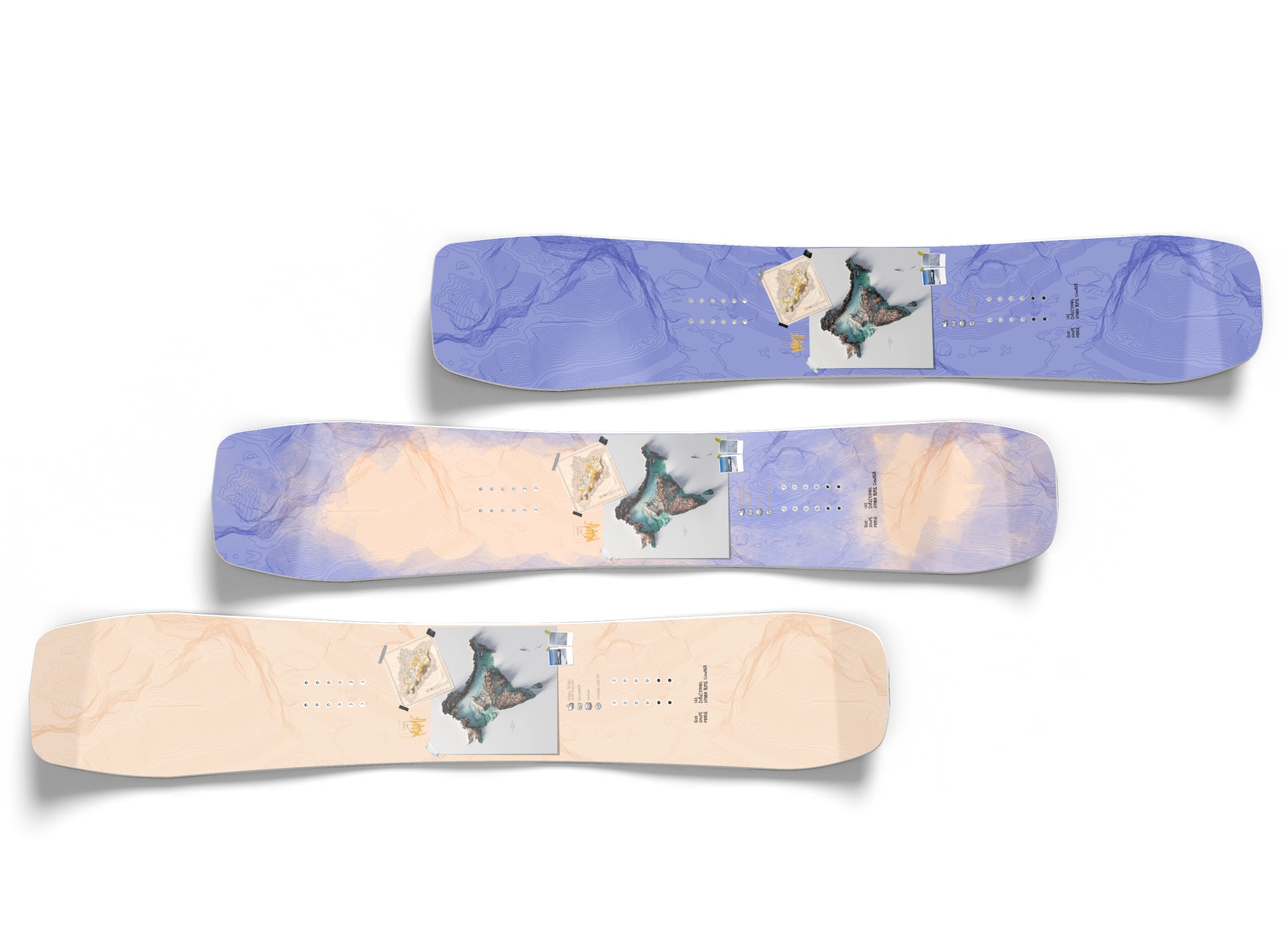
Snow Seeds are stickers that make snow. Harnessing cloud seeding technology, the aim is to provide mountain sports enthusiasts and locals with a passive solution that helps regenerate natural precipitation patterns.
We have seen the effects of climate change disproportionately affect mountain communities, many dependent on reliable snowfall and precipitation for their livelihoods. The consequences of changing snowfall quality and quantity are shrinking snow seasons, impacting the lives of local communities and economic activity in the region, with many greater effects downstream. The climate crisis has made it imperative for communities to adapt their activities to these changes, with most communities doing so. Still, there needs to be solutions to mitigate and reverse the effects of the climate crisis, and regenerative practices are the way forward.
Country and Townhouse Regeneration Award winner
Peerasin Punxh Hutaphaet, MA Material Futures, GROWinK
GROWinK transforms CMYK printing into a living, regenerative medium. Fungi-based pigments and bacterial spores activate in moisture, evolving prints that fade, decompose, and nourish soil ecosystems. This self-decomposing ink redefines printing as a living interface, turning colour and communication into real ecological action within nature’s cyclical rhythms.
My background is in Visual Communication, and I’ve always been passionate about printing, graphic illustration, and creating visuals that inspire a better world. But I began to wonder what if these messages could do more than just be seen? What if they could actually take real action? Instead of creating new materials, I wanted to design something that could break down what already exists. That led me back to nature, where creation and destruction work together to keep the ecosystem balanced through the roles of bacteria and fungi.
The first prize, runners up and the Country & Townhouse Regeneration Award were decided by the jury. The YourNOVA People's Choice Award was voted for by the public.
2025 Jury:
Jose Miguel Sokoloff (MullenLowe Global Creative Council),
Robert Taylor (Queer Britain),
Bimini (Drag Queen, Author, Recording Artist & Model),
Nuria Hernández (Unilever),
Eitan Senerman (Spatial Innovation),
Edeline Lee (Fashion Designer),
Carmen Mariscal (Artist, Researcher & Theatre Set Designer),
Jai Clarke-Binns (Google DeepMind),
Emma Marsh (Country & Town House),
Kemi Anthony (IKEA).
-

MullenLowe NOVA Awards 2024
-

Design by Tripoom Chongpanisook, Jidapa Charoenchokekitti and Arthur Yu, BA Graphic Communication Design. 2025
-

Design by Tripoom Chongpanisook, Jidapa Charoenchokekitti and Arthur Yu, BA Graphic Communication Design. 2025