Fuensanta Soriano
Profession
MA Arts and Cultural Enterprise alum
College
Central Saint Martins
Person Type
Alumni
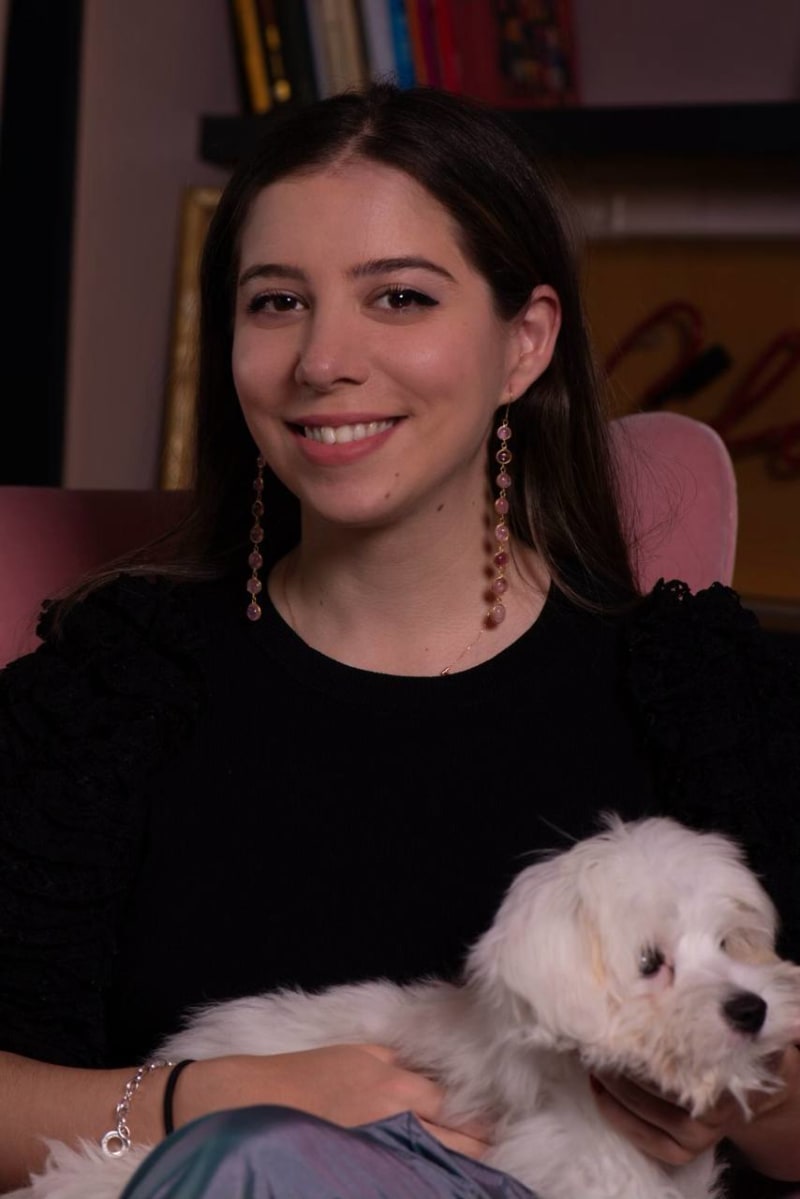
Fuensanta, originally from Spain, moved to London in 2018 and is now Senior Patrons Manager at Tate, working across both Tate Modern and Tate Britain. She studied MA Arts and Cultural Enterprise at Central Saint Martins.
Please can you tell me a little bit about yourself?
My name is Fuensanta Soriano López (or Fuen Lopez, to make things easier!) and I am currently Senior Patrons Manager at Tate (across both Tate Modern & Tate Britain), although, my background is in Conservation and Restoration of Cultural Heritage, which I studied at the University of Granada as my undergraduate (from 2011-2015). Over the years, I have built an international career that combines restoration, gallery management, design, creative direction, and cultural strategy, nevertheless, since moving to London in 2018, I find that there has been a shift in which I have leaned on working with artists, institutions, collectors, and cultural organisations across the UK. Today, my focus is on cultivating meaningful relationships with patrons, designing immersive cultural programmes, and building bridges between audiences and institutions.
Why did you choose to study MA Arts and Cultural Enterprise at Central Saint Martins (CSM)?
I chose the course because it reflected both the reality and the future of the cultural sector: a fast-changing, globalised landscape where the focus has shifted from the object to the experience. I was drawn to the programme’s balance between critical theory, strategic business knowledge, and cultural innovation, as well as its strong emphasis on ethics and social responsibility. For me, it was the perfect space to connect my practical experience with a deeper understanding of how cultural projects can be managed, scaled, and sustained on a global level.
What have you been working on since graduating?
I did the entire course while working full time at a renowned UK based artist studio, and, coincidentally, moved on to Tate shortly after submitting my dissertation. Since graduating, I have stepped up as Senior Patrons Manager, where I work with an incredible team on leading the strategy and delivery of the museum’s patrons programme. This includes curating an annual calendar of bespoke events, among them cultural trips and behind-the-scenes experiences with curators. My role also involves developing high-level relationships with patrons, managing budgets, and collaborating closely with colleagues across curatorial, events, and operations teams. It is an incredibly dynamic position where I can apply both my academic learnings and my professional background to strengthen Tate’s mission.
What was the most interesting project you worked on during your time on the course?
The course was so dynamic that I genuinely enjoyed every project I worked on, each for different reasons. Because I did not have a clear idea of what my final project would be at the start, I decided to push myself out of my comfort zone with every submission. For Unit 3, for example, I explored the fast fashion ecosystem and the greenwashing strategies used by companies like Shein to mislead consumers into believing they are sustainable. I contrasted this with a Spanish slow fashion brand that creates affordable collections from recycled materials, primarily plastics collected from the ocean (and drew some fascinating conclusions from the comparison).
Equally valuable were the many collaborative moments with my classmates, which I truly treasure. One of the greatest strengths of this postgraduate course is the diversity of professional backgrounds, everyone comes from a completely different corner of the arts, culture, or creative industries, which means there is very little overlap. That diversity makes the learning experience incredibly enriching. One project I am particularly fond of was Unit 4, where we worked in groups to design and launch an actual enterprise during the intensive weekend. It was fascinating not only to see the different ways of thinking within my group, but also to witness the originality and ambition of the other teams’ ideas.
What important piece of advice would you give to students thinking of studying this course?
Be open and adaptable. This is not a traditional course, it pushes you to think differently, to collaborate across disciplines, and to challenge your assumptions about the cultural sector. Take advantage of the diversity in your cohort: your peers’ experiences and perspectives are one of the richest parts of the programme. And finally, apply everything to your own practice. The course gives you tools, but it will always be up to you to use them to shape your future path.
What was the highlight of your Central Saint Martins experience?
Unfortunately, being a part time course (and mostly online), I think I did not get to experience the full on Central Saint Martins experience, other than on those Fridays in which we would have the intensive weekends – which is a treat because the arts shop is open, all the students from all the courses are around, the library is packed and the building is truly alive. Nevertheless, this means that the highlight was the incredible diversity of people I met. My cohort brought together professionals from all over the world with their own perspective, and our tutors/professors and guest speakers were all sensational.
The conversations we had, both in and outside the classroom, were inspiring and often as valuable as the course content itself. Those exchanges created a network I know will last for years.
What is the most important thing you learnt on the course?
That cultural enterprise is not just about managing projects, it is about leadership with purpose. The course taught me how to think strategically and globally, but also how to ground my decisions in ethics, sustainability, and social impact. That balance between creativity, strategy, and responsibility is the most important takeaway I carry into my professional life.
Follow Fuensanta on Instagram