Undergraduate

BA (Hons) Fashion Public Relations and Communication

Start date:
September 2026
Application deadline:
14 January 2026, 6pm (GMT)
College:
London College of Fashion
Fees:
£9,790 per year (Home) £30,890 per year (International) Fee details
UCAS code:
4T39
Course length:
3 years (optional 1 year placement)
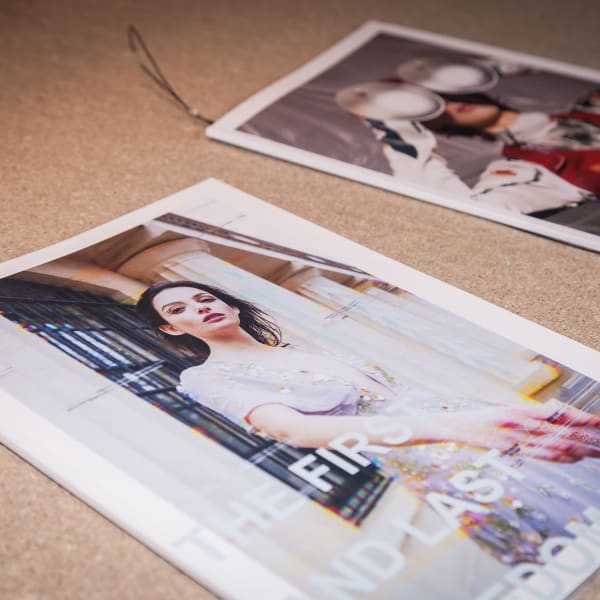
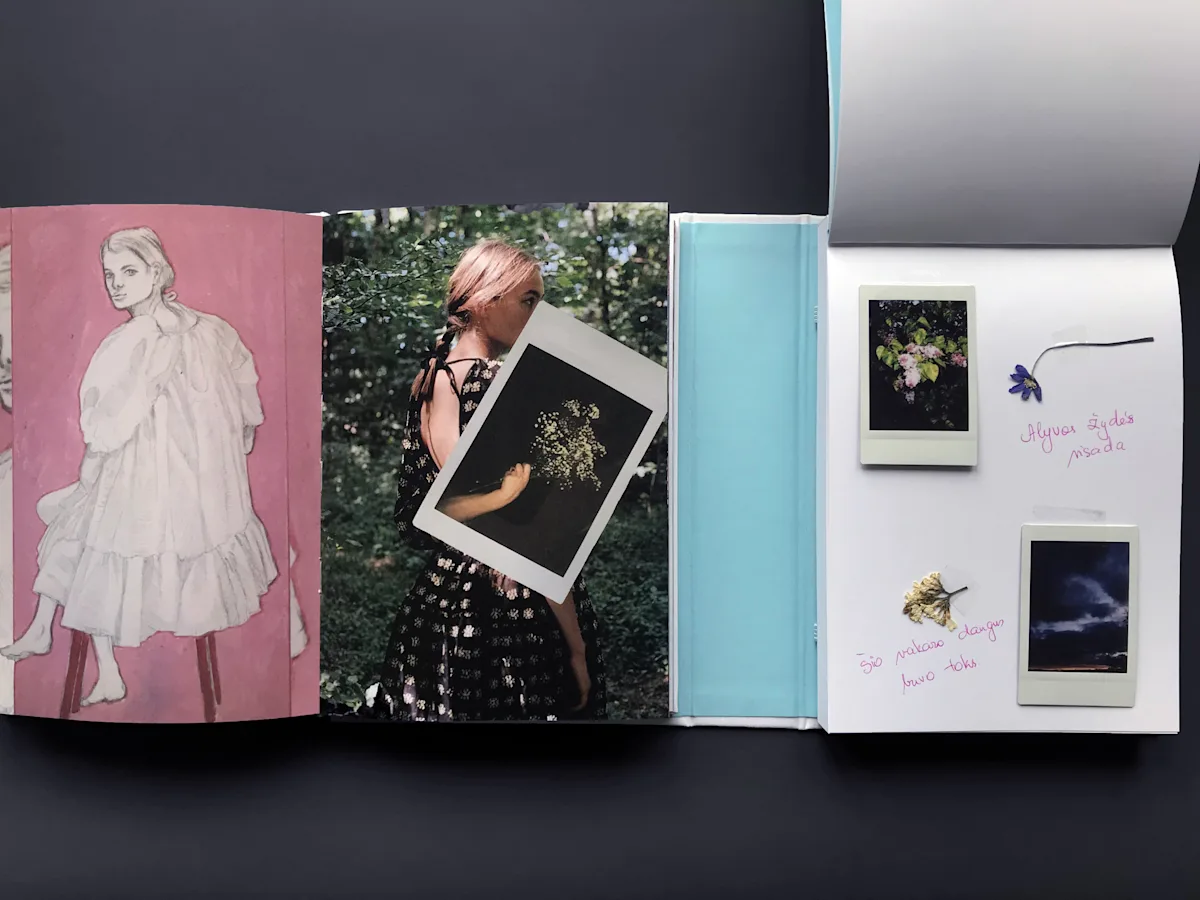
Student workbook with photos and notes.
Cecilie Bahnsen campaign by Sigita Bendikaite | BA (Hons) Public Relations and Communication | London College of Fashion | University of Arts London

Understand the fashion industry and immerse yourself in the evolving communications landscape, creating compelling campaigns that target press and consumers alike.

Course summary

Applications closed 2026/27 

We are no longer accepting applications for 2026/27 entry to this course.

Why choose this course at London College of Fashion

  • Fashion specific: As the only specialist undergraduate fashion public relations and communication course in the UK, you will learn about public relations methods and case studies specific to the fashion and beauty industries.
  • Industry Links: Learn from academics with strong experience in the industry, alongside industry practitioners and alumni. You will also work on live industry briefs to put theory into practice.
  • Work experience: Develop your professional practice through a work placement, giving you work experience as part of the course, preparing you for life after graduation.
  • Collaborate: Work on projects with students from other courses, simulating industry practice and offering networking and community building opportunities.
  • Employability: Alumni now work at in-house and agency positions including The Communications Store, Karla Otto, Celine, Vogue, The Woolmark Company, Dior Homme, Bottega Veneta, Hermes and DH-PR.

Upcoming Open Days and Virtual Events

Fashion Business, Media and Communication Open Day, Saturday 17 October

Can't make it?

Join our Discovery Webinar: Studying at LCF virtual event on Thursday 24 September.

Or visit us in person on one of our College Tours, running every Wednesday.

Check your eligibility for UAL’s Travel Bursary.

Global experiences

This course offers the opportunity to study abroad for a semester or short-term (subject to meeting requirements). Going abroad as part of your degree is an exciting experience that helps you to build a global network. At LCF we have a range of partners across the world, including the USA, Australia, Italy and more.

Scholarships, bursaries and awards

Use our scholarship search to discover if you are eligible for any scholarships, bursaries or awards.

Course overview

Introduction  

BA (Hons) Fashion Public Relations and Communication will equip you with the necessary knowledge and skills to develop a career in communications within the fashion industry. The course aims to prepare you with an understanding of the urgent challenges affecting society at large in terms of climate change, social and racial justice.  

This will influence your ability to create meaningful communication campaigns and messaging for brands and organisations, that respond to the shifting concerns of their consumers and other stakeholders.   

You’ll gain valuable insights into the importance of building strong brand communities and develop experience in adapting the use of various channels to nurture these relationships.  

What to expect  

  • Diverse teaching methods: Learn through a combination of lectures, seminars, open studios, peer-led asynchronous activities and tutorials, which are structured to allow for part-time work and work-experience opportunities.  
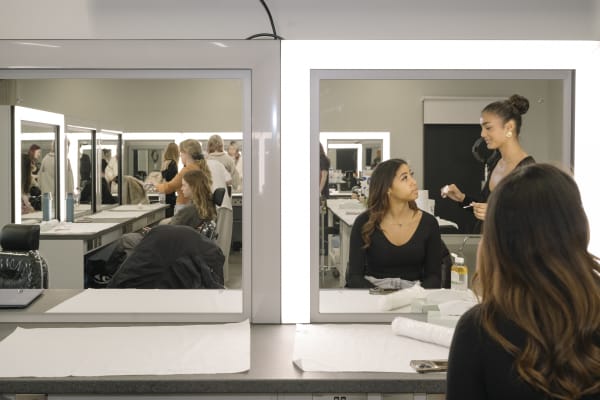
  • Additional technical workshops: Benefit from specialist workshops to develop your InDesign, Photoshop, styling and moving image skills.  
  • Collaboration: Participate in cross-course collaborative units to experience content beyond your discipline and network with students from other courses.  
  • Gain a holistic view of fashion communication: Explore the discipline from a theoretical, cultural, social and business perspective as part of the Fashion Cultures and Histories unit. 
  • Specialist support: Learn from a course team of industry specialists and benefit from language, academic and employability support throughout your studies. 

Work experience and opportunities 

You will engage with live industry briefs and Knowledge Exchange projects during your degree. You will have an opportunity to undertake an optional short term work placement or a year-long placement between the second and final year of the course. Both will enhance your employability by offering valuable experience and contacts within the industry; while the year-long option will allow you to earn an additional Diploma in Professional Studies qualification.  

Mode of study  

BA (Hons) Fashion Public Relations and Communication runs for 90 weeks in full time mode. It is divided into 3 stages over 3 academic years. Each stage lasts 30 weeks.  

Climate, Social and Racial Justice  

UAL’s Principles for Climate, Social and Racial Justice are embedded throughout the course. 

Contact us

Register your interest to receive information and updates about studying at UAL.

Register your interest

Contact us to make an enquiry.

Course units

Stage 1 (Level 4) 

The first year of the course allows you to familiarise yourselves with the key components of fashion communication and introduces you to the global media landscape.  All modules are compulsory and in addition to core units, you will be provided with technical and academic support to enhance your creative competency and research skills.   

The units you will study in Year 1, Stage 1, Level 4 are as follows: 

Introduction to Fashion Communication (20 Credits) 

In this unit you will be introduced to your course, its subject specialism and effective learning at undergraduate level. You will learn the practices and knowledge base needed to understand your discipline, and develop skills for independent and collaborative learning, reflection, and self-development. 

Fashion PR and Branding Principles (40 Credits)  

You will be introduced to PR and branding methods in the fashion industry, framed by global perspectives and understand their intrinsic relationship to the media. In a group, you’ll formulate a brand concept and develop storytelling techniques that advocate positive change. You’ll also produce an individual submission to demonstrate your knowledge of the media and its interdependence within the field of public relations. 

Fashion Cultures and Histories (20 Credits)  

You will take a philosophical and theoretical approach to the study of fashion and its role in representing and communicating identity. Understand key ways of thinking about fashion across its cultural, historical, social and political contexts. Engage in debate and analysis of fashion as a key marker of social and cultural change and a means of understanding the relationship between individuals and communities.  

Fashion Experiences: Concept and Communication (20 Credits)  

Explore how brands develop seasonal presentations to promote fashion collections on a global stage. Working in groups, you will experiment with creative methods to develop an event concept and communication strategy that is reflective of industry practices and appropriate for both your brand and audience. Individually you will assess the environmental and social impact of fashion weeks and reimagine a more equitable future for fashion week. 

Fashion Communication: Community of Practice (20 Credits) 

In this unit you will develop your understanding of the fellow disciplines in the Fashion Communication programme. You will consider how this community of practice can contribute to a more socially conscious future and produce a proposal for a project that promotes change making through collaboration. 

In Stage 1 you are required to complete 120 credits at level 4 in order to progress to Stage 2. 

Stage 2 (Level 5) 

Year 2 focuses on the development of professional skills and provides the opportunity for you to consolidate skills gained so far and apply to an industry context. You are provided with further opportunities to enhance your technical skills and network with peers and industry.  

The units you will study in Year 2, Stage 2, Level 5 are as follows: 

Critical Issues in Fashion Research (20 Credits)   

Expand your critical understanding of fashion in a global context and examine emerging debates in fashion research. You’ll engage in collaborative research around current and emerging cultural issues and be guided through researching and writing about fashion across its social, historical, political and cultural contexts, building on the first-year unit Fashion Cultures and Histories. You’ll develop your own independent research path and interests.

Reputation Management and Corporate Strategy (20 Credits) 

In this unit, you will devise, develop, and present a strategic plan in response to a crisis. You will also explore how brands build positive reputations through the crafting and implementation of long-term strategies that consider social and environmental justice. 

Fashion Communication: Situating Your Practice (20 Credits) 

You will explore and develop your fashion communication identity and position yourself within the professional fashion eco-system. You will examine the possibilities available to you now, and in the future, to determine your skills and examine the opportunities relevant to you within the fashion sector. You will consider how your work has purpose, addressing your motivations and values.

Fashion Communication: Professional Practice Placement or Portfolio (20 Credits) 

You have an option to choose: 

  • Placement 

In which you will undertake a short-term placement in industry which is suitable for your own development and career aspirations. The Graduate Futures Placement Team provides support to get a placement and you can directly apply to companies. 

or

  • Portfolio 

In which you will experiment with creative practice and develop an outcome for your portfolio in response to an industry brief. Using a process of design principles, you will define, ideate, and test your ideas with an external audience in mind. There will be support throughout from both academic and industry practitioners. 

Innovation in Communication (40 Credits) 

Explore how brands embrace emerging technologies and current innovations that impact the way fashion communicators tell stories. You will be allocated a brand and undertake research to create a communication campaign reflective of your discipline from concept to realisation. Acquire the skills necessary to produce creative tactics that engage with innovation in the field of communication. 

In Stage 2 you are required to complete 120 credits at level 5 in order to progress to Stage 3. 

Stage 3 (Level 6) 

Year 3 will allow you to focus on your individual practice, through an extended project, preparing you for the transition from student to industry practitioner.  You will develop an ability to manage your own learning and deploy techniques of analysis and enquiry when producing your final year outcomes. 

The units you will study in Year 3, Stage 3, Level 6 are as follows:   

Context for Communication Project (20 Credits)  

Building on research skills already acquired on the course, this unit will broaden your knowledge of primary research skills to enable you to gather valuable insights on a brand of your choice. This unit will allow you to gain specialist knowledge in a particular area to inform the next project as well as enhance your career prospects.  

Creative Industries: Theories and Practices or Fashion Communication: Theories and Contexts (40 Credits) 

You have the option to choose: 

  • Creative Industries: Theories and Practices 

In this unit, you’ll complete an independent research project and engage with industry professionals to learn about current debates and issues that shape and inform cultural production across media, communication and performance. You’ll be encouraged to respond to these debates in the form of an extended essay with supporting research materials. This unit will equip you with critical thinking, literacy and communication skills for both academic and professional contexts. 

or  

  • Fashion Communication: Theories and Contexts 

In this unit, you will examine how fashion operates as a system shaped by relationships between people, bodies, media and technologies. You will apply media and communication theory to a case study of your choice and present your research in a format that best suits your approach. By the end of the unit, you will have developed confident critical thinking, research and communication skills for academic and professional contexts.

Communication Project (40 Credits) 

In response to the Context for Communication Project, you will devise a cohesive strategy for a 12-month communication campaign for your chosen brand. It must be relevant, contemporary and meaningful. You will use idea generation techniques to aid the conceptualisation of your campaign, evidencing experimentation and risk taking. 

Professional Presentation (20 Credits)  

This unit will consolidate your learning and prepare you for future employment or postgraduate opportunities. You will be supported by tutors and industry practitioners to develop your outcomes to an industry level; and professionally present yourself and your work. 

In Stage 3 you are required to complete 120 credits at level 6. 

A 20-credit unit is approximately equivalent to 200 hours of learning time, which includes a mixture of taught time, independent study and assessment. 

All students are entitled to a tutorial package that consists of:  

  • one induction tutorial (group or one to one);  
  • one tutorial per block for the duration for their course of study at LCF;  
  • group tutorials as required;  
  • an appropriate level of confidentiality.  

Optional Diploma Year 

Diploma in Professional Studies: Industry (Optional)

This optional diploma can be taken between years 2 and 3. With support from your tutors, you’ll undertake an industry placement for a minimum of 100 days/20 weeks. As well as developing industry skills, you’ll gain an additional qualification upon successful completion.

Diploma in Professional Studies: Enterprise (Optional)

This optional diploma can be taken between years 2 and 3. With support from your tutors, you’ll undertake an enterprise placement year where you will explore a business idea from proposal to minimal viable product (MVP). As well as developing enterprise skills, you’ll gain an additional qualification upon successful completion.

Diploma in Creative Computing (Optional)

Between years 2 and 3, you can undertake the year-long Diploma in Creative Computing. This will develop your skills in creative computing alongside your degree. After successfully completing the diploma and your undergraduate course, you’ll graduate with an enhanced degree: BA (Hons) Fashion Public Relations and Communication (with Creative Computing).

Diploma in Storytelling (Optional)

Between years 2 and 3, you can undertake the year-long Diploma in Storytelling. Enhance your creative voice and discover how to engage audiences and enact change through compelling storytelling - a skill that's in demand across a range of creative industries. After successfully completing the diploma and your undergraduate course, you’ll graduate with an enhanced degree: BA (Hons) Fashion Public Relations and Communication (with Storytelling).
Learning and teaching methods

The following teaching and learning methods are employed to support the integrated aims of the course outcomes: 

  • Lectures 
  • Seminars 
  • Group workshops 
  • Industry talks 
  • Case study presentations 
  • Self-directed study 
  • Practical workshops 
  • Placements/Work based learning 
  • Peer assessment 
  • Group critiques 
  • Group presentations 
  • Panel discussions 
  • Role playing 
  • Mock interviews 
  • External visits 

Assessment methods

The following assessment methods are employed to support the integrated aims of the course outcomes: 

  • Media proposals 
  • Written reports 
  • Essay/Visual essay or extended essay 
  • Group production work 
  • Research folders/logs 
  • Moving image outcomes 
  • Journals 
  • Presentations  
  • Individual negotiated project 
  • Reflective summary 

UAL Showcase

Explore work by our recent students on UAL Showcase

Stories

Facilities

Staff

Fees and funding

Home fee

£9,790 per year

This fee is correct for entry in September 2026  and is subject to change for entry in September 2027.

Tuition fees may increase in future years for new and continuing students.

Home fees are currently charged to UK nationals and UK residents who meet the rules. However, the rules are complex. Find out more about our tuition fees and determining your fee status.

International fee

£30,890 per year

This fee is correct for entry in September 2026 and is subject to change for entry in September 2027.

Tuition fees for international students may increase by up to 5% in each future year of your course.

Students from countries outside of the UK will generally be charged international fees. The rules are complex so read more about tuition fees and determining your fee status.

Additional costs

You may need to cover additional costs which are not included in your tuition fees, such as materials and equipment specific to your course. For a list of general digital equipment you may need (and how you can borrow equipment), visit our Study costs page.

Accommodation

Find out about accommodation options and how much they will cost, and other living expenses you'll need to consider.

Scholarships, bursaries and awards

Find out more about bursaries, loans and scholarships.

If you’re based in the UK and plan to visit UAL for an Open Event, check if you’re eligible for our UAL Travel Bursary. This covers the costs of mainland train or airline travel to visit UAL.

How to pay

Find out how you can pay your tuition fees.

Scholarship search

Entry requirements

The standard minimum entry requirements for this course are:

One or a combination of the following accepted full level 3 qualifications:

  • 112 UCAS tariff points from two or more A Levels (preferred subjects include English, a foreign language and Media Studies);
  • Distinction at Foundation Diploma in Art and Design;
  • Distinction, Merit, Merit at BTEC Extended Diploma (preferred subjects Art & Design);
  • Merit at UAL Extended Diploma;
  • Access Diploma or 112 new UCAS tariff points from the Access to HE Diploma;
  • 112 new UCAS tariff points from a combination of the above qualifications or an equivalent full Level 3 qualification;
  • or equivalent EU or non-EU qualifications such as International Baccalaureate Diploma at 25 points minimum;
  • and Five GCSE passes at grade A*-C or grade 9-4, with grade C (grade 4) or above in English.

APEL (Accreditation of Prior (Experiential) Learning)

Applicants who do not meet these course entry requirements may still be considered in exceptional cases. The course team will consider each application that demonstrates additional strengths and alternative evidence. This might, for example, be demonstrated by:

  • Related academic or work experience
  • The quality of the personal statement
  • A strong academic or other professional reference
  • OR a combination of these factors

Each application will be considered on its own merit but we cannot guarantee an offer in each case.

English Language Requirements

IELTS level 6.5 with a minimum of 5.5 in reading, writing, listening and speaking. Please check our main English Language Requirements.

Selection criteria

The course team seeks to recruit students who can demonstrate:

  • An interest in fashion public relations and the communication of brands
  • A strong interest in fashion and how it is communicated to audiences, such as consumers and the media
  • An enthusiasm for writing and the potential to enhance their writing skills to the professional level required by a strategic communicator
  • An interest in culture, current affairs, trends and the media in all its forms
  • Strong interpersonal skills and the potential to develop a research-based strategy for the client

Information for disabled applicants

UAL is committed to achieving inclusion and equality for disabled students. This includes students who have:

     
  • Dyslexia or another Specific Learning Difference
  • A sensory impairment
  • A physical impairment
  • A long-term health or mental health condition
  • Autism
  • Another long-term condition which has an impact on your day-to-day life

Our Disability Service arranges adjustments and support for disabled applicants and students.

Read our Disability and dyslexia: applying for a course and joining UAL information.

Apply now

Applications closed 2026/27 

We are no longer accepting applications for 2026/27 entry to this course.

Applications for 2027/28 entry will open in Autumn 2026.

Apply now

Applications closed 2026/27 

We are no longer accepting applications for 2026/27 entry to this course.

Applications for 2027/28 entry will open in Autumn 2026.

How to apply

Follow this step-by-step guide to apply for this course

Step 1

Step 1: Initial application

You will need to submit an initial application including your personal statement.

Personal statement advice

The total character limit is 4,000 characters or less.

When creating your personal statement on the UCAS website, you will need to answer these 3 questions:

  • Why do you want to study this course or subject?
  • How have your qualifications and studies helped you to prepare for this course or subject?
  • What else have you done to prepare outside of education and why are these experiences useful?

To find out more about what to put in your personal statement, visit the UCAS advice page. For more information and support with applying to our courses, read our undergraduate application advice.

Step 2

Step 2: Written task

We will review your initial application. If you have met the standard entry requirements, we will ask you to submit a written task.

You’ll need to submit this via PebblePad, our online portfolio tool.

Written task advice

Please cover the following topics (500 words)

  • Tell us what your favourite brand is and why?
  • Explain how this brand communicates with their audience and why you think this strategy is effective.
  • Please include any visuals to support your argument. Feel free to be creative with the layout.

For more support on how to upload your written task to PebblePad, please see our PebblePad advice.

Step 3

Step 3: Interview

You may be invited to an interview following our review of your application. All interviews are held online and last 15 to 20 minutes.

For top tips, see our Interview advice.

Final step: After you apply

Find out how we'll communicate with you and see what happens after you apply.

Careers

Your future employability is central to all our courses and as a student with us you’ll have access to a wealth of resources to prepare you for your future career in the fashion industry. Graduate Futures is our dedicated employability team who will work with you throughout your time with us to get you ready for employment. There are also a variety of opportunities on the course to enhance your employability.

Industry engagement

Industry connections are embedded throughout the course, helping you gain valuable insight into professional fashion communications. Students have worked on live projects with NOW Gallery, Halpern PR and The Digital Fairy, gaining experience in developing real-world PR and communication strategies.

A wide range of industry experts regularly share their experience through talks and workshops, including guest speakers such as Emanuele Sangaletti (Communications Director - UK, Scandinavia & The Netherlands, Fendi), Clio Peppiatt (Womenswear Designer), and representatives from Richard Quinn and Halpern PR.

In the second year, you have the option to undertake a six-week placement, giving you hands-on experience and an opportunity to build your professional networks.

Potential careers

As a student on our course, you will build a broad and adaptable skillset including press release writing, social media strategy, show production, crisis management, and communication planning. You'll also explore innovative technology, develop creative proposals and gain experience of working collaboratively.

The course places strong emphasis on inclusive and ethical practices, with modules focused on sustainability, racial and climate justice in fashion. This means you’ll be well prepared for roles such as a PR Account Executive, Press Assistant, Communications Executive, Social Media Manager, Events or Showroom Coordinator, or Creative Producer.

LCF alumni

Graduates from this course have gone on to exciting roles across the communications and fashion sectors, in both global and emerging brands. Previous graduates have secured positions at:

  • Bottega Veneta
  • Christian Louboutin
  • KCD
  • Levi’s
  • Refy Beauty