Postgraduate

MA Television

Start date:
September 2026
Application deadline:
Applications closed for 2026/27 entry
College:
London College of Communication
Fees:
£14,420 (Home) £30,890 (International) Fee details
Course length:
1 year 3 months full time (45 weeks across a four-term model)
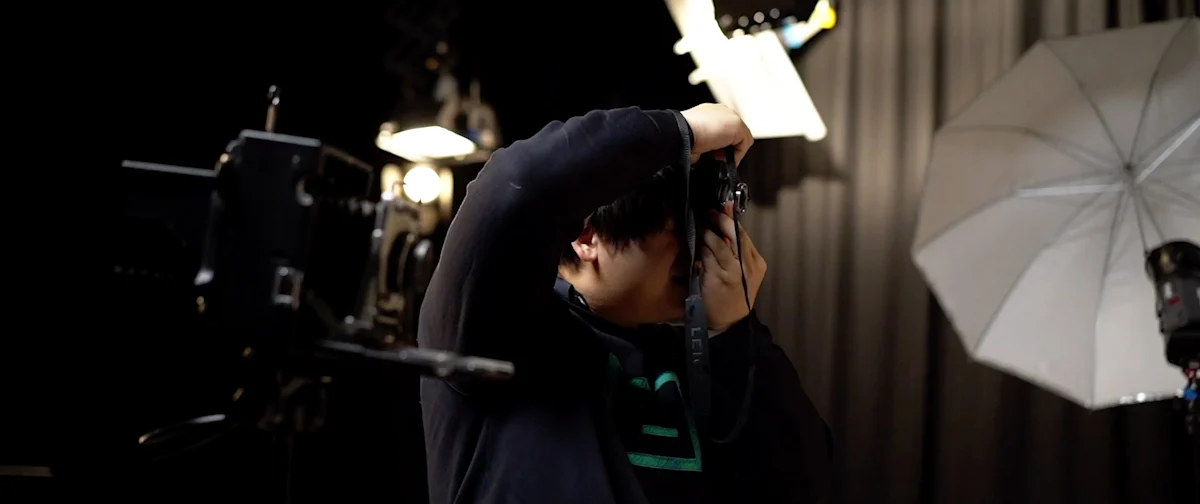
Close-up of a student holding a film camera in a studio.
MA Television, London College of Communication, UAL.

Join MA Television and Content Production to learn the creative and technical skills required to produce compelling factual content for multi-platform networks, and for global audiences.

Course summary

Applications closed 2026/2027

Applications are now closed for 2026/27 entry. Applications for 2027/28 entry will open in autumn 2026.

Please note: The title of this course will change from MA Television to MA Television and Content Production for entry in 2027/28.

Term dates

The term dates for this course are different from the standard UAL term dates. This is a temporary change while we move into our new building.

  • From September 2026 to June 2027 you will study in our current building. The final week of the Summer Term (June 2027) will be taught online.
  • During your final term (Autumn 2027) you will study in our new building. Your term starts on 4 October and ends on 17 December.

View Postgraduate term dates

Why choose this course at London College of Communication

  • Factual focus: Combine advanced programme development and production with a critical analysis of today’s television and content industries - exploring what they are, what they mean, how they work, and how they’re changing.
  • Outstanding facilities: Make the most of opportunities to make ‘live’ television programmes in LCC’s broadcast-standard, multicamera TV studio.
  • Multiple perspectives: Explore key industry issues, including television genres and formats; linear and digital platforms; ethical, commercial, and legal frameworks; representation, diversity, and sustainability, alongside media production.
  • Employability and entrepreneurship: Build the knowledge and screen storytelling skills to thrive in the TV industry. By developing your entrepreneurial abilities and industry intelligence, you’ll create your own future-facing career strategy.
  • Industry connections: Learn from leading producers, directors, and presenters of factual television whose credits include Netflix, BBC One, ITV, Sky, and Channel 4.
  • Career outcomes: Study on a course where 90% of students agreed that their studies had helped prepare them for their future career, according to the Postgraduate Taught Experience Survey (PTES) 2025.

Open Events

The next Open Evening for this course will be announced soon.

Course overview

MA Television combines industry intelligence (both intensive research and critical analysis) with programme production and development. Bringing a 360-degree perspective to the business of television, we ask what it means, who it’s for, how it works and what it might become.

On this course, you’ll learn key skills needed to develop and produce factual TV programmes, covering areas including format, narrative, scripting, treatments, proposals, proofs of concept and pitches together with techniques across camera, sound and editing.

In a world where streaming giants like Netflix, Amazon Prime, YouTube and TikTok sit alongside traditional broadcasters like the BBC and established pay networks like Sky and HBO, you’ll also explore the digital revolution’s transformative impact on television production, distribution and consumption, and analyse how TV intersects with social media.

Other units will consider the nature of the TV industry and potential markets for your ideas.

What to expect 

  • With a focus on factual programmes, you’ll analyse and practice the craft of TV storytelling, exploring the genres and formats driving a global trade in television ideas.
  • You’ll explore different production values and techniques, working in teams to develop and produce TV shows while drawing on analysis of contemporary factual genres.
  • You’ll approach the practice of programme-making through complimentary, connected and direct exercises of creative imagination and project management across demands on time, resource, cost and quality.
  • You’ll be introduced to key issues around the production, use and consumption of factual TV programming through our Media Cultures strand. You’ll consider whether television holds a mirror up to - or indeed shapes - culture, identity and society.

Industry experience and opportunities

You’ll gain valuable experience of real-world contexts, conditions and outcomes of productions using briefs set by/agreed with your tutors. 

In your second term, you’ll collaborate with fellow students and/or external partners such as local charities and NGOs, small businesses, artists, or arts organisations.  

The Screen School also belongs to the BAFTA albert Education Partnership, which offers students the opportunity to learn about environmentally responsible working practices, their professional relevance, and their contribution to the transformation of the film and television industry. During your time on the course, you will be encouraged to engage with and achieve the albert graduate employability certificate.

Mode of study 

MA Television is offered in full-time mode and runs for 45 weeks over 15 months, with a break over the summer. You will be expected to commit an average of 40 hours per week to your course, including teaching hours and independent study. 

Contact us

Register your interest to receive information and updates about studying at UAL.

Register your interest

Contact us to make an enquiry.

Course units

In response to the Climate Emergency, UAL has embedded responsible practices within the curriculum. We shaped our courses around principles of social and racial justice, and environmental sustainability that ensure learning outcomes reflect the urgent need to equip you with the understanding, skills, and values for ethical practice and empower you to work towards an equitable future.

Each course is divided into units, which are credit-rated. The minimum unit size is 20 credits. The MA course structure involves 5 units totalling 180 credits.

Autumn, term 1 

Production (40 credits)

Working to an editorial brief, you’ll participate in the making of 2 factual television programmes as part of an intensive, practice-based introduction to production techniques. You’ll learn about studio practice in our multi-cam television studio, and about production on location.  

Media Cultures Terms 1, 2 and 3 (40 credits)

You’ll be introduced to critical study of the factual television programme industry: not only in terms of its current practice, but also its history and future. You’ll also learn an overview of relevant formats and the underlying story development process.  

Spring, term 2

Production and Media Cultures (continues)
Collaborative unit (20 credits)

You’ll identify, form and develop collaborative working relationships with a range of potential partners or briefs, both across the University and externally. Learn about the concept of talent, produce a treatment and proof of concept, draft a budget and production schedule, and make a competitive pitch to industry standards.

Major Project – Development and Commencement (60 credits across 3 terms)

You’ll research and develop individual pitches, proposals, treatments, business plans, budgets and proofs of concept for your Major Project. 

Summer, term 3

Major Project – Pitches, Production and Offline Post Production (continued)

Using your research in development from the Spring term, you'll develop a presentation for competitive pitching sessions where a selection panel will determine the proposals selected for full production.

You’ll then form teams to begin pre-production of your studio-/location-based Major Project television programme, before working as a production and post-production group to produce a rough cut.

Autumn, term 4

Major Project – Post Production and Reflection (continued)

In your fourth term, you’ll refine the rough cut of your Major Project and reflect on both your development portfolio and your group production: analysing the collaborative process in your team and its outcome, your own role within that, and the market value of your work.

Professional Futures (20 credits)

In this unit, you’ll be coached and mentored in your career planning through areas including: research into employment opportunities or the development of start-ups; networking and approaches to potential employers; the refinement of your CV; and the creation of a calling card portfolio. 
Learning and teaching methods

  • Lectures 
  • Seminars 
  • Technical and other workshops 
  • Supervised practice 
  • Independent group practice 
  • Close reading 
  • Critiques of practical outcomes 
  • Supervised presentations 
  • Guided student-managed learning 

Assessment methods

  • Written analyses 
  • Formative and summative proposals, treatments, pitches, taster tapes  
  • Reflective written or video essays 
  • Television productions 
  • Career plans and showcase materials

Student voices

Vanessa Zhao

Jiafang Han

Jiafang talks through her final year project, Psychic Gallery, work that reflects the surreal and difficult nature of the pandemic in 2021.

Irene Villalon

MA Television graduate Irene Villaton talks to us about her final year project, following the lives of figure skating duo Penny Coomes and Nick Buckland.

Joana Esteves

Joana talks us through her final project on the Girl Guides.

Henrik Bie

Hear about Henrik's experience of being a postgraduate student at UAL and what it was like to move from Norway to London.

Course playlist

Course showreel | 2022

Facilities

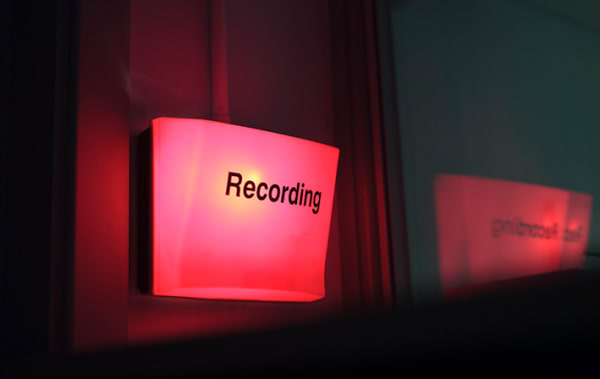
  • Red light indicating recording is taking place.
    Image © Vladimir Molico

    Lens-Based and Audio-Visual

    Find out about the workspaces and studios that support Lens-Based and Audio-Visual practice.

  • Student reading a book in between two bookshelves in the Library
    Students in the Digital Space. London College of Communication, UAL. Photograph: Alys Tomlinson

    The Digital Space

    The Digital Space is an open-plan, creative hub with computers set up with specialist software.

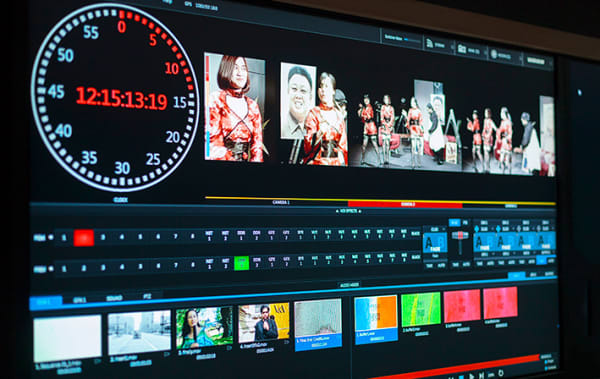
  • A close-up of a monitor in the TV studio.
    Image © Vladimir Molico

    Film and Television

    Find out about the resources on offer to Film and Television students.

Staff

Visiting Practitioners

We have regular masterclasses with leading producers, directors and presenters of features and factual television, including:

  • Rosie Alison, Producer
  • Leo Burley, Director
  • Jonathan Levi, Producer

Fees and funding

Home fee

£14,420

This fee is correct for 2026/27 entry and is subject to change for 2027/28 entry.

Tuition fees may increase in future years for new and continuing students on courses lasting more than one year. For this course, you can pay tuition fees in instalments.

Students from countries outside of the UK will generally be charged international fees. The rules are complex so read more about tuition fees and determining your fee status.

International fee

£30,890

This fee is correct for 2026/27 entry and is subject to change for 2027/28 entry.

Tuition fees may increase in future years for new and continuing students on courses lasting more than one year. For this course, you can pay tuition fees in instalments.

Students from countries outside of the UK will generally be charged international fees. The rules are complex so read more about tuition fees and determining your fee status.

Additional costs

You may need to cover additional costs which are not included in your tuition fees, such as materials and equipment specific to your course. For a list of general digital equipment you may need (and how you can borrow equipment), visit our Study costs page.

Accommodation

Find out about accommodation options and how much they will cost, and other living expenses you’ll need to consider.

Scholarships, bursaries and awards

If you’ve completed a qualifying course at UAL, you may be eligible for a tuition fee discount on this course. Find out more about our Progression discount.

You can also find out more about the Postgraduate Masters Loan (Home students only) and scholarships for Home and International students. Discover more about student funding.

If you’re based in the UK and plan to visit UAL for an Open Event, check if you’re eligible for our UAL Travel Bursary. This covers the costs of mainland train or airline travel to visit UAL.

How to pay

Find out how you can pay your tuition fees.

Scholarship search

Entry requirements

The course team welcomes applicants from a broad range of backgrounds, from all over the world. MA Television attracts applications from graduates of a good honours degree in a relevant subject such as either film, television or related media subject. We will also consider graduates of a good honours degree in any other subjects who can demonstrate a developed interest in, and knowledge of, current television practice and output.

Such fields may include print journalism, photography, project management, business, general management and any other discipline or area which it is felt will bring a variety of experience and imagination to the course.

If you do not have the required qualifications, but do have professional experience, you may be eligible to gain credit for previous learning and experience.

The educational level may be demonstrated by:

  • Honours degree (named above);
  • Possession of equivalent qualifications;
  • Prior experiential learning, the outcome of which can be demonstrated to be equivalent to formal qualifications otherwise required, demonstrating relevant experience and an aptitude for film, television or other moving-image production subjects;
  • Or a combination of formal qualifications and experiential learning which, taken together, can be demonstrated to be equivalent to formal qualifications otherwise required.

APEL (Accreditation of Prior Learning)

Applicants who do not meet these course entry requirements may still be considered in exceptional cases. The course team will consider each application that demonstrates additional strengths and alternative evidence. This might, for example, be demonstrated by:

  • Related academic or work experience
  • The quality of the personal statement
  • A strong academic or other professional reference
  • OR a combination of these factors

Each application will be considered on its own merit but we cannot guarantee an offer in each case.

Language requirements

All classes are conducted in English. If English is not your first language, we strongly recommend you let us know your English language test score in your application. If you have booked a test or are awaiting your results, please indicate this in your application. When asked to upload a CV as part of your application, please include any information about your English test score.

  • IELTS 6.5 (or equivalent) is required, with a minimum of 5.5 in each of the four skills.
  • If your first language is not English, you can check you have achieved the correct IELTS level in English on the Language Requirements page.

Selection criteria

Offers will be made based on the following selection criteria, which applicants are expected to demonstrate:

  • Sufficient prior knowledge and experience of and/or potential in television to be able to successfully complete the programme of study and have an academic or professional background in a relevant subject
  • Knowledge and understanding as reflective viewers of the ways in which television programmes operate. (Relevant for applicants without practical experience of programme-making)

Information for disabled applicants

UAL is committed to achieving inclusion and equality for disabled students. This includes students who have:

     
  • Dyslexia or another Specific Learning Difference
  • A sensory impairment
  • A physical impairment
  • A long-term health or mental health condition
  • Autism
  • Another long-term condition which has an impact on your day-to-day life

Our Disability Service arranges adjustments and support for disabled applicants and students.

Read our Disability and dyslexia: applying for a course and joining UAL information.

How to apply

Follow this step-by-step guide to apply for this course

Step 1: Initial application

For a general guide to applying to our courses, read our postgraduate application advice.

You will need to submit an initial application including your personal statement and CV.

Personal statement advice

Your personal statement should be maximum 500 words and include:

  • your reasons for choosing the course
  • your current creative practice and how this course will help you achieve your future plans
  • any relevant education and experience, especially if you do not have any formal academic qualifications.

CV advice

Please provide a CV detailing your education, qualifications and any relevant work or voluntary experience. If you have any web projects or other media that you would like to share, please include links in your CV. If English is not your first language, please also include your most recent English language test score.

Step 2: Video task

We will review your initial application. If you have met the standard entry requirements, we will ask you to submit a video task.

You’ll need to submit this via PebblePad, our online portfolio tool.

Video task advice

We would like you to submit a 2-3 minute video to help us learn more about you. When recording your task, please face the camera and speak in English.

What to include in your video task
  • Take 90 seconds to describe the view from your window
  • Take another 90 seconds to explain how the view changes over time.

Find advice on how to plan and film your video task. Then read our guidance on how to submit your video task, including the file types we accept.

Step 3: Interview

You may be invited to an interview following our review of your application. All interviews are held online and last 15 to 20 minutes.

For top tips, see our Interview advice.

Final step: After you apply

Find out how we'll communicate with you and see what happens after you apply.

Apply now

Application deadline

Applications are now closed for 2026/27 entry. Applications for 2027/28 entry will open in autumn 2026.

Read more about deadlines

Apply now

Application deadline

Applications are now closed for 2026/27 entry. Applications for 2027/28 entry will open in autumn 2026.

Read more about deadlines

Careers

MA Television and Content Production prepares you for careers across television, factual content production and the wider screen industries. You'll develop the creative, editorial, production and commercial skills needed to succeed in a rapidly evolving media landscape.

Graduate destinations include:

  • Production: Producer, Assistant Producer, Production Coordinator, Production Manager
  • Editorial and Development: Researcher, Programme Developer, Content Producer
  • Factual Television and Documentary: Documentary Producer, Factual Programme Maker, Current Affairs Researcher
  • Content and Digital Media: Content Producer, Branded Content Creator, Digital Content Strategist
  • Broadcast and Streaming: Roles with broadcasters, streaming platforms and independent production companies
  • Freelance and Entrepreneurial Practice: Freelance Producer-Director, Independent Content Creator, Production Company Founder

UAL Alumni Association

Our alumni association offers graduates support and a number of benefits.

Student Jobs & Careers

Find out how careers and employability helps our students and graduates start their careers.