Responsible and Accessible
Fashion and Beauty


Research group coordinators: Gabriela Daniels and Olga Cieslak
Projects

Insights from Research and Conference Contributions
Researchers from the group have recently shared pioneering work on responsible and sustainable fashion, beauty, and wellbeing at major international conferences. Their contributions explored themes such as ethical consumption, circular design, sustainable brand development, and the science of beauty. From experimental methods using eye-tracking and heat mapping to cross-disciplinary studies linking cosmetics, culture, and wellbeing, their research reflects the group’s commitment to advancing socially conscious and evidence-based innovation.
Collectively, these presentations underscored the need for new models of responsibility and transparency in fashion and beauty, highlighting how consumer insight, creative practice, and scientific research can together shape a more sustainable and inclusive future. The breadth of topics also opens strong potential for further cross-disciplinary collaboration and industry partnership.
Project researchers

Symposium: The Future Face of Beauty
The Future Face of Beauty Symposium explored how beauty is evolving in contemporary society, bringing together researchers, practitioners, and industry voices to examine the social, psychological, and scientific dimensions of beautification. Discussions centred on ageing, inclusivity, and shifting perceptions of aesthetic ideals across cultures. Research presented at the event ranged from studies on hair and skin perception to the use of neuroscience and historical analysis in understanding beauty norms. The symposium highlighted the power of interdisciplinary collaboration, across science, design, and psychology, in shaping a more inclusive and socially conscious future for beauty.
Project researchers
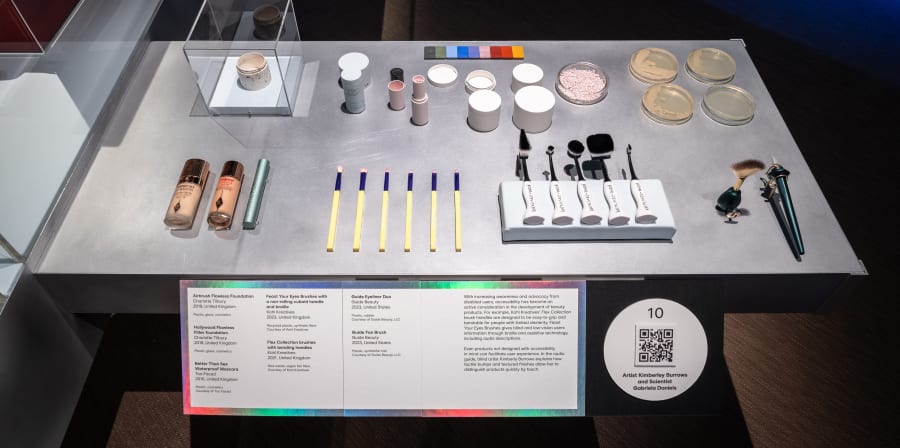
Cult of Beauty
Cosmetics inclusivity was at the heart of the contribution of this project to the Wellcome Collection Exhibition in London. This exhibition delved into the evolving notions of beauty across various cultures and historical periods. The project was rooted in research examining how blind and low-vision consumers interact with makeup and how cosmetic products and packaging design could become more universally accessible and user-friendly for everyone. This work has also been disseminated via industry forums and interviews, as well as peer reviewed journal articles. Click here to watch the Cult of Beauty Film.
Project Lead
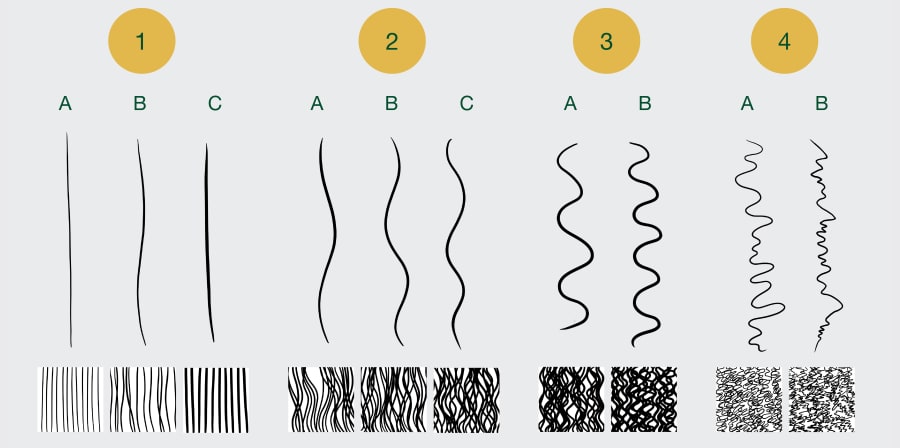
Celebrating Consumer Hair Diversity
The project explores the diversity of human hair through various activities and publications. Combining ethnography and surveys to identify optimal approaches for consumer-relevant product testing of textured hair and AI-facilitated analysis of hair images. The project also investigates the role of hair in personal and social identity, aiming to enhance consumer-oriented product development and testing. This research contributes to making cosmetic consumption more sustainable.
Project Lead
Project Researchers
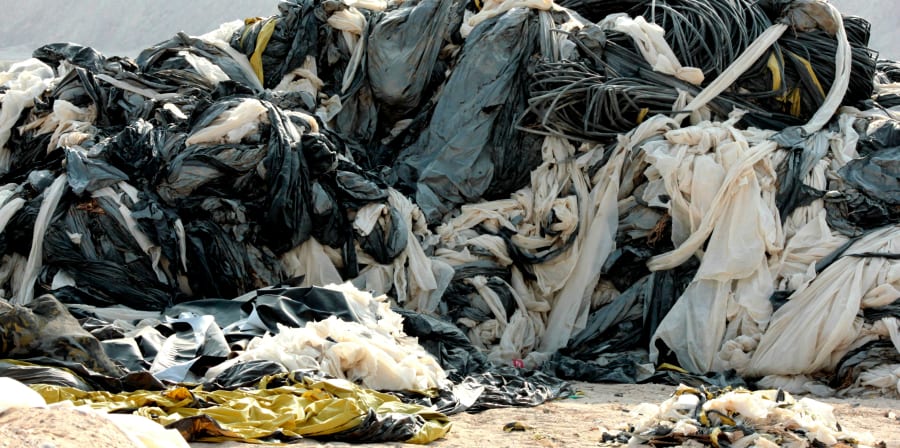
Uncovering stigmas towards the consumption of second-hand clothes and potential implications for the transition to a circular system
The project evidences the urgency to address ecological challenges and highlights the tension existing between the promotion of sustainability practices in fashion sustainability and the obstacles of incorporating these in the fashion system today. Clothing reuse, particularly, second-hand clothing consumption, is offered as a viable short-term alternative and scenario for ecological impact reduction. Activities include a paper presentation at the International Foundation of Fashion Technology Institutes (IFFTI) 2024 Conference, at EWHA University, Seoul, South Korea, and forms part of an on-going research project assessing consumer perspectives regarding second-hand clothing and accessories consumption
Project Lead
Project Researchers
Towards transformative sustainable fashion education: The Fashion Business School’s approach
This project explores how transformative sustainable pedagogies are being implemented in the Fashion Business School (FBS) at London College of Fashion. Specifically, providing an understanding of how sustainability is embedded in the teaching and learning experience of fashion business students. This research took a multiple case study approach to showcase the transformative nature of Education for Sustainable Development (ESD) initiatives to inform future thinking in teaching and learning practices for fashion sustainability education. This project was presented at the Global Fashion Conference, 2023 and has been published in peer-reviewed book, Fashion for the Common Good.
Project Lead
Project Researchers
Broadening the conversation on inclusive retailing: Exploring the fashion in-store retail experience of parents with autistic children
The project explores the important area of inclusion and fashion retail, particularly through the lens of hidden disabilities and autism. In the UK around 700,000 individuals are diagnosed with autism spectrum disorder (ASD). When family members are included, roughly 2.8 million people are affected by autism daily. Through this project we aim to inform inclusive retail practices, by gaining a better understanding of the servicescape-related fashion retail experience of parents and their autistic children. This project has been published in peer-reviewed book, Pioneering New Perspectives in the Fashion Industry: Disruption. Diversity and Sustainable Innovation. This project is part of on-going investigation into inclusive fashion retail practices.
Project Lead
Project Researchers
Dr Bethan Alexander
Joanne Shin
Inclusive retail playbook: Strategies for enhancing disability access and inclusion
This collaborative project explores marketing strategies undertaken by UK fashion retailers to establish whether they meet the needs of disabled consumers while shopping for fashion products and services. The research is framed around the necessity to understand and improve the intersection of customer service and accessibility from the perspective of disabled customers. The overarching goal is to develop a comprehensive understanding of the barriers that impede disabled customers and propose viable solutions through the implementation of an ‘Inclusive Retail Playbook’ to provide practical strategies for fashion retail. This project is part of an ongoing project on inclusive fashion retailing and marketing. Activities include conference presentation and onward peer-reviewed journal publications.