Community Costumes 2026: Fairytales, making and material thinking at Brampton Primary School
- Written byS.Williams
- Published date 12 April 2026
Share story
The Portal Centre for Social Impact is a space at London College of Fashion (LCF), UAL where students, designers and communities collaborate to facilitate positive social change.
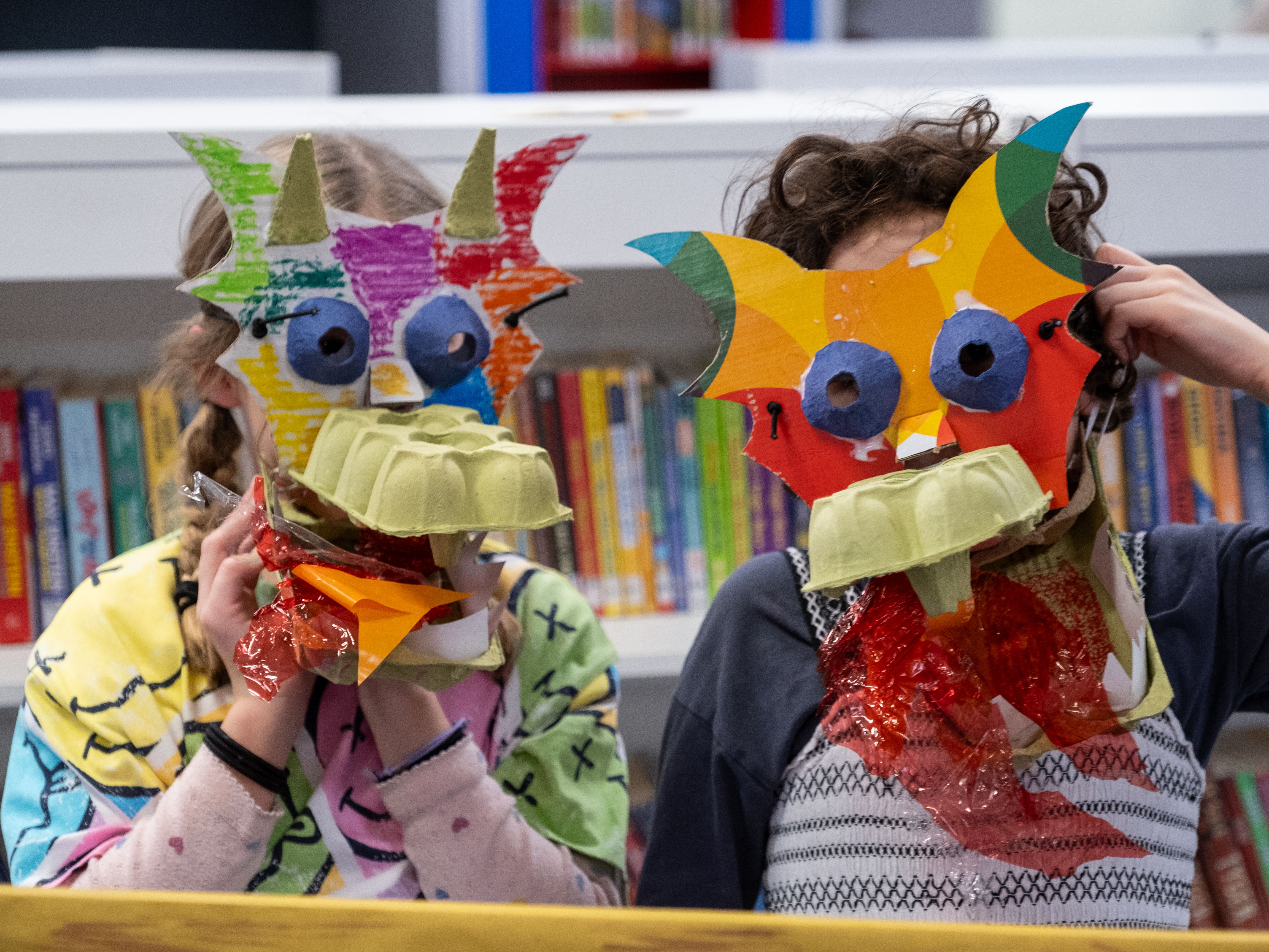
For Community Costumes 2026, The Portal Centre for Social Impact worked with Brampton Primary School to deliver a 4-day series of costume-making workshops for Years 1–4, funded by The Merchant Taylors Company. Designed around the school’s spring theme of Fairytales, the programme invited the children to explore storytelling through hands‑on making, material reuse and imaginative environmental thinking.
Led by MA Costume Design for Performance graduate Jessie Von Curry, each 1-hour workshop connected creative practice with conversations about ecosystems, waste and sustainability. Rather than treating costume as decoration, the children used design to investigate questions such as: What is this material? Where has it come from? What could it become?
Across the week, children revisited familiar stories through making, using practical craft as a route into deeper discussion.
A core principle of the project was designing with reclaimed and natural materials. Fabric offcuts, cardboard packaging, paper waste and found natural elements formed the basis of every build – an intentional choice that encouraged resourcefulness and creative problem solving.
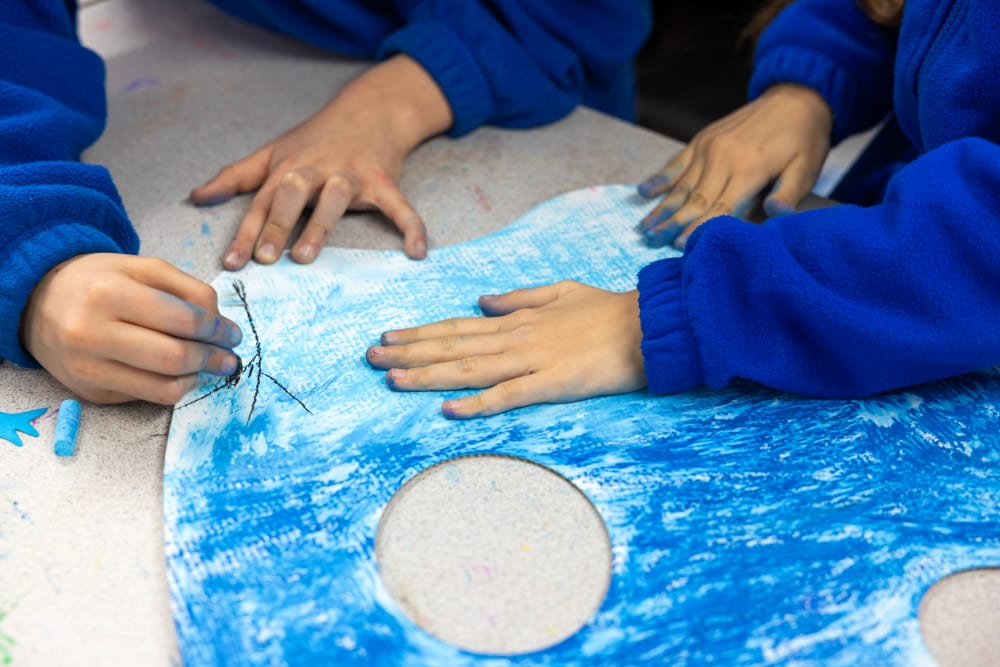
By repurposing everyday waste, children explored ideas of value, reuse and material lifecycles. The physical process of cutting, layering and assembling helped them link abstract sustainability concepts to real, tactile experience – which many thoroughly enjoyed throughout the week.
“It is so brilliant, we don’t have time to think of these things, it is such simple ideas to bring into the classroom” – Teacher, Brampton Primary School.
Year 1: The Elves and the Shoemaker
Year 1 explored The Elves and the Shoemaker, focusing on making, mending and transformation. The children constructed imaginative shoes using cardboard structures, foil and scrap textiles. Through this, they considered what makes an object strong, why we repair items and how materials commonly seen as waste can take on new purpose. The story offered an accessible way to introduce ideas of durability, care and repair culture.
Year 2: Forest homes and habitat thinking
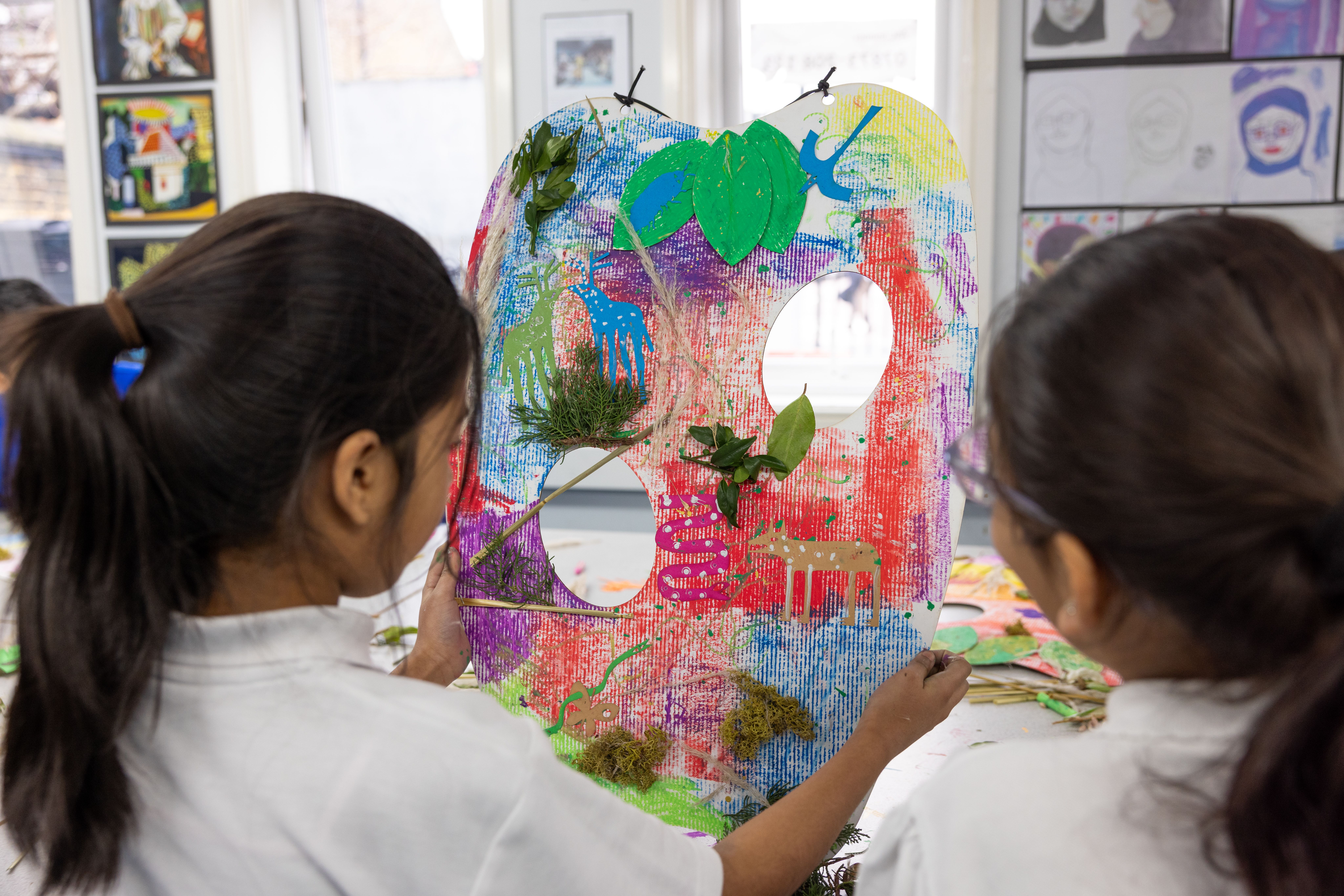
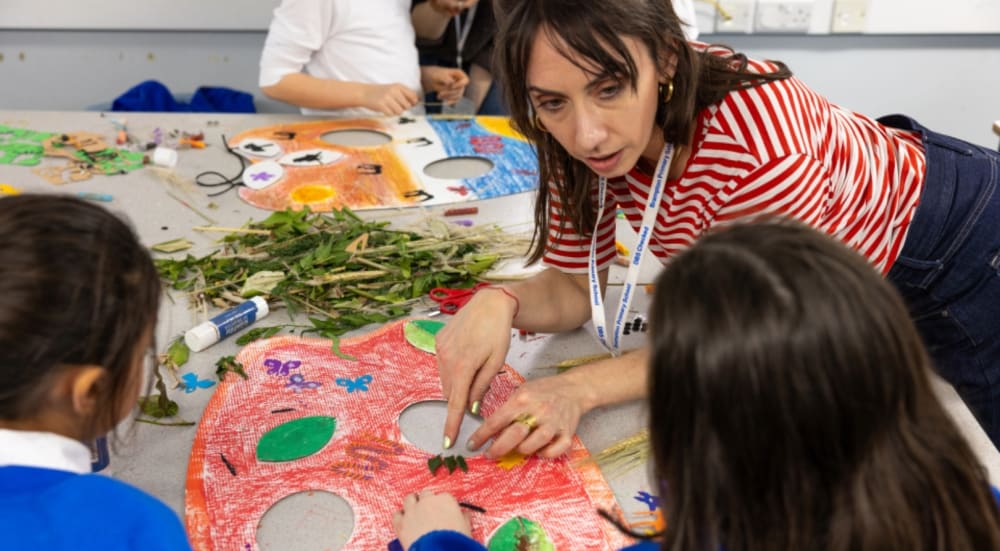
Inspired by the folklore of Baba Yaga, Year 2 created forest‑themed home masks from reclaimed and natural materials. Their designs prompted discussions about habitats, shelter and the ways environments shape the forms we build. Twigs, leaves and textured papers were combined to represent structures connected to forest ecosystems.
The making process helped pupils understand interdependence in nature – how branches, soil and plants contribute to cycles of growth and decay.
“It is great that you can come here and do this with the children, it is the creativity that they will remember forever" – Teacher, Brampton Primary School.
Year 3: Character, Growth and Transformation
With Pinocchio as a starting point, Year 3 designed extended-nose masks, exploring exaggeration, identity and narrative symbolism in storytelling. The workshop introduced structural challenges, including balance, stability and adapting material for strength. Decorative details evoked woodgrain and forest textures, linking back to Pinocchio’s origins.
As they worked, the group reflected on ideas of truth and consequence, using the physical process of extending the nose to understand metaphor through making. By the end, many confidently presented their masks, describing both their creative choices and the thinking behind them.
Year 4: The Apple as an ecosystem
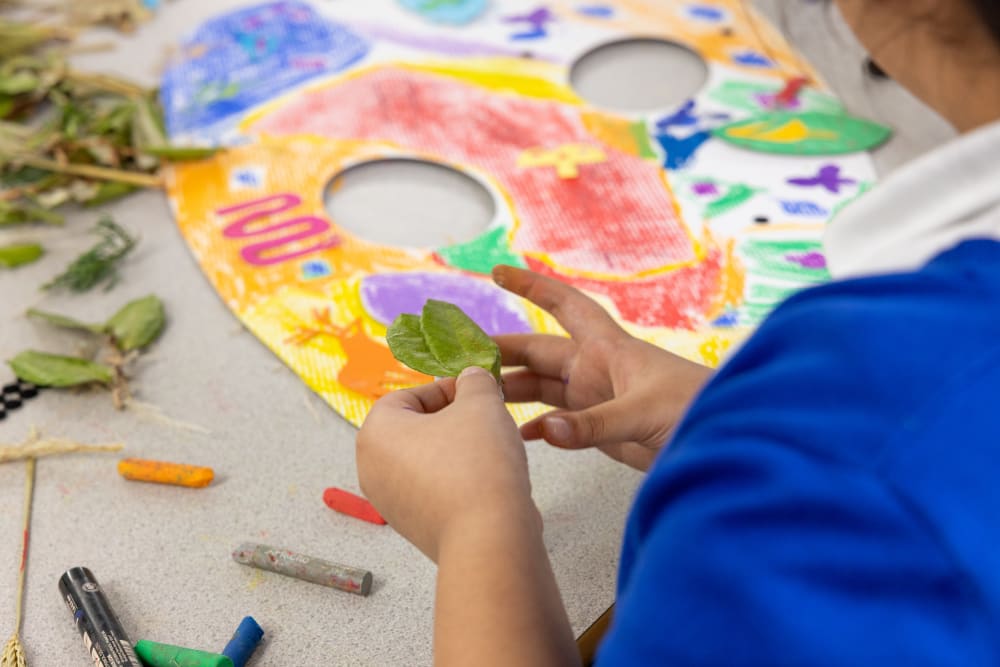
Year 4 reimagined the poisoned apple from Snow White as a living ecosystem. Instead of focusing solely on the story’s object, the children constructed whole body costume elements incorporating seeds, insects, roots and layers of soil. The designs visualised pollination, decomposition and nutrient cycles, linking directly to science curriculum content on food chains and plant lifecycles. Teachers observed that building an ecosystem physically helped consolidate the children’s understanding and encouraged thoughtful discussion.
“This is an inclusive activity for accessing the literature” – Teacher, Brampton Primary School.
Learning through making
Across the four days, the workshops demonstrated the power of combining creative practice with environmental education. Through making, they:
- Developed fine motor and structural skills
- Practised iterative design and problem‑solving
- Strengthened their communication
- Built confidence through authorship and creative ownership
Importantly, every child was positioned as a designer, not simply a participant, resulting in a wide range of imaginative, personal outcomes.
“We are so lucky that you can do this with us”– Teacher, Brampton Primary School.
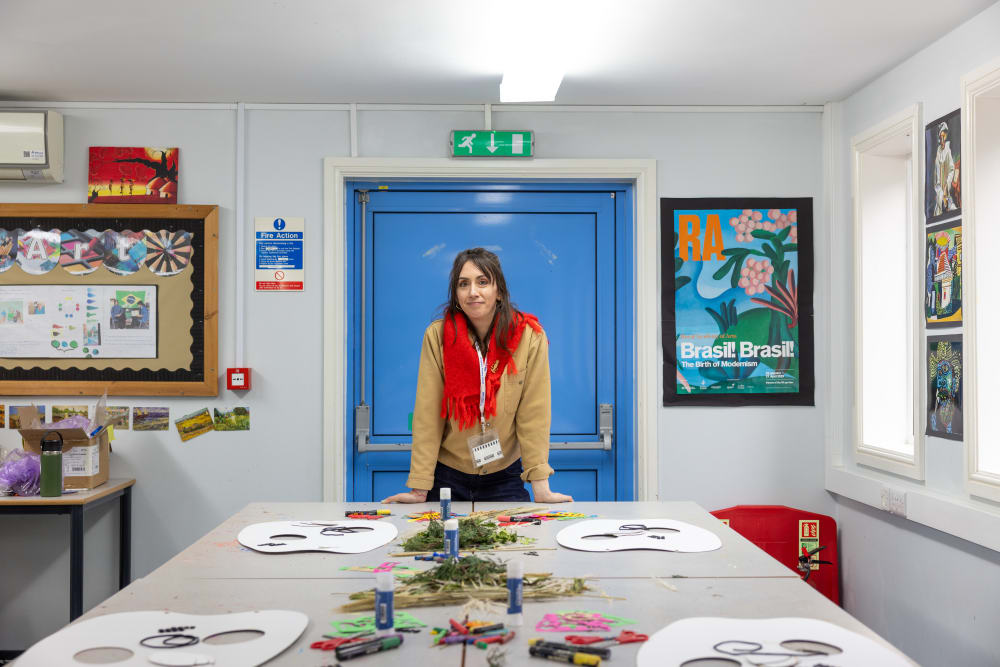
We spoke with Jessie who reflected on the week.
Tell us about your practice to date and what you have been working on with the Portal Centre for Social Impact.
My practice as a multi-disciplinary artist and designer explores the body as a site for examining our material relationships with other species – blending storytelling with fashion, costume, sculpture, and performance to create multi-sensory works shaped by the animacy of materials and ecology. Through Studio Von Curry, I work at the intersection of art, design, and sustainability, collaborating with museums, universities, brands, and other creatives to make pieces that reimagine more-than-human futures.
Most recently, I have been working with The Portal Centre for Social Impact to facilitate a series of community costume-making workshops for primary school students at Brampton Primary School, using storytelling and hands-on making as tools for sustainability education. Across 16 workshops over four days, 480 students from Years 1–4 worked with reused, natural, and low-impact materials to create costumes inspired by fairytales, building ecological understanding and circular thinking through craft.
Tell us how this project has challenged and surprised you.
One of the most meaningful challenges was planning for the range of skill levels across different developmental stages. Many techniques I might naturally reach for, like hand sewing, simply weren't viable, and understanding which methods would offer a productive challenge rather than a frustrating one required real consideration. From managing the dexterity needed for Velcro dots and knotting to working with staplers, pairing the right technique to the right age group was a constant balancing act.
On a more personal level, facilitating that volume and energy of children across a single day was a significant physical and vocal challenge, one that eventually led me to learn quieter, more effective ways of gaining a classroom's attention. The greatest surprise was witnessing how differently creative confidence was already formed at such a young age – it became clear that some children had regular access to creative time and encouragement at home, while others seemed uncertain about their own abilities or how to engage. That the messages children receive about what they can and cannot do begin so early was a powerful and sobering observation.
How might you see yourself using this experience in your future practice?
Public participatory workshops have long been part of my practice – creating spaces for audiences to engage with materials in new ways through weaving, mask-making, costume development and beyond, while learning from participants' questions, approaches, and curiosities. This past week represented the most intensive workshop programme I have undertaken with children, and it has deepened how I consider everyone's foundational understanding of ecology, particularly given how many children in cities like London have limited access to green spaces or wilderness. Having grown up largely without that access myself and coming to it later in life, I bring a personal empathy to that experience, and this week has renewed my commitment to encouraging children to get curious about the natural world. Going forward, this project will inform how I design participatory experiences that meet people, of all ages, where they are in regard to their relationship with the environment.
What is your one takeaway that you would share with other LCF students and alumni from working on this project?
Investing time in preparation upfront will save you considerable energy and effort when it matters most. With 16 workshops across four days, there was little margin for disorganisation in the moments between sessions – but thanks to great support from Frank and Sally at LCF’s Laser cutting Lab, who helped cut many of the materials in advance, as well as hands-on assistance from knitwear student Rose Reeves, everything was in place before the workshops began. Having materials prepped, sorted, and organised meant that even amid the intensity of back-to-back sessions, the actual delivery felt manageable and could run smoothly. Whatever the scale of your project, treat preparation as part of the work itself – it's what allows the creative experience, for you and your participants, to truly land.
Beyond the costumes
“It was the most fun ever!”– Pupil, Brampton Primary School.
By the end of the week, it was clear that the value of this work reached far beyond the costumes themselves. Children engaged deeply with ideas of sustainability, narrative and design, while LCF graduate Jessie Von Curry gained real‑world experience in creative facilitation and community engagement. This is the heart of LCF’s commitment to social impact, using creativity as a vehicle for education, connection and positive change. Partnerships like this ensure that knowledge flows both ways, strengthening communities and reaffirming our role as an institution that learns with, not just for, others. The fairytales may have set the scene, but the relationships, confidence and environmental understanding that grew from them will continue to shape futures – long after the costumes leave the classroom.
- Read more LCF Stories
- Find out more about Social Purpose at LCF