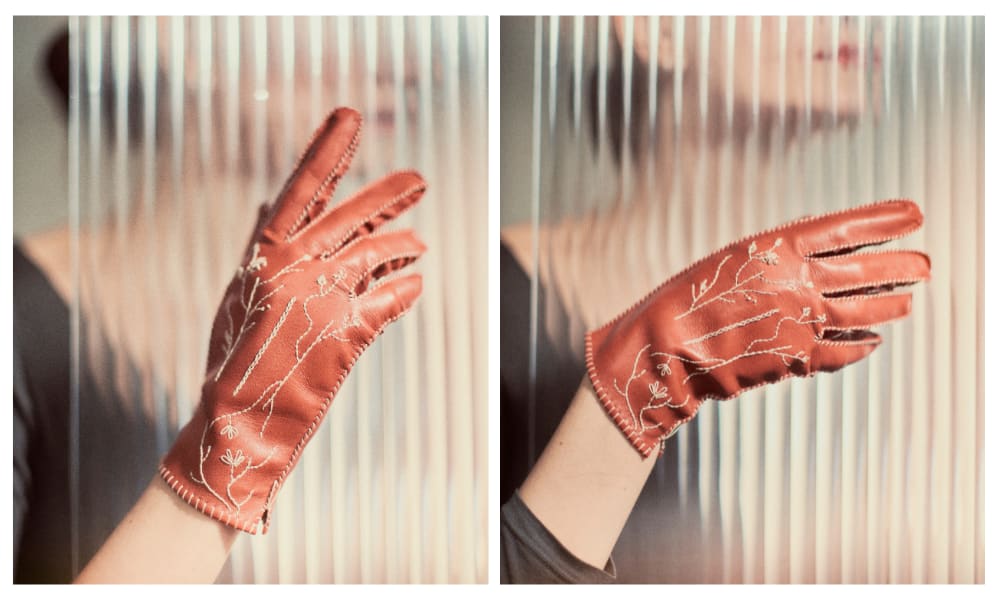
LCF student Stella Lee wins top prize in Glove Making workshop
- Written byLondon College of Fashion
- Published date 22 May 2026
Share story
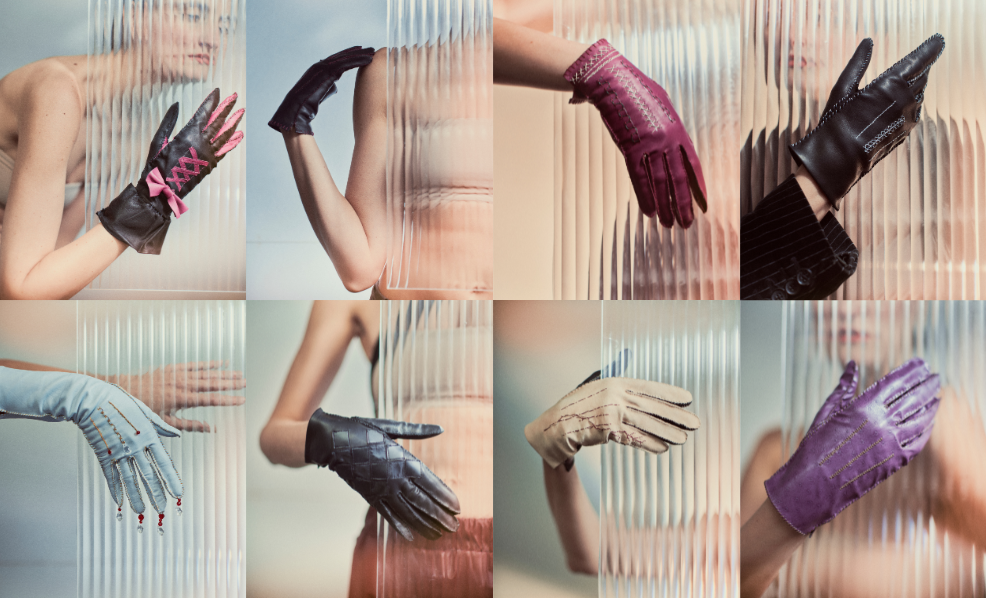
From crystal-tipped fingers to intricate hand-stitched leather, students at London College of Fashion, UAL, are reimagining the future of glove-making through traditional craft.
The annual Glove Making workshops returned for its ninth year, offering students a rare opportunity to learn specialist techniques supported by The Worshipful Company of Glovers. For 2026, a new £500 award for the best-made glove, donated by Dave Lewis, introduced an added incentive for innovation and precision.
Across three 2-day workshops in March, glove maker Riina Õun led 40 students from courses including BA (Hons) Cordwainers Fashion Bags and Accessories, BA (Hons) Cordwainers Footwear, BA (Hons) Costume for Performance, MA Fashion Textiles Technologies, BA (Hons) Fashion Design Technology: Womenswear and MA Fashion Artefact.
Students learned how to cut, construct and stitch gloves entirely by hand using traditional methods. The process required patience and accuracy, while also offering a slower, more focused approach to making. Alongside practical skills, sessions explored the history and cultural significance of gloves, situating the craft within a wider fashion context.
By the final day, the workshops produced a wide range of outcomes, combining technical skill with individual design expression. Master Glovers and committee representatives visited to observe the work and judge the finished pieces, recognising both the high standard of craftsmanship and the diversity of ideas.
Celebrating emerging talent
The top prize of £500 was awarded to Stella Lee (BA (Hons) Cordwainers Fashion Bags and Accessories) for a glove recognised for its consistent hand-stitching, craftsmanship and attention to detail. Her design reinterpreted the traditional three-point structure with layered stitchwork that added depth while remaining highly wearable.
Other students were also commended for their work:
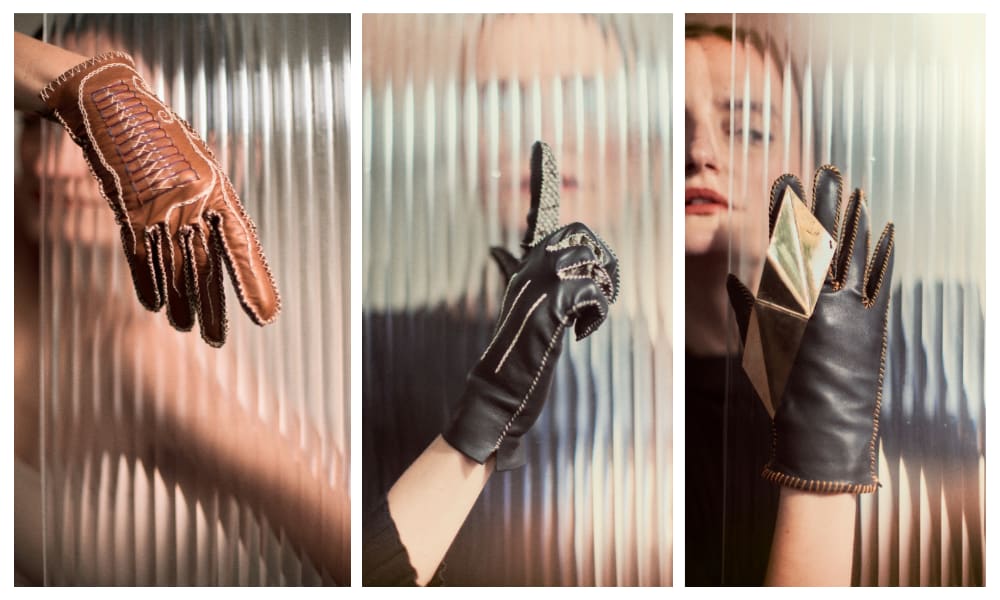
- Heidi Grant (BA (Hons) Costume for Performance) for intricate decorative stitching
- Sofie Byriel (MA Fashion Artefact) for her use of fish skin leather
- Dan Moore (MA Fashion Artefact) for a design incorporating reflective metal detailing
Stella will be invited to attend the Glovers’ Summer Student Awards lunch to receive her prize.
Preserving craft for the future
The Glove Making workshops support students to develop specialist skills that are less commonly taught, while encouraging new interpretations of heritage techniques. By combining craft knowledge with contemporary design thinking, the programme enables students to expand their practice and explore how traditional making skills can inform future fashion work.
- Read more LCF Stories
- Find out more about studying at LCF