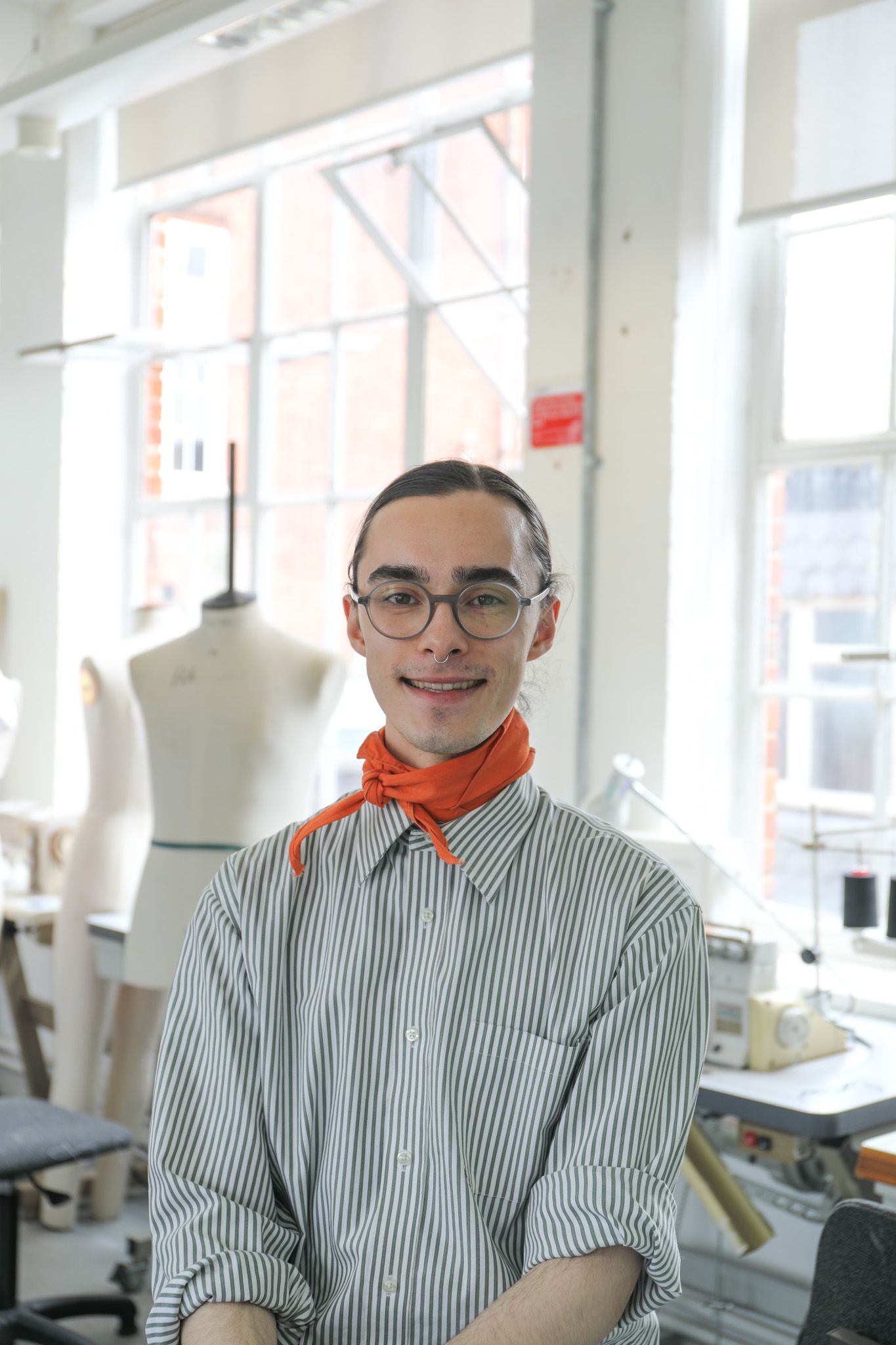
Meet BA (Hons) Costume for Performance alum Robin
- Written byNatalie Ellis
- Published date 26 February 2026
Share story
We caught up with BA (Hons) Costume for Performance alum Robin Simon, whose work spans theatre, opera, film, dance and wearable art. From early experiences in Germany to designing for university theatres and national companies. Robin’s career is already reaching across disciplines and continents.
For students thinking about applying, or nervous about freelancing, community, or career stability — Robin’s reflections offer a rare, honest look at what the industry really feels like once you step out of the workshop.
What made you choose BA (Hons) Costume for Performance at LCF after training in Germany?
When I was looking for degree programmes to study costume design, the idea of studying in London was super exciting to me. What drew me to the course was the holistic approach to costume practice, and most importantly its forward-facing identity. How is costume design, interpretation and contextualisation changing, and where can we push the potentials of storytelling through the body? I didn’t want to do conventional work, and LCF seemed like the right place to be unconventional.
How did the course prepare you for working across multiple disciplines — theatre, opera, film, dance, and wearable art?
The processes of design, development, and realisation can vary a lot across different disciplines, although of course, there are practical and metaphysical skills that are transferable.
The course offers space to learn a lot of specialist techniques that are specific to certain disciplines, which already makes for a pretty varied skillset and comprehensive understanding of the different fields of work.
We learned that whichever format you work towards, you have to understand the parameters and requirements your outcome context imposes onto your work, which really instilled in me an openness to communicate and enquire about my needs and ambitions with my collaborators.
Since graduating, I’ve found that budgetary, temporal or practical limitations can often be incredibly helpful and inspiring factors in design & development.
You were millinery studio manager for Lara Jensen Studio on looks for Lady Gaga at Coachella 2025. What was that experience like, and what prepared you for a project of that scale?
A big part of how I managed to do that job was audacity. I hadn’t worked on a similar project before, but soon enough I just found myself doing it. I have a pretty natural skill when it comes to organising and planning work and people, which definitely helped, and I am also quick to think on my feet, which you need to be on jobs like these with fast turnarounds. In the end, one of the biggest realisations I had whilst doing this job was that one of the most important things is working with people who are excitable, fun, and kind – it makes all the difference, especially in high-stress intense work environments, which this industry often is.
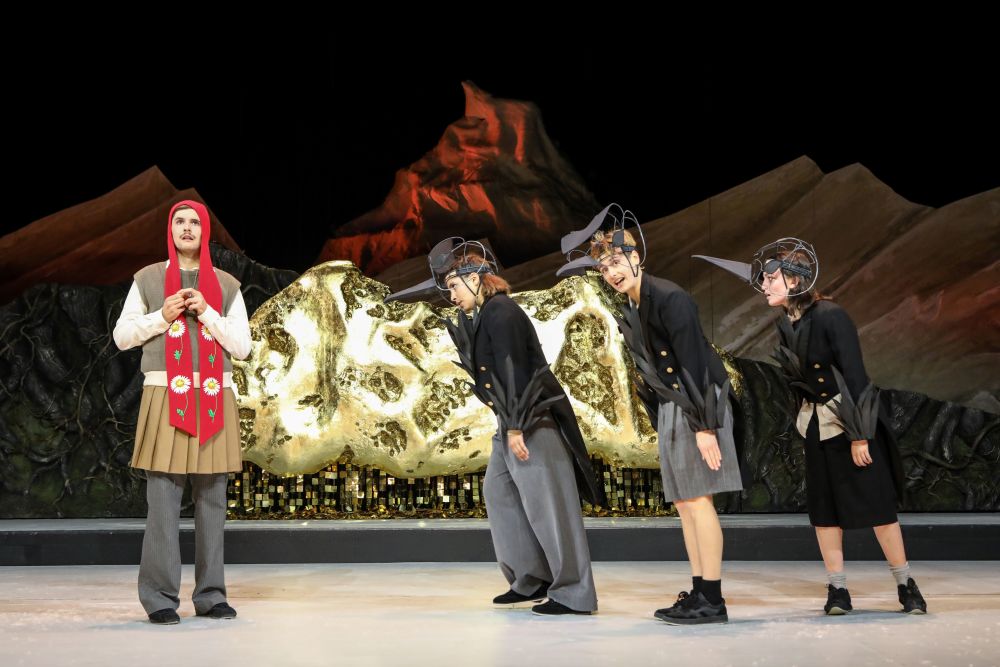
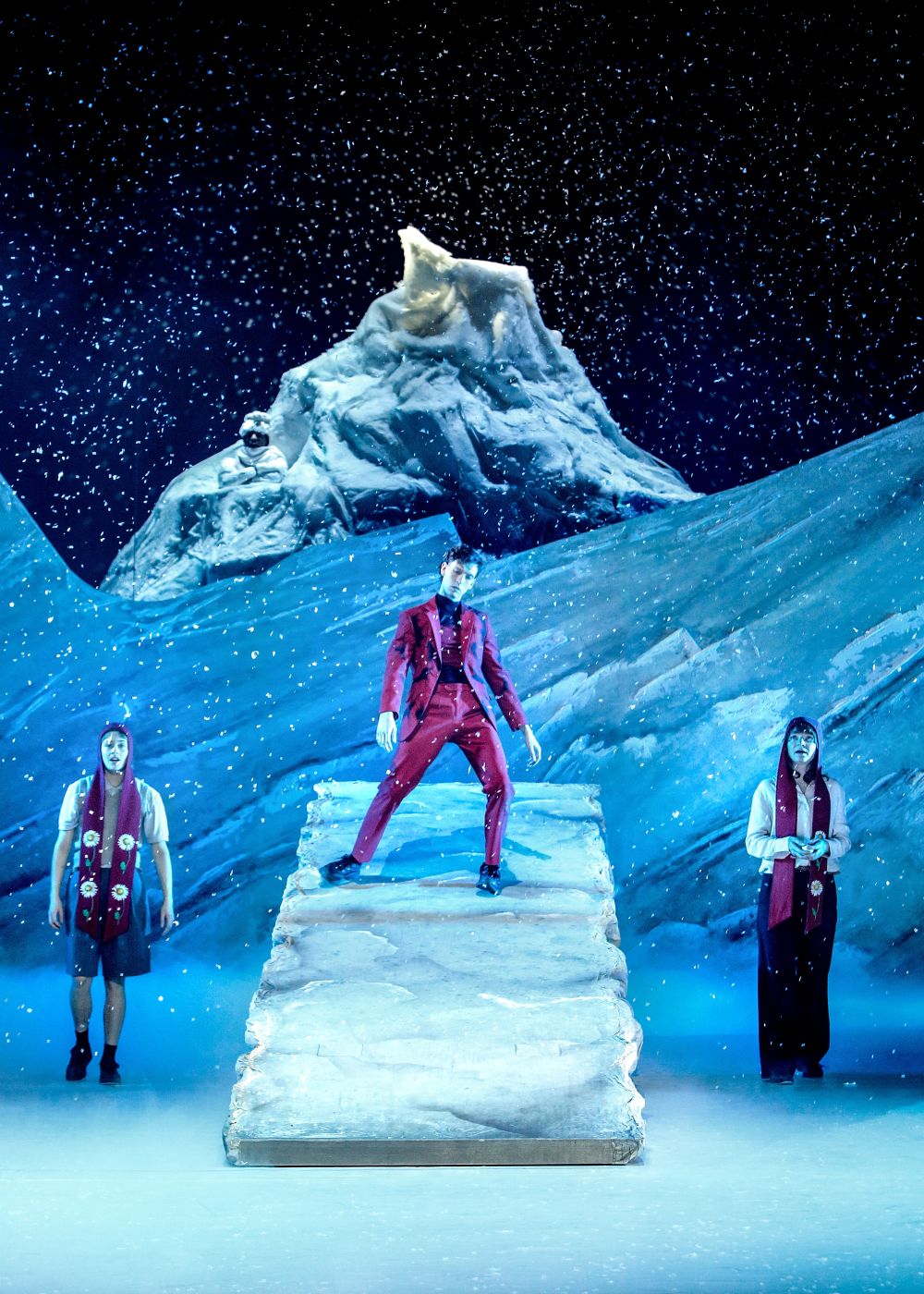
Another recent instance where I found myself very much outside of my comfort zone was when I was asked to redesign and head the production of costumes for Die Schneekönigin at Schauspiel Hannover. It was a previous contact from my time in Bochum who got in touch with me to solve a tricky situation on a tight turnaround – I was to rework the costumes along a similar visual concept. One of the main reasons that I was able to bring it to a successful realisation was my technical skill, which allowed me to reorganise workflows and introduce new production methods making use of all the fantastic departments in the building. What helped significantly was my social skill and attitude to the job; I was able to get everyone to pull together because I listened, understood, and negotiated boundaries and abilities, and because I stepped up. It was hugely gratifying and affirming that I was able to assume the position and complete the job successfully.
Die Schneekönigin at Schauspiel Hannover
-
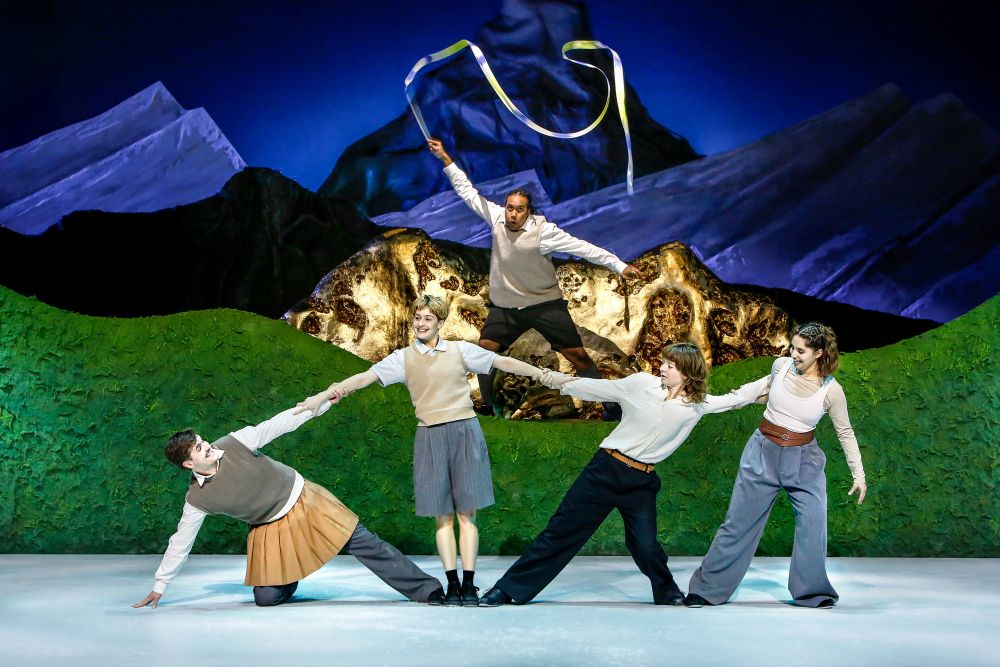
© Birgit Hupfeld │ Die Schneekönigin
-
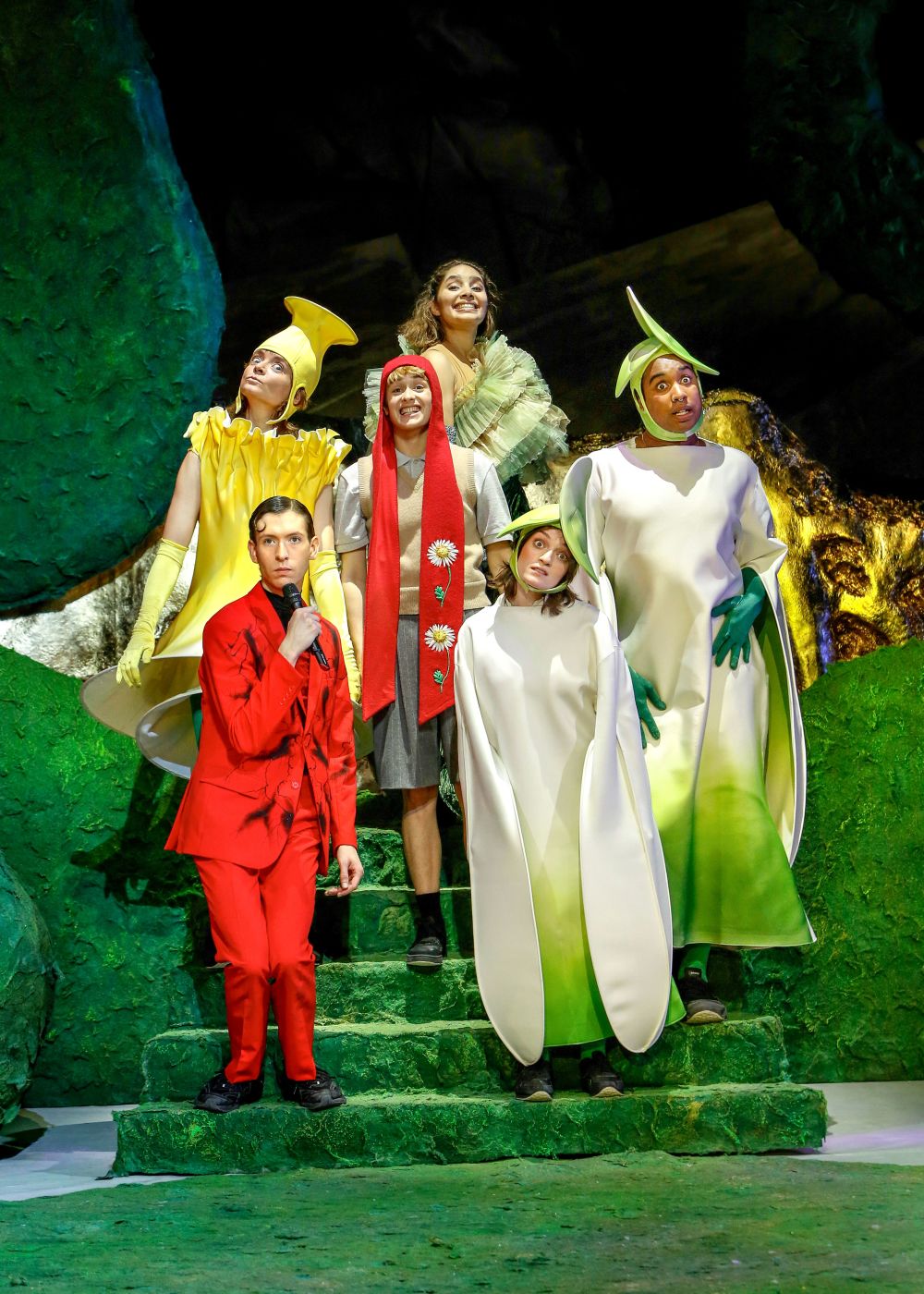
© Birgit Hupfeld │ Die Schneekönigin
-
© Birgit Hupfeld │ Die Schneekönigin
-
© Birgit Hupfeld │ Die Schneekönigin
You’ve worked on productions from Cambridge University’s Downing Dramatic Society to OperaUpClose and the English National Ballet School. How did you first start building those industry connections?
The three examples mentioned here are jobs I got in very different ways. Before I came to LCF, I had already worked a year interning in the costume department of Schauspielhaus Bochum.
My first work experiences in London were jobs I got through connections I had made there – and networking remains an important part of how I get work. I was willing and able to put in the work, make a good impression and ended up being asked back or referred.
While at LCF, I did a voluntary collaboration project with students from English National Ballet School, and that connection paid off when I was referred to supervise their summer showcase in 2025.
In a similar way, after graduation, I found myself in Cambridge for six months due to unforeseen circumstances, and while I was trying to move back to London, I got a retail job and decided to get in touch with the flourishing community of student theatre in town.
I ended up designing costumes for three unpaid productions with DDS, which were all great fun, brilliant exercises, and great material for my portfolio. I am currently working on a show we’re taking to the Brighton Fringe with some of the same people from Cambridge, so again, the network comes through. A lot of the other jobs I have worked are ones that I found advertised and applied through a regular application process.
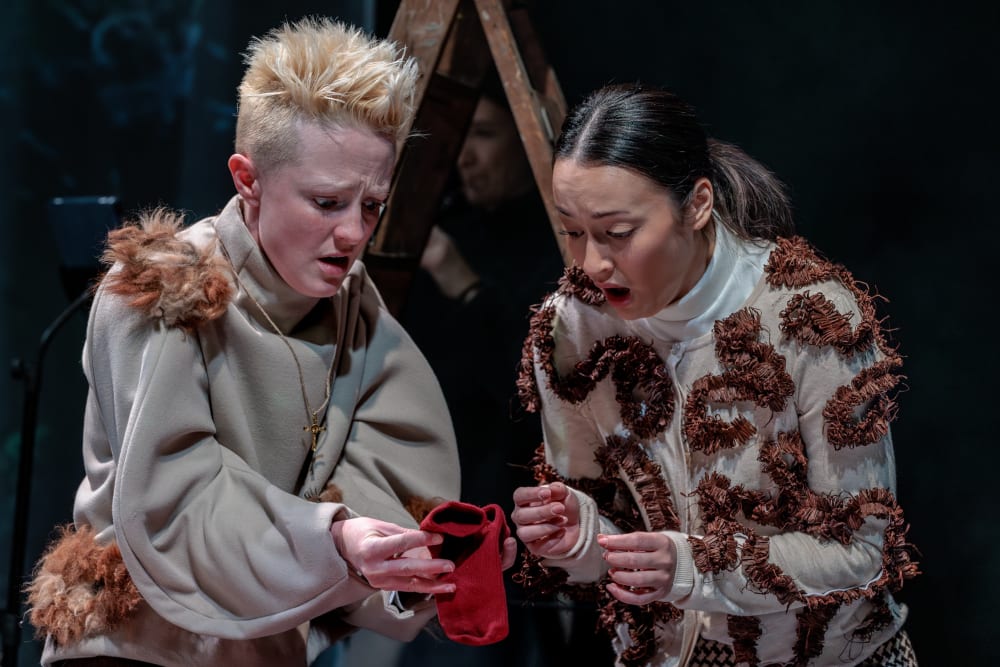
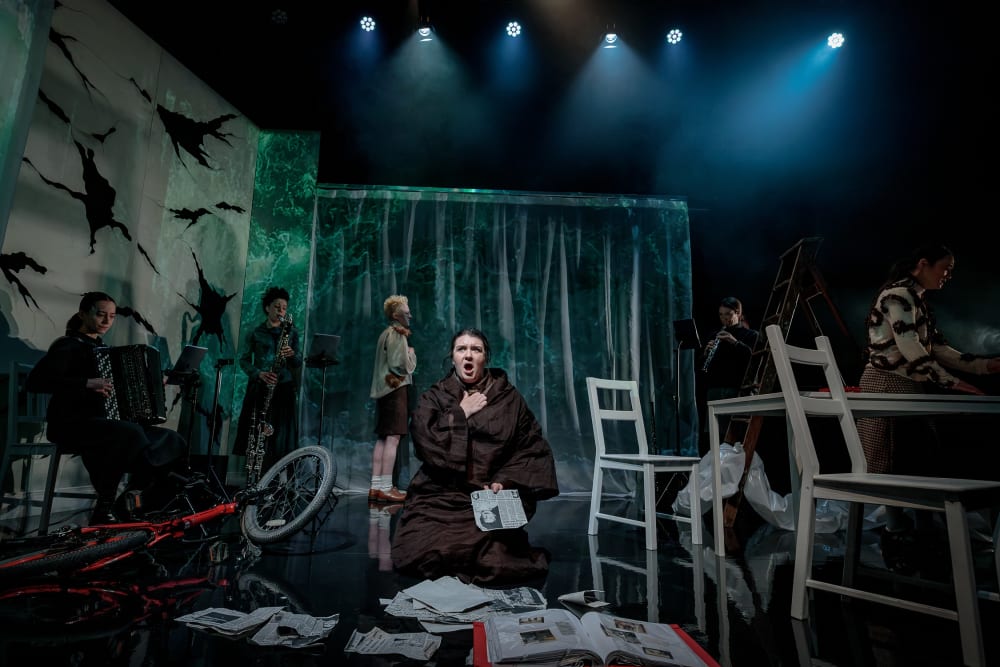
To work as an Early Career Designer on Riders to the Sea with OperaUpClose was a fantastic opportunity and experience that I applied to after seeing the position advertised on the Arts Council England jobs page.
What would you say to students who are worried about employability or freelancing after graduation?
I think the most important message I would want to give to graduating students is that you don’t need to put pressure on yourself to follow anyone else’s timeline of progression. It is a tough industry to break into, but I believe that skill, ambition and enthusiasm will be rewarded. Social media is a fantastic place to dig yourself a deep deep hole with the shovel of comparison to all the amazing things other people are doing. Everyone’s on their own journey under their own circumstances and privileges.
Be persistent, keep applying, get used to rejection, aim high and don’t think of what some might consider mediocre jobs as stagnation, but use those jobs to learn, refine your skills, make connections, and grow.
As someone who came to London from Germany, how did you find your community at LCF?
I was pretty lucky in that a lot of people in my year group moved to London for the course without knowing many others. Because it was Covid when I started at LCF and socialisation outside of class was limited, I hung out a lot with my classmates, some of whom ended up becoming very good friends – we bonded over similar interests and massively varying opinions on music, queerness (which a lot of people at art school are queer) and our ambitions.
Why would you recommend BA (Hons) Costume for Performance to someone considering applying?
I think that in the creative industries, a lot of what ends up making someone really good at what they do and have a successful career, are things that aren’t taught at school or university.
My experience on the course taught me to depend on myself, and to continuously aim to further my skills and point of view.
It’s a great place for those who already have an idea of where they’re going, and are looking for an opportunity to challenge and question themselves whilst gaining a comprehensive insight into costume conception, design, and realisation.
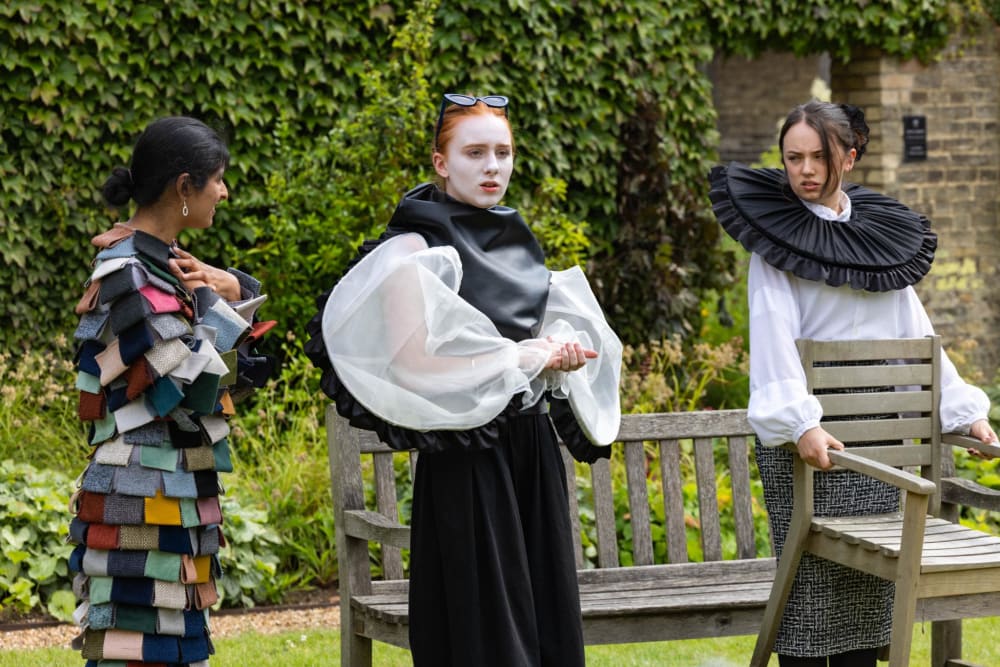
Robin’s career so far reflects what many BA (Hons) Costume for Performance students discover, that the course equips you with technical skill, but also the confidence to navigate different disciplines, make your own opportunities, and find collaborators who lift you up.
BA (Hons) Costume for Performance offers the space to experiment, to specialise, and to understand costume as a storytelling tool across stage and screen. And, as Robin shows, the work you make here can carry you into places you never expected to go.
- Learn more about BA (Hons) Costume for Performance
- Read more LCF Stories
- Find out about LCF undergraduate courses