MA Sound Arts student reflects on movement, collaboration and experimental sound practice
- Written byLondon College of Communication
- Published date 29 April 2026
Tell us about yourself
Hi, my name is Ashling, and I am currently studying MA Sound Arts at London College of Communication (LCC), part of the University of the Arts London.
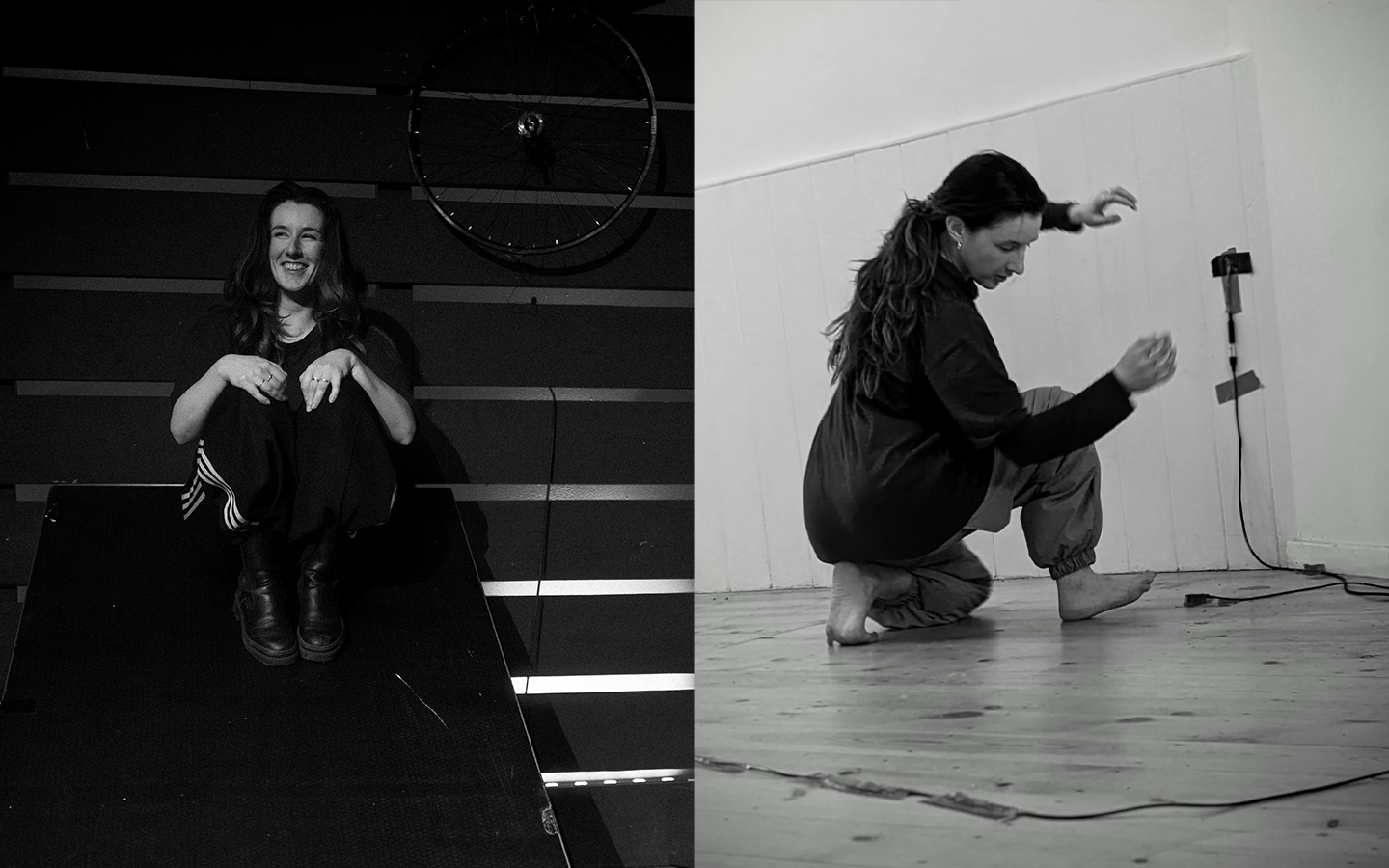
Prior to the MA, I was based in Newcastle upon Tyne working freelance in dance, sound, and street theatre, performing across the UK and internationally. As a dance artist, I worked closely with musicians, often engaging in live dance and music improvisation and sharing. I always found the relationship between sound and movement particularly interesting and began to explore its interconnectedness further through several residencies, including a Creative UK Residency in Alnmouth and a Creative Summer Residency at Dance City.
This led to site-specific performances and workshops exploring the relationship between movement and sound in relation to the body in space. Performances include Newcastle Contemporary Art, a collaboration with Turner Prize nominee Delaine Le Bas, Industrial Coast events, Sonic Arts Week Middlesbrough, and Fertile Ground’s The Harvest.
I decided to study at LCC as I wanted time to focus more closely on sound art, develop my practice, learn more about its history, be surrounded by other practitioners, and learn from the lecturers within the faculty.
What did you do before joining London College of Communication (LCC), and why did you choose this course?
Before joining LCC, I was working freelance across dance, sound, and performance, developing a practice centred on live improvisation and interdisciplinary collaboration. My work often explored how sound and movement interact in space, which gradually led me toward sound art as a dedicated area of study.
I chose the MA Sound Arts course at LCC because I wanted to deepen my practice, expand my understanding of sound art histories, and be part of a community of practitioners working in this field.

What have you learned on the course so far, and how is it shaping your practice?
Since being on the course, we have had a range of opportunities to develop ourselves as sound artists.
In the autumn term, we devised a group radio show on Resonance FM, engaging in collaborative writing and sound production to create The Sound of Criticism. We also worked with LCC’s Her Noise Archive, responding to its themes through new creative work.
I was particularly inspired by Ellen Fullman’s Long String Instrument and developed a prototype for a large-scale interactive installation, Sonic Web, activated by movement. I am looking forward to refining this project in the coming terms.
The spring term offered the opportunity to collaborate with Japan-based MA Sound Arts alumni Tomoko Hojo, participating in workshops exploring Wan-Chien Cheng’s score Voice in Flow and Hojo’s Ring In/Ring Out. These performances were shared during an evening of expanded listening at IKLECTIC in March.
LCC is also home to CRiSAP, a world-leading research centre in sonic arts, and students can attend monthly soirées to engage with wider research and practice.

What advice would you give to future students considering this course?
I would encourage prospective students to attend open days, meet the course leaders, and ask as many questions as possible to determine whether the course is the right fit.
I would also encourage continued exploration of your own practice while engaging with exhibitions, performances and research that can help inform and develop your thinking.
Related links
- Discover MA Sound Arts
- Explore more from our Screen School
- Learn more about CRiSAP
- Follow Ashling McCann