Fashion Psychology Meets the Industry: Insights, AI, and Future Career Paths
- Written byLondon College of Fashion
- Published date 07 March 2026
Share story
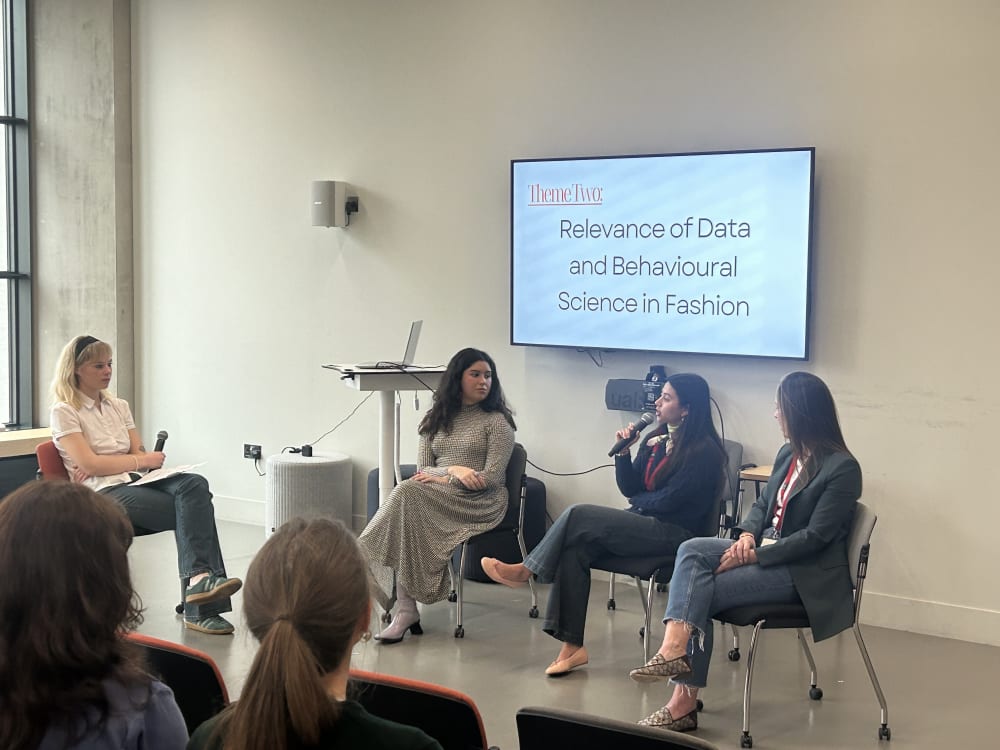
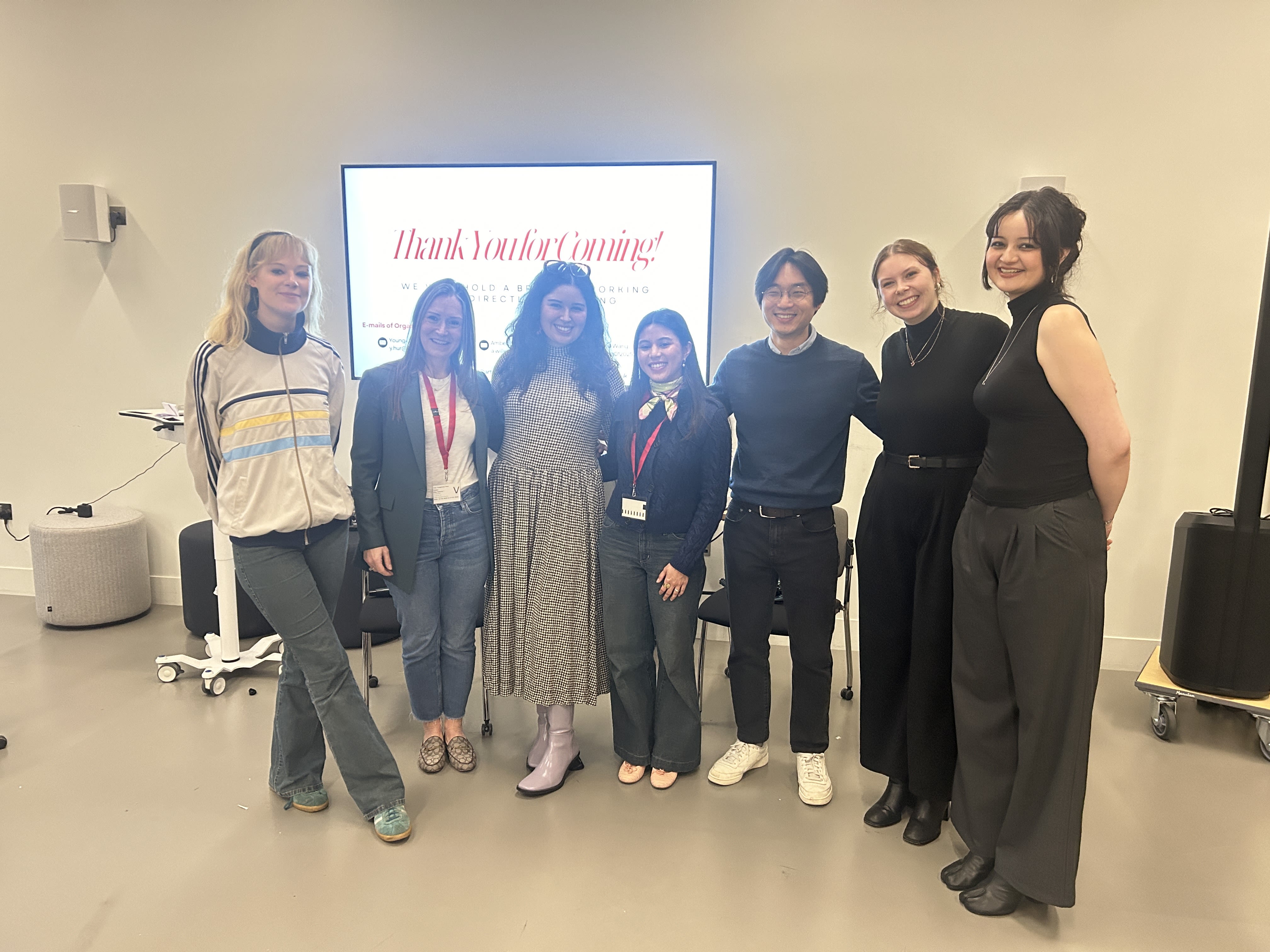
On the last Friday of February, students and alumni from London College of Fashion's Psychology of Fashion courses gathered for a panel event, where insights about and tips for students taking their first foray into the fashion industry were shared.
Organised by the MSc Psychology of Fashion course reps Amber Williams, Hannah Tipton and Lissa Spenninger, and Course Leader Young-Jin Hur, the event built on the success of previous years’ panels. The latest iteration of Fashion Psychology Meets the Fashion Industry once again provided students with insights and firsthand experiences from fashion industry insiders.
Industry experts share their experiences
We were joined by Fflur Roberts, Head of Luxury Goods at Euromonitor, alongside two MSc Psychology of Fashion alumni: Paloma Romero-Salas, who holds a Research Executive position at Toluna, and Mikela Alvarado, Trend Specialist at WGSN.
Over the course of two hours, the panellists shared insights and personal experiences, covering topics ranging from how data and behavioural science can be applied in the realm of fashion, practical advice on navigating the job market, and up-to-date industry perspectives on hot topics such as the future of artificial intelligence (AI) and sustainability.
The growing importance of consumer insights
Mikela revealed that “brands are [increasingly placing more emphasis] on understanding who their consumers are,” which signals the importance of honing data analysis and behavioural science knowledge.
Particularly relevant to our course was the clarity offered in terms of research methods used in industry settings, and the value of behavioural insights and data in decision-making processes.
AI in the Fashion Industry: Tool, Not Threat
The panellists agreed that while AI serves as an important tool for optimisation within their respective roles, the idea of being rendered obsolete is not a looming fear as many students may worry about. After all, human skills like client communication and relationship building are key soft skills that AI is unable to replicate, so brush up those interpersonal skills, everyone.
Rather than framing AI as a threat, speakers illustrated how it can be integrated as a collaborative tool, reshaping expectations and broadening student perspectives.
Networking and career preparation
Beyond knowledge acquisition, the event provided valuable opportunities for networking and building meaningful professional relationships.
By speaking with Psychology of Fashion alumni, the event aimed to strengthen fellow students’ confidence in taking proactive steps to enter the industry by offering reassurance, motivation, and inspiration to pursue long-term career ambitions.
Practical guidance was also shared on the importance of conducting thorough, strategic research into the brands and specific roles students aspire to pursue. This includes understanding a company’s ethos, target audience, current projects, and industry positioning in order to craft highly tailored applications. In addition, the panel discussed the proactive use of cold emailing as a professional networking strategy.
Connecting academic learning with industry practice
Industry engagement is a vital component of studying psychology at LCF because it bridges the gap between academic theory and real-world practice.
Engaging with industry professionals helps contextualise classroom learning, demonstrating how qualitative and quantitative skills translate into tangible business impact. This reinforces the relevance and value of psychological insight within fashion, strengthening students’ professional identity and clarity around potential career pathways.
Young-Jin Hur, course leader at London College of Fashion, states:
The industry panel discussion provides a platform through which current students can learn how the psychology course, through scientific approaches to human data, data literacy, and unique psychological insights into human behaviour, can equip them for the fashion industry. It is also a fantastic opportunity for students to meet alumni and hear about their unique journeys from being LCF students to making real strides in the industry.
Looking ahead: The future for Psychology of Fashion graduates
To conclude, the Fashion Psychology Meets the Fashion Industry event gave students the opportunity to get a firsthand look at how the theories and ideas they had been learning about could be integrated into a major industry.
By discussing topics urgently arising in the modern fashion industry like AI, sustainability, and job acquisition, students were able to see how the knowledge they are acquiring at LCF can be applied in real-world disciplines. The two alumni who joined the panel were able to show students the light at the end of the tunnel: what they study in the classroom is happening in companies every day.
If one were to study psychology within a fashion-focused institution, they could look forward to having a wide array of access to both creative and academic knowledge at their fingertips. Tutors share their passion for the field and encourage creative thinking and problem solving. The assessments teach vital research skills and apply them in modern workplace settings.
It may also be interesting to explain to others that they are getting a science degree at a fashion school. As the event demonstrated, although the field may be small and niche now, these skills are needed in many aspects of the fashion industry. It encourages students to look forward to life after graduation, as the skillsets they bring to the table are needed, respected, and sought after.
- Find out more about MSc Psychology of Fashion
- Read more LCF Stories