
Thinking about what comes after your BA? At LCF, progression isn’t about starting over; it’s about building on what you’ve mastered and pushing it into new territory. Our postgraduate courses don’t just deepen your skills; they connect tradition with innovation, craft with technology, and ideas with industry.
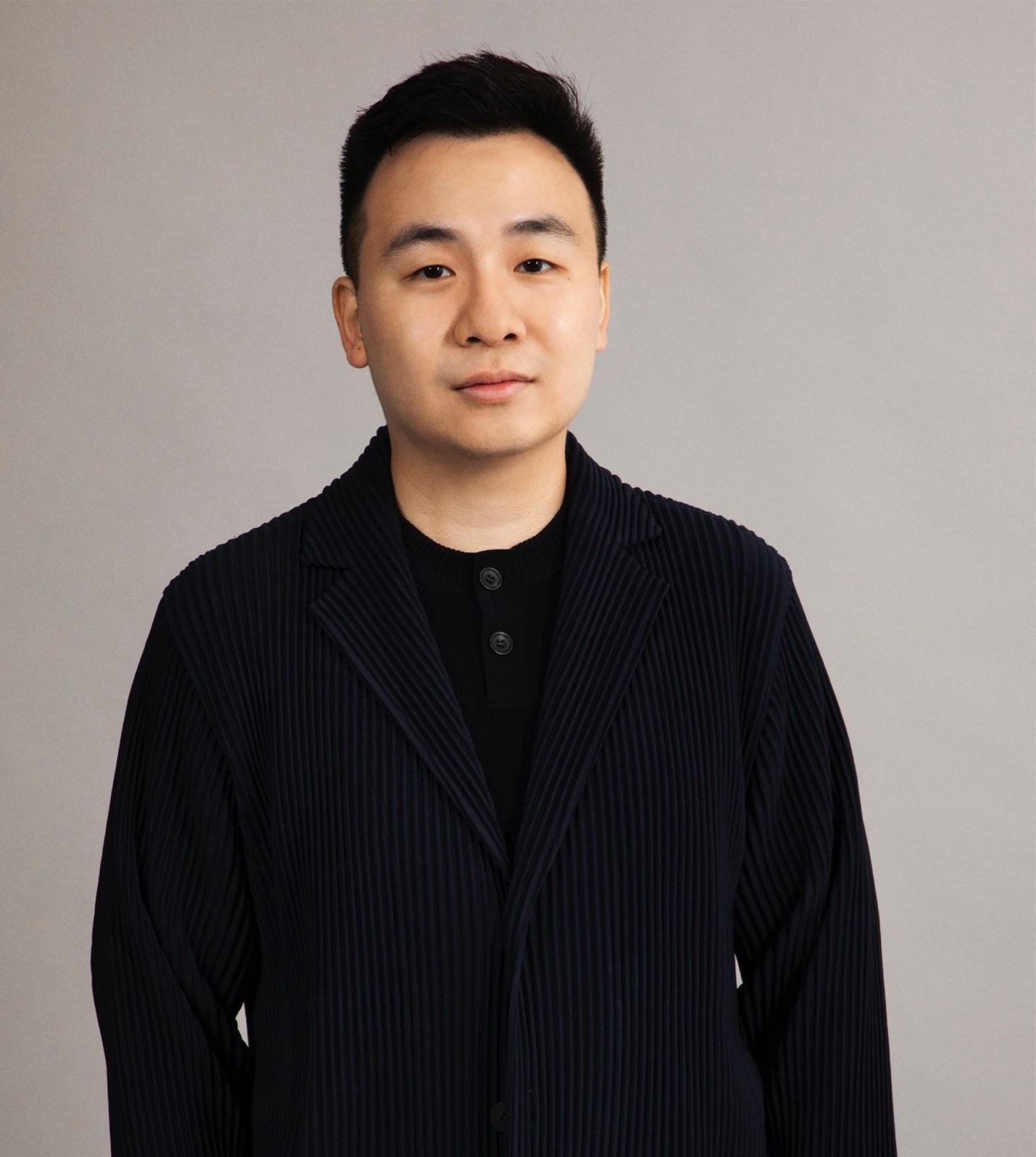
In a recent interview, we caught up with Bowen Zhan, now an Assistant Professor of Design Studies at the University of Wisconsin–Madison, who reflects on how his BA in Bespoke Tailoring and MA in Pattern and Garment Technology provided him with invaluable experiences that have gone on to shape his whole career.
Hi Bowen! Can you start by introducing your journey at LCF, starting with your BA course, and how did that experience lead to pursuing an MA?
LCF became the natural choice because of the specificity and depth of its courses. The programmes offered allowed me to focus on a particular area of practice rather than a generalised fashion design pathway.
Bespoke tailoring stood out as the most meaningful option for me, as it centres on traditional craftsmanship. During the BA, I developed strong skills in pattern cutting, fabric handling, and hand construction techniques.
At the same time, I began to question what the future of such a traditional craft might look like. A key moment for me was a project that was then called Technology in Tailoring, now known as Future Artisan, which encouraged me to think critically about how digital innovation could support and extend traditional practices.
This project marked a turning point in my thinking. It pushed me to consider how craftsmanship, industry practice, and technology might coexist, and it directly led to my decision to pursue the MA in Pattern and Garment Technology.
The MA felt like a natural progression that allowed me to continue engaging deeply with tradition while also exploring future-focused development and industry applications.
What motivated you to study at LCF for two different levels, rather than elsewhere?
My decision to study at LCF for both undergraduate and postgraduate levels was shaped by several interconnected factors, with London itself playing an important role. As one of the world’s major fashion capitals, London carries a strong historical and cultural relationship with fashion, particularly in areas such as bespoke tailoring.
Savile Row is not simply a street associated with tailored suits, but a symbol of craftsmanship, discipline, and a form of gentlemanly culture deeply embedded in British history.
Studying BA (Hons) Bespoke Tailoring at LCF allowed me to immerse myself fully in this context. As a leading fashion institution, LCF provided not only technical expertise but also the cultural and historical grounding that is essential to understanding tailoring as a practice.
The combination of location, institutional reputation, and specialised teaching made LCF the most meaningful choice for my undergraduate studies, and there was no hesitation in that decision.
The motivation to continue at LCF for my MA followed a similar logic. The specific discipline of MA Pattern and Garment Technology offered at LCF is highly specialised, and I did not find the same level of focus or depth elsewhere.
Rather than broadening away from tailoring, the MA allowed me to build directly on my undergraduate experience by expanding it into questions of digital innovation, industry practice, and future development.
How did LCF’s teaching and community help you develop?
One of the most important strengths of LCF’s teaching is its close connection to industry. Many of the tutors bring professional experience directly into the classroom, which meant that the knowledge and skills we learned were grounded in current industry practice rather than abstract theory.
This gave me a realistic understanding of how the fashion industry operates today and helped me develop skills that were immediately relevant. Being based in London further strengthened this connection; knowledge felt present and active.
As a fashion-specialised institution, LCF provides comprehensive facilities and resources that support both standard professional training and more experimental exploration. From pattern cutting studios to technical workshops and digital tools, I had access to everything I needed to test ideas at different scales and levels of complexity.
Equally valuable was the exposure to external expertise. Through guest lectures, workshops, and collaborations with professionals from both industry and academia, I was able to gain insight into the current state of the field and emerging directions. These interactions helped bridge the gap between education and practice and allowed me to situate my own work within a broader professional and research context.
What skills did you gain from each stage that you apply now in your career?
The knowledge and skills I gained from both my BA and MA have proven to be far more valuable than I could have anticipated at this stage of my career. Each level contributed something distinct, and together they shaped the way I now teach, research, and approach fashion education.
Through my BA in Bespoke Tailoring, I developed a deep understanding of manual patternmaking, garment construction, and the discipline of traditional craftsmanship. This training built a strong respect for process, precision, and material behaviour.
The MA expanded this foundation by introducing digital tools, industry-focused thinking, and a more analytical approach to problem-solving. The MA encouraged me to think critically about efficiency, scalability, and future development within the fashion industry.
In my current role as an educator, where my teaching focuses on both manual and digital patternmaking, I draw directly on this combined background. What feels particularly valuable is the ability to bridge tradition and innovation, and to translate knowledge gained in studios and industry settings into teaching that is accessible and meaningful for students. This balance allows me to help students understand not only how garments are made, but also how fashion practices can evolve responsibly in the future.

How do you feel studying from undergraduate through to MA at the same university has shaped you, both personally and professionally?
Working within the same university has meant a shared understanding of undergraduate and postgraduate teaching frameworks. The knowledge, skills, and ways of working developed during the BA were recognised and built upon during the MA, which created space for direct progression and meaningful knowledge translation. This continuity supported a more coherent development of my practice rather than treating each stage as a separate reset.
Finally, what are your next goals in the fashion industry, and how do you think your LCF experiences have prepared you for that?
As an academic working in fashion-related studies, my next goal is to continue developing as both an instructor and a researcher. I am interested in building teaching that bridges traditional craftsmanship and emerging digital tools, while advancing research that addresses how fashion systems can become more thoughtful, efficient, and sustainable.
My experiences at LCF remain one of the most valuable foundations of my professional journey.
The training I received there, particularly the balance between technical depth, critical thinking, and industry awareness, continues to inform how I approach new ideas and projects. Many of the questions I am exploring now in my research can be traced back to the foundations I built during my BA and MA, where I first began to connect craft, technology, and human-centred design.