Postgraduate

MA Cities

A map of Recife, Brazil plotting historical geographical and data from 1859 to now via different layers of coloured lines and shaded areas
Mapping water flow under the city of Recife in Brazil from 1850 - present. By MA Cities Y1 student Gaia Maria Vignali.
College
Central Saint Martins
Start date
September 2026
Course length
Two years (60 weeks)
Extended Full Time

MA Cities creates city-making practices that foreground social and climate justice.

Course summary

Apply now to start in September 2026

Applications are open for this course. Apply by 18 March for equal consideration.

Through a critical and experimental approach, you will challenge conventions of urban development and regeneration, exploring new forms of knowledge exchange through culturally engaged participatory processes. This course is part of the Spatial Practices programme.

Why choose this course at Central Saint Martins

  • Critical spatial practices: The course emphasises critical engagement with the realities of urban spatial production in the context of environmental, political and societal crisis. It embraces the disruptive and experimental culture of Central Saint Martins while ensuring rigorous academic content creates innovative, relevant and applicable and published results.
  • Engaging with industry: Elements of the course are delivered by industry practitioners as part of your professional development. One unit has a city as a client partner. You will have direct involvement in urban sites and situations as part of your study in the U.K. and beyond.
  • Interdisciplinary, wide-ranging appeal: This course will appeal to architects who are keen to up-skill and approach the complexities of the city creatively; planners who seek a more multi-disciplinary approach; artists, creative practitioners, curators and commissioners who want to critically advance their practice; and professionals from urban design, urban policy and research backgrounds who want to broaden their critical discourse and international network.
  • Future-facing creative production: You will produce a multimedia portfolio as part of your taught and individual research that experiments across practices being deployed to expand the field of city-making, and that addresses pressing urban issues.
  • Course structure: MA Cities is delivered through a combination of intensive learning sprints and self-directed study. Each sprint will deliver core knowledge and research into urban policy and governance; cultural infrastructure and creative citizenship; and the urban economy.
  • Open days

    Upcoming open days for this course will take place on the following dates:

    Recordings

    Watch a recording of the recent MA Cities open day.

    Scholarships, bursaries and awards

    Course overview

    MA Cities creates city-making practices that foreground social and climate justice. As an art and design college, Central Saint Martins is a place of intense cultural production, generating critical creative practices in complex and conflicting urban settings. Through an enquiry-led approach, MA Cities challenges the conventions of urban development, regeneration, and place-making and provides a platform for generating and implementing innovative forms of civic practice. 


    MA Cities confronts the pressing social, ethical and environmental concerns of the city and explore the value and agency of alternative practices from around the world.  Students will navigate complex and dynamic scenarios using creativity and originality to address current and future city-making challenges. MA Cites understands cities, towns and other dense urban settlements as collaborative and contested spaces – created through interactions between various participants and stakeholders. The course engages in collaboration and knowledge exchange with a wide range of art, design, and architectural practices, external partners and organisations. Students will be immersed in professional contexts of public sector and urban practice through direct engagement with local governments, regeneration agencies, creative and spatial practitioners. The course also works in collaboration with world-wide partners, to ensure that the course is informed by leading international perspectives and becomes a platform for transnational exchange and expertise in creative city-making.

    What to Expect

    • The course is focused on city-making as a cross-disciplinary field that is rapidly evolving, and students are encouraged to shape the jobs and approaches that future cities will need through the course
    • The course teaches and deploys design methods from across disciplines relevant to city-making, including multiple time-based media at various scope and scale—drawing, text, sound, broadcasting, film, projection, performance, curation, collaborative workshops and public events to develop approaches to intervene in and speculate on current urban systems.
    • The course takes a highly philosophical and highly practical approach to city-making. The course’s theory program draws readings and references from diverse disciplines, cities and practices. The course offers introductions to a variety of technical skills and tools; students work independently to determine and develop which skills are important to augment their particular practice.  
    • The course cohort is highly cross-disciplinary and transnational. Students come from global backgrounds and diverse disciplines, as well as a range of cities, and are encouraged to work across these throughout the course, collaborating across the cohort and their wider networks of practice to complement, develop, and enhance skillsets and interests across urban references and design domains.

    On this course, students will engage with theoretical and practice-orientated approaches, political and ethical positions and a range of scales and methods of city-making. Students will critically reflect upon your own forms of urban practice, and develop new modes of research into critical practices, urban policy, governance and the urban economy –through creative collaboration and experimentation. The course will encourage students to develop an individual position, agenda and methodology, to inform their future urban practice.  

    Each unit includes a live project with an external partner from across industry, academia or government sectors. In the second year, students lead a live city-making project and self-directed thesis by practice. MA Cities alumni go on to work in many fields—architecture, urban strategy and development in the private and public sector, community collaboration and engagement, teaching and independent practice. 

    Contact us

    Register your interest to receive information and updates about studying at UAL.

    Contact us to make an enquiry.

    Course units

    Unit 1: Voices in the City – Situated Practices and Positions

    This unit introduces students to a series of short live projects and collaborations across courses, for example with MA Narrative Environments’ Unit 1: Foundations

    Voices in the City introduces each incoming cohort to a series of analytical, speculative, and creative studio-based explorations of the city. The intention is to learn a range of new skills and unlearn fixed perspectives on the city, then establish an ethical, situated and propositional position in relation to the city and to others. 

    The unit addresses the challenges facing cities through transcultural and cross-cultural dialogues and lectures, situated projects and site-specific interventions and documentation. It challenges students to confront their own specific cultural identities in relation to others and to reflect upon the polyphonic nature of civic practices. 

    Contextual studies sessions run in parallel to studio and engage with different theories and approaches to collaborative forms of city-making and taught research skills. Students will establish a thematic grounding and critical position to working in, with and for communities, examining: theories and practices around the production of social space; concepts of public space, the public realm, place-making, participatory practice and the commons.
     

    Unit 2: Productive Ecologies – Critical Creative Practices and Life-Affirming Infrastructures

    Productive Ecologies explores ways of working that bring together research and practice to address pressing urban issues and contested sites, developing civic practices through the observation of, and participation in, a live project. This is undertaken in collaboration with external agencies, for example local government, regeneration authorities, arts groups and/or third-sector organisations. In this unit, students will develop methods of critical analysis and interpretation through mapping and proposition, and will interrogate the role of culture and value in city making—the production and distribution of both, and how they might be created, countered, measured, counter-mapped, communicated, protected, collectivised—in relation to urban change.

    Students will contribute to the development of a productive ecology on a specific site, working with a live client to define to develop curatorial strategies for the generation and/or maintenance of ‘life-affirming infrastructure’.

    The unit will test a broad spectrum of models of research-based creative practices. These research-based practices serve as propositional models for valuing, advocating for and creating spaces with and for specific communities in the changing city.

    Unit 3: The Project in the City – Practice Manual and Speculative Policy 

    This unit supports students to develop and launch a live project.

    The Project in the City focuses on organisational structures, working relationships and forms of commissioning by local authorities, government and wider agencies, including their associated policy and political contexts. The unit is delivered as a series of case studies with reports and seminars from a range of practitioners, policymakers, arts professionals and local authority representatives. They will cover a range of subjects including the inner workings of local and regional government, the complexities of institutional relationships, providing first-hand accounts of initiating and implementing projects. This unit also includes lectures and case-study presentations on forms and theories of urban governance, urban policy, funding, procurement, regulation, and legislation.

    In parallel to the theory and site-specific studio work, this unit allows time and focus to develop a thesis question. It also supports students in scoping and testing methods for conducting a thesis. The thesis can be formulated as either an independent written thesis, design thesis or practice-based project. If appropriate, it can be formulated in association with a third party through an embedded practice placement undertaken during Unit 6. The thesis and live project should involve collaboration with key partners, including engagement with communities, organisations and stakeholders.

    Unit 4: Space, Money & Time – Cities, Global Flows and Transactions

    This unit supports students to speculate on the global potential of their live project.

    Space, Money & Time is concerned with the economy of urban practices, and the relationships between economic flows, social transactions and urban space. The unit goes beyond traditional urban design and planning methods to engage with the realities of fluctuating and emerging forms of economic flows and social transactions. Students will question the ethics of spatial practice and cultural production in cities on the basis of these flows and transactions, then critically reflect on and update their ethical position set out in Unit 1. 
     

    Unit 5: Thesis by Practice - New Positions on City-Making

    This unit intends to make public new city-making practices explored in the theses 

    The course culminates in a student-led thesis by practice. Students will work with a supervisor and a second, transnational, critical friend of the thesis. Thesis will reflect on the conceptual, intellectual and practical skills encountered in the course through an independent written thesis, design thesis or practice-based project. The unit is intended to rehearse creative attributes that enable students to become a self-sufficient and critical practitioner, shaping and theorising a future city-making role and develop the confidence and independence to pursue their practices. Through supervision, presentations, group tutorials, publication and exhibition, the thesis unit will support students to conduct and deliver an enquiry-led proposition which frames and launches a new civic or urban practice, revisiting the situated and declarative ways of working set out in unit 1, and rehearsing skills of proactivity, enterprise and agility.
     

    Important note concerning academic progression through your course: 

    If you are required to retake a unit you will need to cease further study on the course until you have passed the unit concerned. Once you have successfully passed this unit, you will be able to proceed onto the next unit. Retaking a unit might require you to take time out of study, which could affect other things such as student loans or the visa status for international students. 

    CSM Academic Support is delivered by a team of academics and practitioners working alongside your course to help you progress and achieve your maximum potential as a student. Academic Support can help you to develop your skills in different areas, including critical thinking, research and writing, time management, presentations and working independently and collaboratively. These may be offered as part of your timetabled classes or as bookable tutorials and workshops. 

    Mode of Study

    MA Cities is offered is offered in extended full time mode which runs for 60 weeks across two academic years. 

    Students will be expected to commit 30 hours per week to study, which includes teaching time and independent study. 

    Credit and award requirements 

    The course is credit-rated at 180 credits. 

    On successfully completing the course, you will gain a Master of Arts (MA degree).

    Under the Framework for Higher Education Qualifications, an MA is Level 7. All units must be passed in order to achieve the MA but the classification of the award is derived from the mark for the final unit only. 

    If you are unable to continue on the course, a Postgraduate Certificate (PG Cert) will normally be offered following the successful completion of 60 credits, or a Postgraduate Diploma (PG Dip) following the successful completion of 120 credits.
    Learning and teaching methods

    The learning and teaching methods devised for this course include: 

    • Briefings
    • ‘Orientation’ exercises 
    • Weekly tasks
    • Reading groups
    • Lectures
    • Seminars
    • Workshops
    • Collaborative projects (cross-cohort and cross-programme)
    • Individual and group tutorial and feedback sessions.
    • Drop-ins
    • Field Trips and Site Visits
    • Self-reflection
    • Public events such as symposia
    • Skilling workshops 
    • Team, group and work in pairs 
    • Presentations
    • Peer and external feedback 

    Some learning experiences, such as technical/ software workshops, lectures from global practitioners, or rapid tutorials, function best online, and so those sessions will be delivered digitally.

    Assessment methods

    All assessment will be of a combination of:

    • Practice (i.e. plans, proposals, projects, prototypes, presentations)
    • Papers, leading up to a thesis by practice

    MA Cities at Central Saint Martins

    Spatial Practices programme

    Student voice: Nabil Al-Kinani

    Student voice: Khadijah Carberry

    Student voice: Carina Kanbi

    UAL Showcase

    Explore work by our recent students on UAL Showcase

    Facilities

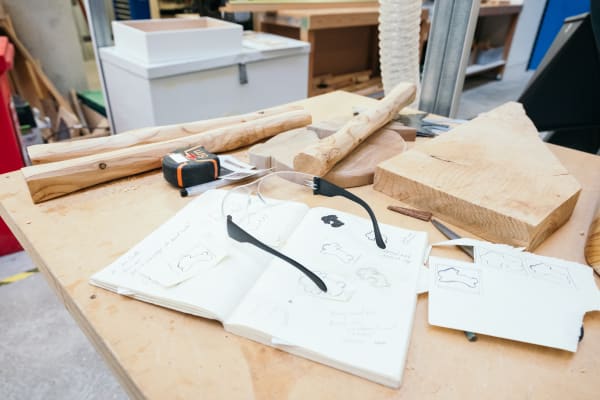
    • A large machine which has a wooden box on top of it
      Image courtesy of Central Saint Martins, 3D Large Wood workshop at Central Saint Martins
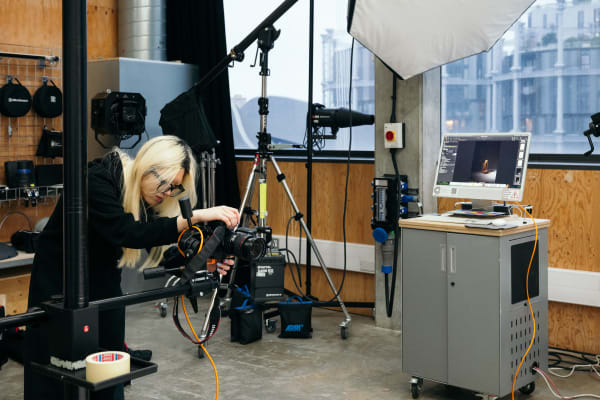
    • A photography studio
      Image courtesy of Central Saint Martins,

    Staff

    Fees and funding

    Home fee

    £7,550 per year

    This fee is correct for 2026/27 entry and is subject to change for 2027/28 entry.

    Tuition fees may increase in future years for new and continuing students on courses lasting more than one year. For this course, you can pay tuition fees in instalments.

    Home fees are currently charged to UK nationals and UK residents who meet the rules. However, the rules are complex. Find out more about our tuition fees and determining your fee status.

    International fee

    £19,845 per year

    This fee is correct for 2026/27 entry and is subject to change for 2027/28 entry.

    Tuition fees may increase in future years for new and continuing students on courses lasting more than one year. For this course, you can pay tuition fees in instalments.

    Students from countries outside of the UK will generally be charged international fees. The rules are complex so read more about tuition fees and determining your fee status.

    Additional costs

    You may need to cover additional costs which are not included in your tuition fees, such as materials and equipment specific to your course. For a list of general digital equipment you may need (and how you can borrow equipment), visit our Study costs page.

    Accommodation

    Find out about accommodation options and how much they will cost, and other living expenses you'll need to consider.

    Scholarships, bursaries and awards

    If you’ve completed a qualifying course at UAL, you may be eligible for a tuition fee discount on this course. Find out more about our Progression discount.

    You can also find out more about the Postgraduate Masters Loan (Home students only) and scholarships for Home and International students. Discover more about student funding.

    If you’re based in the UK and plan to visit UAL for an Open Event, check if you’re eligible for our UAL Travel Bursary. This covers the costs of mainland train or airline travel to visit UAL.

    How to pay

    Find out how you can pay your tuition fees.

    Scholarship search

    Entry requirements

    The standard entry requirements for students for this course are as follows:

    • An upper second-class honours degree in a relevant field including but not limited to: Architecture, Design (all forms), Anthropology, Fine Art, Theatre, Geography, Landscape, Urban Studies, Urban Planning, Engineering, Environmental Science, Literature, Postcolonial Studies, Politics, Cognitive Sciences, Computer Science, Performance, UX/UI, Communications, Media, Film, Writing, Journalism

    Or

    • An equivalent EU / international qualification

    And

    • Academic or creative experience working in fields such as architecture, urban, regional and strategic planning, policy, economics, production, curation, community collaboration and engagement, engineering, construction project management, transport planning, environmental strategy, speculative and critical design, film, media, installation, interaction design, industrial design, or other forms of independent and professional practice related to city-making.

    The course aims to recruit post-experience candidates who have graduate-level qualifications and a minimum of one year work experience. The course will not normally recruit from end-on students (i.e. those progressing directly from undergraduate degrees). 

    AP(E)L - Accreditation of Prior (Experiential) Learning

    If you do not meet these entry requirements but your application demonstrates additional strengths and alternative relevant experience, you may still be considered. This could include:

    • The quality of the personal statement 
    • Substantial related academic or work experience, which could be considered equivalent to the minimum entry requirements
    • A strong academic or other professional reference in conjunction with the above  

    Each application will be considered on its own merit but we cannot guarantee an offer in each case. 

    English Language Requirements

    IELTS level 6.5 or above, with at least 5.5 in reading, writing, listening and speaking. For further guidance, please check our English Language requirements.

    Selection criteria

    Offers will be made based on the following selection criteria:

    • A clear personal statement and position on shaping the city, related to the aims and objectives of the course
    • An interest in and commitment to the practice of city-making with a focus on social and climate justice
    • A deep curiosity about the world and rigorous engagement at all stages of the design process
    • A capacity for practice, research and production that move beyond the individual, personal, and emotional towards the infrastructural, socio-technical, and planetary in scope
    • Aspirations in personal and professional practice that will support and be supported by the course
    • Communication skills and ability in visual, written and verbal presentation 
    • Ability to think in abstract, conceptual and strategic terms 
    • A collaborative mindset and an ability to negotiate roles within multidisciplinary and cross-cultural teams

    Information for disabled applicants

    UAL is committed to achieving inclusion and equality for disabled students. This includes students who have:

       
    • Dyslexia or another Specific Learning Difference
    • A sensory impairment
    • A physical impairment
    • A long-term health or mental health condition
    • Autism
    • Another long-term condition which has an impact on your day-to-day life

    Our Disability Service arranges adjustments and support for disabled applicants and students.

    Read our Disability and dyslexia: applying for a course and joining UAL information.

    Apply now

    Application deadline

    Deadline

    Round 1:

    2 December 2025 at 1pm (UK time)

    Round 2:

    18 March 2026 at 1pm (UK time)

    Digital portfolio and video task deadline

    Round 1:

    7 days after digital portfolio and video task request

    Round 2:

    7 days after digital portfolio and video task request

    Decision outcome

    Round 1:

    6 weeks from date of application

    Round 2:

    6 weeks from date of application

    Round 1
    Round 2
    Deadline
    2 December 2025 at 1pm (UK time)
    18 March 2026 at 1pm (UK time)
    Digital portfolio and video task deadline
    7 days after digital portfolio and video task request
    7 days after digital portfolio and video task request
    Decision outcome
    6 weeks from date of application
    6 weeks from date of application

    We have 2 rounds of deadlines for postgraduate courses: one in December and one in March. If there are still places available after 18 March, this course will remain open to applications until all places have been filled.

    Read more about deadlines

    Apply now

    Application deadline

    Deadline

    Round 1:

    2 December 2025 at 1pm (UK time)

    Round 2:

    18 March 2026 at 1pm (UK time)

    Digital portfolio and video task deadline

    Round 1:

    7 days after digital portfolio and video task request

    Round 2:

    7 days after digital portfolio and video task request

    Decision outcome

    Round 1:

    6 weeks from date of application

    Round 2:

    6 weeks from date of application

    Round 1
    Round 2
    Deadline
    2 December 2025 at 1pm (UK time)
    18 March 2026 at 1pm (UK time)
    Digital portfolio and video task deadline
    7 days after digital portfolio and video task request
    7 days after digital portfolio and video task request
    Decision outcome
    6 weeks from date of application
    6 weeks from date of application

    We have 2 rounds of deadlines for postgraduate courses: one in December and one in March. If there are still places available after 18 March, this course will remain open to applications until all places have been filled.

    Read more about deadlines

    Apply to UAL

    Start your application
    or

    Apply with a UAL Representative

    Based across the world, our local UAL representatives can support you with your application from your home country. Check to see if there is a representative available in your country currently.

    Find your representative

    How to apply

    Follow this step-by-step guide to apply for this course

    Step 1: Initial application

    You will need to submit an initial application including your personal statement and CV.

    Personal statement advice

    Your personal statement should be maximum 500 words and include:

    • your reasons for choosing the course, including your specific interest in city-making and urban research
    • your current creative practice and how this course will help you achieve your future plans
    • what new skills and projects you hope to develop through the course
    • the kind of city-making you hope to be involved in in the future
    • any relevant education and experience, especially if you do not have any formal academic qualifications.

    CV advice

    Please provide a CV detailing your education, qualifications and any relevant work or voluntary experience. If you have any web projects or other media that you would like to share, please include links in your CV. If English is not your first language, please also include your most recent English language test score.

    Read our advice on preparing the tasks and documents for your initial application.

    Step 2: Video task and digital portfolio

    We will review your initial application. If you have met the standard entry requirements, we will ask you to submit a digital portfolio.

    You’ll need to submit this via PebblePad, our online portfolio tool.

    Video task advice

    We’d like you to submit a short video to help us learn more about you. When recording your task, please face the camera and speak in English.

    What to include in your video task:

    • Please tell us why cities and city-making matter to you.
    • Answer the question as clearly as possible. Aim for a shorter video of 30-45 seconds. The maximum length of the video is 2-3 minutes.
    • Where possible, do not read from a script.

    Find advice on how to plan and film your video task. Then read our guidance on how to submit your video task, including the file types we accept.

    Digital portfolio advice

    Your portfolio should consist of recent work that reflects your creative strengths.

    It should:

    • be a maximum of 10 pages, including your video task
    • include a range of work to showcase your current creative practice. Focus on work that illustrates your interests at a range of urban scales, as well as your professional experience and practical skills. This doesn’t have to be purely design focused. For example, you could include photography and an analytical text, events you have organised, or other work that you consider to be spatial or to contribute to city-making
    • include works in progress, experimentation and research. This helps us understand how you test ideas and develop your work. For example, a series of photographs exploring a spatial condition; analytical diagrams exploring the connection between particular issues in the city (even if there is no design solution or masterplan in response); or a collage proposing a spatial intervention.
    • show how your work is a good fit for the course rather than including every page of a project
    • include any collaborative work and reflect on the collaboration: was it integral to the creative process?

    To find out how to create, format and upload your portfolio, see our Portfolio advice and PebblePad advice.

    Step 3: Interview

    You may be invited to an interview following our review of your application. All interviews are held online and last 15 to 20 minutes.

    For top tips, see our Interview advice.

    You also need to know

    Communicating with you

    Once you have submitted your initial application, we will email you with your login details for our Applicant portal.

    Requests for supplementary documents like qualifications and English language tests will be made through the applicant portal. You can also use it to ask questions regarding your application. Visit our After you apply page for more information.

    Applying to more than 1 course

    You can apply for more than 1 postgraduate course at UAL but we recommend that you apply for a maximum of 3 courses.

    As every course has its own entry and assessment requirements, we recommend tailoring each application to showcase how your experience, skills and interests match that course. Applying for many different courses may make it more difficult for you to show that you are suitable for each course in a competitive admissions process.

    Only apply to the course(s) you are most interested in – applying for too wide a range of different courses may reduce your ability to clearly demonstrate your suitability for each. It’s better to make fewer bespoke applications than many generic ones. This will help you to stand out where we have high demand for places.

    If you receive offers for multiple courses, you'll only be able to accept 1 offer. UAL doesn't accept repeat applications to the same course in the same academic year.

    Visas and immigration history check

    All non-UK nationals must complete an immigration history check. Your application may be considered by our course teams before this check takes place. If your course requires a portfolio and/or video task, we may request these before we identify any issues arising from your immigration history check. Sometimes your history may mean that we are not able to continue considering your application. Visit our Immigration and visas advice page for more information.

    External student transfer policy

    UAL accepts transfers from other institutions on a case-by-case basis. Read our Student transfer policy for more information.

    Alternative offers

    If we are unable to consider you for the course you have applied to but your application is really strong, we may make you an alternative offer on a different course or at a different UAL College. This happens when our admissions tutors have found another course that they believe would be a strong match for your skills and interests.

    Deferring your place

    We do not accept any deferral requests for our postgraduate courses. This means that you must apply in the year that you plan to start your course and you will not be able to defer your place to start at a later date.

    Application deadlines

    Most of our postgraduate courses have 2 rounds of deadlines: one in December and one in March.

    As long as you apply ahead of each deadline we will consider your application alongside all the other applications in that round. We always make sure to hold enough places back for round 2 to make sure we can consider your application fairly, no matter which round you apply in.

    If there are still places available after the second deadline, the course will remain open to applications until all places have been filled.

    For our MBA courses, there is only 1 deadline. This is 31 July for international applicants and 31 August for UK applicants. This is to make sure you have enough time to apply for your visa if you are an international student.

    For our January-start courses, the deadline is in October. If there are still places available after this deadline, the course will remain open to applications until all places have been filled.

    Careers

    Students come from these backgrounds:

    • Architecture
    • Aid / NGO
    • Arts
    • Theatre
    • Diplomacy
    • Urbanism
    • Marketing

    Students have career shifted into:

    • Local authority work
    • Commissioning
    • Launching their own engagement practice
    • Film work
    • Urban consultancy
    • Urban design
    • Experimental theatre on urban themes
    • Sustainable building materials
    • Academic research