Postgraduate

MA Music Production

A display showing a record, a series of photographs and a cassette-tape.

College
London College of Communication
Start date
September 2026
Course length
1 year 3 months full-time (45 weeks across a four-term model)

MA Music Production will prepare you for a career as a highly skilled producer of music and audio through 4 key areas: creative practice in music production; technical studio and production skills; historic, aesthetic and critical listening and research skills; and employability within the creative industries.

Course summary

Term dates

The term dates for this course are different from the standard UAL term dates. This is a temporary change while we move into our new building.

  • From September 2026 to June 2027 you will study in our current building. The final week of the Summer Term (June 2027) will be taught online.
  • During your final term (Autumn 2027) you will study in our new building. Your term starts on 4 October and ends on 17 December.

View Postgraduate term dates

Why choose this course at London College of Communication

  • Creative practice in action: With structure, time and facilities to explore specialist production techniques, you’ll work creatively and critically to develop and redefine your own practice.
  • Connected collaboration: As part of a global community of likeminded creatives, you’ll have opportunities to collaborate with other Screen School disciplines including film, television, animation, games design and virtual reality (VR).
  • Industry-aligned: Designed with industry specialists, this course provides opportunities to connect with creative practitioners and industry figures.
  • Build your career: You’ll focus on developing your career path by building a portfolio, creating work aligned with your interests, growing your network, and demonstrating your skills through opportunities such as public exhibitions.
  • Facilities and research: Our new, state-of-the-art studios will be your primary working space, with access to control and composition rooms, live rooms and multi-channel mixing rooms. You’ll also benefit from our close relationship with the Creative Research into Sound Arts Practice (CRiSAP) research centre.

Open Events

The next Open Evening for this course will be announced soon.

A recording of our latest Virtual Open Event for this course is available. Watch online.

Course overview

MA Music Production will prepare you for a career as a highly skilled producer of music and audio. With a focus on 4 key areas, you’ll be supported to explore creative practice in music production; technical studio and production skills; historic, aesthetic and critical listening and research skills; and employability within the creative industries.

Designed to meet the needs of students who have completed an undergraduate programme in a related subject, this course is also suited to professionals who wish to return to study and further develop their own music production practices.

What to expect

  • Redefining your practice: Throughout your time on the course, you’ll develop a deep understanding of how to work creatively across the convergent digital technologies of contemporary music production.
  • Course progression: You’ll follow a curriculum that maps onto 3 distinct course stages, moving from technical and research practices in Term 1 to industry and collaborative practices in Term 2, before focusing on individual project and production delivery in Terms 3 and 4.
  • Practical learning: Supported by leading academics and industry professionals, you’ll be given the structure, time and facilities needed to explore a range of specialist production techniques.
  • Creative development: You’ll develop your own creative practice in areas such as studio and live recording, mixing, mastering, songwriting and composing for a wide range of media applications including film and television, games and virtual reality (VR).
  • Specialist facilities: The course is delivered using purpose-built, industry-standard audio facilities at LCC, including a suite of new studios and live rooms, a multi-channel performance lab, and an extensive range of audio equipment for recording and producing music.

Industry experience and opportunities

Working within one of the leading art and design universities in the world, you’ll have opportunities to collaborate across disciplines, and also with industry practitioners and partner companies.

Throughout the MA, you’ll build a portfolio of work that showcases your creative talent, and have space to both critically reflect on and evaluate your own practice, enhancing your own uniqueness as a music producer.

Mode of study

MA Music Production is in Full Time mode which runs for 45 weeks over 15 months. You will be expected to commit 40 hours per week to study.

Contact us

Register your interest to receive information and updates about studying at UAL.

Contact us to make an enquiry.

Course units

In response to the Climate Emergency, UAL has embedded responsible practices within the curriculum. We shaped our courses around principles of social and racial justice, and environmental sustainability that ensure learning outcomes reflect the urgent need to equip you with the understanding, skills, and values for ethical practice and empower you to work towards an equitable future.

Each course is divided into units, which are credit-rated. The minimum unit size is 20 credits. The MA course structure involves 5 units, totalling 180 credits.

Autumn, Term 1

The Practice of Music Production (40 credits)

This unit will cover the fundamental tools used in the process of music production.

You’ll demonstrate that you have an advanced understanding of core technologies and learn how to apply your knowledge practically, grounding and enhancing your own music production practice through contextual, technical and creative study.

Critical Perspectives on Music Production (20 credits)

Through critical group discussion of both historical concepts and current research and practice, you will evaluate your own music production practice in reference to global contemporary debates on the art of record production and the wider creative industries.

You’ll also undertake self-directed research in order to create an individual music production practice proposal.

Spring, Term 2

Collaborative Unit (20 credits)

In this unit, you will identify, form and develop collaborative working relationships with a range of potential partners - either within the University or externally. You’ll design and deliver a cross-disciplinary project to a bespoke brief, replicating the kinds of collaborative work that music production typically involves.

Music Industry Practices (40 credits)

In this unit, you’ll study the music industry by examining its past, present and future, along with the diverse technical, social, cultural and political influences that shape music industry practices.

You’ll participate in sessions to develop key skills needed to work within the industry, ranging from business planning, copyright and intellectual property to funding applications and performance rights. You’ll also have the opportunity to prepare for your career beyond the course by working to a set industry brief.

Summer, Term 3

Final Major Project (60 credits)

This unit will provide an opportunity for you to demonstrate the development of your own practice and research relating to music production through the completion of a Final Major Project.

Working within an extended period of practice-based research, you’ll synthesise the practical, reflective and conceptual developments in your work throughout the course, and also produce an accompanying critical reflection on that practice.

Autumn, Term 4

Final Major Project (60 credits - continued)

Learning and teaching methods

  • Practical workshops
  • Studio recording practice
  • Lectures
  • Seminars
  • Tutorials
  • Guest lectures and workshops
  • Project work
  • Peer critique
  • Research
  • Learning sets
  • Group working
  • Virtual learning environment

Assessment methods

  • Studio recording (creative work)
  • Studio mix (creative work)
  • Portfolio
  • Written report
  • Written reflection
  • Essay
  • Presentation
  • Project proposal
  • Collaborative project (creative work)
  • Programme notes

Facilities

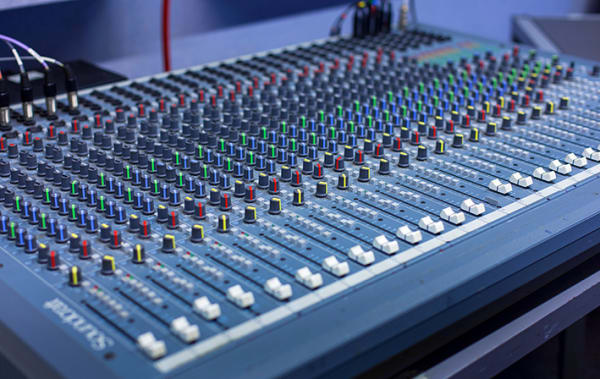
  • The mixing board in the Composition Studio.
    Image © Lewis Bush

    Sound and Music

    Access our range of resources, studios and workspaces that support Sound Arts and Music Production practices.

  • Student reading a book in between two bookshelves in the Library
    Students in the Digital Space. London College of Communication, UAL. Photograph: Alys Tomlinson

    The Digital Space

    The Digital Space is an open-plan, creative hub with computers set up with specialist software.

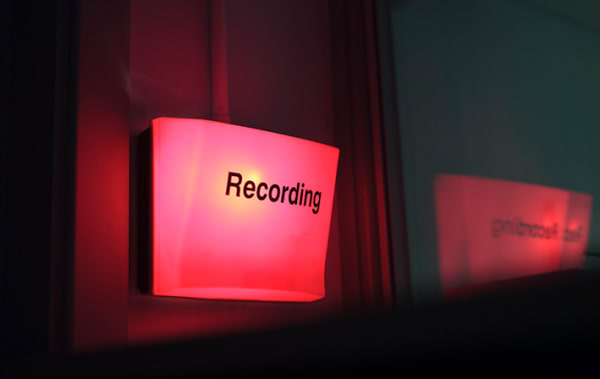
  • Red light indicating recording is taking place.
    Image © Vladimir Molico

    Lens-based and Audio-visual

    Studios, workshops and technical spaces for photography, video production, special effects, audio-visual and live events projects.

Industry accreditations

MA Music Production is accredited by, and delivered with support from, the music industry professional body Joint Audio Media Education Support (JAMES) - a recognised Professional Statutory and Regulatory Body (PSRB) for higher education courses.

Logo for the accrediting body JAMES

Staff

Fees and funding

Home fee

£14,420

This fee is correct for 2026/27 entry and is subject to change for 2027/28 entry.

Tuition fees may increase in future years for new and continuing students on courses lasting more than one year. For this course, you can pay tuition fees in instalments.

Students from countries outside of the UK will generally be charged international fees. The rules are complex so read more about tuition fees and determining your fee status.

International fee

£30,890

This fee is correct for 2026/27 entry and is subject to change for 2027/28 entry.

Tuition fees may increase in future years for new and continuing students on courses lasting more than one year. For this course, you can pay tuition fees in instalments.

Students from countries outside of the UK will generally be charged international fees. The rules are complex so read more about tuition fees and determining your fee status.

Additional costs

You may need to cover additional costs which are not included in your tuition fees, such as materials and equipment specific to your course. For a list of general digital equipment you may need (and how you can borrow equipment), visit our Study costs page.

Accommodation

Find out about accommodation options and how much they will cost, and other living expenses you’ll need to consider.

Scholarships, bursaries and awards

If you’ve completed a qualifying course at UAL, you may be eligible for a tuition fee discount on this course. Find out more about our Progression discount.

You can also find out more about the Postgraduate Masters Loan (Home students only) and scholarships for Home and International students. Discover more about student funding.

If you’re based in the UK and plan to visit UAL for an Open Event, check if you’re eligible for our UAL Travel Bursary. This covers the costs of mainland train or airline travel to visit UAL.

How to pay

Find out how you can pay your tuition fees.

Scholarship search

Entry requirements

Applicants will be considered for admission if they have achieved an educational level equivalent to an honours degree in a relevant subject such as music production, music technology, audio technology, sound design, sound arts, or a closely related subject. However, we do not exclude candidates who have graduated from other less strongly aligned disciplines. All applicants will be required to submit a portfolio of previous work in the broad area of music production.

This educational level may be demonstrated by:

  • Honours degree;
  • Possession of equivalent qualifications;
  • Prior experiential learning, the outcome of which can be demonstrated to be equivalent to formal qualifications otherwise required;
  • Or a combination of formal qualifications and experiential learning which, taken together, can be demonstrated to be equivalent to formal qualifications otherwise required.

APEL - Accreditation of Prior (Experiential) Learning

Applicants who do not meet these course entry requirements may still be considered in exceptional cases. The course team will consider each application that demonstrates additional strengths and alternative evidence. This might, for example, be demonstrated by:

  • Related academic or work experience
  • The quality of the personal statement
  • A strong academic or other professional reference
  • OR a combination of these factors

Each application will be considered on its own merit. We cannot guarantee an offer in each case.

English language requirements

All classes are conducted in English. If English is not your first language, we strongly recommend you let us know your English language test score in your application. If you have booked a test or are awaiting your results, please indicate this in your application. When asked to upload a CV as part of your application, please include any information about your English test score.

  • IELTS 6.5 (or equivalent) is required, with a minimum of 5.5 in each of the four skills

All classes are conducted in English. If English is not your first language you will be asked to provide evidence of your English language ability when you enrol.

For further guidance, please check our  English language requirements.

Selection criteria

Offers will be made based on the following selection criteria, which applicants are expected to demonstrate:

  • An academic or professional background in music production (or a related area)
  • Sufficient prior knowledge and experience of and/or potential in music production to be able to successfully complete the programme of study
  • Knowledge of aural culture and an ability to engage in critical discussion
  • A clear sense of their own creative practice within the broad field of music production
  • An interest in collaborative practices

Information for disabled applicants

UAL is committed to achieving inclusion and equality for disabled students. This includes students who have:

     
  • Dyslexia or another Specific Learning Difference
  • A sensory impairment
  • A physical impairment
  • A long-term health or mental health condition
  • Autism
  • Another long-term condition which has an impact on your day-to-day life

Our Disability Service arranges adjustments and support for disabled applicants and students.

Read our Disability and dyslexia: applying for a course and joining UAL information.

Apply now

Application deadline

Deadline

Round 1:

2 December 2025 at 1pm (UK time)

Round 2:

18 March 2026 at 1pm (UK time)

Digital portfolio and video task deadline

Round 1:

16 December 2025 at 1pm (UK time)

Round 2:

31 March 2026 at 1pm (UK time)

Decision outcome

Round 1:

20 March 2026

Round 2:

19 June 2026

Round 1
Round 2
Deadline
2 December 2025 at 1pm (UK time)
18 March 2026 at 1pm (UK time)
Digital portfolio and video task deadline
16 December 2025 at 1pm (UK time)
31 March 2026 at 1pm (UK time)
Decision outcome
20 March 2026
19 June 2026

We have 2 rounds of deadlines for postgraduate courses: one in December and one in March. If there are still places available after 18 March, this course will remain open to applications until all places have been filled.

Read more about deadlines

Apply now

Application deadline

Deadline

Round 1:

2 December 2025 at 1pm (UK time)

Round 2:

18 March 2026 at 1pm (UK time)

Digital portfolio and video task deadline

Round 1:

16 December 2025 at 1pm (UK time)

Round 2:

31 March 2026 at 1pm (UK time)

Decision outcome

Round 1:

20 March 2026

Round 2:

19 June 2026

Round 1
Round 2
Deadline
2 December 2025 at 1pm (UK time)
18 March 2026 at 1pm (UK time)
Digital portfolio and video task deadline
16 December 2025 at 1pm (UK time)
31 March 2026 at 1pm (UK time)
Decision outcome
20 March 2026
19 June 2026

We have 2 rounds of deadlines for postgraduate courses: one in December and one in March. If there are still places available after 18 March, this course will remain open to applications until all places have been filled.

Read more about deadlines

Apply to UAL

Start your application
or

Apply with a UAL Representative

Based across the world, our local UAL representatives can support you with your application from your home country. Check to see if there is a representative available in your country currently.

Find your representative

How to apply

Follow this step-by-step guide to apply for this course

Step 1: Initial application

You will need to submit an initial application including your personal statement and CV and study proposal.

Personal statement advice

Your personal statement should be maximum 500 words and include:

  • your reasons for choosing the course
  • your current creative practice and how this course will help you achieve your future plans
  • any relevant education and experience, especially if you do not have any formal academic qualifications.

CV advice

Please provide a CV detailing your education, qualifications and any relevant work or voluntary experience. If you have any web projects or other media that you would like to share, please include links in your CV. If English is not your first language, please also include your most recent English language test score.

Read our advice on preparing the tasks and documents for your initial application.

Study proposal

Please provide a summary of your study proposal (500-800 words)

It should:

  • outline your intentions for your major project
  • describe your area of enquiry, research methods and objectives as well as how you intend to develop your project
  • refer to any research or contextual material that supports your idea. For example, key texts, sources, recordings and other associated media or practitioners
  • Include any challenges or problems you think you may encounter, and how you hope to solve them. Consider any technical and practical challenges, as well as any historical, cultural or social implications you may face.

Please note, your proposal supports your application. We understand that your ideas will develop and change throughout your studies and may not reflect your actual work on the course.

Step 2: Video task and digital portfolio

We will review your initial application. If you have met the standard entry requirements, we will ask you to submit a video task and digital portfolio.

You’ll need to submit these via PebblePad, our online portfolio tool. Please submit your video task on the first page followed by your portfolio.

Video task advice

We’d like you to submit a 2-3 minute video to help us learn more about you. When recording your task, please face the camera and speak in English.

What to include in your video task

  • Tell us what interests you about MA Music Production and why you want to study this course.
  • Choose 1 project from your portfolio. Describe your role and how the project was developed.
  • Discuss how the project challenged or surprised you.

Find advice on how to plan and film your video task. Then read our guidance on how to submit your video task, including the file types we accept.

Digital portfolio advice

Your portfolio should consist of recent work that reflects your creative strengths.

It should:

  • include a maximum of 3 audio files such as recordings, mixes, compositions and performances
  • demonstrate your knowledge, understanding, skills and engagement with music production and/or related fields
  • feature examples of music production work to explain how you have worked with others in appropriate production contexts and developed your work from initial ideas to final outcomes
  • include supporting captions that explain the motivation, development, and realisation of the project
  • highlight your intellectual curiosity, open mindedness and commitment to postgraduate study.

For more support, see our Portfolio advice and PebblePad advice.

Step 3: Interview

You may be invited to an interview following our review of your application. All interviews are held online and last 15 to 20 minutes.

For top tips, see our Interview advice.

You also need to know

Communicating with you

Once you have submitted your initial application, we will email you with your login details for our Applicant portal.

Requests for supplementary documents like qualifications and English language tests will be made through the applicant portal. You can also use it to ask questions regarding your application. Visit our After you apply page for more information.

Applying to more than 1 course

You can apply for more than 1 postgraduate course at UAL but we recommend that you apply for a maximum of 3 courses.

As every course has its own entry and assessment requirements, we recommend tailoring each application to showcase how your experience, skills and interests match that course. Applying for many different courses may make it more difficult for you to show that you are suitable for each course in a competitive admissions process.

Only apply to the course(s) you are most interested in – applying for too wide a range of different courses may reduce your ability to clearly demonstrate your suitability for each. It’s better to make fewer bespoke applications than many generic ones. This will help you to stand out where we have high demand for places.

If you receive offers for multiple courses, you'll only be able to accept 1 offer. UAL doesn't accept repeat applications to the same course in the same academic year.

Visas and immigration history check

All non-UK nationals must complete an immigration history check. Your application may be considered by our course teams before this check takes place. If your course requires a portfolio and/or video task, we may request these before we identify any issues arising from your immigration history check. Sometimes your history may mean that we are not able to continue considering your application. Visit our Immigration and visas advice page for more information.

External student transfer policy

UAL accepts transfers from other institutions on a case-by-case basis. Read our Student transfer policy for more information.

Alternative offers

If we are unable to consider you for the course you have applied to but your application is really strong, we may make you an alternative offer on a different course or at a different UAL College. This happens when our admissions tutors have found another course that they believe would be a strong match for your skills and interests.

Deferring your place

We do not accept any deferral requests for our postgraduate courses. This means that you must apply in the year that you plan to start your course and you will not be able to defer your place to start at a later date.

Application deadlines

Most of our postgraduate courses have 2 rounds of deadlines: one in December and one in March.

As long as you apply ahead of each deadline we will consider your application alongside all the other applications in that round. We always make sure to hold enough places back for round 2 to make sure we can consider your application fairly, no matter which round you apply in.

If there are still places available after the second deadline, the course will remain open to applications until all places have been filled.

For our MBA courses, there is only 1 deadline. This is 31 July for international applicants and 31 August for UK applicants. This is to make sure you have enough time to apply for your visa if you are an international student.

For our January-start courses, the deadline is in October. If there are still places available after this deadline, the course will remain open to applications until all places have been filled.

Careers

MA Music Production will develop your employability skills for a wide range of music production career paths in areas including:

  • Studio engineering
  • Live sound engineering
  • Song writing
  • Music performance
  • Composing for media
  • Game audio
  • Acoustics
  • Audio post-production.

With the increasingly freelance nature of employment in the creative industries, this course will also offer you the guidance and confidence to become a freelance professional.

More widely, Careers and Employability at UAL will support you in your journey to becoming an innovator in the creative and cultural sectors through a programme of events, seminars, workshops, online resources and funding opportunities.