Postgraduate

MA Fashion Photography

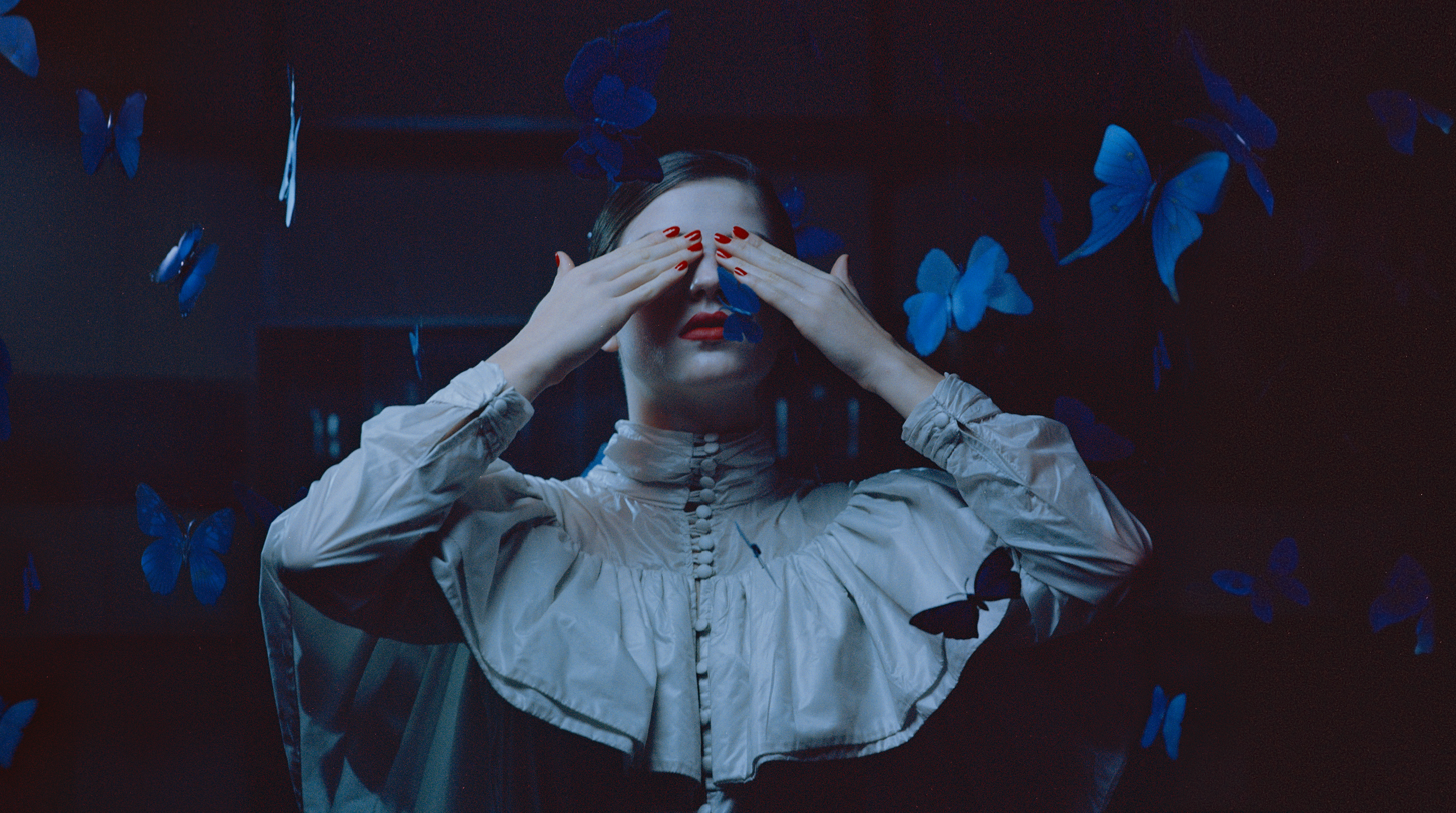
Female model with red nails covering her eyes.
MA Fashion Photography. Still from I, Unfolded by Phoebe Guo.
College
London College of Fashion
Start date
September 2026
Course length
12 months

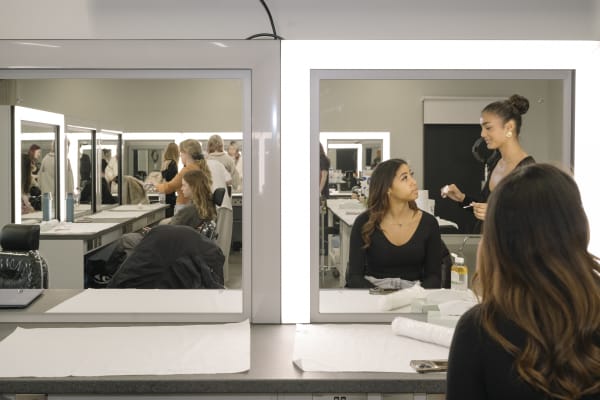
Develop a diverse skill set, exploring both theory and practice through progressive projects and whilst utilising our industry standard facilities and equipment.

Course summary

Why choose this course at London College of Fashion

  • Photography in all its forms: Utilise photography across a range of mediums, technologies and thinking including analogue, digital, moving image and alternative and emerging platforms.
  • Research: Develop an understanding of the processes and methodologies of research and explore theory, philosophical frameworks and prototyping, culminating in the pursuit of your Masters Project.
  • Practical skills: Develop a diverse skill set that you'll be able to apply to fashion photography as well as other areas like fine art, popular culture and mass media, whilst utilising our industry standard facilities.
  • Experimental and experiential: Be proactive and take creative risks in a supportive and encouraging environment and also work on collaborative projects with students from across LCF and UAL, alumni and the fashion industry.
  • Employability: Integrate theory and practice through progressive projects designed to realise your graduate aspirations, opportunities and destinations; opening up employment opportunities.

Upcoming events

Virtual Event: Fashion Media, Communication and Performance: Thursday 5 February.

To visit us in person, book a Campus Tour.

Scholarships, bursaries and awards

Use our scholarship search to discover if you are eligible for any scholarships, bursaries or awards.

Course overview

Since its inception as a democratic medium for the masses, photography has continued to evolve in format and application, shifting technical and intellectual paradigms. New ways of practicing, encountering and disseminating build on established methods to extend the possibilities, opportunities and reach of photography, making it ever more accessible and omni-present. 

Fashion photography is a term of reference for a practice of photography that takes fashion as the material for the camera.  Fashion is equally complex and expansive in contemporary times, informed and challenged by social, cultural, economic, and other factors that cannot be ignored much like photography, and undergoing similar revisions and reinventions. In this way, there are many real and notional interplays between photography and fashion that begin with ‘image’, and venture much further into the superposition of other parallel, sophisticated and entangled states for consideration as fashion photography.  An initial disaggregation from fashion photography of fashion and photography as discreet disciplines that are conceivably all-encompassing, avoids any subsequent reductive effect in fashion photography. It is this ontology that provides the discourse to a post-graduate benchmark and distinctive ethos for the MA Fashion Photography.  

What to Expect 

  • A teaching and learning environment with diversity and inclusion of changes in technology, culture and industry practice while also building on established technologies and transcendent values, such as creativity, independent research and enquiry, critical and informed judgement, communication skills and collaboration. This approach underpins an expanded fashion photography discourse in practice, theory and research.   
  • A curriculum for exploring, situating and integrating theory and practice in a cumulative progression of projects, intended to realise a range of graduate aspirations, opportunities and destinations. The course is designed to develop and position photographic practice within new or established creative and commercial protocols, employment opportunities, and further study aspirations.  
  • The stimulation to take a novel approach, disruptive even, to develop an authentic analysis, philosophy and vision of fashion + photography that is informed by personal and professional agendas and knowledge to become outward facing to make a viable and sustainable contributions to the discipline and related areas in creative, industrial, environmental, cultural, social, political and academic contexts. 
  • A range of directed and self-directed historical, cultural, educational, professional and global references and processes to develop fashion photographies that oscillate between notions of truth and fiction; sameness and difference; public and private; still and moving; the mirror and window; the epic and the everyday, for example - much like the image, spectacle and performance of fashion itself as body, representation and identity. 

Mode of Study 

You should engage with photography in all its forms as the perfect medium; the photograph has explicit and implicit capacity for contextual and conceptual interplays and iterations across a full range of technologies and thinking including analogue, digital, moving image and alternative platforms for production and dissemination (AI; NFT). 

The course offers a full-time curriculum and learning environment that stimulates a continuous practice of intellectual, technical and collaborative persuits and opportunities in combination with research that leads to a self-negotiated masters project. This is key to a sustainable livelihood in professional employment or self-employment, further academic study or teaching.

Research at MA Level 

Research is core to the curriculum and pedagogical approaches for the course. The development of effective approaches towards research enquiry is central for the emergence of a critically reflective and culturally aware practitioner/learner. An iterative approach highlighting the crucial interrelationship between theory and practice, and the value of interdisciplinary modes of interrogation for the potential generation of new knowledge is prioritised. Throughout the course, an understanding of the processes and methodologies of research will be developed within the discipline and situated within a broader cultural arena.    

The integration of theoretical and/or philosophical frameworks provide ways to look at the world in relationship to project work. A systematic approach to research is supported, including the shaping of ethical and achievable research questions and prototyping (of ideas) that may lead to new insights, connections and understanding. Through the course core research capabilities are developed, tested, and extended to underpin progressive cycles of reflexive practice. The application of research and critical perspectives in both theory and practice using a range of techniques and research methods are evaluated through formative and summative assessment. This helps to identify areas for potential improvement and development appropriate to your professional aspirations and advanced research potential that culminate in the proposition and independent pursuit of the Masters Project.   

Climate, Social and Racial Justice 

We are committed to ensuring that your skills are set within an ethical framework and are working to embed UAL’s Principles for Climate, Social and Racial Justice into the course. 

Contact us

Register your interest to receive information and updates about studying at UAL.

Contact us to make an enquiry.

Course units

Block 1: EXPLORE – supports the transition to postgraduate level study and new thinking of fashion photography (as anti-thesis) through the following units: 

  • In/Different Spaces (20 credits) 

This unit is purposefully challenge-led and disruptive of preconceived ideas and habits, as a basis to offer you a different space in which to consider, engage with and expand your discourse of fashion photography. 

In/Different Spaces seeks to benchmark a new intellectual and pragmatic space for the group, distinct from your past in real and notional ways. This new learning environment welcomes and considers all possibilities. You should find your own response in this context, challenging preconceived ideas of place, environment, work ethic and creativity. 

  • Interplays: Fashion and Photography (40 credits) 

Interplays: Fashion and Photography offers a conceptual and practical experience to explore and develop critical, meaningful and diverse relationships between fashion and photography; fostering a newly invigorated and authentic relationship with your work, informed by historical and cultural interplays. 

Practical classes, historical and theoretical lectures and debate, and project development will generate interplays between photography and fashion; encouraging experimentation in thinking and making, and the development of ideas and methodologies for your own personal and professional aspirations. 

On successful completion of these units, you are eligible for the award of a Postgraduate Certificate. (60 credits) 

Block 2: SITUATE – fosters the shift from orientation and exploration of the discipline to a position of iterative affirmation of your own interests (as in thesis or premise) and specific direction through the following units: 

  • New Iterations in Fashion Photography (40 credits) 

This unit is intended to foster an independent and self-directed engagement with theory and practice. During the unit you will extend your personal and professional photographic aspiration and intention, exploring the discourse and practice of fashion photography in relation to audience and market, and potential commercial, environmental, cultural and societal contribution and benefit. 

This unit should be formative in the development of your Master’s Project, encouraging a unique and sustainable approach to project development and strategy. 

  • Elective Unit (20 credits) 

Students will have the opportunity to participate in an elective unit as part of this course. This is an opportunity for students to collaborate with students from other courses within the college.

The following is an example list of electives that have been previously delivered:

  • Creative Decision Making for Fashion Enterprise
  • Cultural Programming
  • Fashion Politics and Cultures
  • Fashion Practices for Social Change
  • Fashion Together: Collaboration for Innovation

Please note:

  • Elective unit titles and details of the unit may change year to year
  • Elective units offered may change year to year, that is, unit listed above may or may not be offered in subsequent years
  • Students participate in a bidding process for choosing electives and participation in any particular elective is not guaranteed

On successful completion of these units, you are eligible for the award of Postgraduate Diploma. (120 credits) 

Block 3: INTEGRATE – The culmination of theory and practice acquired throughout Block 1 and 2 (as in synthesis), brought together through the Master’s Project. 

  • Master’s Project (60 credits) 

The Master’s Project is the final stage of your Master’s course and is the culmination of your studies and provides you with a space to synthesise all the knowledge and skills you have gained on the course so far. Your project will be self-directed, and you will negotiate the shape and direction of your project at the outset with your supervisor. This important final phase of your studies is where you will effectively communicate your work along with your ability to critically interrogate your practice with robust approaches to research and theoretical analysis.  

Upon completion of your project, you will have generated a high-quality piece of work that will showcase your practice, academic literacy and the professional standards that will act as a platform for your future career and professional development. 

On successful completion of the Master’s Project unit, you are eligible for the award of Master’s of Art. (180 credits) The final award grading is based upon the results of the Master’s Project only. 

MA Fashion Photography is offered in full-time mode and runs for 45 weeks over 12 months. You will be expected to commit an average of 40 hours per week to your course, including teaching hours, tutorial support and independent study. 

Credit Framework 

The University of the Arts London Credit Framework equates 20 credits to 200 hours of learning time. 

Learning and teaching methods

The course utilises established learning and teaching methods including: lectures; seminars; studio and technical demonstrations and workshops; cultural field trips; and group and individual tutorials. The course cultivates an international perspective with global networks, as well as a ‘go see’ attitude outside of the classroom or studio. 

The following set of learning and teaching strategies also significantly underpin the course ethos:   

Experimental and experiential learning: Students are encouraged to be proactive and to take creative risks.   

Collaboration: Collaboration is a core principle and key skill on this course, and students are encouraged to initiate self-directed collaborative projects often required as part of their production team, as well as external collaborations with other MA cohorts within communities of LCF and UAL peers, alumni and industry.  

Peer-to-Peer Learning, Knowledge exchange and Feedback: Developing the skill of offering collegial and constructive criticism is key to the construction of a formative learning environment, and to a possible career in academia. This is embedded in the course, as students present their ideas in class to staff and students for critique and formative feedback.

Expert Talks: Guest experts from the industry, alumni, and leading scholars from across LCF and UAL and other HEI’s are invited to share their expertise with the students in an array of forms, including lectures, panel discussions, and workshops. These occasions are embedded in the curriculum, complementing and extending the core delivery.  

Technical Delivery: Technical delivery developing core skills in photographic and related media practice and production are embedded in the curriculum to support the core course units. This provision is offered by technical staff teams in the scheduled teaching programme as part of an expected level of advanced skill, as well as through sign-up workshop sessions via the media lab and department. 

Assessment methods

Formative methods: 

  • Project presentations at interim and final stages. 
  • Individual and group tutorial and seminar activity. 
  • Draft written elements. 

Summative methods: 

  • Written project proposals and reflexive evaluations. 
  • Live presentation. 
  • Research and development material evidence that demonstrates iterative explorations, findings and knowledge of a range of sources. 
  • Bodies of coherent practical work, individually or collaboratively produced. 
  • Written critical evaluation and commentary, including future development possibilities. 

Showcasing at LCF

There are a range of showcasing opportunities students can take part in whilst studying at LCF. End year showcasing at London College of Fashion, UAL, is one of the moments students can celebrate graduating from their courses. However, degree shows are not part of the learning outcomes in a course curriculum and are therefore not guaranteed as part of studying with us. Students must register by a deadline to take part, and we are not able to show all student work so submitting students will have their work curated.

UAL Showcase

Explore work by our recent students on UAL Showcase

Stories

  • Mary Ferril MA Fashion Photography 2025

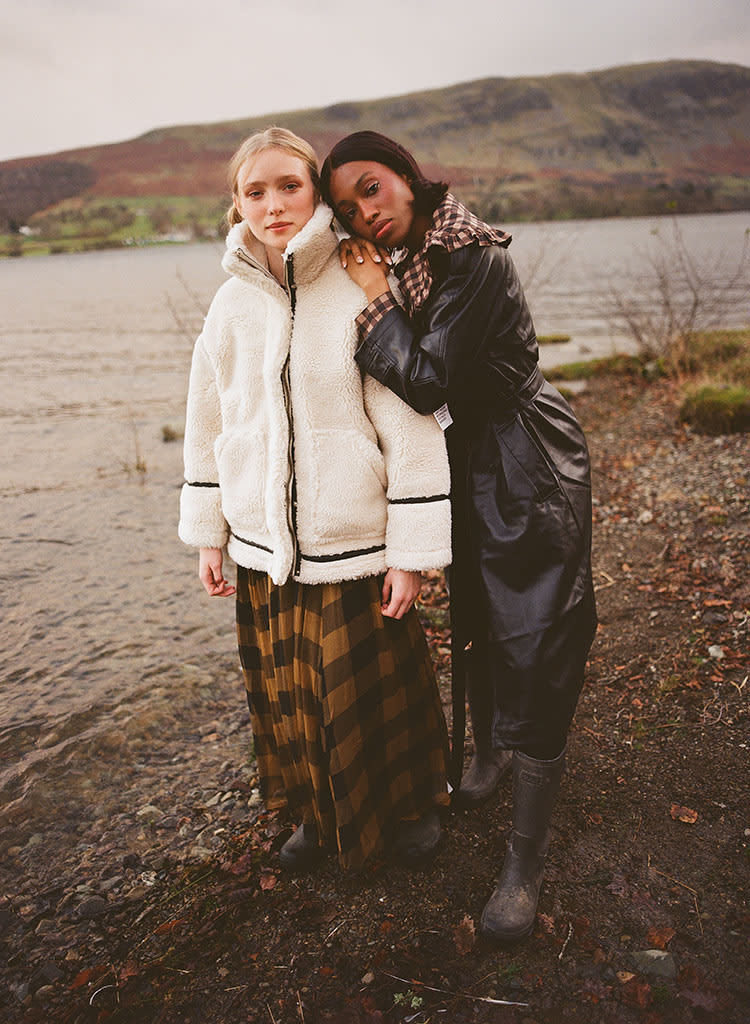
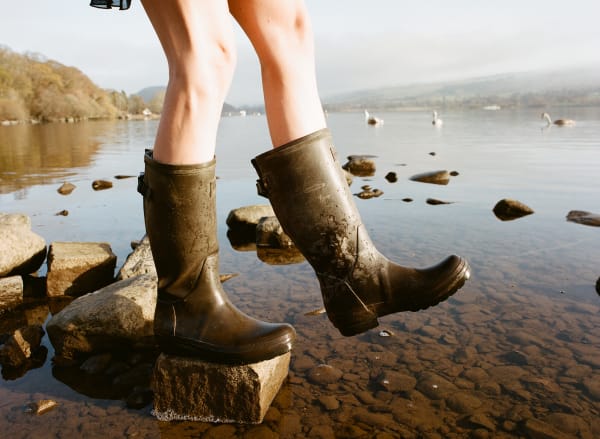
    LCF25: Ecological Tranquil Through the Lens of Lakeland Repose

    Mary Ferril, a graduating MA Fashion Photography student at London College of Fashion, is using her lens to explore the relationship between fashion, nature, and sustainability. Her final project, Lakeland Repose, brings together ASOS and the

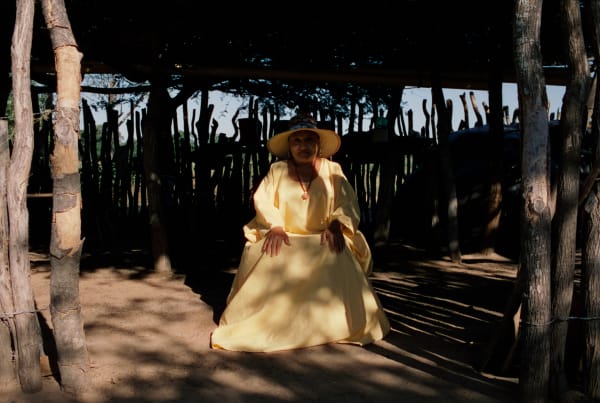
  • Wayuu Woman , Marisol Mendez Miruku 2023

    Miruku: Exploring the Water Crisis Through Artistic Vision and Stories of Resilience

    Discover the empathetic documentation and the profound impact of the water crisis on communities worldwide through the interview with MA Fashion Photography graduate Marisol Mendez, winner of the Sony World Photography Award.

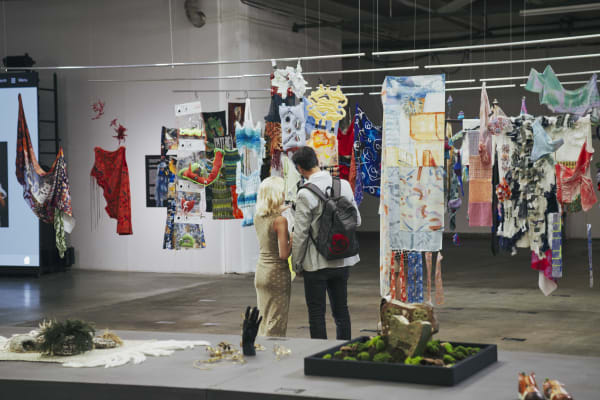
  • Visitors during a recent LCF graduate exhibition. Photographer: © Ana Blumenkron

    Introducing LCF's new public facing Cultural Programme

    LCF is excited to announce that from September 2023, when it opens the doors to its new home as part of East Bank, it will offer a brand-new, free, cultural programme open to the public.

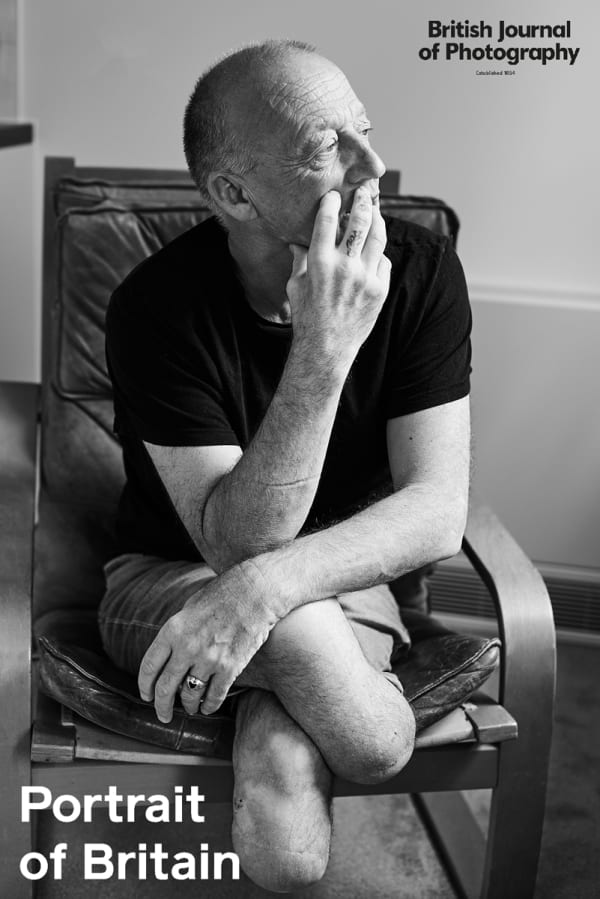
  • ‘From War to the Wardrobe’ Winner of Portrait of Britain - Antonia Penia (2023)

    Rediscovering artist: Antonia Penia

    Making headway into the photography world, recent MA Fashion Photography graduate Antonia Penia’s recent work ‘From War to the Wardrobe’ is now being showcased at Portrait of Britain and with an exhibition in the works at Cervantes Institute

Facilities

Staff

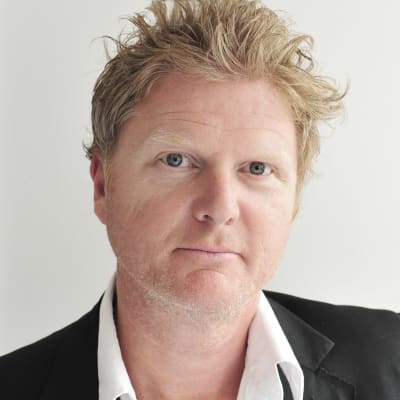
Paul Bevan is course director for MA Fashion Photography. Read Paul Bevan's full profile here.

Fees and funding

Home fee

£14,420

This fee is correct for 2026/27 entry and is subject to change for 2027/28 entry.

Tuition fees may increase in future years for new and continuing students on courses lasting more than one year. For this course, you can pay tuition fees in instalments.

Students from countries outside of the UK will generally be charged international fees. The rules are complex so read more about tuition fees and determining your fee status.

International fee

£30,890

This fee is correct for 2026/27 entry and is subject to change for 2027/28 entry.

Tuition fees may increase in future years for new and continuing students on courses lasting more than one year. For this course, you can pay tuition fees in instalments.

Students from countries outside of the UK will generally be charged international fees. The rules are complex so read more about tuition fees and determining your fee status.

Additional costs

You may need to cover additional costs which are not included in your tuition fees, such as materials and equipment specific to your course. For a list of general digital equipment you may need (and how you can borrow equipment), visit our Study costs page.

Accommodation

Find out about accommodation options and how much they will cost, and other living expenses you’ll need to consider.

Scholarships, bursaries and awards

If you’ve completed a qualifying course at UAL, you may be eligible for a tuition fee discount on this course. Find out more about our Progression discount.

You can also find out more about the Postgraduate Masters Loan (Home students only) and scholarships for Home and International students. Discover more about student funding.

If you’re based in the UK and plan to visit UAL for an Open Event, check if you’re eligible for our UAL Travel Bursary. This covers the costs of mainland train or airline travel to visit UAL.

How to pay

Find out how you can pay your tuition fees.

Scholarship search

Entry requirements

You will have: 

  • A relevant degree and prior experience in the critical and creative practice of fashion photography, photo-media or fine art photography.  
  • An ability and willingness to collaborate, to generate new ideas, and to engage in cultural and social theory in the research and development of an expanded fashion photography practice, as demonstrated in a portfolio of recent work and the articulated motivation to undertake postgraduate study. 

We will also consider applicants who are practicing photographers, artists or designers from different contexts with a demonstrated orientation towards fashion photography. We are also interested in applicants from an artistic or scientific background, who can evidence a connection into an expanded fashion photography practice in the creative and academic industries, as appropriate.

APEL (Accreditation of Prior (Experiential) Learning) 

Applicants who do not meet these course entry requirements may still be considered in exceptional cases. The course team will consider each application that demonstrates additional strengths and alternative evidence. This might, for example, be demonstrated by: 

  • Related academic or work experience (minimum of three years) 
  • The quality of the personal statement 
  • A strong academic or other professional reference 
  • OR a combination of these factors 

Each application will be considered on its own merit, but we cannot guarantee an offer in each case.

Selection criteria

The course seeks to recruit students from diverse socio-economic and cultural backgrounds and welcomes applications from mature students. Primarily it is the purpose of selection to recruit those students for whom the course would be most beneficial and appropriate at the time of application, as evidenced through the application process.

English Language Requirements

IELTS level 6.5 with a minimum of 5.5 in reading, writing, listening and speaking. Please check our main English Language Requirements.

Information for disabled applicants

UAL is committed to achieving inclusion and equality for disabled students. This includes students who have:

     
  • Dyslexia or another Specific Learning Difference
  • A sensory impairment
  • A physical impairment
  • A long-term health or mental health condition
  • Autism
  • Another long-term condition which has an impact on your day-to-day life

Our Disability Service arranges adjustments and support for disabled applicants and students.

Read our Disability and dyslexia: applying for a course and joining UAL information.

Apply now

Application deadline

Deadline

Round 1:

2 December 2025 at 1pm (UK time)

Round 2:

18 March 2026 at 1pm (UK time)

Digital portfolio and video task deadline

Round 1:

16 December 2025 at 1pm (UK time)

Round 2:

31 March 2026 at 1pm (UK time)

Decision outcome

Round 1:

20 March 2026

Round 2:

19 June 2026

Round 1
Round 2
Deadline
2 December 2025 at 1pm (UK time)
18 March 2026 at 1pm (UK time)
Digital portfolio and video task deadline
16 December 2025 at 1pm (UK time)
31 March 2026 at 1pm (UK time)
Decision outcome
20 March 2026
19 June 2026

We have 2 rounds of deadlines for postgraduate courses: one in December and one in March. If there are still places available after 18 March, this course will remain open to applications until all places have been filled.

Read more about deadlines

Apply now

Application deadline

Deadline

Round 1:

2 December 2025 at 1pm (UK time)

Round 2:

18 March 2026 at 1pm (UK time)

Digital portfolio and video task deadline

Round 1:

16 December 2025 at 1pm (UK time)

Round 2:

31 March 2026 at 1pm (UK time)

Decision outcome

Round 1:

20 March 2026

Round 2:

19 June 2026

Round 1
Round 2
Deadline
2 December 2025 at 1pm (UK time)
18 March 2026 at 1pm (UK time)
Digital portfolio and video task deadline
16 December 2025 at 1pm (UK time)
31 March 2026 at 1pm (UK time)
Decision outcome
20 March 2026
19 June 2026

We have 2 rounds of deadlines for postgraduate courses: one in December and one in March. If there are still places available after 18 March, this course will remain open to applications until all places have been filled.

Read more about deadlines

Apply to UAL

Start your application
or

Apply with a UAL Representative

Based across the world, our local UAL representatives can support you with your application from your home country. Check to see if there is a representative available in your country currently.

Find your representative

How to apply

Follow this step-by-step guide to apply for this course

Step 1: Initial application

You will need to submit an initial application including your personal statement, CV and study proposal.

Personal statement advice

Your personal statement should be maximum 500 words and include:

  • your reasons for choosing the course
  • your current creative practice and how this course will help you achieve your future plans
  • any relevant education and experience, especially if you do not have any formal academic qualifications.

CV advice

Please provide a CV detailing your education, qualifications and any relevant work or voluntary experience. If you have any web projects or other media that you would like to share, please include links in your CV. If English is not your first language, please also include your most recent English language test score.

Read our advice on preparing the tasks and documents for your initial application.

Study proposal advice

Please provide a summary of your study proposal (600 words).

It should:

  • state briefly the background for your proposal
  • determine the precise area of study, demonstrating your understanding of the historical and contemporary contexts
  • set out the aims and objects for your proposal within the course structure
  • refer to critical discourses that underpin your practice and how your work may contribute to these
  • outline your intended methodology, including how you intend to conduct your project and who you intend to address
  • include any research sources as well as details of any libraries, exhibitions museums etc. that you have visited as part of your research
  • include a bibliography using Harvard referencing and an appendix for any additional material if necessary. This will not be included in the word count.

Please note, your proposal serves to inform your application and we understand that your ideas will develop and change throughout your studies.

Step 2: Video task and digital portfolio

We will review your initial application. If you have met the standard entry requirements, we will ask you to submit a video task and a digital portfolio.

You’ll need to submit these via PebblePad, our online portfolio tool. Please submit your video task on the first page followed by your portfolio.

Video task advice

We’d like you to submit a 2-3 minute video to help us learn more about you. The video must be in English.

What to include in your video task

  • Talk about your practice in general terms and the themes or agendas that motivate and inform this, citing any particular examples in your portfolio as appropriate, and how this develops your understanding and definition of fashion photography.
  • Tell us how this experience inspired you to apply to MA Fashion Photography at LCF.

Find advice on how to plan and film your video task. Then read our guidance on how to submit your video task, including the file types we accept.

Digital portfolio advice

Your portfolio should consist of recent work that reflects your creative strengths.

It should:

  • be maximum 30 pages, including your video task
  • include work from a variety of projects to illustrate your diverse skillset and ability to experiment with different styles and mediums
  • feature work in progress as well as fully realised pieces to demonstrate your research skills and ability to develop ideas from initial concept to final outcome
  • include annotations to contextualise your work. Tell us the roles and responsibilities you undertook in any group project work that you include.

For more support, see our portfolio advice and PebblePad advice.

Step 3: Interview

You may be invited to an interview following our review of your application. All interviews are held online and last 15 to 20 minutes.

For top tips, see our Interview advice.

You also need to know

Communicating with you

Once you have submitted your initial application, we will email you with your login details for our Applicant portal.

Requests for supplementary documents like qualifications and English language tests will be made through the applicant portal. You can also use it to ask questions regarding your application. Visit our After you apply page for more information.

Applying to more than 1 course

You can apply for more than 1 postgraduate course at UAL but we recommend that you apply for a maximum of 3 courses.

As every course has its own entry and assessment requirements, we recommend tailoring each application to showcase how your experience, skills and interests match that course. Applying for many different courses may make it more difficult for you to show that you are suitable for each course in a competitive admissions process.

Only apply to the course(s) you are most interested in – applying for too wide a range of different courses may reduce your ability to clearly demonstrate your suitability for each. It’s better to make fewer bespoke applications than many generic ones. This will help you to stand out where we have high demand for places.

If you receive offers for multiple courses, you'll only be able to accept 1 offer. UAL doesn't accept repeat applications to the same course in the same academic year.

Visas and immigration history check

All non-UK nationals must complete an immigration history check. Your application may be considered by our course teams before this check takes place. If your course requires a portfolio and/or video task, we may request these before we identify any issues arising from your immigration history check. Sometimes your history may mean that we are not able to continue considering your application. Visit our Immigration and visas advice page for more information.

External student transfer policy

UAL accepts transfers from other institutions on a case-by-case basis. Read our Student transfer policy for more information.

Alternative offers

If we are unable to consider you for the course you have applied to but your application is really strong, we may make you an alternative offer on a different course or at a different UAL College. This happens when our admissions tutors have found another course that they believe would be a strong match for your skills and interests.

Deferring your place

We do not accept any deferral requests for our postgraduate courses. This means that you must apply in the year that you plan to start your course and you will not be able to defer your place to start at a later date.

Application deadlines

Most of our postgraduate courses have 2 rounds of deadlines: one in December and one in March.

As long as you apply ahead of each deadline we will consider your application alongside all the other applications in that round. We always make sure to hold enough places back for round 2 to make sure we can consider your application fairly, no matter which round you apply in.

If there are still places available after the second deadline, the course will remain open to applications until all places have been filled.

For our MBA courses, there is only 1 deadline. This is 31 July for international applicants and 31 August for UK applicants. This is to make sure you have enough time to apply for your visa if you are an international student.

For our January-start courses, the deadline is in October. If there are still places available after this deadline, the course will remain open to applications until all places have been filled.

Careers

Your future employability is central to all our courses and as a student with us you’ll have access to a wealth of resources to prepare you for your future career in the fashion industry. Graduate Futures is our dedicated employability team who will work with you throughout your time with us to get you ready for employment. There are also a variety of opportunities on the course to enhance your employability.

Industry engagement

Students engage with the fashion and creative industries through a range of collaborative opportunities, live projects and guest lectures. The course has worked with a number of high-profile organisations including IMG, Nikon School, Town Hall Hotel and The Print Space.

Students benefit from talks and critiques by leading photographers and alumni, including Ram Shergill, Thurstan Redding, Kasia Wozniak, Lucho Dávila and Grace Hodgson. Many graduates and students have achieved recognition in major awards such as the Taylor Wessing Photographic Portrait Prize, Sony World Photography Awards and the Ilford Photo Analogue Community Grant showcasing the exceptional creativity, technical skill, and innovation fostered within the course.

Potential careers

The course equips you with the creative, technical and critical skills needed to work as a professional image-maker in the fashion industry and beyond. You’ll gain expertise in advanced studio and location photography, digital and analogue processes, creative direction, post-production and moving image. Alongside these practical skills, students develop strong conceptual thinking, storytelling and professional skills — including pitching ideas, working to client briefs and managing complex creative projects.

Graduates of the course are well prepared for careers as Fashion Photographers, Creative Directors, Producers, Art Directors, Editors and Image-Makers across fashion media, advertising, editorial and cultural institutions. The course also supports pathways into artistic practice, research and higher-level academic study.

LCF alumni

Graduates of MA Fashion Photography have gone on to establish influential creative careers and work with leading brands, media and cultural organisations. Alumni include:

  • Andrea Brandt, Bang & Olufsen
  • Nadia Lee Cohen
  • Ram Shergill
  • Tania Franco Klein
  • Thurstan Redding