Course units
Level 4
In the first year of the course, you'll be introduced to the foundational skills of fashion communication and creative direction.
The units you will study in Year 1, Stage 1, Level 4 are as follows:
Introduction to Fashion Communication (20 Credits)
In this unit you will be introduced to your course, its subject specialism and effective learning at undergraduate level. You will learn the practices and knowledge base needed to understand your discipline, and develop skills for independent and collaborative learning, reflection, and self-development.
Creative Contexts (40 Credits)
You’ll explore foundational practices and skills essential to creative direction practice, such as research, experimentation, and collaboration. You’ll be introduced to contemporary design principles and use these to develop meaningful creative assets through conceptual and practical application.
Fashion Cultures and Histories (20 Credits)
You’ll take a philosophical and theoretical approach to the study of fashion and its role in representing and communicating identity. Understand key ways of thinking about fashion across its cultural, historical, social and political contexts. Engage in debate and analysis of fashion as a key marker of social and cultural change and a means of understanding the relationship between individuals and communities.
Experiential Narratives (20 Credits)
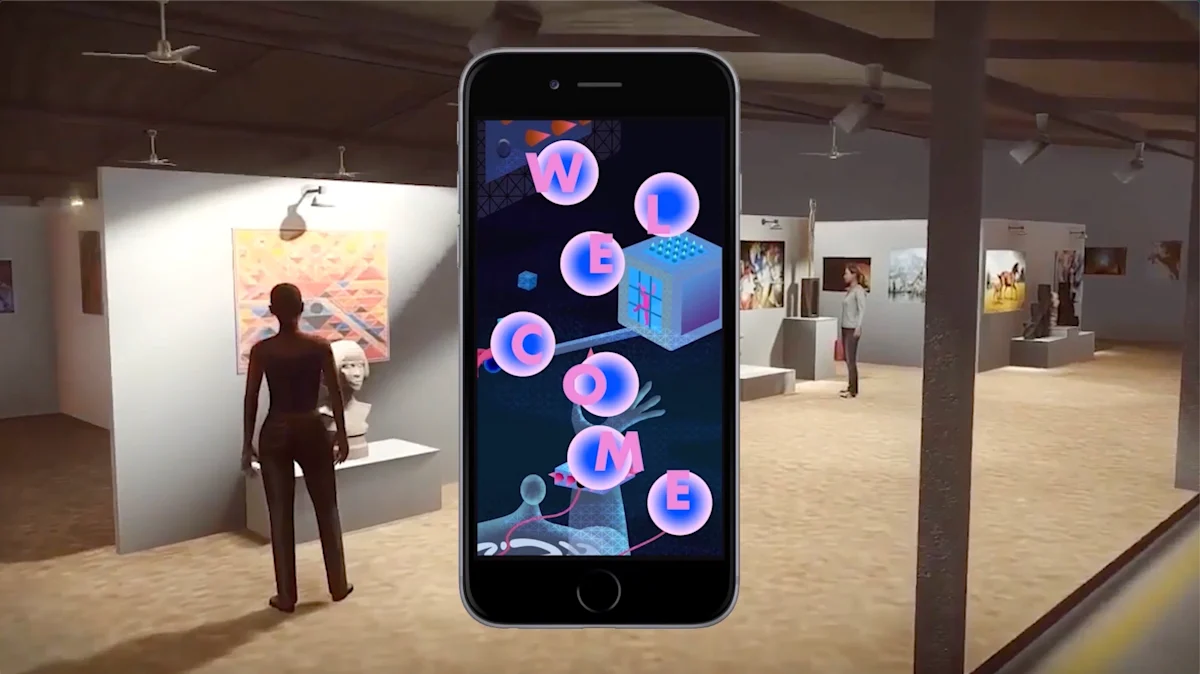
You’ll explore the convergence of digital and physical environments and experiences for audiences. You’ll be introduced to change-making principles and the ethics of inclusive storytelling for emerging areas of fashion communication. Working independently and with peer support, you’ll produce a prototype for an immersive platform or experience to facilitate greater diversity, inclusivity and accessibility.
Fashion Communication: Community of Practice (20 Credits)
In this unit you will develop your understanding of the fellow disciplines in the Fashion Communication programme. You will consider how this community of practice can contribute to a more socially conscious future and produce a proposal for a project that promotes change making through collaboration.
In Stage 1, you are required to complete 120 credits at Level 4 in order to progress to Stage 2.
Level 5
The second year builds on these core skills by inviting you to situate them within an applied context: the design of community experiences, strategic thinking and speculative design, and the mobilising and communicating of appropriate creative responses to racial, social and ecological concerns.
The units you will study in Year 2, Stage 2, Level 5 are as follows:
Critical Issues in Fashion Research (20 Credits)
Expand your critical understanding of fashion in a global context and examine emerging debates in fashion research. You’ll engage in collaborative research around current and emerging cultural issues and be guided through researching and writing about fashion across its social, historical, political and cultural contexts, building on the first-year unit Fashion Cultures and Histories. You’ll develop your own independent research path and interests.
Critical Communities (20 Credits)
Explore the conceptual and practical competencies of event curation, community-building, and cultural programming through a creative direction lens. You will research the needs of an identified critical community, addressing ecological and social justice concerns, and respond by conceptualising a cultural programming event, activation or start-up. This unit will include a critical consideration of the role and significance of placemaking.
Fashion Communication: Situating Your Practice (20 Credits)
You will explore and develop your fashion communication identity and position yourself within the professional fashion eco-system. You will examine the possibilities available to you now, and in the future, to determine your skills and examine the opportunities relevant to you within the fashion sector. You will consider how your work has purpose, addressing your motivations and values.
Fashion Communication: Professional Practice Placement or Portfolio (20 Credits)
You have the option to choose:
- Placement
In which you will undertake a short-term placement in industry which is suitable for your own development and career aspirations. The Graduate Futures Placement Team provides support to get a placement and you can directly apply to companies.
or
- Portfolio
In which you will experiment with creative practice and develop an outcome for your portfolio in response to an industry brief. Using a process of design principles, you will define, ideate, and test your ideas with an external audience in mind. There will be support throughout from both academic and industry practitioners.
Future Directions (40 Credits)
In this unit, you will explore the intersections of strategic problem-solving, innovation, and speculation. You will be introduced to foresight and world-building methodologies us these to envision and present compelling and necessary future contexts for fashion. You will apply your individual and collaborative skills in image-making, moving-image production, curation, and community-engaged practice to work towards social, racial, and climate justice for the future.
In Stage 2 you are required to complete 120 credits at level 5 in order to progress to Stage 3.
Level 6
The third year consolidates these skills and expands them further by enabling you to identify, develop, and realise your own creative and strategic practice through extended research-driven and practice-led projects. Finally, you’ll bring your body of work together to build your own portfolio.
The units you will study in Year 3, Stage 3, Level 6 are as follows:
Context for Communication Project (20 Credits)
You’ll explore a research topic of your own choosing and engage critically with a variety of primary and secondary research methods. You will identify a suitable contextual direction that aligns with your personal practice and professional or academic ambitions. You’ll analyse, evaluate, and present structured context that will inform the next unit, Communication Project.
Communication Project (40 Credits)
In this unit, you will bring together the core competencies, methods and processes developed during your time on the course, filtered through your own creative direction practice. You will use the context formed in the previous unit to define the terms of a personal communication project. You’ll ideate, prototype, and produce a portfolio piece or pieces in response to your individual brief or research question. You must evidence original ideas, new insights, technical proficiency, and effective project management.
Creative Industries: Theories and Practices or Fashion Communication: Theories and Contexts (40 Credits)
You have the option to choose:
- Creative Industries: Theories and Practices
In this unit, you’ll complete an independent research project and engage with industry professionals to learn about current debates and issues that shape and inform cultural production across media, communication and performance. You’ll be encouraged to respond to these debates in the form of an extended essay with supporting research materials. This unit will equip you with critical thinking, literacy and communication skills for both academic and professional contexts.
or
- Fashion Communication: Theories and Contexts
In this unit, you will examine how fashion operates as a system shaped by relationships between people, bodies, media and technologies. You will apply media and communication theory to a case study of your choice and present your research in a format that best suits your approach. By the end of the unit, you will have developed confident critical thinking, research and communication skills for academic and professional contexts.
Professional Presentation (20 Credits)
Consolidate your learning and prepare for future employment or postgraduate opportunities. Reflect on your career goals to position yourself and your work for future professional contexts. You’ll be supported by tutors, alumni and creative practitioners to select appropriate media and platforms to creatively and professionally present yourself and your work.
In Stage 3 you are required to complete 120 credits at Level 6.
A 20-credit unit is approximately equivalent to 200 hours of learning time, which includes a mixture of taught time, independent study and assessment.
All students are entitled to a tutorial package that consists of:
- one induction tutorial (group or one to one);
- one tutorial per block for the duration for their course of study at LCF;
- group tutorials as required;
- an appropriate level of confidentiality.
Optional Diploma Year
Diploma in Professional Studies: Industry (Optional)
This optional diploma can be taken between years 2 and 3. With support from your tutors, you’ll undertake an industry placement for a minimum of 100 days/20 weeks. As well as developing industry skills, you’ll gain an additional qualification upon successful completion.
Diploma in Professional Studies: Enterprise (Optional)
This optional diploma can be taken between years 2 and 3. With support from your tutors, you’ll undertake an enterprise placement year where you will explore a business idea from proposal to minimal viable product (MVP). As well as developing enterprise skills, you’ll gain an additional qualification upon successful completion.
Diploma in Creative Computing (Optional)
Between years 2 and 3, you can undertake the year-long Diploma in Creative Computing. This will develop your skills in creative computing alongside your degree. After successfully completing the diploma and your undergraduate course, you’ll graduate with an enhanced degree: BA (Hons) Creative Direction for Fashion (with Creative Computing).
Diploma in Storytelling (Optional)
Between years 2 and 3, you can undertake the year-long Diploma in Storytelling. Enhance your creative voice and discover how to engage audiences and enact change through compelling storytelling - a skill that's in demand across a range of creative industries. After successfully completing the diploma and your undergraduate course, you’ll graduate with an enhanced degree: BA (Hons) Creative Direction for Fashion (with Storytelling).