Undergraduate

BA (Hons) Theatre and Performance Design

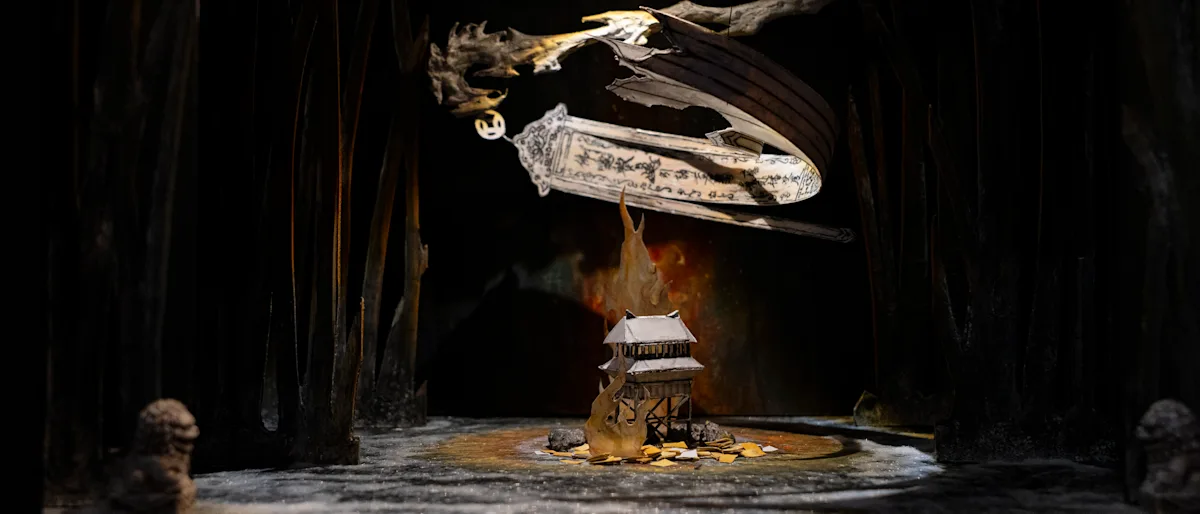
A shadowy, mystical scene depicts a small house on a rock amid dark, towering trees. Above, a ghostly, ornate figure floats, enhancing the eerie atmosphere.
Ibbie Xu, 2025 BA Theatre and Performance Design, Wimbledon College of Arts, UAL
College
Wimbledon College of Arts
UCAS code
W464
Start date
September 2026
Course length
3 years

BA Theatre and Performance Design at Wimbledon College of Arts will give you the practical and conceptual design skills to work in live events, contemporary theatre and performance design.

Course summary

Please note: The title of this course has changed. This course is running in 2025/26 as BA (Hons) Theatre Design. From 2026/27 this course will run as BA (Hons) Theatre and Performance Design.

Course overview

BA Theatre and Performance Design focuses on set and costume design for live performance. You'll also learn about sound, lighting and video projection design to help you develop your own areas of interest.

This course mixes practical training with theory, experimentation and critical thinking. You'll learn about the core themes and concepts of live performances, including text, character, dramatic space and the role of the designer within the creative team.

Using drawing as a core process, this course will help you make considered design decisions and prepare you for a career in live performance.

What to expect 

  • An ethical focus: We have a responsibility to contribute towards a better and more sustainable world. Throughout your course, you'll explore climate, social and racial justice and learn how to embed these principles into your creative practice. 
  • Expert staff: Learn from a team of practicing theatre and performance designers. 
  • Practical workshops: Develop your knowledge and skills in computer aided design (CAD), fabric dyeing, costume construction, lighting and sound, precision model-making and recorded digital arts for live performance.
  • New ideas: Access a programme of creative research to build your understanding of film, television and the arts. 
  • Sustainability: Learn about and practice the course key themes of sustainability and decolonisation in relation to the discipline. as well as making and materiality and their relation to theatre design.
  • Networking opportunities: Grow a strong network of theatre-makers through collaborative live projects with emerging and established choreographers and directors.
  • Creative facilities: Use of Wimbledon's shared workshops. Discover the Wimbledon facilities

Industry experience and opportunities

You'll gain production experience working and learning alongside our professional practitioners and taking part in specialist work placements with companies and individuals.

You'll design sets and costume for many types of performances such as dance, plays, opera, site-specific theatre and new writing projects so you can build a strong portfolio.

You'll also have the option to study abroad in your second year as part of our international exchange scheme. 

Mode of study

BA (Hons) Theatre and Performance Design is offered in full-time mode. It is divided into 3 stages over 3 academic years. Each stage consists of 30 teaching weeks. You will be expected to commit an average of 40 hours per week to your course, including teaching hours and independent study. 

Contact us

Register your interest to receive information and updates about studying at UAL.

Contact us to make an enquiry.

College Tours

Come and see our facilities and workshops.

Book a Tour

Course units

Year 1 

Unit 1: Introduction to Theatre and Performance Design

This unit is an introduction to your course, the College and the University. 

Unit 2: Designing and making 

Unit 2 will introduce you to the creative skills that are essential to working within the world of contemporary theatre design. The unit focus will be on costume design and making. Projects will give you the working methods and processes that you will build on during the course. You'll use model-making, basic surveying, 3D modelling techniques and technical drawing to aid analysis and representation of spatial forms and colour.

Unit 3: Who are you? Establishing practice 

In this unit, a range of digital processes used in the theatre design and live performance industry will be demonstrated. You'll work on short projects in relation to these. 

Unit 4: Exploring ideas 

In unit 4, you'll create set and costume designs for a set text using a small London theatre as the venue. You'll focus on key social, environmental and cultural themes including sustainability, decolonisation and making and materiality. 

Year 2 

Unit 5: Collaborative and collective practices

You'll be introduced to different ways in which collaborative working can help you to focus and enhance your own creative strengths. You'll have the chance to work with fellow students and creative communities. 

Unit 6: Practice as laboratory 

Unit 6 will enable you to investigate the breadth of contemporary theatre and performance design practice. Areas covered will include, but are not limited to, site-responsive theatre, immersive performance and other aspects of design for performance. 

Unit 7: Where in the world? 1 

Unit 7 will be mainly self-directed with support from academic tutors, theatre directors and performers. You'll make a realised performance in response to themes from set contemporary and historical texts. 

Unit 8: Where in the world? 2 

The main component of this unit will be in the form of a complete speculative design proposal for the same text that was used in unit 7. Your proposal will include storyboards, set, costume, lighting and sound design. During this unit you can also undertake a work placement. 

Year 3 

Unit 9: Professional futures

This unit aims to address the 3Es: employability, enterprise and entrepreneurship. You'll reflect on your learning and skills across the entirety of your study. You'll have an opportunity to showcase your outcomes and intentions. You'll consider your next steps as you enter industry or continue with your education. 

Unit 10: Finding your voice - Research portfolio

Your final year project will be self-directed and involve three extended pieces of work to submit within a research portfolio which is a visual and reflective project that demonstrates your research voice within your practical work

Unit 11: Show your work - Independent practice

This final unit enables you to bring together all the ideas and learning from the course. You'll continue to work on your self-directed project and prepare your portfolio to enter the theatre design profession. You'll also have a series of talks on working in the theatre industry to help support your employment choices and decisions.

Optional Diploma between Years 2 and 3

Between Years 2 and 3 of the course, you will also have the opportunity to undertake one of the following additional UAL qualifications.

Diploma in Professional Studies (DPS)

This optional diploma can be taken between years 2 and 3. With support from your tutors, you will undertake an industry placement for a minimum of 100 days/20 weeks. As well as developing industry skills, you will gain an additional qualification upon successful completion.

Diploma in Creative Computing

Between years 2 and 3, you can undertake the year-long Diploma in Creative Computing. This will develop your skills in creative computing alongside your degree. After successfully completing the diploma and your undergraduate course, you will graduate with an enhanced degree: BA (Hons) Theatre and Performance Design (with Creative Computing).

Diploma in Apple Development

This optional diploma can be taken between years 2 and 3. Over the extra year you will become an Apple developer, undertaking a learning programme which includes content from Apple’s official 'Develop in Swift' curriculum. After successfully completing the diploma and your undergraduate degree, you will graduate with an enhanced degree: BA (Hons) Theatre and Performance Design (with Apple Development)

Learning and teaching methods

  • Artist talks and lectures
  • Critical studies and writing
  • Design of a learning agreement
  • Documentation and dissemination of a project
  • Exhibition planning meetings with tutors and technical staff
  • Group discussions, crits, seminars and tutorials
  • Independent research
  • Individual academic tutorial advice and support
  • Lectures and seminars
  • Negotiation and development of a design proposal
  • Peer review and assessment
  • Planning for a formal presentation of a design proposal
  • Practical workshops
  • Preparation and presentation of ideas at planning meetings
  • Project related professional work placement or collaboration
  • Studio work
  • Study visits
  • Technical inductions and instruction
  • Workshops 

Assessment methods

  • Presentation
  • Professional and personal development
  • Research portfolio

Student work

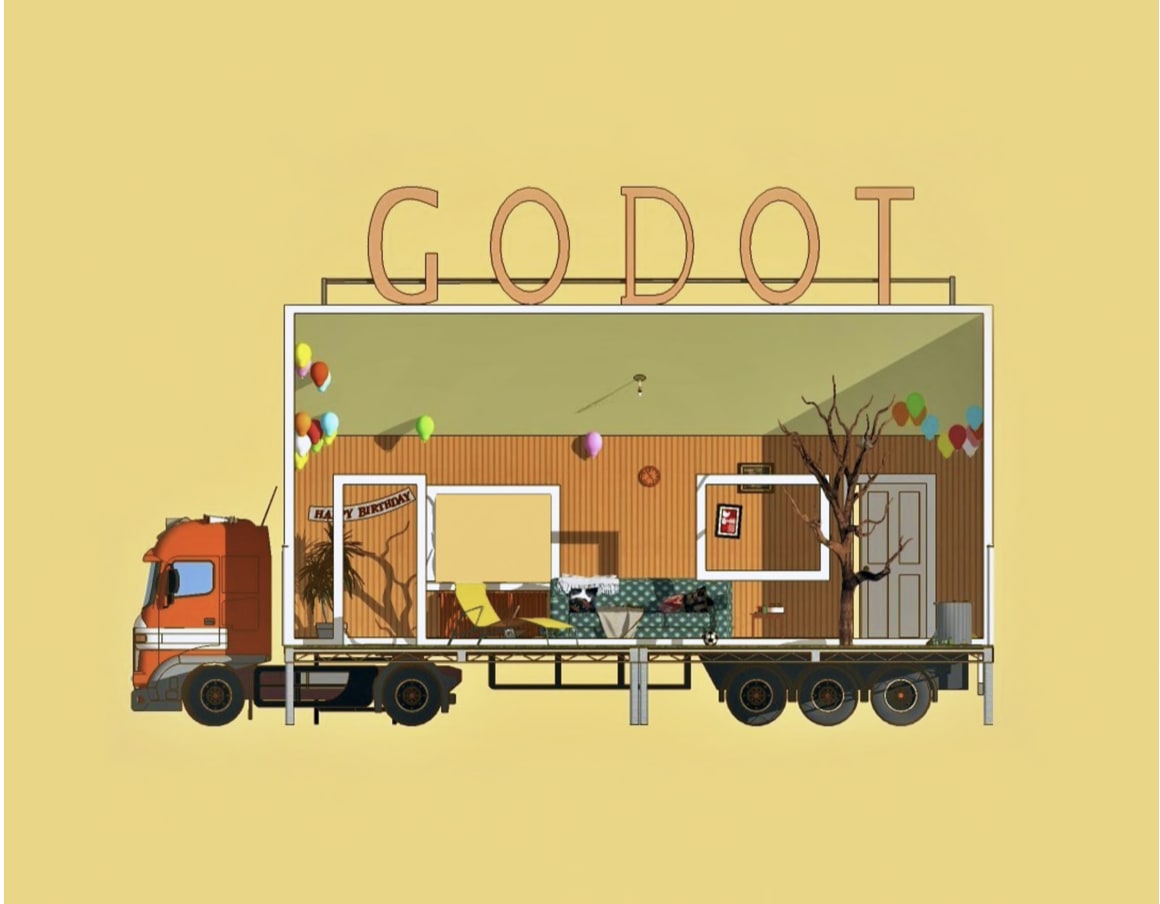
  • Mobile stage set made within a converted articulated lorry.
    Pip Terry
    BA (Hons) Theatre and Performance Design, Wimbledon College of Arts, UAL
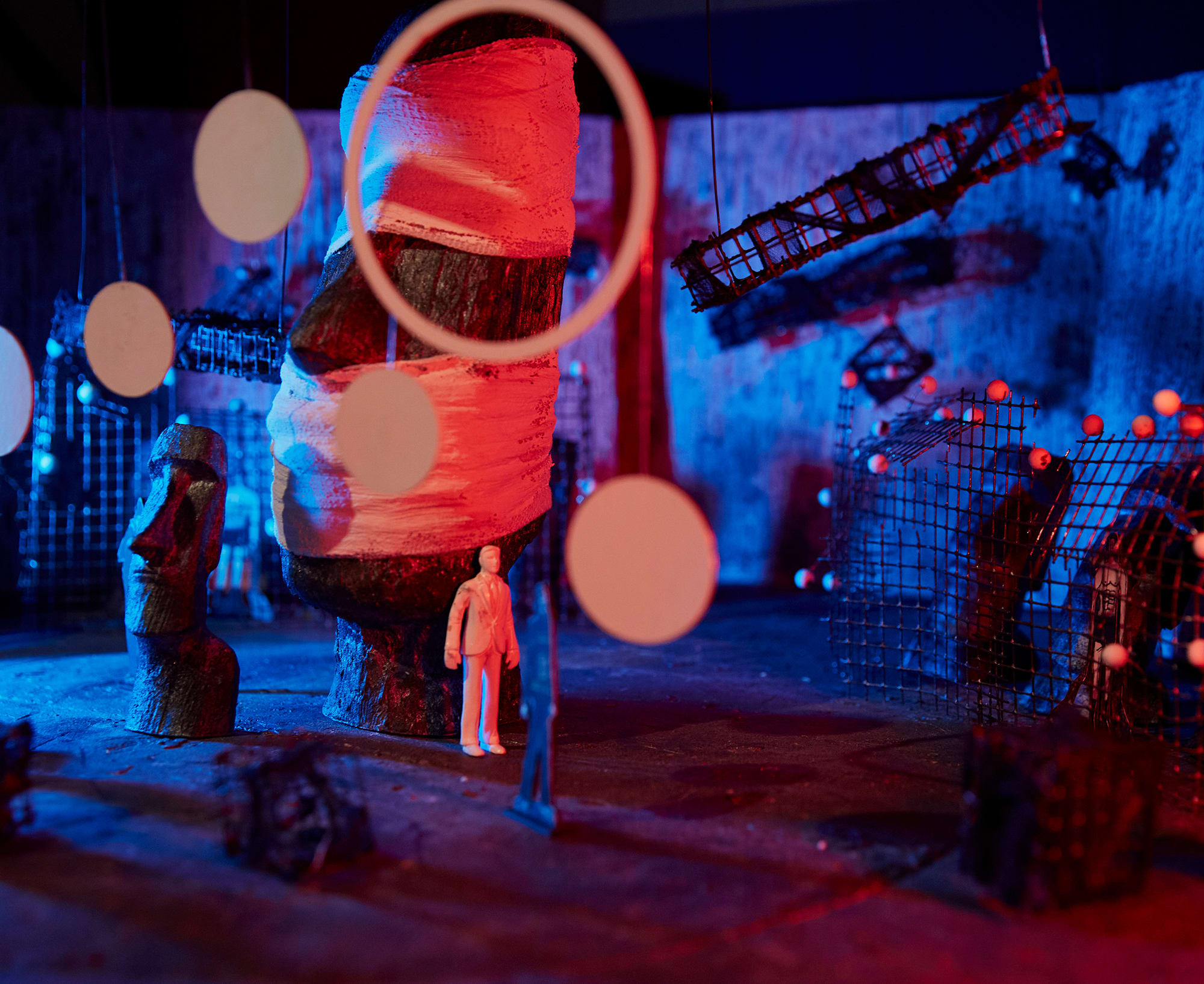
  • Stage set scale model by Chon Fong - BA Theatre Design featuring large replica Moai statues, white circles suspended from the ceiling, blue mood lighting and wire structures on the walls.
    Chon Fong
    BA (Hons) Theatre and Performance Design, Wimbledon College of Arts, UAL
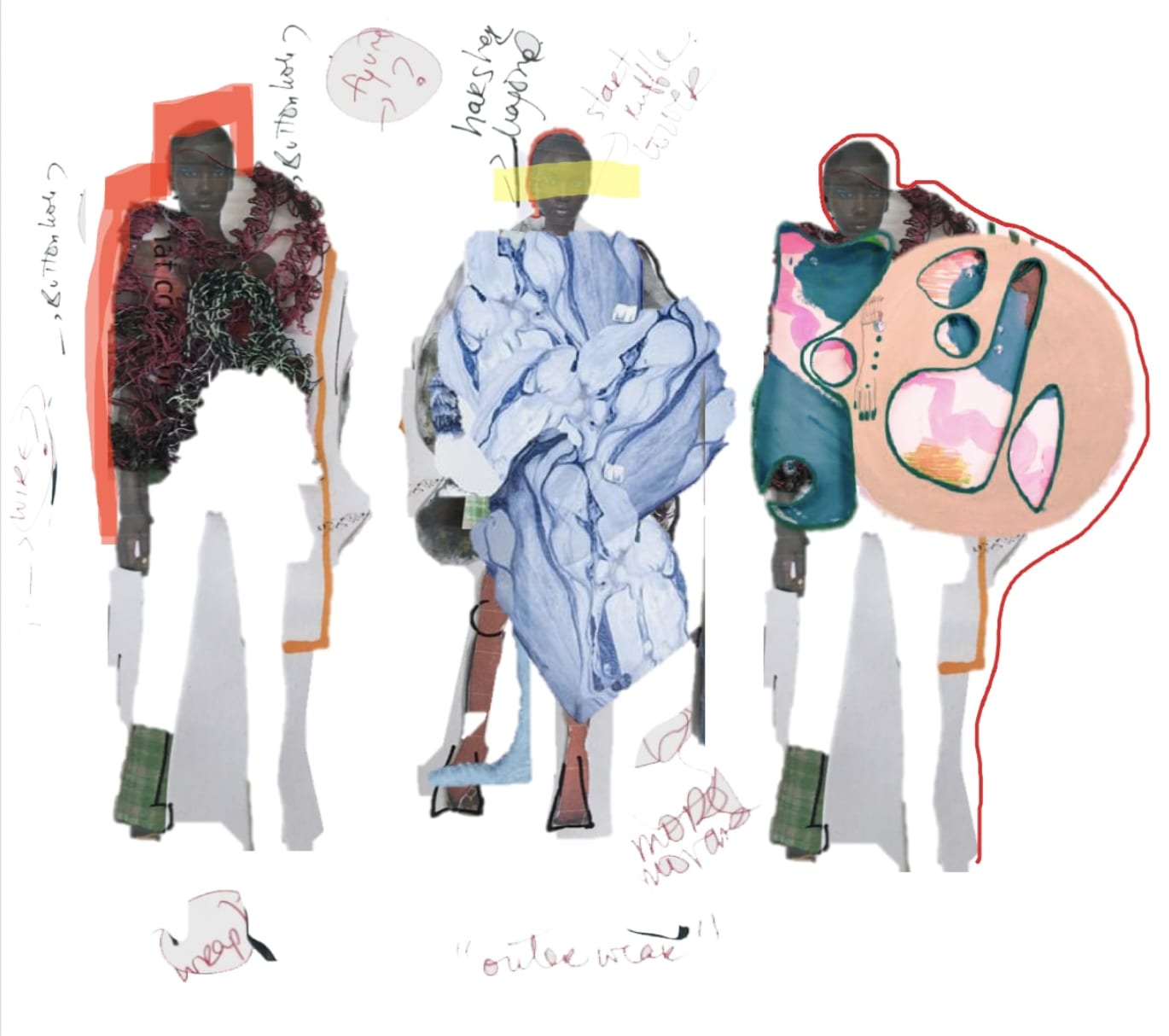
  • 3 drawings of models wearing contemporary costumes in maroon, ice blue, green and pink fleshy colours featuring a lot of volume.
    Ruth Badalia
    BA (Hons) Theatre and Performance Design, Wimbledon College of Arts, UAL
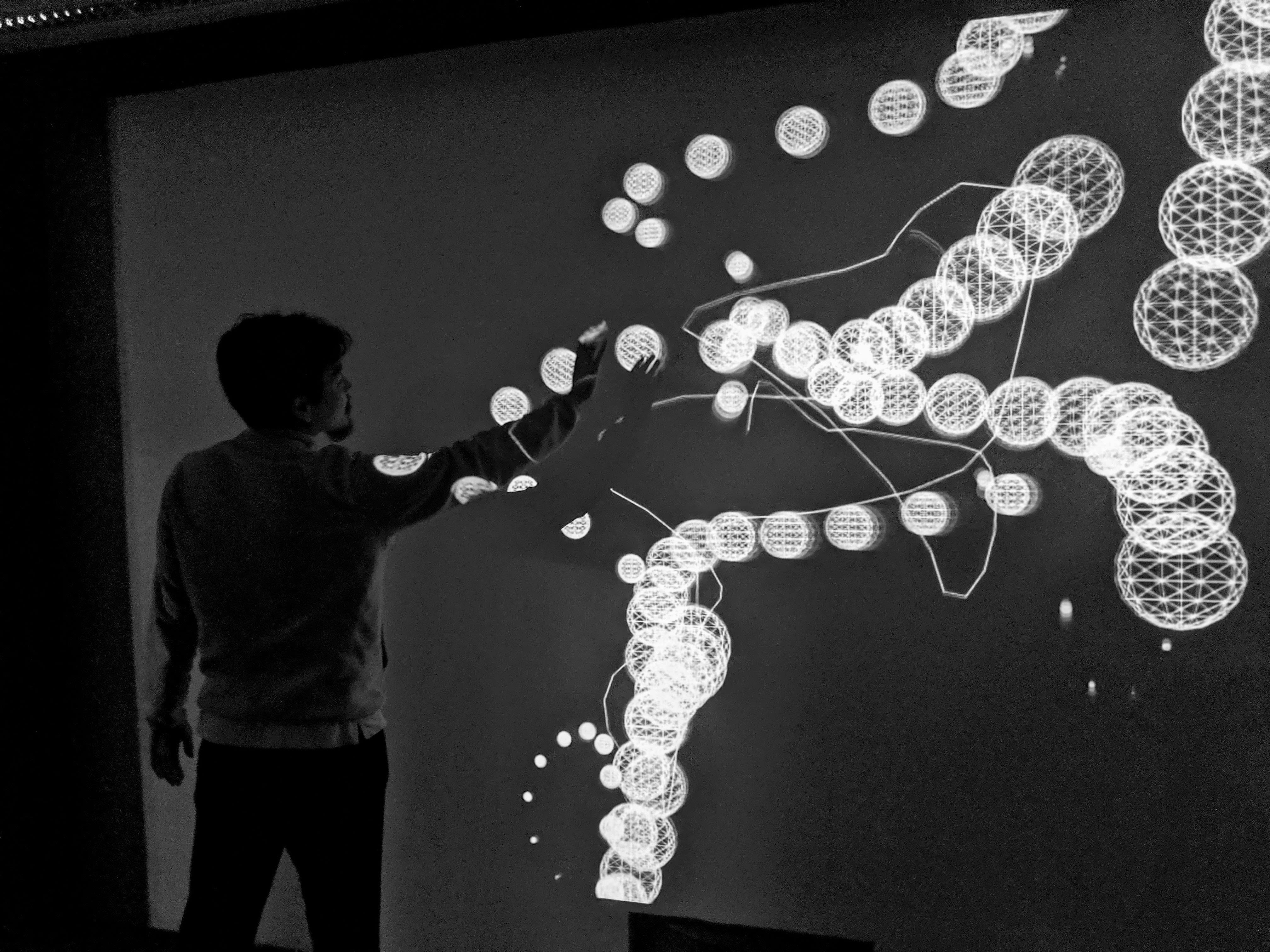
  • Interactive projection featuring globe like spherical computer generated wire structures that move across the screen responding to audience movement.
    Youngjun Chang
    BA (Hons) Theatre and Performance Design, Wimbledon College of Arts, UAL
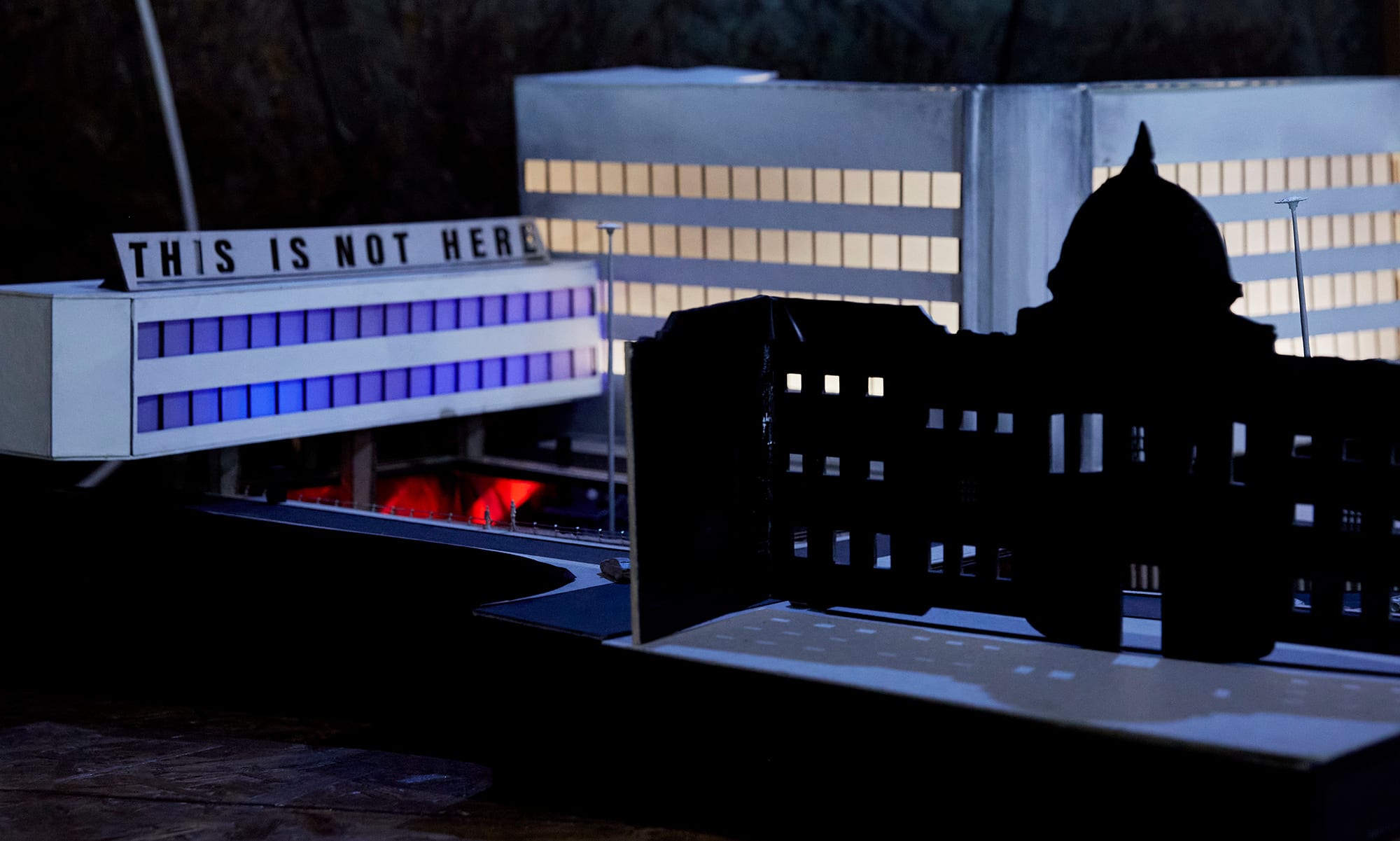
  • Stage set scale model by Sonia Smullen featuring city skyline with buildings from different eras including a church, office block and maybe luxury flats.
    Sonia Smullen
    BA (Hons) Theatre and Performance Design, Wimbledon College of Arts, UAL
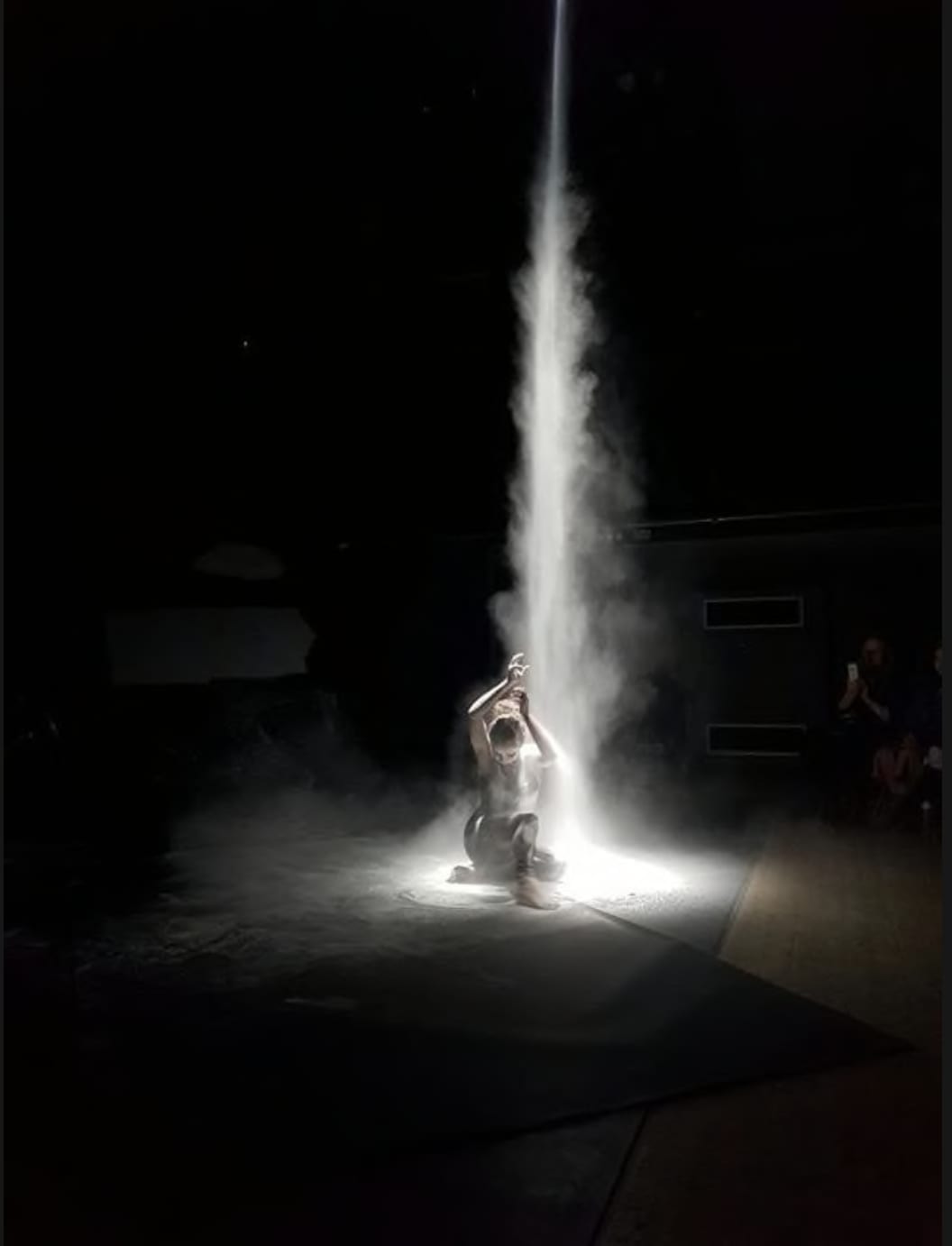
  • Dancer on stage with dry ice and one single white beam of light shining on them.
    Laura Fessey Kohle
    BA (Hons) Theatre and Performance Design, Wimbledon College of Arts, UAL
  • Set design model for Fahrenheit 451 by Maria Kuncheva.
    Maria Kuncheva
    BA (Hons) Theatre and Performance Design, Wimbledon College of Arts, UAL

UAL Showcase: Anna Gorman

Staff

Fees and funding

Home fee

£9,790 per year

Please note that this tuition fee for entry in September 2026 is subject to the passing of UK government legislation to approve the increase in fees. If this is not passed, your tuition fee for 2026/27 will be £9,535.

Tuition fees may increase in future years for new and continuing students.

Home fees are currently charged to UK nationals and UK residents who meet the rules. However, the rules are complex. Find out more about our tuition fees and determining your fee status.

International fee

£30,890 per year

This fee is correct for entry in September 2026 and is subject to change for entry in September 2027.

Tuition fees for international students may increase by up to 5% in each future year of your course.

Students from countries outside of the UK will generally be charged international fees. The rules are complex so read more about tuition fees and determining your fee status.

Additional costs

You may need to cover additional costs which are not included in your tuition fees, such as materials and equipment specific to your course. For a list of general digital equipment you may need (and how you can borrow equipment), visit our Study costs page.

Accommodation

Find out about accommodation options and how much they will cost, and other living expenses you'll need to consider.

Scholarships, bursaries and awards

Find out more about bursaries, loans and scholarships.

If you’re based in the UK and plan to visit UAL for an Open Event, check if you’re eligible for our UAL Travel Bursary. This covers the costs of mainland train or airline travel to visit UAL.

How to pay

Find out how you can pay your tuition fees.

Scholarship search

Entry requirements

The standard entry requirements for this course are:

112 UCAS tariff points, which can be made up of one or a combination of the following accepted full Level 3 qualifications:

  • 112 UCAS tariff points from 2 or more A Levels.
  • Distinction, Merit, Merit at BTEC Extended Diploma.
  • Merit at UAL Extended Diploma.
  • Distinction at Foundation Diploma in Art and Design.
  • Access Diploma or 112 tariff new UCAS points from the Access to HE Diploma.
  • 112 UCAS tariff points from an equivalent full Level 3 qualification.

Or equivalent EU/International qualifications, such as International Baccalaureate Diploma at 25 points minimum.

And three GCSE passes at grade 4 or above (grade A*-C).

APEL - Accreditation of Prior (Experiential) Learning

Applicants who do not meet these course entry requirements may still be considered in exceptional cases. The course team will consider each application that demonstrates additional strengths and alternative evidence. This might, for example, be demonstrated by:

  • Related academic or work experience
  • The quality of the personal statement
  • A strong academic or other professional reference
  • A combination of these factors

Each application will be considered on its own merit but we cannot guarantee an offer in each case.

English language requirements

All classes are taught in English. If English is not your first language you must provide evidence at enrolment of the following:

Selection criteria

We look for:

  • An interest, commitment and motivation for studying the subject
  • An ability to work imaginatively and creatively in 2D and 3D visual media, materials and processes
  • An ability to create, investigate and develop ideas independently
  • An ability to communicate your ideas visually, verbally and in writing
  • Potential for creative problem solving
  • An ability to self-direct and evaluate your own work
  • An ability to engage with the idea of character in the context of a dramatic situation
  • Visual awareness and an understanding of the creative process
  • Cultural and historical awareness of theatre design and performance
  • Motivation for working in theatre related industries
  • A desire to learn and succeed

Information for disabled applicants

UAL is committed to achieving inclusion and equality for disabled students. This includes students who have:

     
  • Dyslexia or another Specific Learning Difference
  • A sensory impairment
  • A physical impairment
  • A long-term health or mental health condition
  • Autism
  • Another long-term condition which has an impact on your day-to-day life

Our Disability Service arranges adjustments and support for disabled applicants and students.

Read our Disability and dyslexia: applying for a course and joining UAL information.

Apply now

Application deadline

14 January 2026 at 6pm (UK time)

If there are places available after this date, the course will remain open to applications until places have been filled.

Apply now

Application deadline

14 January 2026 at 6pm (UK time)

If there are places available after this date, the course will remain open to applications until places have been filled.

Apply to UAL

International students can apply to this course through UCAS with the following codes:

University code:

U65

UCAS code:

W464

Start your application
or

Apply with a UAL Representative

Based across the world, our local UAL representatives can support you with your application from your home country. Check to see if there is a representative available in your country currently.

Find your representative

How to apply

Follow this step-by-step guide to apply for this course

Step 1: Initial application

As part of your application through the UCAS website you'll need to submit a personal statement.

Personal statement advice

The total character limit is 4,000 characters or less. When creating your personal statement on the UCAS website, you will need to answer these 3 questions:

  • Why do you want to study this course or subject?
  • How have your qualifications and studies helped you to prepare for this course or subject?
  • What else have you done to prepare outside of education and why are these experiences useful?

To find out more about what to put in your personal statement, visit the UCAS advice page. For more information and support with applying to our courses, read our undergraduate application advice.

Step 2: Digital portfolio

We will review your initial application. If you have met the standard entry requirements, we will ask you to submit a digital portfolio.

You’ll need to submit this via PebblePad, our online portfolio tool.

Digital portfolio advice

Your portfolio should consist of recent work that reflects your creative strengths.

It should:

  • be maximum 30 pages
  • include a wide range of work that explores form, structure, texture and space
  • include experimental work that demonstrates your ability to develop ideas and solve problems
  • feature any previous experience of theatre work
  • include photos or videos of any sketchbooks or notebooks.

For more support, see our Portfolio advice and PebblePad advice.

Step 3: Interview

You may be invited to an interview following our review of your application. All interviews are held online and last 15 to 20 minutes.

For top tips, see our Interview advice.

You also need to know

Communicating with you

Once you have submitted your initial application, we will email you with your login details for our Applicant portal.

Requests for supplementary documents like qualifications and English language tests will be made through the applicant portal. You can also use it to ask questions regarding your application. Visit our After you apply page for more information.

Visas and immigration history check

All non-UK nationals must complete an immigration history check. Your application may be considered by our course teams before this check takes place. If your course requires a portfolio and/or video task, we may request these before we identify any issues arising from your immigration history check. Sometimes your history may mean that we are not able to continue considering your application. Visit our Immigration and visas advice page for more information.

External student transfer policy

UAL considers transfers from other institutions on a case-by-case basis. Read about how to apply to transfer into year 2 or 3 on our Undergraduate Apply page, and read our Student transfer policy for more information.

Alternative offers

If we are unable to consider you for the course you have applied to but your application is really strong, we may make you an alternative offer on a different course or at a different UAL College. This happens when our admissions tutors have found another course that they believe would be a strong match for your skills and interests.

Deferring your place

We can consider deferral requests if the course can accommodate this. You must apply in the year that you intend to start your course. If you are made an offer and your circumstances change, you can submit a deferral request to defer your place by 1 academic year. You must have met your conditions by 31 August 2026. If you need an English language test in order to meet the entry requirements, the test must be valid on the deferred start date of your course. If not, you will need to reapply. Requests are considered on a case-by case basis.

Contextual Admissions

This course is part of the Contextual Admissions scheme.

This scheme helps us better understand your personal circumstances so that we can assess your application fairly and in context. This ensures that your individual merit and creative potential can shine through, no matter what opportunities and experiences you have received.

Careers

BA Theatre and Performance Design graduates progress into a wide range of roles within the field of theatre and performance.

As well as working as designers in television and film production, production managers and scenic artists our graduates work in site-specific theatre, opera, musicals, music concerts, festivals and animation.

They also possess a range of skills, which enable them to transfer into other areas such as further academic study, exhibition and retail design.

Alumni have been finalists and winners of the Linbury Prize for stage design, progressing to being BAFTA and Olivier Award-winning designers with the National Theatre, Royal Shakespeare Company and the BBC. They have also exhibited at World Stage Design.

Alumni

  • Sarah Greenwood - Oscar nominated and BAFTA winning production designer for films including Atonement, Anna Karenina, Pride and Prejudice and Sherlock Holmes
  • David Harris - Associate Designer for Cameron Macintosh's Les Misérables
  • Richard Hudson - Set designer for The Lion King
  • Ann Maskrey - Costume designer for The Hobbit: An Unexpected Journey and Tim Burton’s Alice In Wonderland
  • Edward Thomas - BAFTA winning production designer who has worked on Dr Who and Torchwood
  • Cécile Trémolières - Freelance set and costume designer. Finalist of the Linbury Prize Stage Design (2013). Awarded the Royal Opera House Linbury bursary (2015)

Find out how careers and employability helps our students and graduates start their careers.