How LCF's New MSc Cosmetic Science Course Will Prepare Students for a Changing Industry

- Written byLondon College of Fashion
- Published date 23 October 2026
Share story
The global cosmetics industry is evolving at pace, driven by advances in science, sustainability, regulation and consumer expectations. London College of Fashion's newest MSc Cosmetic Science degree has been designed to help students develop the expertise needed to navigate this changing landscape.
We spoke with Course Leader Diogo Baltazar about the industry's biggest challenges and opportunities, what makes the course unique, and how students will develop the skills needed for careers across the cosmetics sector.
The cosmetics industry is evolving rapidly; what are the biggest shifts you’re seeing right now?
Sustainability is not innovation anymore; consumers now expect brands to be environmentally and socially conscious as a standard. Additionally, as social media elevated the voices of diverse consumers, cosmetic brands have increasingly been expected to cater to wider consumer needs, especially those that have historically been under-represented in this industry.
With rising misinformation and awareness of greenwashing, consumers also demand that their products have the evidence to back up their claims, whether these are related to their efficacy or lifecycle. However, it is still challenging to find truth; therefore, the future cosmetic scientist is expected to have strong scientific skills and ethical standards, highly valuing evidence-based science, transparency and climate and social justice.
How does MSc Cosmetic Science at LCF respond to these changes?
This degree aims to educate the future cosmetic scientists: they value transparency and truthfulness in science, and they are comfortable with navigating scientific uncertainty, innovation and the challenges of communicating with different audiences.
Throughout their journey, students will engage with the scientific literature and with real-world situations, honing their scientific rigour and developing their creativity as they apply their knowledge via problem-solving activities.
What makes studying cosmetic science at London College of Fashion different from a traditional science degree?
The MSc Cosmetic Science at LCF is for creative scientists: you might love analytical chemistry as much as flashy pigment effects; you might enjoy creating a new texture as well as understanding the complexities of lifecycle analysis; you might be driven to provide consumers the best textured hair conditioner or to design products that contribute to healthy ageing.
Studying applied science in a world-leading creative institution gives students the unique opportunity to combine technical rigour with creativity.
What would a typical week on the course look like?
A typical week will include a few lectures and seminars, a laboratory workshop and sometimes going to an extracurricular guest talk.
One of the lectures might be taught by an industry expert, while one of the seminars might include smelling some fragrances.
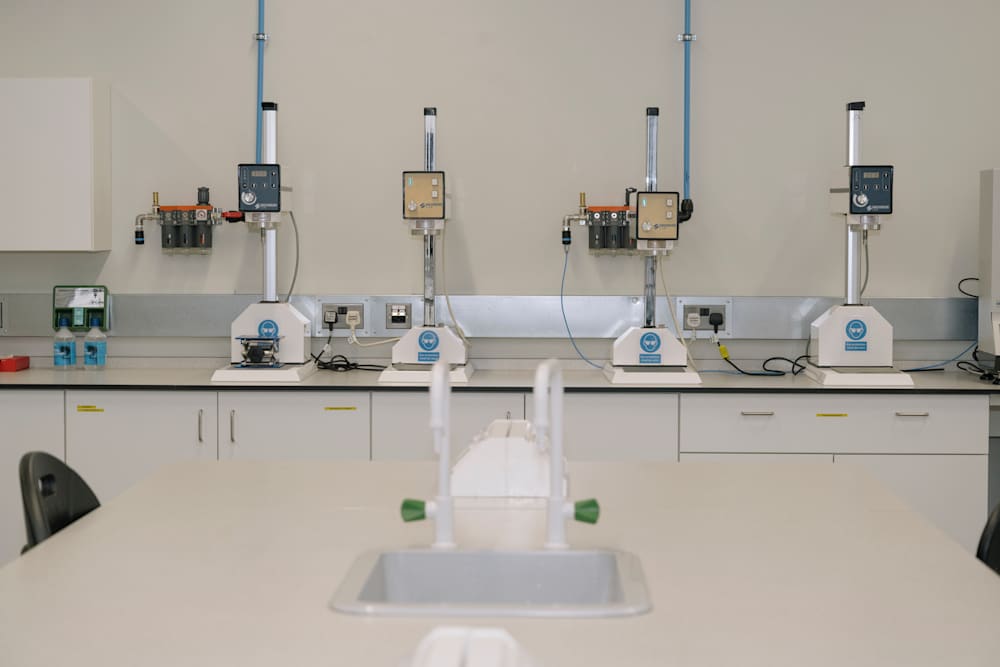
In the laboratory, you might analyse the viscoelastic properties of a lotion, evaluate its sensory properties, or use chromatography to quantify an ingredient.
You might meet your team in the canteen (while drinking your favourite barista drink) to prepare a presentation on the latest decorative effect or hair styling innovation.
How does the learning experience differ between the BSc and MSc courses at LCF?
On the BSc Cosmetic Science, students are commonly expected to learn new knowledge in lectures and later apply it. However, MSc Cosmetic Science students will often need to engage with scientific literature prior to sessions, which will prepare them to learn advanced topics in lectures or engage in critical discussions in seminars.
MSc Cosmetic Science students are expected to invest significant time in independent research to make the most of the fast-paced and intensive curriculum.
- Find out more about MSc Cosmetic Science
- Explore LCF's Cosmetic Science facilities with a virtual tour.
- Hear more from Course Leader Diogo in his staff biography.