Postgraduate

MSc Cosmetic Science

MSc Cosmetic Science facilities and workshops
MSc Cosmetic Science facilities and workshops | London College of Fashion | UAL
College
London College of Fashion
Start date
September 2027
Course length
12 months

Prepare for a career in the cosmetics and personal care industries by developing the advanced scientific, technical and critical skills needed to drive cosmetic innovation.

Course summary

Applications closed 2026/2027

Applications are now closed for 2026/27 entry. Applications for 2027/28 entry will open in autumn 2026.

Why choose this course at London College of Fashion

  • Join a course trusted by industry: Benefit from over 25 years of cosmetic science education at London College of Fashion, studying a course developed with industry input to help you build the knowledge, practical skills and critical thinking needed for today's global cosmetics sector.
  • Develop expertise in modern cosmetic science: Explore cosmetic formulation, product testing, claims substantiation and new product development while addressing industry priorities such as sustainability, responsible consumption, healthy ageing and consumer wellbeing.
  • Tackle real industry challenges: Work on industry-informed projects and case studies that reflect the opportunities and challenges facing cosmetic companies today, with opportunities to engage with professionals, research briefs and industry-sponsored activities.
  • Research what matters to you: Complete an independent Master's project aligned to your interests, choosing either an experimental research project or a critical literature review.
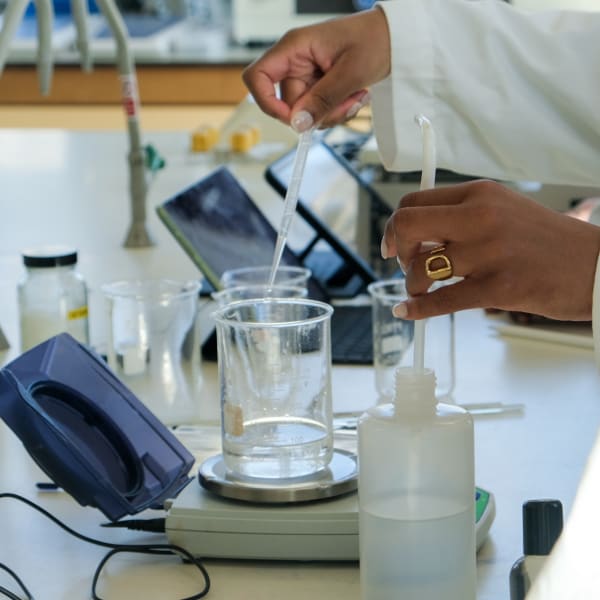
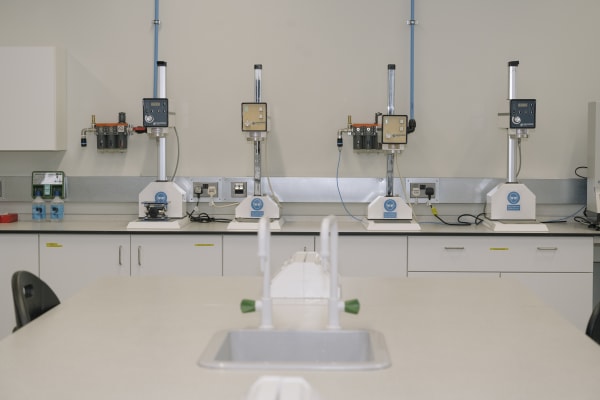
  • Learn in professional cosmetic science laboratories: Develop your scientific and technical skills in our state-of-the-art facilities as you take a hands-on approach to learning.

Upcoming Open Days and virtual events

Join us every Wednesday for a College Tour.

Scholarships, bursaries and awards

Use our scholarship search to discover if you are eligible for any scholarships, bursaries or awards.

Course overview

The MSc Cosmetic Science is an applied science postgraduate degree designed for those with a first degree in science who wish to join the cosmetics industry, or cosmetic industry professionals who wish to advance their career by furthering their studies in cosmetic science. The degree focuses on the needs of the global cosmetic industry and its diverse consumers by providing insight into formulation design, product testing, claims substantiation and new product development. In addition to subject-specific knowledge, this degree enables students to develop the critical, creative and technical skills necessary to lead scientific innovation and shape the future of the cosmetics industry. By the end of their degree, students will be expected to be skilled in presenting succinct and coherent arguments concerning cosmetic science, evidenced by independent critical appraisal of the current literature, appropriately tailored to both expert and general audiences.

The cosmetic industry continues to expand rapidly, with consumers more aware of the benefits of cosmetic products and increasingly demanding greater transparency, robustness and integrity in the scientific and business practices underpinning their development and efficacy. Increasingly, brands invest in science driven, efficacy-focused, multifunctional and sustainable product development. Furthermore, longevity-associated health and wellbeing, and responsible consumption are critical themes influencing the future of the cosmetic industry. Therefore, a career in cosmetic science is currently very relevant and associated with a constant focus on innovation.

What to expect

  • An industry-informed curriculum with a robust scientific underpinning and designed to stay at the forefront of the ever-evolving cosmetic industry trends and innovations.
  • Evidence based, research led and interdisciplinary teaching, providing you with complex problem-solving skills and encouraging the development of effective team and independent working.
  • Contemporary scientific skills, including advanced research, data analysis, information synthesis, critical evaluation and audience-focused scientific communication.
  • The opportunity to tailor your Master’s project according to your personal objectives, by choosing to complete experimental project or a critical literature review.

Industry experience and opportunities

While studying MSc Cosmetic Science you will have opportunities to engage with industry experts in guest-taught sessions, as well as in wider school and college talks and events. You may also join the UK Society for Cosmetic Science and the British Society of Perfumers as a student member and attend industry and scientific events in the UK.

Students may also participate in industry projects and international exchange programmes, subject to availability.

Mode of study

The MSc Cosmetic Science is offered in full-time mode and runs for 45 weeks over 12 months.

Climate, Social and Racial Justice  

We are committed to developing ethical practices. To achieve this, we are working to embed UAL’s Principles for Climate, Social and Racial Justice into the course.

Contact us

Register your interest to receive information and updates about studying at UAL.

Contact us to make an enquiry.

Course units

Block 1

Formulation Design (20 Credits)

In this unit, you will explore the design of cosmetic formulations across various categories, such as skincare, haircare and suncare. After being introduced to formulation principles in lectures, you will formulate products and analyse them via rheological and textural methods in practical sessions. You will also evaluate academic literature on formulation science and cosmetic ingredients to inform proposals of innovation in cosmetic formulation, focusing on texture, stability, efficacy and the needs of the diverse consumer.

New Product Development (20 Credits)

By evaluating new product development models, you will explore the requirements to develop cosmetic products that are innovative, sustainable and fit for purpose. You will focus on products that contribute to consumer health and wellbeing, as well as promoting responsible consumption. You will also develop your critical understanding of the UK and international cosmetic regulations underpinning cosmetic product safety, commercialisation and evidence-based cosmetic efficacy claims. You will learn about sensory and instrumental methodologies, and study design for product evaluation, which are critical for the substantiation of cosmetic product claims.

Research Methods in Cosmetic Science (20 Credits)

This unit will develop your critical understanding of a range of research methods appropriate for the cosmetic science subject area, while engaging with relevant academic literature. You will be introduced to the process of structured research and experimental design, to develop your research capabilities in preparation for your Master’s project. You will also learn about principles of research ethics, critical writing and will receive guidance on refining a feasible research plan.

Block 2

Elective Units (20 Credits)

Students will have the opportunity to participate in an elective unit as part of this course. This is an opportunity for students to collaborate with students from other courses within the college.

The following is an example list of electives that have been previously delivered:

  • Creative Decision Making for Fashion Enterprise
  • Cultural Programming
  • Fashion Politics and Cultures
  • Fashion Practices for Social Change
  • Fashion Together: Collaboration for Innovation

Please note:

  • Elective unit titles and details of the unit may change year to year
  • Elective units offered may change year to year, that is, unit listed above may or may not be offered in subsequent years
  • Students participate in a bidding process for choosing electives and participation in any particular elective is not guaranteed

Advanced Cosmetic Science (40 Credits)

Building on your understanding of skin and hair biology, formulation design and regulations, you will learn about advanced concepts and relevant research developments in cosmetic science. You will develop your critical understanding of the complexities of skin delivery strategies, as well as analytical methodologies and their role in cosmetic innovation and new product development. You will also explore the role of cosmetics in enhancing consumer wellbeing. This unit will include discussions on the latest developments and issues affecting the cosmetic industry, including those associated with artificial intelligence, sustainability, climate and social justice.

Block 3

MSc Project in Cosmetic Science (60 Credits)

This unit will be the culmination of your Master’s journey. Demonstrating self-direction, under the guidance of an academic supervisor, you will choose between an experimental project or critical literature review-based project, resulting in an MSc report or an MSc dissertation, respectively. The topic of your independent research should reflect your personal or professional interests and aspirations; it should be current and relevant to the cosmetic industry. Your work should be publishable: it will be expected to be critical, academically rigorous, contain elements of originality and be at the forefront of the subject area.

Learning and teaching methods

  • Lectures
  • Seminars
  • Guest speakers
  • Laboratory workshops
  • Tutorials
  • Presentations
  • Laboratory supervised access
  • Formative feedback
  • Self-directed study

Assessment methods

  • Time-constrained examination
  • Oral presentation (individual or team)
  • Poster presentation
  • Project report
  • Literature review
  • Project proposal
  • Master’s project (report or dissertation)

Facilities

Staff

Fees and funding

Home fee

£14,420

This fee is correct for 2026/27 entry and is subject to change for 2027/28 entry.

Tuition fees may increase in future years for new and continuing students on courses lasting more than one year. For this course, you can pay tuition fees in instalments.

Students from countries outside of the UK will generally be charged international fees. The rules are complex so read more about tuition fees and determining your fee status.

International fee

£30,890

This fee is correct for 2026/27 entry and is subject to change for 2027/28 entry.

Tuition fees may increase in future years for new and continuing students on courses lasting more than one year. For this course, you can pay tuition fees in instalments.

Students from countries outside of the UK will generally be charged international fees. The rules are complex so read more about tuition fees and determining your fee status.

Additional costs

You may need to cover additional costs which are not included in your tuition fees, such as materials and equipment specific to your course. For a list of general digital equipment you may need (and how you can borrow equipment), visit our Study costs page.

Accommodation

Find out about accommodation options and how much they will cost, and other living expenses you’ll need to consider.

Scholarships, bursaries and awards

If you’ve completed a qualifying course at UAL, you may be eligible for a tuition fee discount on this course. Find out more about our Progression discount.

You can also find out more about the Postgraduate Masters Loan (Home students only) and scholarships for Home and International students. Discover more about student funding.

If you’re based in the UK and plan to visit UAL for an Open Event, check if you’re eligible for our UAL Travel Bursary. This covers the costs of mainland train or airline travel to visit UAL.

How to pay

Find out how you can pay your tuition fees.

Scholarship search

Entry requirements


The standard entry requirements for this course are as follows:

  • An Honours degree at 2.1 or above in a science discipline; 
  • OR Equivalent qualifications.

APEL (Accreditation of Prior (Experiential) Learning)

Applicants who do not meet these course entry requirements may still be considered in exceptional cases. The course team will consider each application that demonstrates additional strengths and alternative evidence. This might, for example, be demonstrated by: 

  • Related academic or work experience (minimum of three years) 
  • The quality of the personal statement 
  • A strong academic or other professional reference 
  • OR a combination of these factors 

English Language Requirements

IELTS level 7.0 with a minimum of 6.0 in reading, writing, listening and speaking. Please check our main English Language Requirements.


Selection criteria

The course seeks to recruit students from diverse socio-economic and cultural backgrounds and welcomes applications from mature students.

The course team seeks to recruit students who can demonstrate:

  • the potential to develop their practical and critical abilities through academic study;
  • critical knowledge of a subject area;
  • a capacity for intellectual enquiry and reflective thought;
  • an openness to new ideas and a willingness to participate actively in their own intellectual development;
  • initiative with a developed and mature attitude to independent study.

Information for disabled applicants

UAL is committed to achieving inclusion and equality for disabled students. This includes students who have:

     
  • Dyslexia or another Specific Learning Difference
  • A sensory impairment
  • A physical impairment
  • A long-term health or mental health condition
  • Autism
  • Another long-term condition which has an impact on your day-to-day life

Our Disability Service arranges adjustments and support for disabled applicants and students.

Read our Disability and dyslexia: applying for a course and joining UAL information.

Apply now

Application deadline

Applications are now closed for 2026/27 entry. Applications for 2027/28 entry will open in autumn 2026.

Read more about deadlines

Apply now

Application deadline

Applications are now closed for 2026/27 entry. Applications for 2027/28 entry will open in autumn 2026.

Read more about deadlines

How to apply

Follow this step-by-step guide to apply for this course

Step 1: Initial application

You will need to submit an initial application including your personal statement, CV and study proposal.

Personal statement advice

Your personal statement should be maximum 500 words and include:

  • your reasons for choosing the course
  • your current creative practice and how this course will help you achieve your future plans
  • any relevant education and experience, especially if you do not have any formal academic qualifications.

CV advice

Please provide a CV detailing your education, qualifications and any relevant work or voluntary experience. If you have any web projects or other media that you would like to share, please include links in your CV. If English is not your first language, please also include your most recent English language test score.

Read our advice on preparing the tasks and documents for your initial application.

Study proposal advice

Please provide a study proposal of your potential research project (500 words).
It should:

  • state briefly the background for your proposal, with appropriate review and critical evaluation of the existing academic literature
  • set out the aims and objects for your proposal within the context of the course structure
  • justify your proposed research study in light of both its theoretical and practical contributions to the field of cosmetic science
  • outline your proposed methodology
  • outline expected findings and discuss potential limitations of the proposed research
  • include references using the Harvard referencing style and an appendix for any additional material if necessary. This will not be included in the word count.

Please note, your proposal serves to inform your application and we understand that your area of research will develop and change throughout your studies.

Step 2: Video task

We’d like you to submit a 2-3 minute video to help us learn more about you. When recording your video, please face the camera and speak in English.

What to include in your video task

  • Introduce your study proposal and explain why you have chosen to focus on this subject area.

Find advice on how to plan and film your video task. Then read our guidance on how to submit your video task, including the file types we accept.

Step 3: Interview

You may be invited to an interview following our review of your application. All interviews are held online and last 15 to 20 minutes.

For top tips, see our Interview advice.

You also need to know

Communicating with you

Once you have submitted your initial application, we will email you with your login details for our applicant portal.

Requests for supplementary documents like qualifications and English language tests will be made through the applicant portal. You can also use it to ask questions regarding your application. Visit our After you apply page for more information.

Applying to more than 1 course

You can apply for more than 1 postgraduate course at UAL but we recommend that you apply for a maximum of 3 courses.

As every course has its own entry and assessment requirements, we recommend tailoring each application to showcase how your experience, skills and interests match that course. Applying for many different courses may make it more difficult for you to show that you are suitable for each course in a competitive admissions process.

Only apply to the course(s) you are most interested in – applying for too wide a range of different courses may reduce your ability to clearly demonstrate your suitability for each. It’s better to make fewer bespoke applications than many generic ones. This will help you to stand out where we have high demand for places.

If you receive offers for multiple courses, you'll only be able to accept 1 offer. UAL doesn't accept repeat applications to the same course in the same academic year.

Visas and immigration history check

All non-UK nationals must complete an immigration history check. Your application may be considered by our course teams before this check takes place. If your course requires a portfolio and/or video task, we may request these before we identify any issues arising from your immigration history check. Sometimes your history may mean that we are not able to continue considering your application. Visit our Immigration and visas advice page for more information.

External student transfer policy

UAL accepts transfers from other institutions on a case-by-case basis. Read our Student transfer policy for more information.

Alternative offers

If we are unable to consider you for the course you have applied to but your application is really strong, we may make you an alternative offer on a different course or at a different UAL College. This happens when our admissions tutors have found another course that they believe would be a strong match for your skills and interests.

Deferring your place

We do not accept any deferral requests for our postgraduate courses. This means that you must apply in the year that you plan to start your course and you will not be able to defer your place to start at a later date.

Application deadlines

Most of our postgraduate courses have 2 rounds of deadlines: one in December and one in March.

As long as you apply ahead of each deadline we will consider your application alongside all the other applications in that round. We always make sure to hold enough places back for round 2 to make sure we can consider your application fairly, no matter which round you apply in.

If there are still places available after the second deadline, the course will remain open to applications until all places have been filled.

For our MBA courses, there is only 1 deadline. This is 31 July for international applicants and 31 August for UK applicants. This is to make sure you have enough time to apply for your visa if you are an international student.

For our January-start courses, the deadline is in October. If there are still places available after this deadline, the course will remain open to applications until all places have been filled.

Careers

Your future employability is central to all our courses and as a student with us you’ll have access to a wealth of resources to prepare you for your future career in the fashion industry. Graduate Futures is our dedicated employability team who will work with you throughout your time with us to get you ready for employment. There are also a variety of opportunities on the course to enhance your employability.

Industry engagement

You will engage with the fashion and creative industries through a range of collaborative opportunities, live projects, visits and guest lectures. Based within East Bank, London’s newest Cultural Quarter, you will benefit from close collaborations with institutions such as Sadlers Wells East, UCL and BBC Music as well as cultural programming within the Queen Elizabeth Olympic Park. You will benefit from talks and workshops with leading curators, fashion researchers and museum professionals from the V&A, London College of Fashion and beyond.

Graduate Futures

Graduate Futures provides a comprehensive career management service supporting our students to become informed and self-reliant individuals able to plan and manage their own careers.

LCF alumni

Many of our alumni are now impressive, leading industry figures.