Postgraduate

Graduate Diploma Fine Art


College
Chelsea College of Arts
Start date
September 2026
Course length
1 year (full time)

Graduate Diploma Fine Art at Chelsea College of Arts will enable you to develop an independent art practice and build confidence in your approach.

Course summary

Applications suspended 2026/27

We are not recruiting for this course for entry in 2026/27. Discover more courses at UAL.

Guaranteed progression

Successful completion of this course guarantees progression to MA Fine Art at Chelsea College of Arts or 1 of the MA Fine Art courses at Camberwell College of Arts.

Course overview

Graduate Diploma in Fine Art is for students who have a BA (Bachelor of Arts) but not necessarily in fine art. The course will help you progress to MA (Master of Arts) level or pursue a career within the field of fine art.

What to expect  

  • A practice-led course: That brings together a wide range of media. These include film, video, digital media, sound, print, performance, drawing, painting and sculpture. 
  • Integrated practice and theory: This will help you understand the contexts and conditions that shape and frame contemporary art practice. 
  • Independence: To develop an art practice enabling you to progress onto MA level. You’ll have significant control over what you learn, the pace you do this at and how you might show this.
  • Support: You’ll be helped throughout the course via on-going dialogue with your tutors and fellow students.
  • A framework to develop your work: This will enable you to locate your ideas and practice in relation to contemporary art and debates on cultural and theoretical issues. 
  • Portfolios and proposals: You’ll produce a portfolio of practical work and write applications for MA or other related courses and funding. 
  • Written work and verbal presentations: To articulate your ideas in relation to other appropriate practices and theories.
  • Inductions: Into the processes and facilities available in the College’s studios and workshops.
  • Negotiated access to Chelsea's workshops: These include ceramics, casting, laser cutting, photography, audio-visual editing, metal and woodwork. View the Chelsea facilities.

Industry experience and opportunities  

The Graduate Diploma Fine Art course has professional practice at its core. The course prepares you for progression to MA study as well as to independent practice. You’ll take part in exhibitions at the College and offsite. These will give you hands-on industry experience in curation, collaboration, exhibition production, publicity and publications. The taught programme covers transferable skills and introduces you to a wide range of professional contexts.   

Mode of study 

Graduate Diploma Fine Art is offered in full-time mode and consists of 30 teaching weeks over 1 academic year. You will be expected to commit an average of 40 hours per week to your course, including teaching hours and independent study.

Contact us

Register your interest to receive information and updates about studying at UAL.

Contact us to make an enquiry.

Course units

Unit 1 - Building practice  

This unit is an introduction to your course, the College and the University.  

There’ll be a programme of artist talks, lectures and regular tutor group sessions. You’ll be introduced to ways in which theoretical material and research can be used in relation to art practice. You’ll take part in an exhibition and produce a piece of critical writing related to your practice. You’ll begin to develop an enquiry-based practice and consider the value of taking risks and experimentation.  

Unit 2 - Public practice: development and realisation  

In this unit you'll develop your work further. You'll produce a portfolio of work that can be used within a professional context or to apply for an MA.  

There’ll be a series of workshops, tutorials and crits. You’ll document your work including how it becomes public, give a presentation and complete a piece of critical writing. You’ll make your work public externally and within the College.

Learning and teaching methods

  • Documentation workshops
  • Exhibition and work in progress crits
  • Group and individual tutorials
  • Presentation skills workshops
  • Technical skills workshops relating to installation
  • Workshops on portfolio presentation and digital technology

Assessment methods

  • Artist statements
  • Art submissions
  • Presentations
  • Projects
  • Research portfolios
  • Written submissions

Student work

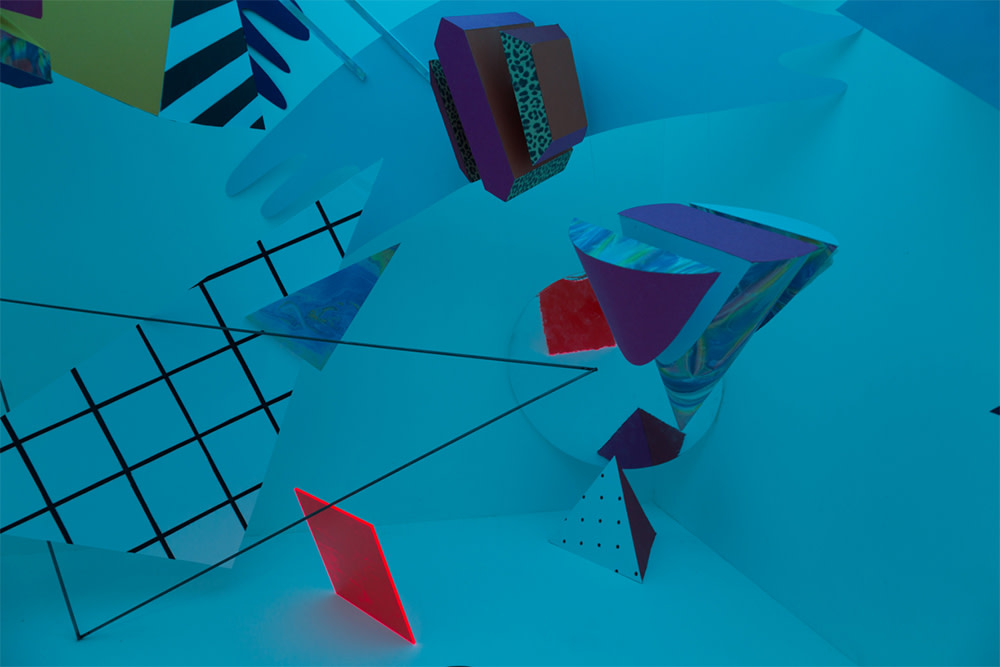
  • Sculpture using geometric elements and perspex.
    Graduate Diploma Fine Art interim show
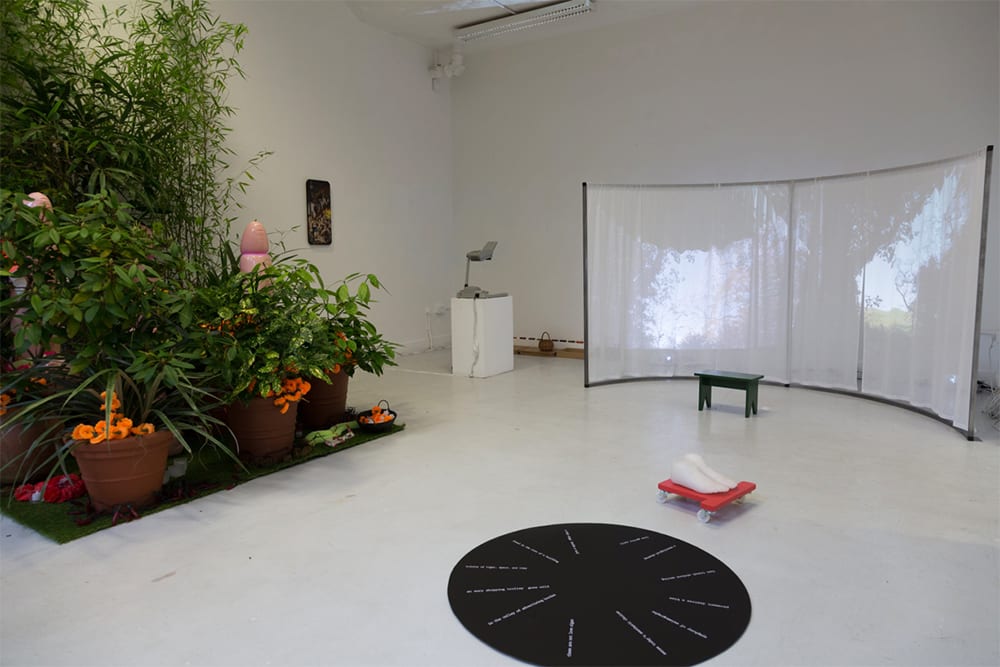
  • Interim show photo with video work, foot sculpture and installation featuring plants.
    Graduate Diploma Fine Art interim show
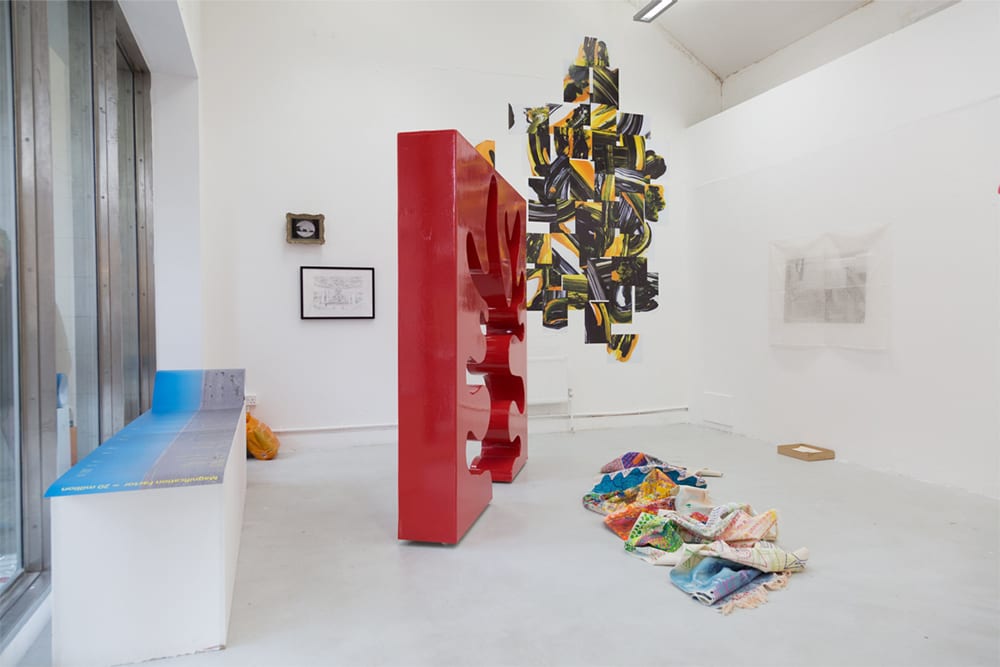
  • Interim show photo with paintings, sculptures and digital prints.
    Graduate Diploma Fine Art interim show
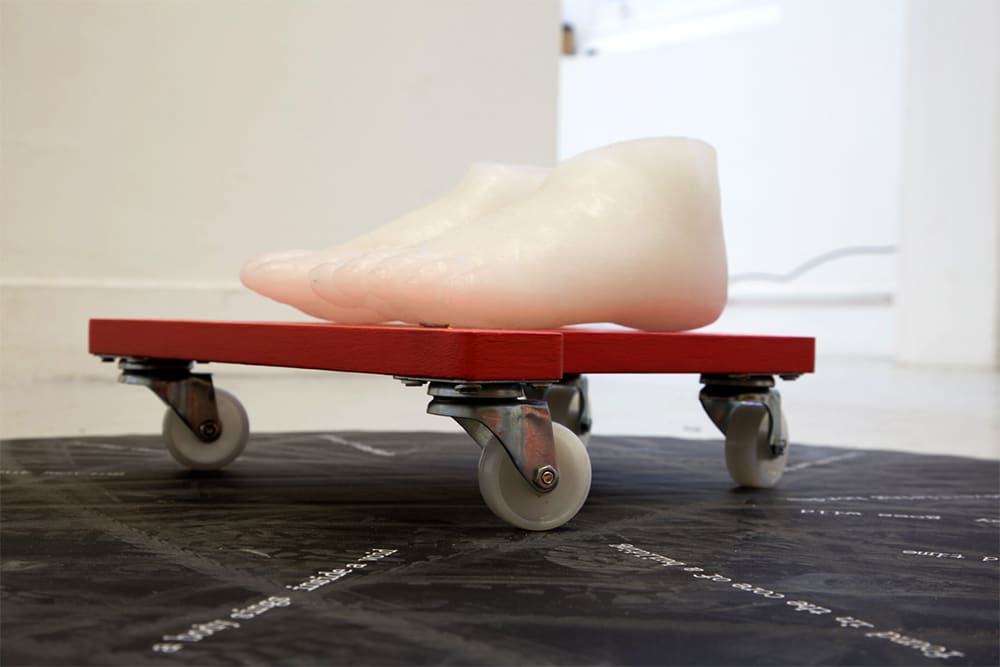
  • Sculpture consisting of feet moulded in wax on small platform with wheels.
    Graduate Diploma Fine Art interim show

Staff

  • Doug Fishbone  - Course Leader
  • Jeff Dennis - Senior Lecturer
  • Patricia Ellis - Fine Art Programme Director
  • Isabelle Gressel - Associate Lecturer
  • Tom Morton - Associate Lecturer

Fees and funding

Home fee

£14,420

This fee is correct for 2026/27 entry and is subject to change for 2027/28 entry.

Tuition fees may increase in future years for new and continuing students on courses lasting more than one year. For this course, you can pay tuition fees in instalments.

Home fees are currently charged to UK nationals and UK residents who meet the rules. However, the rules are complex. Find out more about our tuition fees and determining your fee status.

International fee

£30,890

This fee is correct for 2026/27 entry and is subject to change for 2027/28 entry.

Tuition fees may increase in future years for new and continuing students on courses lasting more than one year. For this course, you can pay tuition fees in instalments.

Students from countries outside of the UK will generally be charged international fees. The rules are complex so read more about tuition fees and determining your fee status.

Additional costs

You may need to cover additional costs which are not included in your tuition fees, such as materials and equipment specific to your course. For a list of general digital equipment you may need (and how you can borrow equipment), visit our Study costs page.

Accommodation

Find out about accommodation options and how much they will cost, and other living expenses you'll need to consider.

Scholarships, bursaries and awards

If you’ve completed a qualifying course at UAL (which includes study abroad courses), you may be eligible for a tuition fee discount on this course. Find out more about our Progression discount.

How to pay

Find out how you can pay your tuition fees.

Scholarship search

Entry requirements

The standard minimum entry requirements for this course are:

  • BA (Hons) degree or equivalent academic qualifications
  • Evidence of ability in art or design
  • Alternative qualifications and experience will also be taken into consideration
  • Personal statement
  • Portfolio of work

Entry to this course will also be determined by the quality of your application, your portfolio of work and personal statement.

APEL - Accreditation of Prior (Experiential) Learning

Applicants who do not meet these course entry requirements may still be considered in exceptional cases. The course team will consider each application that demonstrates additional strengths and alternative evidence. This might, for example, be demonstrated by:

  • Related academic or work experience
  • The quality of the personal statement
  • A strong academic or other professional reference
  • A combination of these factors

Each application will be considered on its own merit, but we cannot guarantee an offer in each case.

English language requirements

All classes are taught in English. If English isn't your first language you must provide evidence at enrolment of the following:

Selection criteria

We look for:

  • Evidence of visual and conceptual creative abilities
  • A clear commitment to the chosen field of study
  • The potential to develop the full range of practical, critical and conceptual skills necessary to complete the course
  • The ability to benefit from the learning environment and experience
  • An awareness of the contemporary and historical context of fine art
  • Some understanding of the role that contemporary critical thought and historical study can play in the development of personal creative work
  • The ability to communicate and discuss issues and ideas both verbally and in writing
  • The ability to manage your own time and initiate projects

Information for disabled applicants

UAL is committed to achieving inclusion and equality for disabled students. This includes students who have:

     
  • Dyslexia or another Specific Learning Difference
  • A sensory impairment
  • A physical impairment
  • A long-term health or mental health condition
  • Autism
  • Another long-term condition which has an impact on your day-to-day life

Our Disability Service arranges adjustments and support for disabled applicants and students.

Read our Disability and dyslexia: applying for a course and joining UAL information.

Apply now

Application deadline

We are not recruiting for this course for entry in September 2026.
Discover more courses at UAL.

Read more about deadlines

Apply now

Application deadline

We are not recruiting for this course for entry in September 2026.
Discover more courses at UAL.

Read more about deadlines

How to apply

Follow this step-by-step guide to apply for this course

Step 1: Initial application

You will need to submit an initial application including your personal statement and CV.

Personal statement advice

Your personal statement should be maximum 500 words and include:

  • any relevant education and experience
  • an introduction to your art practice: what do you make or do?
  • the ideas, interests, research or cultural references that inform your artworks
  • the relationship between your thinking and your making
  • how you would like to develop your practice on this course.

CV advice

Please provide a CV detailing your education, qualifications, exhibitions, events, publications and any relevant work or voluntary experience. If you have any web projects or other media that you would like to share, please include links in your CV. If English is not your first language, please also include your most recent English language test score.

Read our advice on preparing the tasks and documents for your initial application.

Step 2: Digital portfolio

We will review your initial application. If you have met the standard entry requirements, we will ask you to submit a digital portfolio.

You’ll need to submit this via PebblePad, our online portfolio tool.

Digital portfolio advice

Your portfolio should consist of recent work that reflects your creative strengths.

It should:

  • include completed artwork in any media. Please provide a URL where we can view any time-based media
  • include visual references or creative processes to help us understand the artwork
  • make sure that images that appear large on the screen so they can be clearly and easily viewed
  • avoid using any of the following: artwork that is not yours, sketchbook pages, cluttered page layouts, “mind map” diagrams.

For more support, see our Portfolio advice and PebblePad advice.

Step 3: Interview

You may be invited to an interview following our review of your application. All interviews are held online and last 15 to 20 minutes.

For top tips, see our Interview advice.

You also need to know

Communicating with you

Once you have submitted your initial application, we will email you with your login details for our Applicant portal.

Requests for supplementary documents like qualifications and English language tests will be made through the applicant portal. You can also use it to ask questions regarding your application. Visit our After you apply page for more information.

Applying to more than 1 course

You can apply for more than 1 postgraduate course at UAL but we recommend that you apply for a maximum of 3 courses.

As every course has its own entry and assessment requirements, we recommend tailoring each application to showcase how your experience, skills and interests match that course. Applying for many different courses may make it more difficult for you to show that you are suitable for each course in a competitive admissions process.

Only apply to the course(s) you are most interested in – applying for too wide a range of different courses may reduce your ability to clearly demonstrate your suitability for each. It’s better to make fewer bespoke applications than many generic ones. This will help you to stand out where we have high demand for places.

If you receive offers for multiple courses, you'll only be able to accept 1 offer. UAL doesn't accept repeat applications to the same course in the same academic year.

Visas and immigration history check

All non-UK nationals must complete an immigration history check. Your application may be considered by our course teams before this check takes place. If your course requires a portfolio and/or video task, we may request these before we identify any issues arising from your immigration history check. Sometimes your history may mean that we are not able to continue considering your application. Visit our Immigration and visas advice page for more information.

External student transfer policy

UAL accepts transfers from other institutions on a case-by-case basis. Read our Student transfer policy for more information.

Alternative offers

If we are unable to consider you for the course you have applied to but your application is really strong, we may make you an alternative offer on a different course or at a different UAL College. This happens when our admissions tutors have found another course that they believe would be a strong match for your skills and interests.

Deferring your place

We do not accept any deferral requests for our postgraduate courses. This means that you must apply in the year that you plan to start your course and you will not be able to defer your place to start at a later date.

Application deadlines

Most of our postgraduate courses have 2 rounds of deadlines: one in December and one in March.

As long as you apply ahead of each deadline we will consider your application alongside all the other applications in that round. We always make sure to hold enough places back for round 2 to make sure we can consider your application fairly, no matter which round you apply in.

If there are still places available after the second deadline, the course will remain open to applications until all places have been filled.

For our MBA courses, there is only 1 deadline. This is 31 July for international applicants and 31 August for UK applicants. This is to make sure you have enough time to apply for your visa if you are an international student.

For our January-start courses, the deadline is in October. If there are still places available after this deadline, the course will remain open to applications until all places have been filled.
Careers

The course is aimed at preparing students for further study at Masters level or pursuing a career in the field of fine art. This could include art practice, art writing, curation, arts administration, art consultancy, collaborative practice and community arts.

If you successfully pass your Graduate Diploma, we will guarantee you a conditional offer on MA Fine Art at Chelsea College of Arts or any of the MA Fine Art pathways at Camberwell College of Arts starting the following year.

Find out how careers and employability helps our students and graduates start their careers.