Undergraduate

BA (Hons) Journalism and Publishing

A compilation of screenshots of different online platforms.
BA (Hons) Magazine Journalism and Publishing, LCC.
College
London College of Communication
UCAS code
V0G4
Start date
September 2026
Course length
3 years

Develop skills in digital, print and multiplatform storytelling. With journalism and business skills, you’ll create stories to reach audiences, and launch a rewarding career in media and publishing.

Course summary

Course subject to re-approval

Please note that this course is undergoing re-approval. This is the process by which we ensure the course continues to provide a high quality academic experience. During re-approval there may be some changes to the course content displayed on this page. Please contact us if you have any questions about the course.

Our new building

You will be one of the first students to join us in our cutting-edge new building for London College of Communication, just across the road from our current site in Elephant & Castle.

Key Information for 2026 entry applicants

  • From September 2026 to June 2027 you will study at our existing building.
  • For your next two years of your degree you will study at our new building.

Why choose this course at London College of Communication

  • 360-degree view: You’ll learn to manage publishing processes from idea to publication, going beyond content creation to understand how successful media businesses operate and build audiences.
  • Storytelling: You’ll acquire practical journalism skills to produce news and feature content for different platforms and formats, including short-form video, podcasts, newsletters, live blogs, instazines, photo books, and printed publications.
  • Ethics: In an age of fake news and AI technologies, you’ll learn the editorial processes that ensure you operate with integrity as a journalist and publisher, creating trustworthy, in-demand content.
  • Real-world industry access: You’ll work with prestigious publishers and organisations on live briefs and projects. Past collaborations include Penguin Michael Joseph, News UK (The Times and The Sun), and the environmental magazine Footprint. The course also has a partnership with the John Schofield Trust, which provides mentoring for early-career professionals.
  • Reputation: UAL is ranked 12th in the UK for Journalism by the Guardian University Guide 2026.
  • Future-readiness: In the National Student Survey 2025, 100% of students agreed that the course had developed the knowledge and skills they need for their futures (results for BA (Hons) Magazine Journalism and Publishing).

Open days

The next Open Day for this course will be announced soon.

A recording of our latest virtual open event for this course is available. Watch online.

Instagram

View our course Instagram.

Course overview

BA (Hons) Journalism and Publishing will develop your skills in digital and print publishing alongside multiplatform journalism. The course will prepare you for a range of rewarding careers in the media and publishing industries including in editorial, production and marketing. It will also give you the tools you need to launch your own print and digital magazines or other media product.

You'll start by building your core skills in practical journalism and publishing, learning to investigate, report and create content with an ethical approach. You’ll learn the strategies and theories that inform editorial decision-making and go on to explore how media businesses build audience engagement and generate revenue through subscriptions and paywalls.

This is a hands-on, industry-facing course, and you will collaborate with publishers and organisations on live briefs and projects. You’ll be guided by tutors with extensive professional experience to develop stories and be supported by expert technicians to bring these to life in our industry-standard facilities, including a newsroom, sound and video studios, and digital and print workshops.

In Year 3 you will bring all your learning together to conceive, produce and publish a media product of your choice alongside a business strategy. This will leave you well placed and prepared for roles across the creative industries.

What to expect 

  • Skills and Knowledge: Expect to develop skills in researching stories, interviewing, journalistic ethics, design and production, project management, audience analysis and generating business and marketing plans.
  • Collaboration: This is a key aspect of the course, just like in the creative industries. As well as collaborating with your classmates, you’ll work on projects with students at UAL, as well as with external practitioners and industry experts.
  • Journalistic integrity. In an age of fake news and AI technologies, you will learn to uphold high standards of accuracy and integrity in all your work.
  • Editorial and business strategies: Understanding these is a key feature of the course, enabling you to make informed decisions on how to communicate with diverse audiences and build communities around your content.
  • Learning. You’ll be taught by expert staff with current industry experience. You’ll produce and be assessed via portfolios of journalism, research reports and essays into contemporary issues, digital or print publications, editorial strategies and launch plans and presentations.
  • Employment: Our graduates can expect to find work across digital content creation, PR and social media marketing, as journalists and editors in media and publishing companies, brand management and editorial production.

Industry experience and opportunities 

Throughout your degree you will gain valuable access to the publishing industry through guest lectures, alumni visits, employability events and practitioner led workshops. You will also have opportunities to connect with the industry through a mentorship programme.

The Professional Practice unit will offer you the choice of work placement or collaborative industry project. Students have been successful in securing placements with media companies including Vogue, Dazed, Glamour, News UK, Elle, Monocle, National Geographic, Hearst Magazine Group, Harpers and Queen as well in the broader fields of PR and marketing. The Creative Futures unit will enable you to develop your own professional profile and focus on career options post-graduation.

You’ll have the opportunity to undertake the Diploma in Professional Studies (DPS) or the UAL Diploma in Creative Computing between Years 2 and 3 to enhance your learning experience and employability skills.

Mode of study 

BA (Hons) Journalism and Publishing runs for 93 weeks in full time mode. It is divided into 3 stages over 3 academic years. Each stage lasts 31 weeks.

Contact us

Register your interest to receive information and updates about studying at UAL.

Contact us to make an enquiry.

Course units

UAL is committed to ensuring that its students’ knowledge and skills are set within a contemporary personal and professional ethical framework in order they may make positive impact in practice particularly in relation to the UAL Principles of Climate, Racial and Social Justice. The UAL Principles help to inform the course’s approach to ethical awareness and application in the curriculum leading to advocacy, mitigation and urgency in developed practice. Ethical behaviours and values are embedded in course aims and are assessed throughout. 

In common with all courses at the University of the Arts London, this course is credit rated. The course is 3 years, levels 4-6. Each year requires you to achieve 120 credit points. 

To be awarded the BA (Hons) Journalism and Publishing qualification, you need to accumulate a total of 360 credits. All modules listed below are compulsory. 

Year 1 

In Year 1, we’ll teach you how to create journalism for digital and print formats as well as the publishing skills to distribute content to different audiences via a range of channels. You’ll also be introduced to the contextual and critical knowledge that shapes the current publishing landscape. This year focuses on helping you grasp the fundamentals of the journalism and publishing process, and, guided by your tutors, will enable you to gain confidence in generating your own stories and sharing them with your peers via course media platforms. Some units will be specific to BA (Hons) Journalism and Publishing, and others will be shared with BA (Hons) Journalism.

Year 2 

You’ll expand on your design and project management skills and be introduced to key aspects of editorial and publishing strategy at the same time as honing your journalism skills. You’ll plot your own journey through the course via a choice of option units which might include creative storytelling, editorial design, photography and book publishing. There will also be an opportunity to build your professional profile and engage with the industry via a work placement or live brief. Some units will be specific to BA (Hons) Journalism and Publishing and others will be shared with BA (Hons) Journalism. You may also choose to go on an international exchange.

Year 3  

In Year 3, you’ll draw all your learning together through the creation of a publishing product of your choice. And you’ll deepen your understanding of journalism and publishing via a research project based around your interests. An important part of Year 3 is preparation for professional life, including learning how to define and explore potential career paths after graduation. These include working as content creators for media and publishing companies, or in the broader fields of PR, marketing and communications as well working independently as a freelance journalist or launching your own digital or print publication.

Optional Diploma between Years 2 and 3

Between Years 2 and 3 of your course, you’ll also have the opportunity to undertake one of the following qualifications:

Diploma in Professional Studies (DPS) (Optional)

An optional, year-long learning opportunity which enables you to develop your professional skills by undertaking time out for industry experience. Supported throughout the year by academics, you’ll build on the knowledge gained on your course in a range of national or international locations, and graduate with an additional qualification of Diploma in Professional Studies.

UAL Diploma in Creative Computing (Optional)

Between Years 2 and 3, you can undertake the year-long Diploma in Creative Computing. This will develop your skills in creative computing alongside your degree. After successfully completing the diploma and your undergraduate degree, you’ll graduate with an enhanced degree: BA (Hons) Journalism and Publishing (with Creative Computing).

Learning and teaching methods

  • Workshops
  • Lectures
  • Seminars and tutorials
  • Directed reading
  • Independent and collaborative working practices
  • Outside speakers and visits
  • Assessed assignments

Assessment methods

  • Portfolios of journalistic and publishing work
  • Reflective statements
  • Projects
  • Essays
  • Research papers and reports
  • Presentations

UAL Showcase

Explore work by our recent students on UAL Showcase

Student voices

Carolina Semprucci

Retrospective

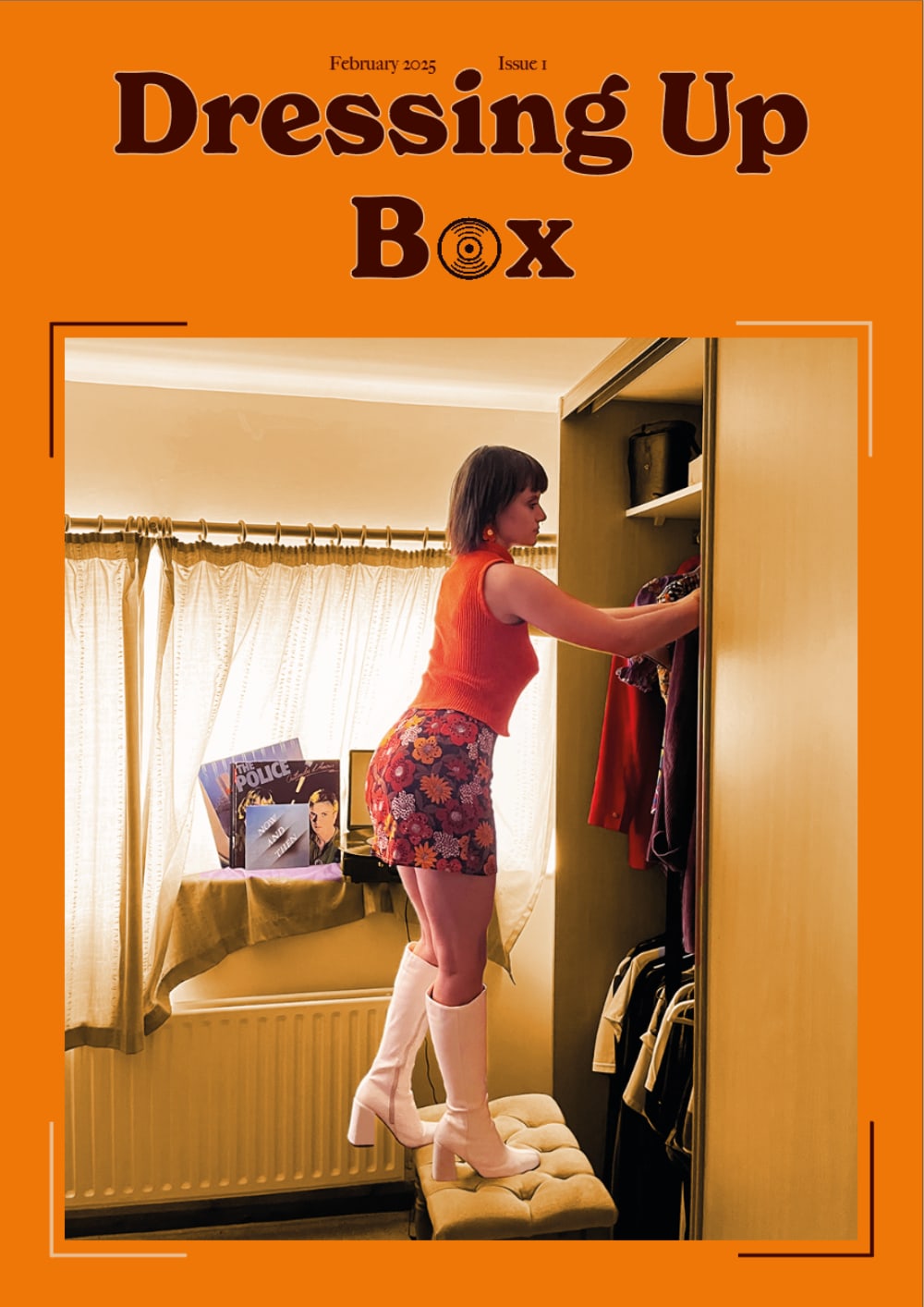
Inspired by a mixture of magazines, books, and archival material, Carolina’s magazine, ‘Retrospective’, is a platform for discussing art in an intimate and accessible setting.

Loana Rondot

Meet Loana Rondot, a student from BA (Hons) Magazine Journalism and Publishing at London College of Communication.

Roz Jones

Limb

Roz’s project is an A5 book that uses elements such as articles, poetry and imagery to examine the topic of addiction.

Stories

Facilities

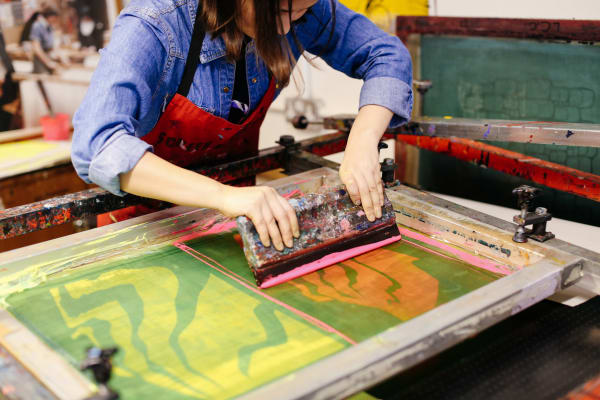
  • Student using the Screen Printing facility
    Libo Li working in Screen Printing Workshop, Postgraduate Diploma Design for Visual Communication. London College of Communication, UAL. Photograph: Alys Tomlinson

    Printing and Finishing

    Discover our printing techniques, from Lithographic Printing to Print Finishing and Bookbinding.

  • Student reading a book in between two bookshelves in the Library
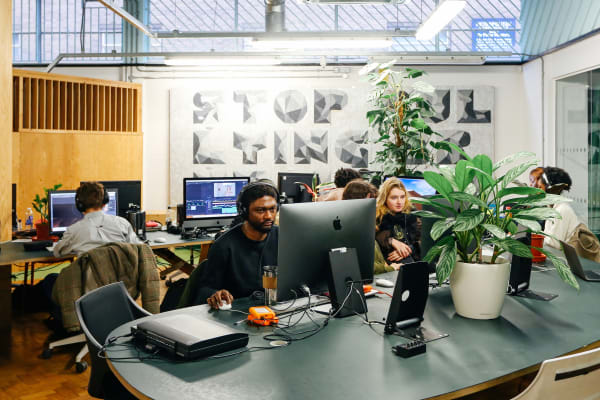
    Students in the Digital Space. London College of Communication, UAL. Photograph: Alys Tomlinson

    The Digital Space

    The Digital Space is an open-plan, creative hub with computers set up with specialist software.

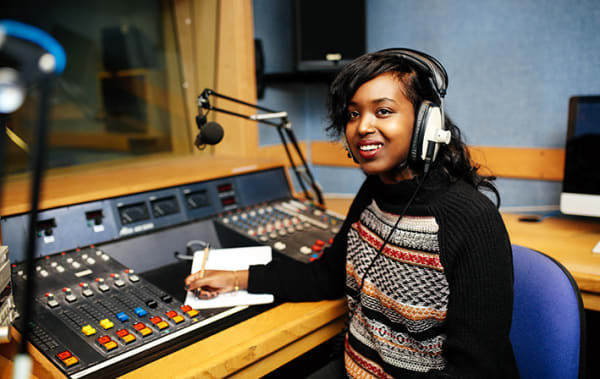
  • A journalism student working in one of the audio studios.
    Image © Alys Tomlinson

    Journalism

    Journalism students have access to an onsite newsroom, media lab and audio studios.

Staff

Associate Lecturers and guest speakers:

Hilly Janes – editor and journalist
Samm Taylor – editor, journalist and lawyer
Lydia Garnett – editor and photographer
Megan Wallace – editorial director, Gay Times
Samm Taylor – editorial and creative content specialist, News UK
Nikki Onafuye – journalist and digital content producer
Steve Watson – director, Stack Magazines
Jem Collins – director Journo Resources and digital journalist
Michael Harrison – creative director (formerly Vogue Singapore)
Liv Siddall – senior editor, We Transfer
Judith Watts – writer, mentor, creative practitioner
Derek Walmsley – editor, The Wire magazine
Tom Loxley – editorial director Radio Times and founder Rakes Progress magazine

Fees and funding

Home fee

£9,790 per year

Please note that this tuition fee for entry in September 2026 is subject to the passing of UK government legislation to approve the increase in fees. If this is not passed, your tuition fee for 2026/27 will be £9,535.

Tuition fees may increase in future years for new and continuing students.

Home fees are currently charged to UK nationals and UK residents who meet the rules. However, the rules are complex. Find out more about our tuition fees and determining your fee status.

International fee

£30,890 per year

This fee is correct for entry in September 2026 and is subject to change for entry in September 2027.

Tuition fees for international students may increase by up to 5% in each future year of your course.

Students from countries outside of the UK will generally be charged international fees. The rules are complex so read more about tuition fees and determining your fee status.

Additional costs

You may need to cover additional costs which are not included in your tuition fees, such as materials and equipment specific to your course. For a list of general digital equipment you may need (and how you can borrow equipment), visit our Study costs page.

Accommodation

Find out about accommodation options and how much they will cost, and other living expenses you'll need to consider.

Scholarships, bursaries and awards

Find out more about bursaries, loans and scholarships.

If you’re based in the UK and plan to visit UAL for an Open Event, check if you’re eligible for our UAL Travel Bursary. This covers the costs of mainland train or airline travel to visit UAL.

How to pay

Find out how you can pay your tuition fees.

Scholarship search

Entry requirements

The course team welcomes applicants from a broad range of backgrounds from all over the world. The course attracts students who apply direct from A-level (or equivalent) or from Foundation Diploma in Art and Design, or other art or design courses, as well as mature students who may have previously worked in industry.

The standard entry requirements for this course are as follows:

  • 104 UCAS tariff points, which can be made up of one or a combination of the following accepted full level 3 qualifications:
  • A Levels at C or above (preferred subjects include: English; History; Media; Business; Art and Design, or other subjects within Social Sciences).
  • Distinction at Foundation Diploma in Art & Design (Level 3 or 4).
  • Distinction, Merit, Merit at BTEC Extended Diploma (preferred subjects: Creative Media and Journalism, Business/Business Studies, IT & Computing, Media),
  • Merit at UAL Extended Diploma.
  • Access to Higher Education Diploma (preferred subject: Journalism, Digital and Creative Media, Marketing, Humanities and Social Sciences).
  • OR equivalent EU/International qualifications, such as International Baccalaureate Diploma at 24 points minimum.

And 3 GCSE passes at grade 4 or above (grade A*-C).

APEL - Accreditation of Prior (Experiential) Learning

If you do not meet these entry requirements but your application demonstrates additional strengths and alternative relevant experience, you may still be considered.

This could include:

  • substantial related academic or work experience, which could be considered equivalent to the minimum entry requirements
  • a strong academic or other professional reference in conjunction with the above.

Each application will be considered on its own merit. We cannot guarantee an offer in each case.

English language requirements

  • IELTS level 6.5 or above, with at least 5.5 in reading, writing, listening and speaking.

All classes are conducted in English. If English is not your first language you will be asked to provide evidence of your English language ability when you enrol. Please check our English language requirements page for more information.

Selection criteria

The details on your UCAS application (including the academic reference and your personal statement) will be assessed against the following criteria:

Offers will be made based on the following selection criteria:

  • A considered and demonstrable interest in and appreciation of the subject disciplines.
  • An understanding of the need for a critical and analytical approach (through research and practice) to this area of study.
  • Commitment to the study and development of your own creative practice and subsequent career opportunities.

Information for disabled applicants

UAL is committed to achieving inclusion and equality for disabled students. This includes students who have:

     
  • Dyslexia or another Specific Learning Difference
  • A sensory impairment
  • A physical impairment
  • A long-term health or mental health condition
  • Autism
  • Another long-term condition which has an impact on your day-to-day life

Our Disability Service arranges adjustments and support for disabled applicants and students.

Read our Disability and dyslexia: applying for a course and joining UAL information.

Apply now

Application deadline

14 January 2026 at 6pm (UK time)

If there are places available after this date, the course will remain open to applications until places have been filled.

Apply now

Application deadline

14 January 2026 at 6pm (UK time)

If there are places available after this date, the course will remain open to applications until places have been filled.

Apply to UAL

International students can apply to this course through UCAS with the following codes:

University code:

U65

UCAS code:

V0G4

Start your application
or

Apply with a UAL Representative

Based across the world, our local UAL representatives can support you with your application from your home country. Check to see if there is a representative available in your country currently.

Find your representative

How to apply

Follow this step-by-step guide to apply for this course

Step 1: Initial application

You will need to submit an initial application including your personal statement.

Personal statement advice

The total character limit is 4,000 characters or less.

When creating your personal statement on the UCAS website, you will need to answer these 3 questions:

  • Why do you want to study this course or subject?
  • How have your qualifications and studies helped you to prepare for this course or subject?
  • What else have you done to prepare outside of education and why are these experiences useful?

To find out more about what to put in your personal statement, visit the UCAS advice page. For more information and support with applying to our courses, read our undergraduate application advice.

Step 2: Interview

You may be invited to an interview following our review of your application. All interviews are held online and last 15 to 20 minutes.

For top tips, see our Interview advice.

You also need to know

Communicating with you

Once you have submitted your initial application, we will email you with your login details for our Applicant portal.

Requests for supplementary documents like qualifications and English language tests will be made through the applicant portal. You can also use it to ask questions regarding your application. Visit our After you apply page for more information.

Visas and immigration history check

All non-UK nationals must complete an immigration history check. Your application may be considered by our course teams before this check takes place. If your course requires a portfolio and/or video task, we may request these before we identify any issues arising from your immigration history check. Sometimes your history may mean that we are not able to continue considering your application. Visit our Immigration and visas advice page for more information.

External student transfer policy

UAL considers transfers from other institutions on a case-by-case basis. Read about how to apply to transfer into year 2 or 3 on our Undergraduate Apply page, and read our Student transfer policy for more information.

Alternative offers

If we are unable to consider you for the course you have applied to but your application is really strong, we may make you an alternative offer on a different course or at a different UAL College. This happens when our admissions tutors have found another course that they believe would be a strong match for your skills and interests.

Deferring your place

We can consider deferral requests if the course can accommodate this. You must apply in the year that you intend to start your course. If you are made an offer and your circumstances change, you can submit a deferral request to defer your place by 1 academic year. You must have met your conditions by 31 August 2026. If you need an English language test in order to meet the entry requirements, the test must be valid on the deferred start date of your course. If not, you will need to reapply. Requests are considered on a case-by case basis.

Contextual Admissions

This course is part of the Contextual Admissions scheme.

This scheme helps us better understand your personal circumstances so that we can assess your application fairly and in context. This ensures that your individual merit and creative potential can shine through, no matter what opportunities and experiences you have received.

Careers

Our graduates have gone onto careers as journalists and content creators for media organisations including Dazed,  ITV, BBC, Hearst magazine group, Zest media, HarperCollins, ITP media, Mail Metro, Sky, APL media and NBC news.

They have also secured roles in the broader fields of public relations, marketing and communications with businesses such as TikTok, Meta, Cow PR, Amazon, EMG Entertainment, eToro, Marks and Spencer, MG OMD, Purple PR, Boden, Harrods and 50 Sport.

Recent graduates include:

  • Carrerra Lydon – brand partnerships manager, Dazed Media
  • Imogen Clarke – global editor-in-chief, Glass Online
  • Layla Turner – commerce writer and content producer, Mailonline
  • Samantha Johnson – editorial manager, 50 Sport
  • Issah Nalzaro – digital content creator, EMG Media and Marketing
  • Roz Jones – new business executive, Uncommon Creative Studio
  • Indigo Wallace – national radio promotions assistant, Your Army
  • Rene Ramos – junior account executive, ModusBPCM
  • Carolina Semprucci – graphic designer, Art Ultra
  • Kexin Sun – gallery executive, iPRECIATION