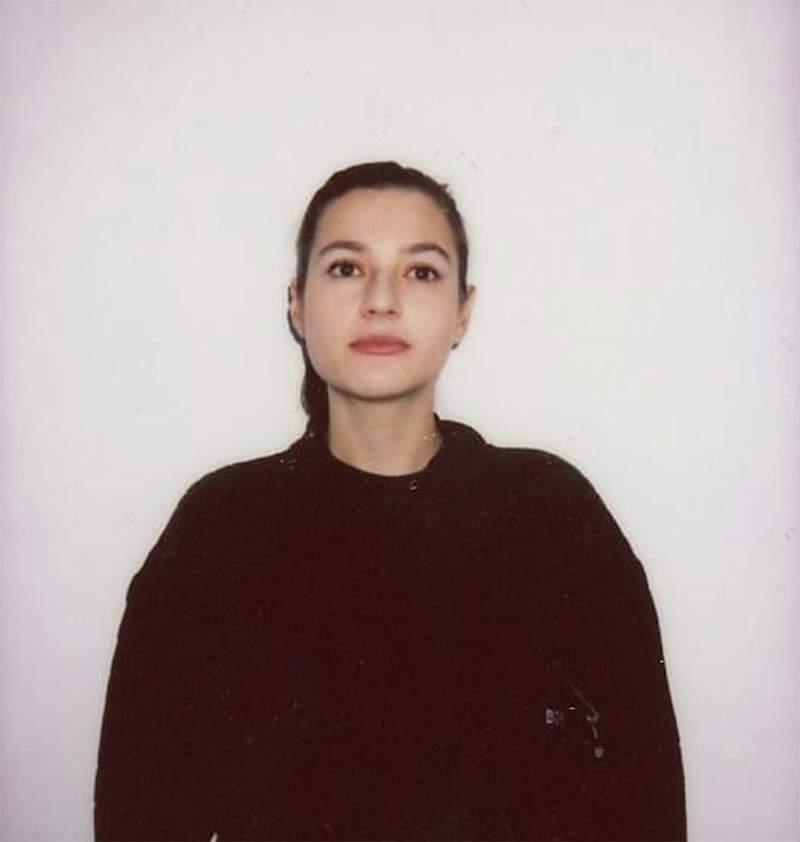
Biography
Vera completed MA Photojournalism and Documentary Photography in 2019. Vera is currently an artist and guest lecturer.
Interview
You graduated from MA Photojournalism and Documentary Photography in 2019. What was the most important learning you took from the course?
The importance of questioning. While the unknown is often embraced in other artistic contexts, Photojournalism and Documentary Photography tend to carry the burden of providing answers. Through the MA, I learnt to use them as tools to raise questions about what we might not see, what is obscured and hidden, not only in a visible sense but also in structural and political terms.
What was a highlight from your time at LCC?
The teaching team – I found their generosity, in relation to their time and advice, their brilliant insights, their humour and their creativity truly inspiring. They created an incredible framework for learning, experimenting and critically evaluating established views of documentary practice and shaped my understanding of the political implications of ‘seeing’.

How did your major project help you when you graduated?
My major project underpinned my decision to continue my research into Switzerland’s involvement in the gold trade with the Nazis as part of a practice-based PhD at University of the Arts London. It was thus central to the path that I chose after the MA.
You are now an artist and guest lecturer. Can you tell us more about your role?
As a freelancer, I take on different roles. I continue my practice-based research, which currently involves writing papers and a book chapter. I collaborate on artistic research as a part of RAKE, a collective I co-founded with three other MAPJD alumni. In our practice, we utilise open-source data to investigate a variety of unseen and obscured elements in society, business and politics. I am involved in different projects as a researcher, helping to gather, organise and analyse data.
I work as a curator for Peckham 24, a yearly festival for contemporary photography in London, collaborating on the selection and realisation of exhibitions. I also work as an art mediator at the House of Electronic Arts in Basel, giving tours and running workshops. As a guest lecturer at the Basel Academy of Arts and Design, I am teaching and researching as a contributor of the Critical Media Lab.
The MA was invaluable in preparing me for these projects and teaching approaches; it laid the foundation for my interest in collaborative research; it gave me insights into the endless possibilities of curating; it revealed the importance of art education in understanding the practices we engage with; it inspired my teaching methods, focusing on open dialogue and critical discussion.
How do you see the MA Photojournalism and Documentary Photography ethos reflected in the work you do?
The need for rigorous research and radical care in everything that I approach and do.
What’s the most exciting or fulfilling aspect of your current work?
The variety and the people; I am lucky to work on many different projects in Switzerland and the UK. Though it was daunting at first, I now fully embrace how dynamic my day-to-day is and truly appreciate the great people I get to work and collaborate with.

Have you won any awards or residencies or grants since leaving the course?
With RAKE Collective, we have one The Photographer’s Gallery New Talent Award in 2021.
What are you currently working on?
In my individual research, the writing inspired me to possibly revisit my major project and extend it, as well as continuing the counter-archive that I revised as part of my doctoral research.
With RAKE, we continue our collaborative practice; we’re currently working on Full Compliance, a project about the British involvement in the manufacturing of parts for the F-35 fighter jets. I am also working on irrelevant encounters, a platform I co-founded with Mireia Ludevid i Llop. We organise workshops to explore narratives, memories, and perspectives that are deemed irrelevant to engage with the challenges and potentials of transitioning concepts from academic discourse to grassroots spaces.