Postgraduate

MA/MSc Computing in the Creative Industries (Modular)

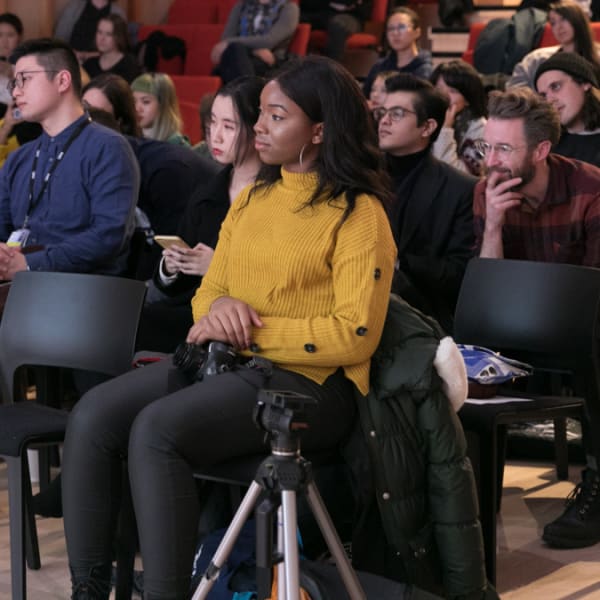
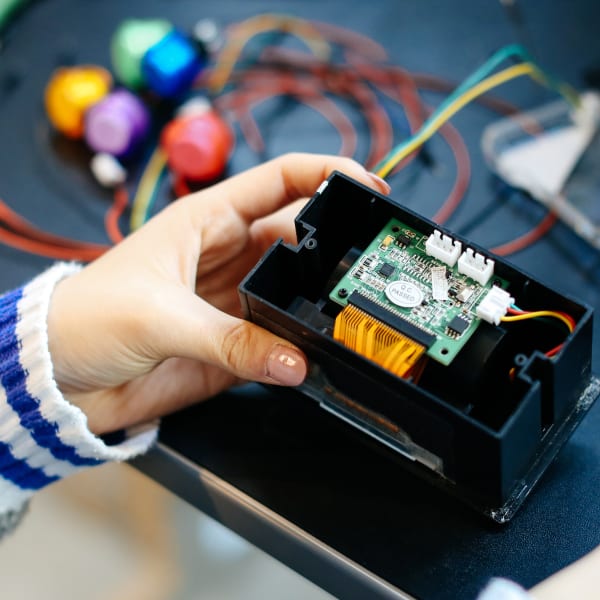
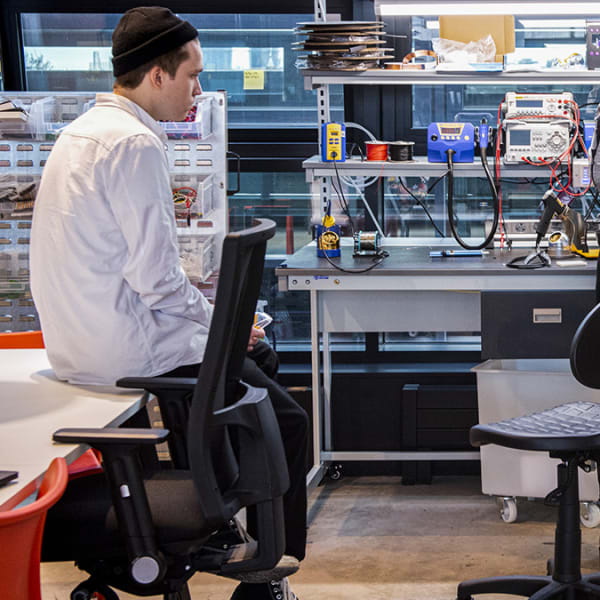
Students working in the teaching spaces at UAL Creative Computing Institute
Students working in the teaching spaces at CCI, 2019, UAL Creative Computing Institute © Ana Escobar
College
UAL Creative Computing Institute
Start date
September 2026
Course length
1 year 3 months full time (45 weeks across a four-term model)

MA/MSc Computing in the Creative Industries allows you to build your own postgraduate degree from units across our postgraduate courses at UAL Creative Computing Institute.

Course summary

Why choose this course at UAL Creative Computing Institute

  • Modular Study: On this course you can build your experience from units of study from the following courses MSc Creative Computing, MSc Applied Machine Learning for Creatives and MA Internet Equalities. This allows you to access CCI expertise in a mix that supports your aspirations.
  • Critical engagement with technology: engagement with creative practice will also build your ability to self-reflect and think critically about your role in shaping the world
  • Institute Environment:  you will have access to purpose-built facilities and technical support, and exposure to creative computing research

Open Events

The next Open Evening for this course will be on Wednesday 18 February. Book your place now.

Follow CCI online

Twitter: @ual_cci

YouTube: @ual_cci

Instagram: @ual_cci

Course overview

MA/MSc Computing in the Creative Industries (Modular) represents an exciting opportunity to study with a world-renowned creative computing faculty across a range of specialisms unique to the Creative Computing Institute (CCI). The course is a modular programme that enables you to study units from across the CCI postgraduate courses in a combination that suits you. Available units within the course come from MRes Creative Computing, MSc Creative Computing, Applied Machine Learning for Creatives, MSc Creative Robotics and MA Internet Equalities. This means that you can select the specific areas of study that are of interest and tailor your post graduate experience at the CCI to support your career aspirations.

We are committed to ensuring that your skills are set within an ethical framework and are working to embed UAL’s Principles for Climate, Social and Racial Justice. 

What to expect

As a modular student you will focus on three core areas of study:

  • Modular structure: as a student you will focus on three core areas of study: 
    • Creativity: How to ideate, develop concepts into prototypes, work with creative research methods and apply critical cultural understanding.
    • Computing: How to leverage programming languages and creative computing platforms to engage in critical discourse surrounding the role of computation in society.
    • Practice: How to apply creative computing across a range of art and industry contexts, leveraging creative practice together with leadership and project management skills.
  • Access to specialist facilities and staff: a focused environment with dedicated course facilities, technical staff and CCI academics across specialist subject areas 
  • Community knowledge sharing: your study network will be comprised of peers from across CCI courses, and you will join our friendly, cutting-edge community of activists, innovators, researchers and practitioners. Together we host a vibrant open events programme, some of which you can see on our YouTube channel

Industry experience and opportunities 

With the ability to select units of study, you are able to tailor the CCI experience to your level of technical ability, desire for critical engagement and your intended graduate path.

Award

The university confers either an MSc or an MA degree upon the successful completion of your programme. The type of degree awarded is determined by the university's regulations and is finalised during the awards committee meeting, which is presided over by the Dean of the CCI or a designated representative.

Degrees are awarded based upon thesis selection. A Modular student can select either an MA or MSc thesis option, depending upon their unit selections. 

Students are only eligible for a specific award if they have completed two or more units relevant to the awarding classification. Students completing less than two MSc units you will not be eligible for the MSc thesis, and vice versa for MA.

This approach ensures that your awarded degree accurately reflects the primary focus of your study programme. 

Contact us

Register your interest to receive information and updates about studying at UAL.

Contact us to make an enquiry.

Course units

Term 1

Pick any two units from the following: 

  • Coding for Robotics 
  • Critical Robotics: Studies and Research Methods 
  • Embedded Systems and Soft Robotics 
  • Methods 1: Domain Knowledge and Creative Computing 
  • Creative Coding for Research 
  • Coding for Digital Media 
  • Conversational Interfaces 
  • Critical Coding: Advanced Creative Practice 
  • Creative Making: Advanced Physical Computing and Tangible Media
  • Intersectional Internets 
  • Critical Coding Practices

Term 2

If you have selected Critical Coding: Advanced Coding Practice in Term 1, select only one extra unit. Otherwise, pick two units from the following: 

  • Introduction to Machine Learning 
  • Creative Making and Applied Robotics
  • Methods 2: Creative Computing Research Methods  
  • Research Design and Experimental Data in Creative Computing 
  • Data Science for Creative Industry 
  • Multimedia Machine Learning 
  • Creative Making: Advanced Computational Creativity and Responsive Environments  
  • Computational Inequalities 
  • Design for Social Change 

Term 3

If you picked one 40 credit unit in Term 2, select only one extra unit from the following. If you picked two 40 credit units in Term 2, do not select any extra units. If you have only selected MRes units in Terms 1 and 2, you must select at least two MA or two MSc units to complete the Final Project. Otherwise, pick two units from the following: 

  • Applied Machine Learning 
  • Methods 3: Computational Research Ethics 
  • Performing Data
  • Engaging Machine Intelligence 
  • Platform Potentials 
  • Methods for Equitable Technology Development 

Term 4

Pick one Final Project unit. To select the Creative Computing Final Project, you must have completed two or more MSc units. To select the Internet Equalities Final Project, you must have completed two or more MA units. 

  • Creative Computing Final Project (MSc) 
  • Internet Equalities Final Project (MA) 

Learning and teaching methods

The learning and teaching methods for the course are inherited from the contributing courses. To enable students to demonstrate achievement against the unit learning outcomes, learning and teaching methods will include:

  • Project work
  • Peer learning and knowledge exchange
  • Collaborative problem-solving and group work
  • Studio/lab-based practice and masterclasses
  • Industry visits and guest critiques
  • Lectures and seminars 
  • Online synchronous live sessions
  • Online asynchronous pre-recorded sessions
  • Flipped classroom sessions.
  • Reading groups

Assessment methods

The assessment strategy for the program is inherited from the contributing courses and designed in accordance with the principles of openness and collaboration that underpin the institute. It is a flexible strategy that supports different pathways through the courses. Assessment methods include:

Project portfolio comprising:

  • Technical prototypes
  • Pitches and presentations
  • Documentation of collaborative processes (online, face-to-face and blended)
  • Peer and self-assessment
  • Critical essays and articles
  • Exams and tests
  • Academic writing

Watch the online open day

Fees and funding

Home fee

£14,420

This fee is correct for 2026/27 entry and is subject to change for 2027/28 entry.

Tuition fees may increase in future years for new and continuing students on courses lasting more than one year. For this course, you can pay tuition fees in instalments.

Students from countries outside of the UK will generally be charged international fees. The rules are complex so read more about tuition fees and determining your fee status.

International fee

£30,890

This fee is correct for 2026/27 entry and is subject to change for 2027/28 entry.

Tuition fees may increase in future years for new and continuing students on courses lasting more than one year. For this course, you can pay tuition fees in instalments.

Students from countries outside of the UK will generally be charged international fees. The rules are complex so read more about tuition fees and determining your fee status.

Additional costs

You may need to cover additional costs which are not included in your tuition fees, such as materials and equipment specific to your course. For a list of general digital equipment you may need (and how you can borrow equipment), visit our Study costs page.

Accommodation

Find out about accommodation options and how much they will cost, and other living expenses you’ll need to consider.

Scholarships, bursaries and awards

If you’ve completed a qualifying course at UAL, you may be eligible for a tuition fee discount on this course. Find out more about our Progression discount.

You can also find out more about the Postgraduate Masters Loan (Home students only) and scholarships for Home and International students. Discover more about student funding.

If you’re based in the UK and plan to visit UAL for an Open Event, check if you’re eligible for our UAL Travel Bursary. This covers the costs of mainland train or airline travel to visit UAL.

How to pay

Find out how you can pay your tuition fees.

Scholarship search

Entry requirements

An applicant will normally be considered for admission if they have achieved an educational level equivalent to an honour’s degree in computer science, data science, science and technology studies, or from a creative discipline with substantial computational practice. Regardless of the field significant programming experience is expected. Educational level may be demonstrated by: 

  • Honours degree (named above).
  • Possession of equivalent qualifications in a design-related or creative discipline.
  • Prior experiential learning equivalent to the formal qualifications otherwise required.

A combination of formal qualifications and experiential learning which is, together, equivalent to the formal qualifications otherwise required. 

Language requirements (International/EU) 

If English is not your first language, IELTS 6.5 (or equivalent) is required, with a minimum of 5.5 in reading, writing, listening and speaking. For more details, please check our main English Language requirements webpage. 

Selection criteria

Prior experience, academic or professional background in a subject area enabling the successful completion of the programme of study. 

A willingness to work as a team player, strong language skills (reading, writing, and speaking), and the ability to self-motivate and work independently. 

Critical knowledge of and enthusiasm for the subject area and a capacity for diverse research-directed study at the intersection of technology, design, and ethics.

A portfolio that incorporates conceptual thinking, technical proficiency and research-based practice; it should reveal your thinking/making process and demonstrate your ability to explore, test and experiment. 

We welcome non-standard applications from diverse applicants and subject fields, as well as applications that make a compelling case for how the course could be creatively applied to the creation and adoption of more equitable technologies. 

Information for disabled applicants

UAL is committed to achieving inclusion and equality for disabled students. This includes students who have:

     
  • Dyslexia or another Specific Learning Difference
  • A sensory impairment
  • A physical impairment
  • A long-term health or mental health condition
  • Autism
  • Another long-term condition which has an impact on your day-to-day life

Our Disability Service arranges adjustments and support for disabled applicants and students.

Read our Disability and dyslexia: applying for a course and joining UAL information.

Apply now

Application deadline

Deadline

Round 1:

2 December 2025 at 1pm (UK time)

Round 2:

18 March 2026 at 1pm (UK time)

Digital portfolio and video task deadline

Round 1:

16 December 2025 at 1pm (UK time)

Round 2:

31 March 2026 at 1pm (UK time)

Decision outcome

Round 1:

20 March 2026

Round 2:

19 June 2026

Round 1
Round 2
Deadline
2 December 2025 at 1pm (UK time)
18 March 2026 at 1pm (UK time)
Digital portfolio and video task deadline
16 December 2025 at 1pm (UK time)
31 March 2026 at 1pm (UK time)
Decision outcome
20 March 2026
19 June 2026

We have 2 rounds of deadlines for postgraduate courses: one in December and one in March. If there are still places available after 18 March, this course will remain open to applications until all places have been filled.

Read more about deadlines

Apply now

Application deadline

Deadline

Round 1:

2 December 2025 at 1pm (UK time)

Round 2:

18 March 2026 at 1pm (UK time)

Digital portfolio and video task deadline

Round 1:

16 December 2025 at 1pm (UK time)

Round 2:

31 March 2026 at 1pm (UK time)

Decision outcome

Round 1:

20 March 2026

Round 2:

19 June 2026

Round 1
Round 2
Deadline
2 December 2025 at 1pm (UK time)
18 March 2026 at 1pm (UK time)
Digital portfolio and video task deadline
16 December 2025 at 1pm (UK time)
31 March 2026 at 1pm (UK time)
Decision outcome
20 March 2026
19 June 2026

We have 2 rounds of deadlines for postgraduate courses: one in December and one in March. If there are still places available after 18 March, this course will remain open to applications until all places have been filled.

Read more about deadlines

Apply to UAL

Start your application
or

Apply with a UAL Representative

Based across the world, our local UAL representatives can support you with your application from your home country. Check to see if there is a representative available in your country currently.

Find your representative

How to apply

Follow this step-by-step guide to apply for this course

Step 1: Initial application

You will need to submit an initial application including your personal statement and CV.

Personal statement advice

Your personal statement should be maximum 500 words and include:

  • your reasons for choosing the course
  • your current creative practice and how this course will help you achieve your future plans
  • any relevant education and experience, especially if you do not have any formal academic qualifications.

CV advice

Please provide a CV detailing your education, qualifications and any relevant work or voluntary experience. If you have any web projects or other media that you would like to share, please include links in your CV. If English is not your first language, please also include your most recent English language test score.

Read our advice on preparing the tasks and documents for your initial application.

Step 2: Video task and digital portfolio

We will review your initial application. If you have met the standard entry requirements, we will ask you to submit a video task and a digital portfolio.

You’ll need to submit these via PebblePad, our online portfolio tool. Please submit your video task on the first page followed by your portfolio.

Video task advice

We’d like you to submit a 2-3 minute video to help us learn more about you. When recording your task, please face the camera and speak in English.

What to include in your video task

  • Tell us why you have applied to MA/MSc Computing and Creative Industry (Modular) and how it will help you achieve your career ambitions.

Find advice on how to plan and film your video task. Then read our guidance on how to submit your video task, including the file types we accept.

Digital portfolio advice

Your portfolio should consist of recent work that reflects your creative strengths.

It should:

  • include work that demonstrates your skills and thinking
  • include 1 page of research
  • 2 pages of coding screenshots showing your project development
  • 2 pages of creative computing projects that you have undertaken
  • 1 page of any other creative work
  • be maximum 6 pages long.

For more support, see our Portfolio advice and PebblePad advice.

You also need to know

Communicating with you

Once you have submitted your initial application, we will email you with your login details for our Applicant portal.

Requests for supplementary documents like qualifications and English language tests will be made through the applicant portal. You can also use it to ask questions regarding your application. Visit our After you apply page for more information.

Applying to more than 1 course

You can apply for more than 1 postgraduate course at UAL but we recommend that you apply for a maximum of 3 courses.

As every course has its own entry and assessment requirements, we recommend tailoring each application to showcase how your experience, skills and interests match that course. Applying for many different courses may make it more difficult for you to show that you are suitable for each course in a competitive admissions process.

Only apply to the course(s) you are most interested in – applying for too wide a range of different courses may reduce your ability to clearly demonstrate your suitability for each. It’s better to make fewer bespoke applications than many generic ones. This will help you to stand out where we have high demand for places.

If you receive offers for multiple courses, you'll only be able to accept 1 offer. UAL doesn't accept repeat applications to the same course in the same academic year.

Visas and immigration history check

All non-UK nationals must complete an immigration history check. Your application may be considered by our course teams before this check takes place. If your course requires a portfolio and/or video task, we may request these before we identify any issues arising from your immigration history check. Sometimes your history may mean that we are not able to continue considering your application. Visit our Immigration and visas advice page for more information.

External student transfer policy

UAL accepts transfers from other institutions on a case-by-case basis. Read our Student transfer policy for more information.

Alternative offers

If we are unable to consider you for the course you have applied to but your application is really strong, we may make you an alternative offer on a different course or at a different UAL College. This happens when our admissions tutors have found another course that they believe would be a strong match for your skills and interests.

Deferring your place

We do not accept any deferral requests for our postgraduate courses. This means that you must apply in the year that you plan to start your course and you will not be able to defer your place to start at a later date.

Application deadlines

Most of our postgraduate courses have 2 rounds of deadlines: one in December and one in March.

As long as you apply ahead of each deadline we will consider your application alongside all the other applications in that round. We always make sure to hold enough places back for round 2 to make sure we can consider your application fairly, no matter which round you apply in.

If there are still places available after the second deadline, the course will remain open to applications until all places have been filled.

For our MBA courses, there is only 1 deadline. This is 31 July for international applicants and 31 August for UK applicants. This is to make sure you have enough time to apply for your visa if you are an international student.

For our January-start courses, the deadline is in October. If there are still places available after this deadline, the course will remain open to applications until all places have been filled.

Careers

Career paths

Depending on your unit choice graduates will be well placed to work in the following areas:

  • Technology Development
  • Technology Policy
  • Technology Research
  • Creative Critical Practice
  • Digital Product Development
  • Digital Project Management
  • User Research
  • Creative Technologist
  • Creative Developer
  • Web Developer
  • UX Developer
  • iOS App Developer
  • Software Developer
  • IoT / Smart Products Developer
  • Front – End Developer
  • Digital Strategist
  • Live Events Technologist
  • Technology Researcher
  • Machine Intelligence Developer
  • Broadcast Technologist
  • IT Specialist
  • Digital Project Manager
  • Digital Entrepreneur
  • Digital Creative
  • Interactive Designer

A proportion of graduates may also wish to pursue PhD study.