Undergraduate

BA (Hons) Interaction Design

A woman standing in a green space filled with flower-shaped lights.
Image Credit: ‘Take a walk through the meadow with me’, Megan Tan and Shao Xuan Tan, 2025, BA (Hons) Interaction Design Arts, LCC, UAL | Photograph: Bernie Lee
College
London College of Communication
UCAS code
W281
Start date
September 2026
Course length
3 years

On BA (Hons) Interaction Design, you’ll design impactful products, systems and services for diverse audiences. Choose from 3 pathways: Creative Technologies, User Experience, and Systems and Services.

Course summary

Our new building

You will be one of the first students to join us in our cutting-edge new building for London College of Communication, just across the road from our current site in Elephant & Castle.

Key Information for 2026 entry applicants

  • From September 2026 to June 2027 you will study at our existing building.
  • For your next two years of your degree you will study at our new building.

Why choose this course at London College of Communication

  • Freedom to explore: In your first year, you’ll explore a wide range of techniques, methodologies, materials and ideas that will enable you to be a versatile, hands-on, creative practitioner, maker and thinker. In your second year, you’ll be guided to focus your skills and knowledge by choosing 1 of 3 specialist pathways.
  • Combine theory and practice: Throughout the course, you’ll develop a rigorous foundation of knowledge and critical analysis skills that will enable you to contribute to debates on contemporary issues in design and wider fields.
  • Reputation: UAL is ranked 7th in the UK for Graphic Design education by the Guardian University Guide 2026.
  • Future-readiness: In the National Student Survey 2025, 92% of students agreed that the course had developed the knowledge and skills they need for their futures (results for BA (Hons) User Experience Design).
  • Inspiring facilities: You will not only have access to the latest digital technologies, but you will also be able to tap into some of the long-established technologies at the heart of design history and thinking – from laser and vinyl cutters, 3D scanning, digital filmmaking and editing, physical computing and coding; all of which sit happily alongside bookbinding, letterpress and a broad spectrum of traditional printing disciplines – helping to bring your ideas to life.
  • Design School community: You’ll join our vibrant community and collaborate on projects to develop your professional practice and make a positive impact. You’ll leave with the capacity to tackle the pressing social, political and environmental injustices facing the world today.

Open days

The next Open Day for this course will be on Saturday 27 June. Book your place.

Course overview

BA (Hons) Interaction Design works across digital, physical and interactive design, focusing on relationships between people, designed objects, interfaces, experiences, emotions, senses and systems. You will work to conceptualise, research and build compelling interactions, and develop skills in a range of design processes including prototyping, narrative design, physical computing, coding, moving image production, and practice-based research. In your second year, you'll choose one of the following 3 pathways, offering different skills, tools and ways to approach, engage and think about design.

Pathway choices

Creative Technologies: Learn through projects that involve play, research, testing and iterative prototyping. Explore how people interact with designed objects and experiences through interaction design, storytelling and moving image. You'll learn technical processes such as design prototyping, filmmaking, coding and physical computing.

User Experience: Learn to design with people’s needs in mind. You’ll use design thinking and research to develop a human-centred approach to user experience design. You will explore emerging digital tools and technologies through group work and challenging design briefs.

Systems and Services: Gain a deep understanding of how design impacts complex systems that comprise the natural and built world and explore how your own design practice can benefit and support individuals, communities and society. You'll learn technical processes such as design prototyping, systems design, design thinking, coding and narrative and experience design.

What to expect on the course

  • People-centred design: Working within the philosophy of 'high-tech, low-tech and no-tech', you'll be encouraged to pursue projects that put people at the centre of their design and practice. You'll have the opportunity to collaborate with local and national organisations and communities on long-term human-centred projects, across a variety of media and technological platforms.
  • Unique facilities: Our studios are constructed as a designer’s playground, nurturing and encouraging creativity and learning, through a community of practice. You will have access to traditional media such as letterpress, printmaking, 3D making and Lens based media alongside the perpetually evolving realm of digital technologies.
  • Experimentation and innovation: Drawing on a tradition of dynamism, exploration, prototyping and experimentation, you will be in an environment where your only boundaries are those set by your own imagination.
  • Responsible design practice: You'll be encouraged to understand that design, in all its forms, impacts the world at large and that you have a responsibility to position yourself in relation to the wider issues of sustainability and social justice and inclusion.

Industry experience and opportunities

You will graduate from the course with the skills needed to work across multiple specialisms in the media industry. Your technical, intellectual and design skills will prepare you for an exciting career in contemporary design.

Additionally, you’ll have the opportunity to undertake the Diploma in Professional StudiesUAL Diploma in Creative Computing or Diploma in Storytelling between Years 2 and 3 to enhance your learning experience and employability skills.

Mode of Study

BA (Hons) Interaction Design runs for 93 weeks in full time mode. It is divided into 3 stages over 3 academic years. Each stage lasts 31 weeks.

Contact us

Register your interest to receive information and updates about studying at UAL.

Contact us to make an enquiry.

Course units

On the course you'll learn how to create digital and physical interactive experiences, across three pathways. You’ll explore all three pathways in your first year through a series of design briefs that encourage and hone your skills, interests and curiosity.  For your second year, you'll choose one specific pathway (see below) from within the Interaction Design Course: Creative Technologies, User Experience, or Systems and Services, with each pathway offering subject specific skills, tools and interaction design methods unique to each specialism. 

All course units are common across the First Year and Block 1 of the Second Year. In Block 2 of your second year, you will be on the unit for your chosen pathway: Creative Technology, User experience or Systems and Services, positioning you for a final year in which you’ll focus your studies more specifically.

On Interaction Design we are committed to ensuring that your skills are set within an ethical framework, and we have worked to embed UAL’s Principles for Climate, Racial and Social Justice Principles into the curriculum regarding everything we think and do in the field of Interaction Design.

As part of this initiative, we’ve shaped our courses around social and environmental sustainability principles that ensure learning outcomes reflect the urgent need to equip you with the understanding, skills, and values to foster a more sustainable and equitable future for the planet and its occupants.

The first half of the course will guide your studies via a series of unique and topic-specific creative briefs, you'll be introduced to, and experiment with, critical and contemporary design practices and ideas. Theses foundational elements will be explored in more depth within the Creative Technology, User Experience, and Systems and Services pathways, on the second half of the course.

Your final year will be a dedicated and focused application of your chosen pathway utilizing the skills learned in years One and Two of the course. In your final year you will develop and realise a final major project where you will continue to develop and apply a uniquely personal practice and perspective to answer complex design problems, embracing approaches such as critical design and design for social change. In common with all courses at the University of the Arts London, this course is credit rated. The course is 3 years, levels 4-6. Each year requires you to achieve 120 credit points. To be awarded the BA (Hons) Interaction Design qualification, you need to accumulate a total of 360 credits.

Year 1

Unit 1A: Introduction to Interaction Design (20 Credits)

Through academic reflection, writing and practical workshops, this unit will equip you with essential academic and design skills that will give you the confidence to navigate through the course and College, and to help you develop a personal approach to your Interaction Design practice.

Unit 1B: Exploration and Play (40 Credits)

Focuses on learning and discovery through practice-based activities and projects. It introduces core design principles from across the three course pathways and explores play as a catalytic method of research, experimentation, decision making and design thinking.

Unit 2A: High Tech, Low Tech, No Tech (40 credits) 

Introduces you to design through various media, materials, rapid prototyping, narrative approaches and diegetic scenarios. This media-agnostic focused unit invites you to consider technologically and materially appropriate design solutions to set studio briefs. You will situate your work within a wider theoretical and practical context, and consideration to the symbiosis between ideation, experimentation, materials and materialisation.

Unit 2B: Responsible Design (20 Credits)

The Unit introduces core principles in ‘responsible’ design where you will explore the role of environmental and social responsibility across multiple design subject specialisms to inform and further develop your own creative practice. You will engage in contemporary debates and explore approaches, tools and frameworks for understanding and practising how social and environmental responsibility is enacted across visual communication practices from within organisational structures, to the design of digital and analogue products, services and images.

Year 2

Unit 3A: Desire Lines and Affordance (40 Credits)

This unit is intensive and designed to introduce you to subject specific processes and techniques involved in interaction and design. It deals with design in the lived environment; exploring how people, designers and users interact with one another in the world around them and encourages you to reach beyond the studio for research, inspiration and practical everyday experience.

Unit 3B: Professional Practices (20 Credits)

This unit seeks to extend your knowledge of the creative, cultural and design industries, providing you with opportunities to work on live project as you continue to develop your design practice in mixed-discipline and collaborative teams.

Pathway Units (40 credits) (Unit 4A)

This unit is designed to further develop and focus specific work and concepts introduced in previous units, by offering you three specifically pathway focused options. Each pathway choice will form the basis of your subsequent study program for the remainder of the course.

Unit 4A: ID: Creative Technology – Pathway Unit

This unit pathway is designed to further aid and develop specific work and concepts introduced in previous units, with a particular focus on Creative Technologies. The unit encourages you to experiment with traditional and new media technologies. The unit is highly spatial and technical, looking at programming, sensors and computing in a real-world context.

Unit 4A: ID: UX - Pathway Unit

In this unit pathway you will develop individual communication strategies for articulating and visualising complex thinking and processes. Building on your previous work and research, you will refine your unique design identity and voice as a creative practitioner to inform your communications skills for materialising applied creative thinking, problem solving, and processes within your chosen fields of user experience design.

Unit 4A: ID: Systems and Services – Pathway Unit

In this unit pathway, you will explore project management and innovation strategies for service design and collaborate with partners from local communities and organisations to develop a service before testing and evaluating impact and effectiveness for the identified users. Design Cultures (20 credits) (Unit 4B) In this unit, you will explore a thematic area of your choice within Design Cultures, questioning established narratives and developing your critical voice. You will explore knowledge at the boundary of your design discipline, evaluating diverse ideas and practices in in relation to your chosen thematic area.

Unit 4B: Design Cultures (20 Credits)

In this unit, you will explore a thematic area of your choice within Design Cultures, questioning established narratives and developing your critical voice. You will explore knowledge at the boundary of your design discipline, evaluating diverse ideas and practices in in relation to your chosen thematic area.

Year 3

Unit 5A: Self-Initiated Research Project (40 credits) - All Pathways

This unit gives you an opportunity to engage with an in-depth research project on a topic of your choice. You will bring together the skills, knowledge and experience you have developed during your study to carry out an extended research project that connects theory and practice.

Unit 5B: Minor Studio Project (20 credits) (Unit 5B) - All Pathways

The Minor Studio Project is self-initiated, emphasising research and the identification of appropriate intellectual and practical methodologies to support your outcomes.

Unit 6A: Major Studio Project (60 credits) (Unit 6) - All Pathways

The Major Studio Project is undertaken by all third-year students and generally consists of three individual briefs, which you can chose from a menu of project briefs (agreed with your tutor). It is the culmination of the course and provides you with the opportunity to utilise your practical, critical and analytical skills in the realisation of interaction design that comprise your individual portfolio.

Optional Diploma between Years 2 and 3

Between Years 2 and 3 of the course, you’ll also have the opportunity to undertake one of the following additional UAL qualifications:

Diploma in Professional Studies (DPS) (Optional)

An optional, year-long learning opportunity which enables you to develop your professional skills by undertaking time out for industry experience. Supported throughout the year by academics, you’ll build on the knowledge gained on your course in a range of national or international locations, and graduate with an additional qualification of Diploma in Professional Studies.

Diploma in Creative Computing (Optional)

Between Years 2 and 3, you can undertake the year-long Diploma in Creative Computing. This will develop your skills in creative computing alongside your degree. After successfully completing the diploma and your undergraduate degree, you’ll graduate with an enhanced degree: BA (Hons) Interaction Design: Pathway Title (with Creative Computing).

Diploma in Storytelling (Optional)

Between years 2 and 3, you can undertake the year-long Diploma in Storytelling. Enhance your creative voice and discover how to engage audiences and enact change through compelling storytelling - a skill that's in demand across a range of creative industries. After successfully completing the diploma and your undergraduate course, you’ll graduate with an enhanced degree: BA (Hons) Interaction Design: Pathway Title (with Storytelling).
Learning and teaching methods

  • Lectures/ large group learning
  • Workshop and seminar learning
  • Academic and creative writing
  • Self-directed learning
  • Guest lecturers / speakers
  • Gallery and studio visits
  • Assessed assignments
  • Individual feedback
  • Tutor and peer to peer crits
  • Group and individual tutorials

Assessment methods

  • Portfolio of work
  • Prepared writing
  • Crits and presentations

Facilities

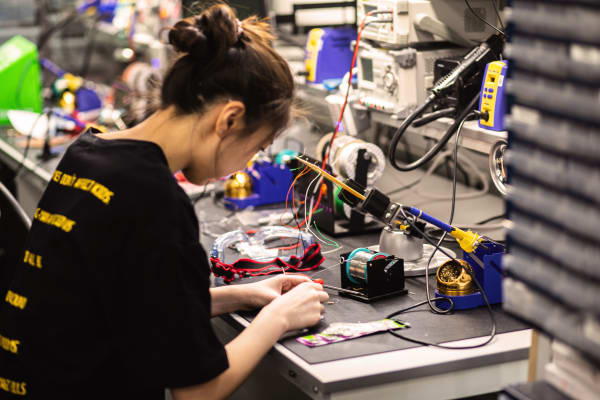
  • Student soldering in the Creative Technology Lab
    Student in Creative Technology Lab, 2020. London College of Communication, UAL. Photograph: Tim Boddy

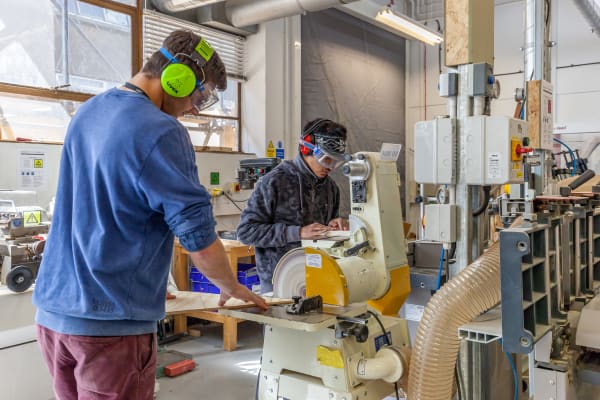
    3D Workshop

    View images and find out about the range of tools and technologies on offer.

  • Student reading a book in between two bookshelves in the Library
    Students in the Digital Space. London College of Communication, UAL. Photograph: Alys Tomlinson

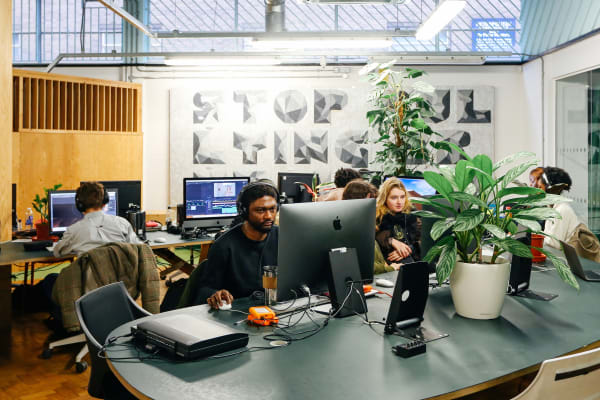
    The Digital Space

    The Digital Space is an open-plan, creative hub with computers set up with specialist software.

  • Students using the computers in the Digital Space
    Student in Creative Technology Lab, 2020. London College of Communication, UAL. Photograph: Tim Boddy

    Creative Technology Lab

    A multi-purpose space that supports students with: Creative Coding, Physical Computing, Projection Mapping, Games, and Virtual Reality.

Staff

Fees and funding

Home fee

£9,790 per year

This fee is correct for entry in September 2026  and is subject to change for entry in September 2027.

Tuition fees may increase in future years for new and continuing students.

Home fees are currently charged to UK nationals and UK residents who meet the rules. However, the rules are complex. Find out more about our tuition fees and determining your fee status.

International fee

£30,890 per year

This fee is correct for entry in September 2026 and is subject to change for entry in September 2027.

Tuition fees for international students may increase by up to 5% in each future year of your course.

Students from countries outside of the UK will generally be charged international fees. The rules are complex so read more about tuition fees and determining your fee status.

Additional costs

You may need to cover additional costs which are not included in your tuition fees, such as materials and equipment specific to your course. For a list of general digital equipment you may need (and how you can borrow equipment), visit our Study costs page.

Accommodation

Find out about accommodation options and how much they will cost, and other living expenses you'll need to consider.

Scholarships, bursaries and awards

Find out more about bursaries, loans and scholarships.

If you’re based in the UK and plan to visit UAL for an Open Event, check if you’re eligible for our UAL Travel Bursary. This covers the costs of mainland train or airline travel to visit UAL.

How to pay

Find out how you can pay your tuition fees.

Scholarship search

Entry requirements

The course team welcomes applicants from a broad range of backgrounds from all over the world. The course attracts students who apply direct from A-level (or equivalent) or from Foundation Diploma in Art and Design, or other art or design courses, as well as mature students who may have previously worked in industry.

The standard entry requirements for this course are as follows:

80 UCAS tariff points, which can be made up of one or a combination of the following accepted full level 3 qualifications:

  • A Levels at grade C or above (preferred subjects include: English; History; Media; Business; Art and Design, or other subjects within Social Sciences).
  • Pass at Foundation Diploma in Art & Design (Level 3 or 4).
  • Merit, Merit, Pass at BTEC Extended Diploma (preferred subjects: Art and Design, IT & Computing, Media).
  • Merit at UAL Extended Diploma.
  • Access to Higher Education Diploma (preferred subject: Digital and Creative Media, Film and Production, Computing).
  • OR equivalent EU/International qualifications, such as International Baccalaureate Diploma at 24 points minimum

And 3 GCSE passes at grade 4 or above (grade A*-C).

APEL - Accreditation of Prior (Experiential) Learning

If you do not meet these entry requirements but your application demonstrates additional strengths and alternative relevant experience, you may still be considered. This could include:

  • Related academic or work experience
  • The quality of the personal statement
  • A strong academic or other professional reference
  • A combination of these factors.

Each application will be considered on its own merit. We cannot guarantee an offer in each case.

English language requirements

  • IELTS level 6.0 or above, with at least 5.5 in reading, writing, listening and speaking.

All classes are taught in English. If English isn’t your first language, you will need to show evidence of your English language ability when you enrol. For further guidance, please check our English language requirements.

Selection criteria

The portfolio, along with the details on your UCAS application (including the academic reference and your personal statement) will be assessed against the following criteria:

  • Visual language: quality of structure, use of line, shape - 2D or 3D, form, scale, space, light, colour, texture and time.
  • Ideas generation: quality of ideas and thought process, expression of design thinking.
  • Research and its application (including images from sketch books): evidence of investigation and use of appropriate resources.
  • Materials, media exploration and experimentation; experimentation and testing of materials to achieve outcomes.
  • Contextual awareness and its influence on the portfolio; understanding and application of subject knowledge and context.

Information for disabled applicants

UAL is committed to achieving inclusion and equality for disabled students. This includes students who have:

     
  • Dyslexia or another Specific Learning Difference
  • A sensory impairment
  • A physical impairment
  • A long-term health or mental health condition
  • Autism
  • Another long-term condition which has an impact on your day-to-day life

Our Disability Service arranges adjustments and support for disabled applicants and students.

Read our Disability and dyslexia: applying for a course and joining UAL information.

Apply now

Application deadline

14 January 2026 at 6pm (UK time)

If there are places available after this date, the course will remain open to applications until places have been filled.

Apply to UAL

Home students can apply to this course through UCAS with the following codes:

University code:

U65

UCAS code:

W281

Start your application

Apply now

Application deadline

14 January 2026 at 6pm (UK time)

If there are places available after this date, the course will remain open to applications until places have been filled.

Apply to UAL

International students can apply to this course through UCAS with the following codes:

University code:

U65

UCAS code:

W281

Start your application
or

Apply with a UAL Representative

Based across the world, our local UAL representatives can support you with your application from your home country. Check to see if there is a representative available in your country currently.

Find your representative

How to apply

Follow this step-by-step guide to apply for this course

Step 1: Initial application

You will need to submit an initial application including your personal statement.

Personal statement advice

Your personal statement should be maximum 4,000 characters and cover the following:

  • Why have you chosen this course? What excites you about the subject?
  • How does your previous or current study relate to the course?
  • Have you got any work experience that might help you?
  • Have any life experiences influenced your decision to apply for this course?
  • What skills do you have that make you perfect for this course?
  • What plans and ambitions do you have for your future career?

Visit the UCAS advice page and our personal statement advice page for more support.

Step 2: Digital portfolio

We will review your initial application. If you have met the standard entry requirements, we will ask you to submit a digital portfolio.

You’ll need to submit these via PebblePad, our online portfolio tool.

Digital portfolio advice

Your portfolio should consist of recent work that reflects your creative strengths.

It should:

  • be maximum 20 pages
  • include unfinished pieces as well as work from completed projects to demonstrate your developmental process
  • incorporate visual research, sketchbooks, or journals that provide valuable insights into your creative process
  • demonstrate your interest, skills and enthusiasm for the field.

For more support, see our Portfolio advice and PebblePad advice.

Step 3: Interview

You may be invited to an interview following our review of your application. All interviews are held online and last 15 to 20 minutes.

For top tips, see our Interview advice.

You also need to know

Communicating with you

Once you have submitted your initial application, we will email you with your login details for our applicant portal.

Requests for supplementary documents like qualifications and English language tests will be made through the applicant portal. You can also use it to ask questions regarding your application. Visit our After you apply page for more information.

Visas and immigration history check

All non-UK nationals must complete an immigration history check. Your application may be considered by our course teams before this check takes place. If your course requires a portfolio and/or video task, we may request these before we identify any issues arising from your immigration history check. Sometimes your history may mean that we are not able to continue considering your application. Visit our Immigration and visas advice page for more information.

External student transfer policy

UAL considers transfers from other institutions on a case-by-case basis. Read about how to apply to transfer into year 2 or 3 on our Undergraduate Apply page, and read our Student transfer policy for more information.

Alternative offers

If we are unable to consider you for the course you have applied to but your application is really strong, we may make you an alternative offer on a different course or at a different UAL College. This happens when our admissions tutors have found another course that they believe would be a strong match for your skills and interests.

Deferring your place

We can consider deferral requests if the course can accommodate this. You must apply in the year that you intend to start your course. If you are made an offer and your circumstances change, you can submit a deferral request to defer your place by 1 academic year. You must have met your conditions by 31 August 2026. If you need an English language test in order to meet the entry requirements, the test must be valid on the deferred start date of your course. If not, you will need to reapply. Requests are considered on a case-by case basis.

Contextual Admissions

This course is part of the Contextual Admissions scheme.

This scheme helps us better understand your personal circumstances so that we can assess your application fairly and in context. This ensures that your individual merit and creative potential can shine through, no matter what opportunities and experiences you have received.

Careers

Careers include:

  • Interaction Designer
  • Interface Designer
  • UX/UI Designer
  • Service Designer
  • Exhibition Designer
  • Research and Prototyping
  • Futures Foresight Researcher
  • Graphic Designer
  • Producer
  • Art Director
  • Social / Media Planner
  • Head of Design / Creative Director
  • Creative Technologist
  • Information Designer
  • Usability and Accessibility Consultant
  • Participatory Designers
  • Editor
  • Filmmaker
  • Set Designer

UAL Alumni Association

Our alumni association offers graduates support and a number of benefits.

Student Jobs and Careers

Find out how careers and employability helps our students and graduates start their careers.