LGBTQ+ month: Kevin Streicher on exploring the visual representation of homosexuality

- Written byStudent Communications
- Published date 12 February 2024
Share story
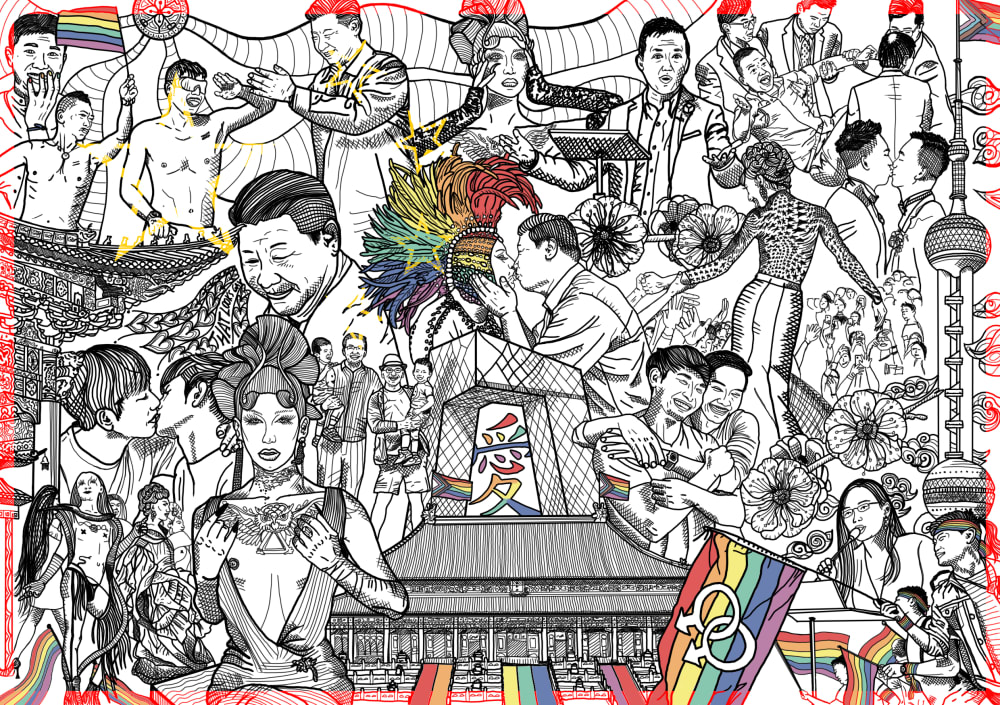
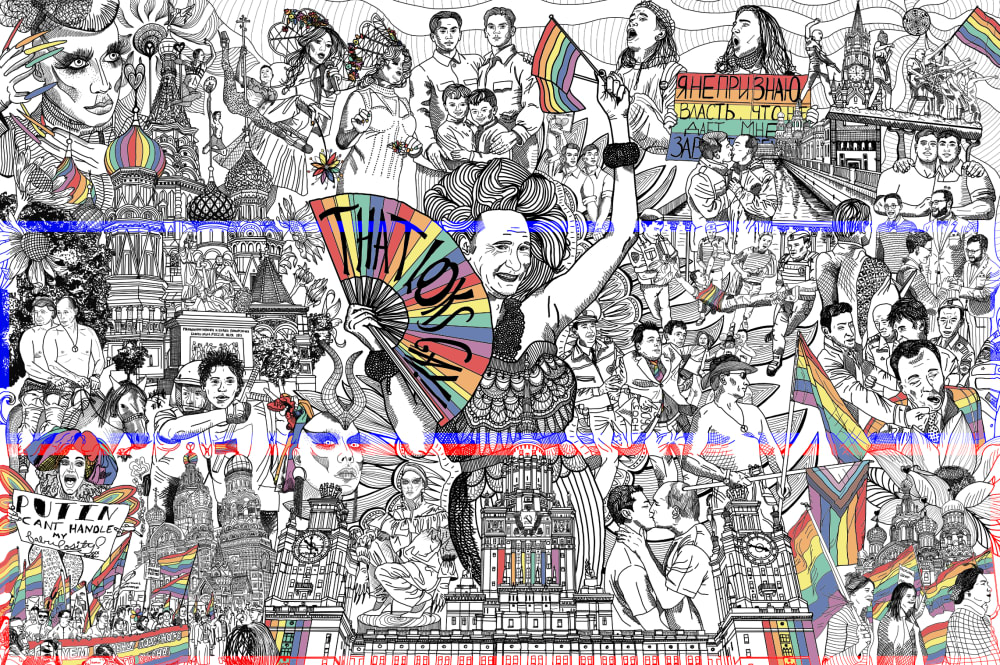
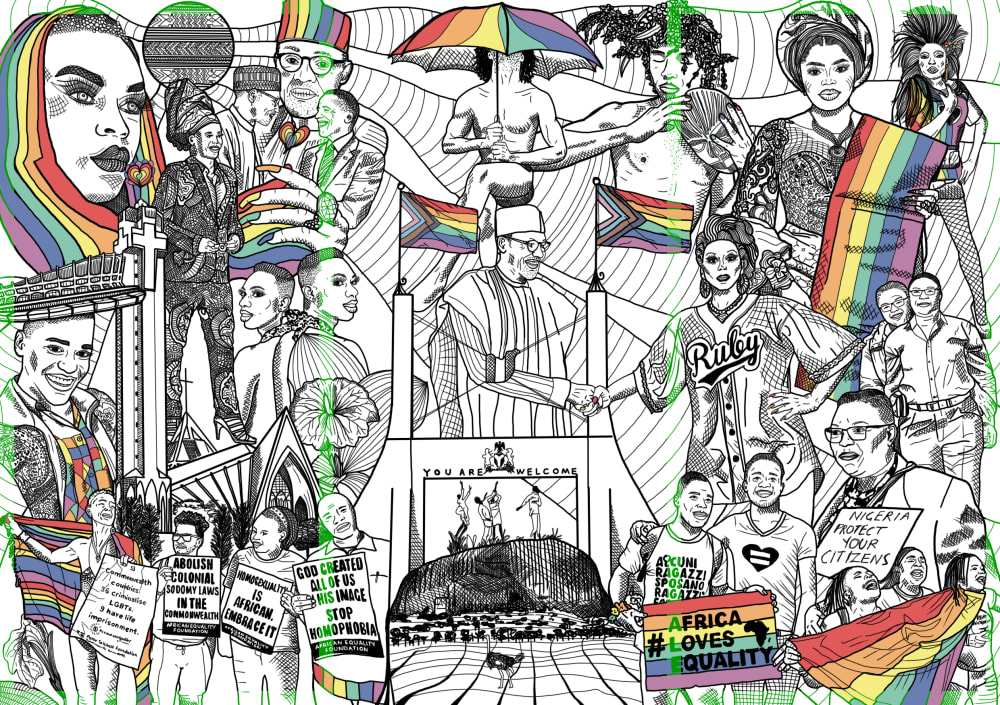
This LGBTQ+ History Month we spoke with Kevin Streicher, a graduate from MA Design for Art Direction at LCC about his project ‘That Looks Gay!’. Kevin uses illustration as a tool to explore an alternative world where queerness is accepted globally.
I found your project ‘That Looks Gay!’ on UAL Showcase. You write that you wanted to explore the visual representation of homosexuality and how it links to social acceptance and tolerance of queerness; What led you to use illustrations to encourage critical thinking about this topic?
From the very beginning, my project "That Looks Gay!" aimed to depict an alternative world by combining reality with satirically critical fiction. I chose illustration as my communication tool. On the one hand, it lets me depict various real events in a homogeneous style. It gives me the freedom to visualise exaggerated fictional representations. Illustration allows people to escape whilst also delivering captivating through visual conspicuity.
Throughout this project the use of flags is one of your key visual themes. In your opinion, what is the significance of a flag and why did you want to explore this?
The symbolic power of flags is undeniable throughout history. Every political movement uses this instrument to strengthen a sense of unity. They also use it to communicate goals. It is also the symbol of a nation. It seemed extremely useful to use these symbols of anti-queer nations to provoke and attract attention. What if our national flags would depict the queer cultures? Queer cultures undoubtedly exist in even queer-unfriendly countries. This is just a critical thought. It fits with my general opinion that the overall problem is lacking visibility. A queer national flag would, in a way, be the highest form of visibility.
How do you think being creative has helped LGBTQ+ movements in history? Do you feel there is more attention on LGBTQ+ artists now compared to when you started your creative journey?
I think creative minds have always fought for queer rights. Especially in the last few decades, with increasing digitalisation, creative people have brought about queer visibility. This increasing visibility results in greater social tolerance as queer artists have easier access to the population as a result. In countries where this visibility does not yet exist, creatives and others must create innovative solutions to challenge, educate, and fascinate people.
Are there LGBTQ+ historic figures, or people making history now, who inspire your work?
There are a lot of wonderful queer people who I have met since starting my master's course at UAL that have inspired and influenced me in my work. During my research, I was deeply inspired by queer artists. For example, drag queens like Lian Longquing greatly inspired me. Many others live in anti-queer countries and they work hard to improve societal attitudes to be more queer-friendly.