Decentralising Fashion: Brazilian Perspectives
- Written byInternal Communications
- Published date 06 June 2022
UAL staff and students are invited to join this upcoming series of online talks from the Fashion Programme at Central Saint Martins, organised by Dr Elizabeth Kutesko and Isabella Coraça.
Our subject finds itself at a critical turning point, as scholars in the Global North begin to draw on decolonial methods to re-imagine established histories of fashion beyond the European canon of elite designers. This lecture series invites three leading academics to present Brazilian perspectives on decentralising fashion’s histories – already well established in the Global South – which offer a template for enabling and empowering different ways of knowing about the world through dress.
Antes de Ontem: Cultural and Commercial Ancestry between Brazil and Angola Mi Medrado - Mi Medrado
8 June, 6pm BST
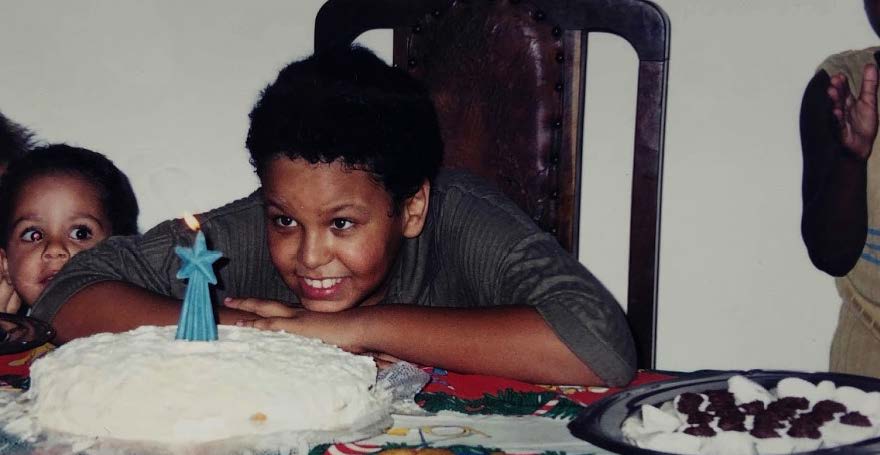
How do we examine the production and circulation of fashion goods in the Southern axis? Upon the return from field research in Luanda, Angola, and São Paulo and Rio de Janeiro, Brazil to Los Angeles, United States, I have engaged in a critical reflection of my positionality with the juxtaposition of my research subject, questioning how to conduct an analytical path to address the cultural and commercial ancestry between Brazil and Angola. For this lecture, I will share a theoretical methodological practice based on the biographical documentary Antes de Ontem (2019), directed by Caio Franco, whose script has supported me to draw a route and sense the urgency of introducing into the theory and practice of fashion studies, examinations that provide criticism on the Brazilian field in the Global South.
About Mi Medrado
Mi Medrado is a Brazilian Anthropologist based in Los Angeles. She is currently conducting her doctoral research on the contemporary production and circulation of media and the fashion industry in the Global South in Salvador, Bahia, Brazil. Such multi-sited ethnography is looking at the production and circulation of goods and fashion professionals and how colonial manifestations and racial lexicon are exchanged in Brazil and Angola. She is a founder-researcher of the Fashion and Decolonization: Global South Crossing collective, CoMoDe, which is associated with the Federal Institute of Education, Science and Technology in Rio de Janeiro. Medrado is among the initiators of the Decolonial Studies in Fashion Network (REDeM) and part of the Nucleus of Studies in Art, Innovation, Fashion, and Design, at the Federal University of Ceará. She is also the Editor-in-Chief of the Research Collective for Decoloniality and Fashion.
Teaching and Researching Brazilian Fashion History: A Narrative of the Journey - Maria Claudia di Bonadio
15 June, 6pm BST
In 2004 I started my journey as a university professor in the fashion field. Back then, fashion courses in Brazil were only starting to establish themselves, and the institution where I used to work at was the first to include Brazilian Fashion History as a class in their curriculum – something that is still unusual in the country’s fashion courses. It’s been 18 years teaching Brazilian Fashion History, and in that time I’ve raised questions such as: what is, in fact, that history? What are its chronological beacons? What is its pragmatic content? Should we call it Brazilian Fashion History or History of Fashion in Brazil? Is there a dialogue between the topics covered in the discipline and the research and bibliographic production in Fashion Studies in Brazil? And also, how has classroom practice started to, to a certain extent, guide my trajectory as a researcher. These are the main subjects that I plan to address in my lecture.
About Maria Claudia Bonadio
Maria Claudia Bonadio is cultural historian and alumni of Unicamp (State University of Campinas), where she obtained her Phd in 2005. She held her post-doctoral at Museu Paulista of University of São Paulo between 2012 and 2014. Her research explores fashion, consumer culture, gender studies and Brazilian identity. She is the author of Moda e sociabilidade: mulheres e consumo na São Paulo dos anos 1920 (Fashion and Sociability: women and consumerism in São Paulo of 1920s, Senac, 2007) and Moda e Publicidade no Brasil nos anos 1960 (Fashion and Advertising in Brazil at 1960s, NVersos, 2014), and co-author of Histórias do Vestir Masculino (Histories of Men’s Dress, Eduem, 2017) and História e Cultura de Moda (Fashion: History and Culture, Estação das Letras e Cores, 2011). She is also the content curator of @historiadamoda.ufjf’s profile of scientific disclosure on Instagram and Editor-in-chief of Dobra[s]: The Journal held by The Brazilian Association on Studies and Research on Fashion.
Brazilian Dress History in the Making: A Perspective on a Plurinational Terrain - Rita Morais de Andrade
22 June, 6pm BST
For those who study clothing and its history, the field of research has undergone quite a significant shift in the last decade. For those entering undergraduate and graduate courses in the last five years, decoloniality appears as an inevitable perspective on fashion and dress studies. This lecture addresses this clash of generations and the entry of perspectives that decentralize the Western canon of the history of dress and fashion. I will talk about my experience as a researcher in the last twenty years, highlighting some completed and in-progress projects, particularly one that involves indigenous dress from Iny Karajá and the contributions it brings to thinking of a plurinational history of dress in Brazil.
About Rita Morais de Andrade
Associate Professor at Faculty of Visual Arts/ Universidade Federal de Goiás, Brazil. Ph.D. in Cultural History, MA in History of Textiles and Dress, specialized in Afro-Brazilian and African History and Culture and in Museology, Bachelor in Fashion. Member of Research Collective for Decolonising Fashion – RCDF. Leader of Research Group Indumenta: dress and textiles studies in Brazil (UFG/CNPq). Her scholarly focus is object-based research on the histories of Brazilian and Latin American dress and textiles.
Image - Still from Antes de Ontem, dir. Caio Franco, 2019