Postgraduate

MA Journalism: Multiplatform Journalism

Start date:
September 2027
Application deadline:
1 December 2026, 1pm (GMT) (Round 1) 17 February 2027, 1pm (GMT) (Round 2)
College:
London College of Communication
Fees:
£14,710 (Home) £31,510 (International) Fee details
Course length:
12 months full-time
Greyscale photograph of brutalist concrete structures on stilts the water.
Work by Phoebe Somerfield, BA (Hons) Photography, UAL.

MA Journalism: Multiplatform Journalism will support you to tell stories across audio and visual media, including podcasts, short video documentaries, and creative videos for social media.

Course summary

Course length change

This course is undergoing a process to make changes to the course structure and content. As part of these changes, the length of this course is changing from 15 months to 12 months for 2027/28 onwards. Please contact us if you have any questions about the course.

Our new building

You’ll be one of the first students to join London College of Communication in our new building, just across the road from our current site in Elephant & Castle.

Term dates

Please note that postgraduate course term dates at LCC differ from standard UAL term dates. See UAL Term dates for details.

Why choose this course at London College of Communication

  • Rather than focusing on news journalism, MA Journalism: Audio and Video Journalism is a multimedia course that explores experimentation and creativity within the discipline.
  • We place emphasis on learning practical skills and developing a personal voice informed by reflection and critical theory.
  • You’ll have opportunities to develop your journalism and editorial skills by working on our Artefact multimedia brand.
  • Our graduates can go on to work across digital and broadcast media, national newspapers and magazines, their own start-up publications, or as freelancers.
  • As part of the Media School at LCC, you’ll belong to a community that also spans publishing, advertising, public relations, media communications and photography.

MA Journalism

MA Journalism offers three pathways: Arts and Lifestyle Journalism and Social Justice Journalism. It is part of the Journalism and Publishing programme.

Open Events

The next Open Evening for this course will be announced soon.

Course overview

MA Journalism: Multiplatform Journalism has a strong industry focus that supports you to develop solid journalism skills across a range of media content, with a particular focus on audio and video.

You’ll develop core journalism skills, including reporting, media law and ethics, while producing digital, text, and broadcast content such as podcasts, short video documentaries and social-first stories. The course encourages experimentation, critical thinking and impactful storytelling, helping you understand how to reach and engage audiences across different formats.

Designed for students from a range of backgrounds, this course is ideal if you are looking to enter or progress within journalism. You’ll graduate equipped with the flexible, multiplatform skillset and a portfolio of work to launch a career in the industry.

What to expect

  • Strong foundations: Develop core skills, including reporting, research, media law and ethics, grounded in professional standards across all areas of journalism.
  • Learn through practice: Our teaching is studio-based and hands-on learning reflecting contemporary journalism covering digital, broadcast and social platforms.
  • Collaborative, real-world publishing: Create and edit content with other students to be published in Artefact, our multiplatform journalism brand spanning digital, social and print.
  • Develop your journalistic storytelling: Explore different styles and genres within your pathway, experimenting to find the most effective voice for each platform.
  • Graduate industry-ready: Complete an industry focussed individual project or portfolio and gain insight from industry professionals, preparing you for careers across journalism, media and communications.

Industry experience and opportunities

You’ll have the opportunity to work on projects with industry partners, drawing on our close links with organisations such as The Guardian, Vice, Dazed and Women in Journalism.

You’ll also be given guidance in freelancing and entrepreneurship, and you will gain insights from guest speakers representing a range of national newspapers, magazines, broadcasters and websites.

Mode of Study

MA Journalism is in Full Time mode which runs for 45 weeks over 15 months. You will be expected to commit 40 hours per week to study.

Contact us

Register your interest to receive information and updates about studying at UAL.

Register your interest

Contact us to make an enquiry.

Course units

We are committed to ensuring that your skills are set within an ethical framework and are embedding UAL’s Principles for Climate, Social and Racial Justice into this course.

Multiplatform Journalism (20 credits)

This unit will introduce you to the core practical journalism skills of research, interviewing, reporting and pitching, along with basic legal principles.

You’ll also develop skills in idea generation and development, primary and secondary research, understanding audiences and their interests through data and analytics, narrative, editing, and promoting work on social media. Throughout this unit, you’ll produce a portfolio of journalistic work for submission. 

Critical Perspectives: Audio and Video Journalism (20 credits)

You’ll explore ethical, theoretical and contextual issues relating to Audio and Video Journalism exploring a dynamic area of research into podcasting, audio narration, the aesthetics of radio, short form video use in journalism (explainers, journalism for TikTok and other social media platforms), VR and its use in journalism, among others.
 

Short-form Video (20 credits)

In this unit you'll develop in-demand skills in mobile video journalism, learning how to shoot, edit and embed eye-catching short-form video for social media to build engagement with online audiences.

Audio and Video Journalism Practice (20 credits) 

You’ll develop skills in a range of journalistic forms relating to Audio and Video Journalism, focusing on primary and secondary research, building narratives and promoting your work on social media. Building skills in longer-form content creation in audio and video, you'll learn how to produce engaging podcasts from first idea to final production using our specialist suite of studios, while video teaching will move from mobile to digital cameras and green-screen studio production. You'll develop location shooting, creative production and editing skills, ultimately crafting your own video documentary feature.  

Collaborative Unit (20 credits) 

This unit is designed to enable you to identify, form and develop collaborative working relationships with a range of potential partners. These could include other postgraduate students at LCC or UAL; postgraduate students at other Higher Education institutions; or external organisations such as cultural or community groups, NGOs, businesses or charities.  

The nature of this collaboration will involve working on a project with outcomes agreed by your tutors, and will take the form of group work that can happen within the College or digitally/remotely. 

Audience, Editing and Platform Management (20 credits) 

In this unit, you’ll develop skills in multimedia platform management through taught sessions from staff and industry professionals, and by working in one or more editorial roles on the Artefact multimedia brand which includes a print magazine, a regularly updated live website, and audio, video and social media channels.  

You’ll also have the opportunity to develop your chosen specialism through your practice. 

Final Major Project (60 credits) 

You’ll put the skills and knowledge developed during the course into action.  

In the first part of the unit, you’ll develop ideas for your personal project and submit a written proposal for an individual journalistic product or portfolio in a medium or media of your choice that’s also relevant to your specialism. You’ll also produce a reflective report looking at your development as a journalist and the direction for your future career. 

In the second part of the unit, you’ll work with a supervisor to produce the project, which will be supported and evidenced by a reflective document. 
Learning and teaching methods

  • Lectures 
  • Seminars 
  • Workshops 
  • Tutorials 
  • Supervised practice 
  • Digital and online learning activities 
  • Reflections on practice 
  • Self-directed learning 
  • Presentations and pitches 

Assessment methods

  • Practical project work and computer-based activities 
  • Prepared writing 
  • Responses to case studies 
  • Workshop based activities 
  • Written research projects 
  • A portfolio of work 
  • Formative assessment 

Facilities

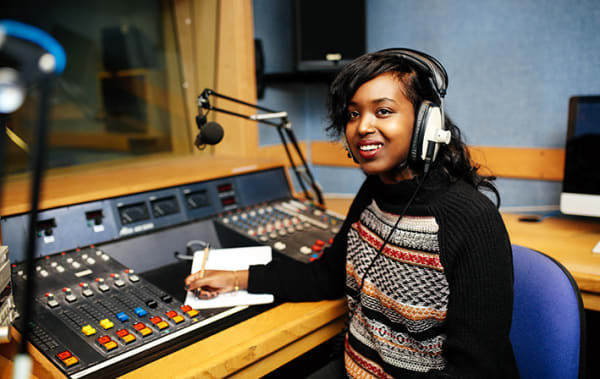
  • A journalism student working in one of the audio studios.
    Image © Alys Tomlinson

    Journalism

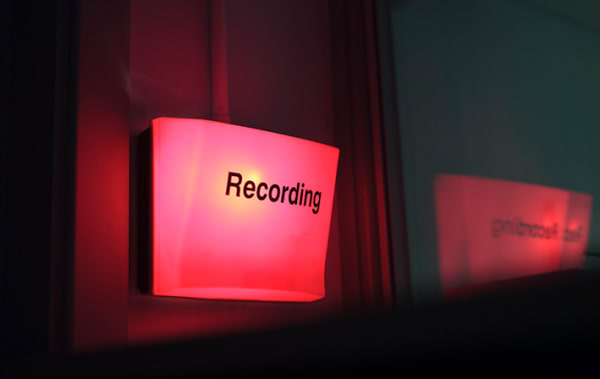
    Journalism students have access to an onsite newsroom, media lab and audio studios.

  • Red light indicating recording is taking place.
    Image © Vladimir Molico

    Lens-Based and Audio-Visual

    Find out about the workspaces and studios that support Lens-Based and Audio-Visual practice.

  • Student reading a book in between two bookshelves in the Library
    Students in the Digital Space. London College of Communication, UAL. Photograph: Alys Tomlinson

    The Digital Space

    The Digital Space is an open-plan, creative hub with computers set up with specialist software.

Staff

Fees and funding

Home fee

£14,710

This fee is correct for 2027/28 entry and is subject to change for 2028/29 entry.

Tuition fees may increase in future years for new and continuing students on courses lasting more than one year. For this course, you can pay tuition fees in instalments.

Students from countries outside of the UK will generally be charged international fees. The rules are complex so read more about tuition fees and determining your fee status.

International fee

£31,510

This fee is correct for 2027/28 entry and is subject to change for 2028/29 entry.

Tuition fees may increase in future years for new and continuing students on courses lasting more than one year. For this course, you can pay tuition fees in instalments.

Students from countries outside of the UK will generally be charged international fees. The rules are complex so read more about tuition fees and determining your fee status.

Additional costs

You may need to cover additional costs which are not included in your tuition fees, such as materials and equipment specific to your course. For a list of general digital equipment you may need (and how you can borrow equipment), visit our Study costs page.

Accommodation

Find out about accommodation options and how much they will cost, and other living expenses you’ll need to consider.

Scholarships, bursaries and awards

If you’ve completed a qualifying course at UAL, you may be eligible for a tuition fee discount on this course. Find out more about our Progression discount.

You can also find out more about the Postgraduate Masters Loan (Home students only) and scholarships for Home and International students. Discover more about student funding.

If you’re based in the UK and plan to visit UAL for an Open Event, check if you’re eligible for our UAL Travel Bursary. This covers the costs of mainland train or airline travel to visit UAL.

How to pay

Find out how you can pay your tuition fees.

Scholarship search

Entry requirements

In order to be considered, you would have achieved an Honours degree (preferably a 2:1), or equivalent professional qualifications with a minimum of three years relevant professional experience.

APEL - Accreditation of Prior (Experiential) Learning

Applicants who do not meet these course entry requirements may still be considered in exceptional cases. The course team will consider each application that demonstrates additional strengths and alternative evidence. This might, for example, be demonstrated by:

  • Related academic or work experience
  • The quality of the personal statement
  • A strong academic or other professional reference
  • OR a combination of these factors

English language requirements

All classes are conducted in English. If English is not your first language, we strongly recommend you let us know your English language test score in your application. If you have booked a test or are awaiting your results, please indicate this in your application. When asked to upload a CV as part of your application, please include any information about your English test score.

  • IELTS 7.0 (or equivalent) is required, with 6.0 in each of the four skills.

If your first language is not English, you can check you have achieved the correct IELTS level in English on the Language Requirements page.

Selection criteria

Offers will be made based on the following selection criteria, which applicants are expected to demonstrate:

  • A well-articulated rationale for applying for the course that demonstrates an enthusiasm for Arts and Lifestyle Journalism, Social Justice Journalism or Audio and Video Journalism;
  • A demonstrable capacity for intellectual enquiry and openness to new ideas;
  • Evidence of understanding or experience of Arts and Lifestyle Journalism, Social Justice Journalism or Audio and Video Journalism that would indicate potential to successfully undertake the programme of study;
  • An academic or professional background in a relevant area.

Information for disabled applicants

UAL is committed to achieving inclusion and equality for disabled students. This includes students who have:

     
  • Dyslexia or another Specific Learning Difference
  • A sensory impairment
  • A physical impairment
  • A long-term health or mental health condition
  • Autism
  • Another long-term condition which has an impact on your day-to-day life

Our Disability Service arranges adjustments and support for disabled applicants and students.

Read our Disability and dyslexia: applying for a course and joining UAL information.

How to apply

Follow this step-by-step guide to apply for this course

Step 1: Initial application

For a general guide to applying to our courses, read our postgraduate application advice.

You will need to submit an initial application including your personal statement and CV.

Personal statement advice

Your personal statement should be maximum 500 words and include:

  • your reasons for choosing the course
  • your current creative practice and how this course will help you achieve your future plans
  • any relevant education and experience, especially if you do not have any formal academic qualifications.

CV advice

Please provide a CV detailing your education, qualifications and any relevant work or voluntary experience. If you have any web projects or other media that you would like to share, please include links in your CV. If English is not your first language, please also include your most recent English language test score.

Step 2: Digital portfolio

We will review your initial application. If you have met the standard entry requirements, we will ask you to submit a digital portfolio.

You’ll need to submit this via PebblePad, our online portfolio tool.

Digital portfolio advice

Your portfolio should consist of recent work that reflects your creative strengths.

It should:

  • be maximum 20 pages
  • include written or published work
  • feature examples of either journalism, blogging, academic essays or multimedia work
  • demonstrate your knowledge of the journalism sector and your awareness of the critical discussions relating to this field.

For more support, see our Portfolio advice and PebblePad advice.

Step 3: Interview

You may be invited to an interview following our review of your application. All interviews are held online and last 15 to 20 minutes.

For top tips, see our Interview advice.

Final step: After you apply

Find out how we'll communicate with you and see what happens after you apply.

Apply now

Application deadline

Deadline

Round 1:

1 December 2026, 1pm (GMT)

Round 2:

17 February 2027, 1pm (GMT)

Digital portfolio deadline

Round 1:

7 days after digital portfolio request

Round 2:

7 days after digital portfolio request

Decision outcome

Round 1:

6 weeks from date of application

Round 2:

6 weeks from date of application

Round 1
Round 2
Deadline
1 December 2026, 1pm (GMT)
17 February 2027, 1pm (GMT)
Digital portfolio deadline
7 days after digital portfolio request
Decision outcome
6 weeks from date of application

We have 2 rounds of deadlines for postgraduate courses: one in December and one in February. If there are still places available after 17 February, this course will remain open to applications until all places are full.

Read more about deadlines

Apply now

Application deadline

Deadline

Round 1:

1 December 2026, 1pm (GMT)

Round 2:

17 February 2027, 1pm (GMT)

Digital portfolio deadline

Round 1:

7 days after digital portfolio request

Round 2:

7 days after digital portfolio request

Decision outcome

Round 1:

6 weeks from date of application

Round 2:

6 weeks from date of application

Round 1
Round 2
Deadline
1 December 2026, 1pm (GMT)
17 February 2027, 1pm (GMT)
Digital portfolio deadline
7 days after digital portfolio request
Decision outcome
6 weeks from date of application

You can still apply for this course while we review the applications as we will continue to consider new applications that arrive before 22 April. After this date we will update the page to say whether there are still places left on this course.

Read more about deadlines

Apply to UAL

Start your application
or

Apply with a UAL Representative

Based across the world, our local UAL representatives can support you with your application from your home country. Check to see if there is a representative available in your country currently.

Find your representative

Careers

Graduates of the course go on to work in a range of roles. Some become journalists across newspapers, broadcasters, online publications, or art, design, lifestyle and food magazines, or become editors for magazines and other publications.

Others take on roles in marketing and communications for fashion and lifestyle brands or major art institutions, choose to set up their own publications, or work as freelance journalists across a range of different titles.

UAL Alumni Association

Our alumni association offers graduates support and a number of benefits.

Student Jobs and Careers

Find out how careers and employability helps our students and graduates start their careers.