Central Saint Martins is sorry to announce the passing of Howard Asher (1946–2021). A former student of the College, Howard kindly donated a large collection of his work to our Museum & Study Collection in 2017. This obituary is based on a conversation between Dr. Philip A. Sykas, Manchester Fashion Institute, and Howard Asher in 2008-2009.
Howard was born in Huddersfield and had a keen interest in art and fashion from a young age, recalling ‘from early childhood I can remember being in tune with creative activities ... Painting was something I did all the time.’
After studying a pre-diploma year at Huddersfield School of Art in 1964, his tutor John Hindle encouraged him 'to apply for the best, which was the Central School of Art (now Central Saint Martins). I didn’t really have any idea what ‘Central’ was about, or the basis of its reputation in the art world’. He remembers dragging his portfolio down to London on the train for an interview. ‘I was fortunate in being interviewed by Audrey Levy, who was then Head of Department, and she must have glimpsed a spark of something’. Howard was accepted, and enrolled onto the Textile course in September 1965.
There was a large cultural difference between the north and south of England at the time, and Howard joked the ‘other students at the College thought I had come from another planet.’ In his first year he was encouraged to knock down all prejudices and preconceptions, which ‘proved to be a hard process for most of us to cope with. You really had to think for yourself and to question everything you did.’
But despite these challenges, Howard had a fantastic experience at the College, and grew substantially as an artist.
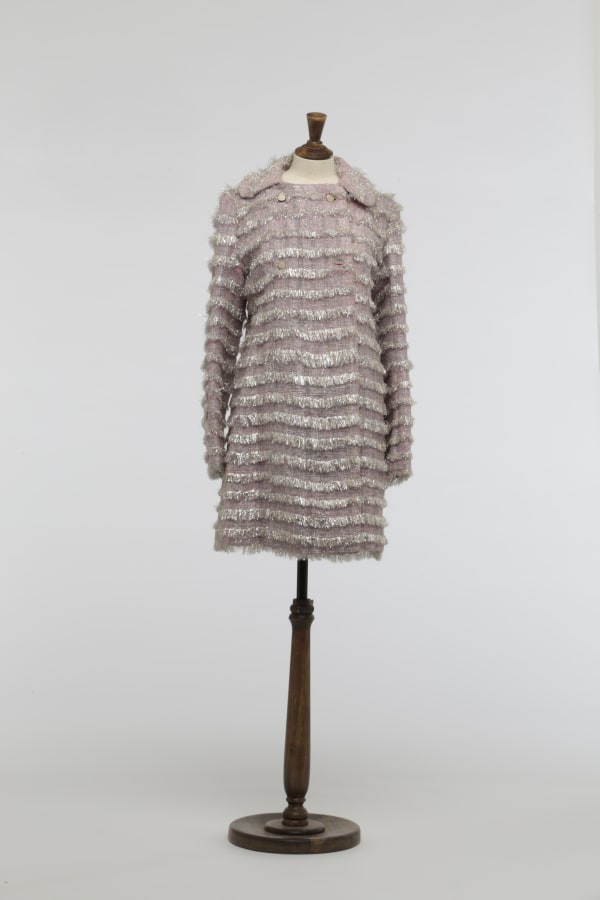
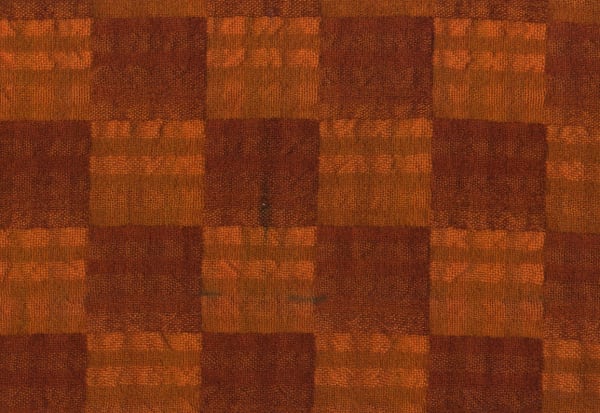
In his final year, the aim of his degree show work was to adapt traditional rug weaving techniques in order to produce pile fabrics for fashion use. ‘I wove lengths of fabric by tufting strips as you would for a rug, but replaced the heavy rug materials with slimmer yarns more suited to dress.’ The degree show work survives intact.
In 1968, Howard was selected by the Principal of the Central School to apply for a Leverhulme Travelling Scholarship in Industrial Design. Out of 32 applicants, Howard was one of four chosen to receive the award of £600. The scholarship money was a huge sum at the time and allowed Howard to travel for eight months in Europe, visiting retail shops, museums, architectural sites and design schools. The trip was hugely influential on his practice and personal life: ‘It is only looking back that I can see how the lessons in independence learned in these eight months of travel were crucial survival skills in the years to follow. Incidentally, it was also while travelling on the Leverhulme scholarship that I started using felt tip pens’, which were to become a key part of his creative practice, as explained in this interview:
Howard Asher on donating his work to our Museum & Study Collection
After the trip, Howard worked at the Deryck Healey studio in London, and also began visiting textile company offices in the West End with his portfolio to sell designs on a freelance basis. After some success, he decided to visit New York with his art school colleague, Tony Boyd. ‘Sales were very good for both of us, and we had no problem getting appointments. Being English opened doors in a city enamoured by the London music scene.’
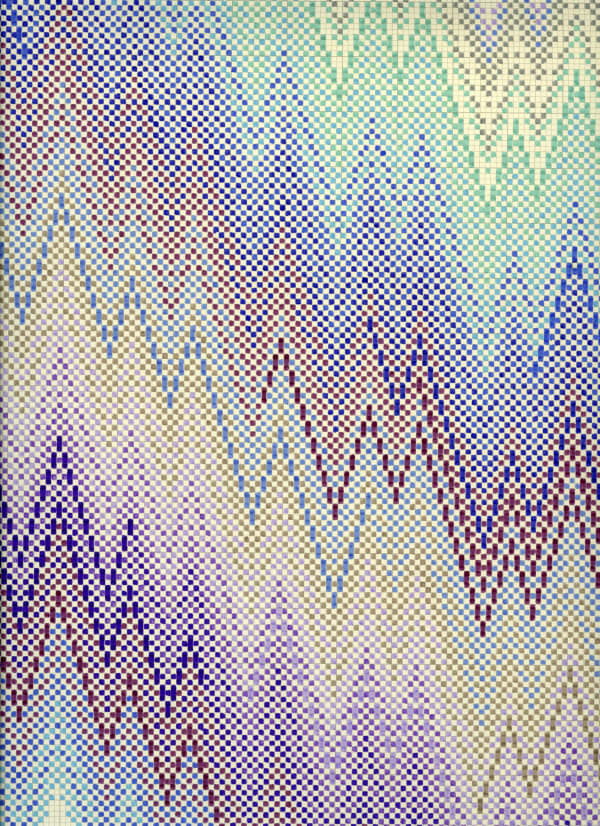
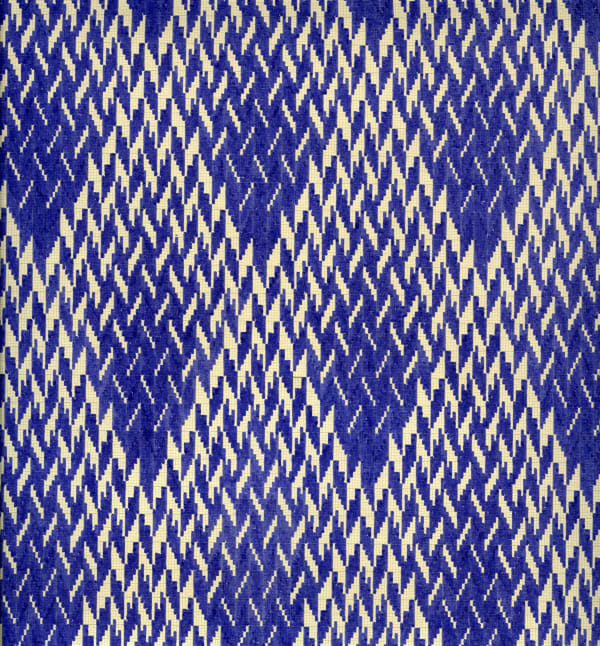
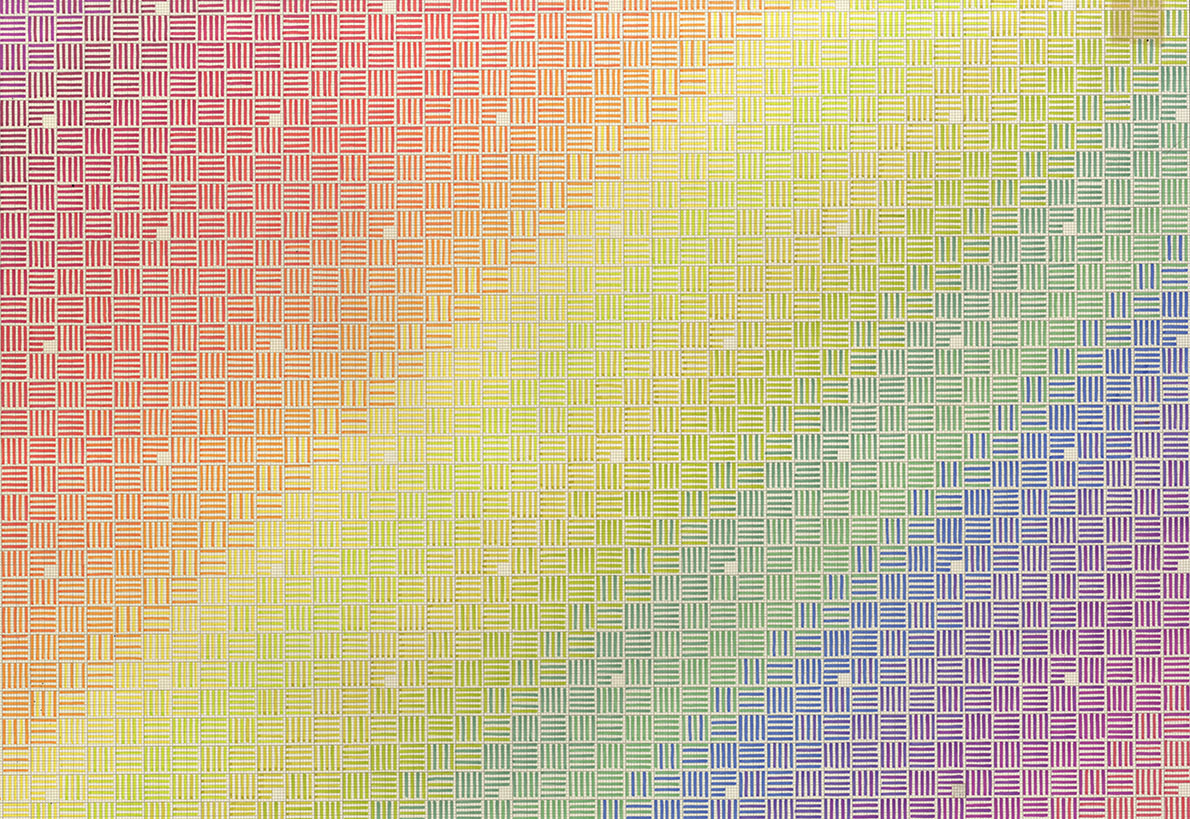
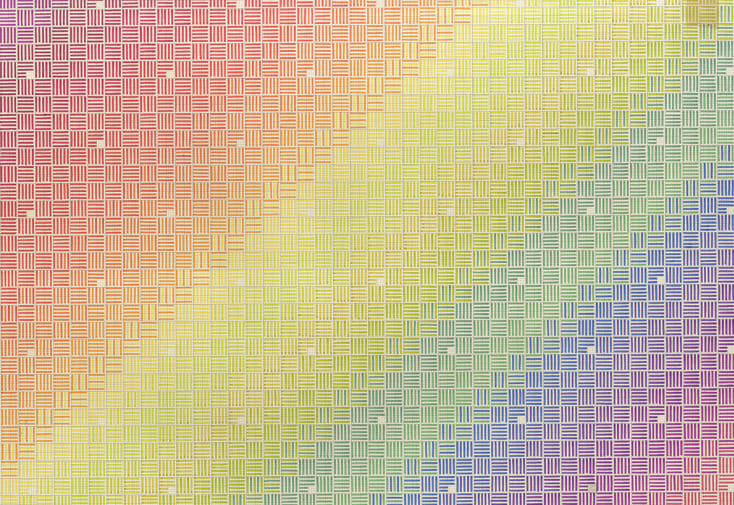
Howard’s career began to blossom, and he decided to go freelance full-time. Around 1970, he met the design agent Bruno Pichler, who asked Howard and his colleague Judith Found to design some patterns for double-knit fabrics. The designs were done on millimetre graph paper, and Howard’s signature style of working on point paper developed from this: ‘I took to this design process straight away, and it launched my best-known design style.’ Orders for fashion prints continued alongside double-knit designs in the early 1970s, and he sold hundreds of designs ‘to a market that seemed insatiable.’
While he was a student, Howard had met Susan, who was also from Huddersfield. In 1971, the couple married and decided to live up north. Howard travelled back and forth between home and London for work, and in the second half of the 1970s began regularly exhibiting at trade fairs. ‘My design life became a continuous cycle of being at home producing new ideas, alternating with being on the road in New York or at trade shows.’
Howard slowly tried to break into the market for home furnishings. This was not easy because it required a new technical background, with different scales, repeat styles and colourings. Howard continued to design on graph paper, but now the designs were free to be larger and he could introduce more colours. Sales in New York continued to form an important part of Howard’s business, and the bedding market became a steady user of Howard’s patterns in the 1980s.
Howard and Susan's first child Ben was born on 6 March 1979, their second child Tom was born 25 April 1980.
In the early 21st century, many textile firms began working digitally, and the demand for Howard’s handmade designs started to slow. He eventually stopped travelling to New York, and began exploring other creative projects instead.
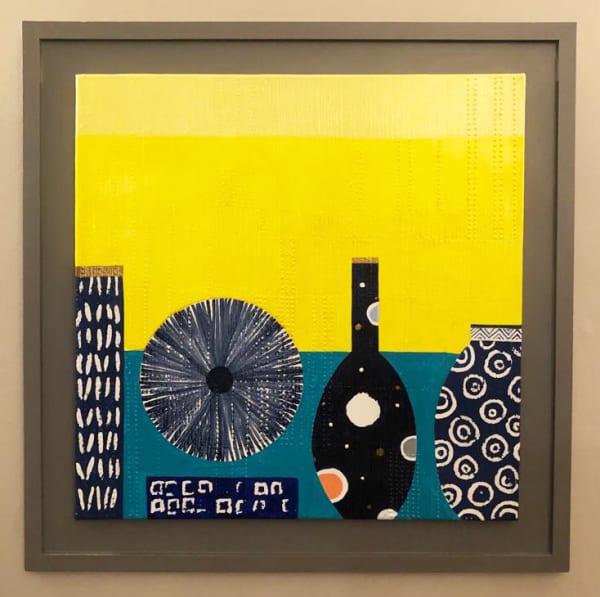
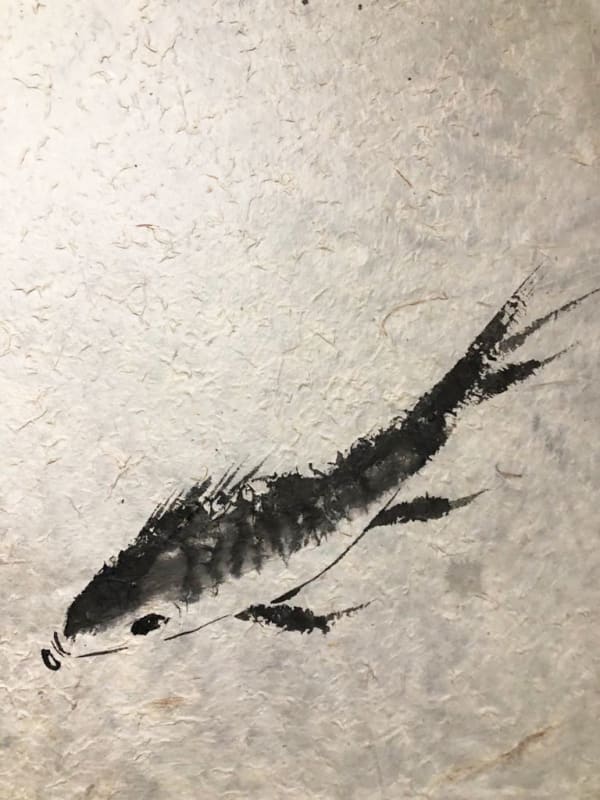
Howard took to acrylic painting on canvas, and was still painting frequently until the week before his death. Multiple layers of colour, patterns and textures were laid over colour washes, inspired by a lifetime of creating patterns. Globe Arts Studio, who run accessible art and craft workshops for children and adults in Slaithwaite, Huddersfield, frequently exhibited his work, and have since named their front gallery the Howard Asher Gallery in his memory. Howard also donated an annual prize to Globe Arts Studio. He also regularly exhibited at Holmfirth Artweek, and donated the Howard Asher Colour Prize to this festival to support emerging talent. Howard also became interested in Chinese brush painting later in life, and joined the Yorkshire Group of the Chinese Brush Painters' Society, who meet monthly at Pool-in-Wharfedale.
His wife Susan says that ‘art was in his blood all through his life’. His legacy will continue to be studied by future students at the College through his donation to the Museum & Study Collection, and he will be remembered fondly by all those who knew him at Central Saint Martins. Staff member Anna Buruma says ‘it’s extraordinary how students immediately respond to Howard Asher’s drawings. There is something in there that they really, really like. I don’t know if the reason for that is because it has a digital feel to it, even though it long predates digital images. They are very seductive his drawings.’
On donating his collection, Howard said ‘it’s lovely that it’s here. It’s fantastic.’