The Power of Different Storytelling on the Climate Emergency, by Timna Krenn
- Written byTimna Krenn
- Published date 09 February 2023
Share story
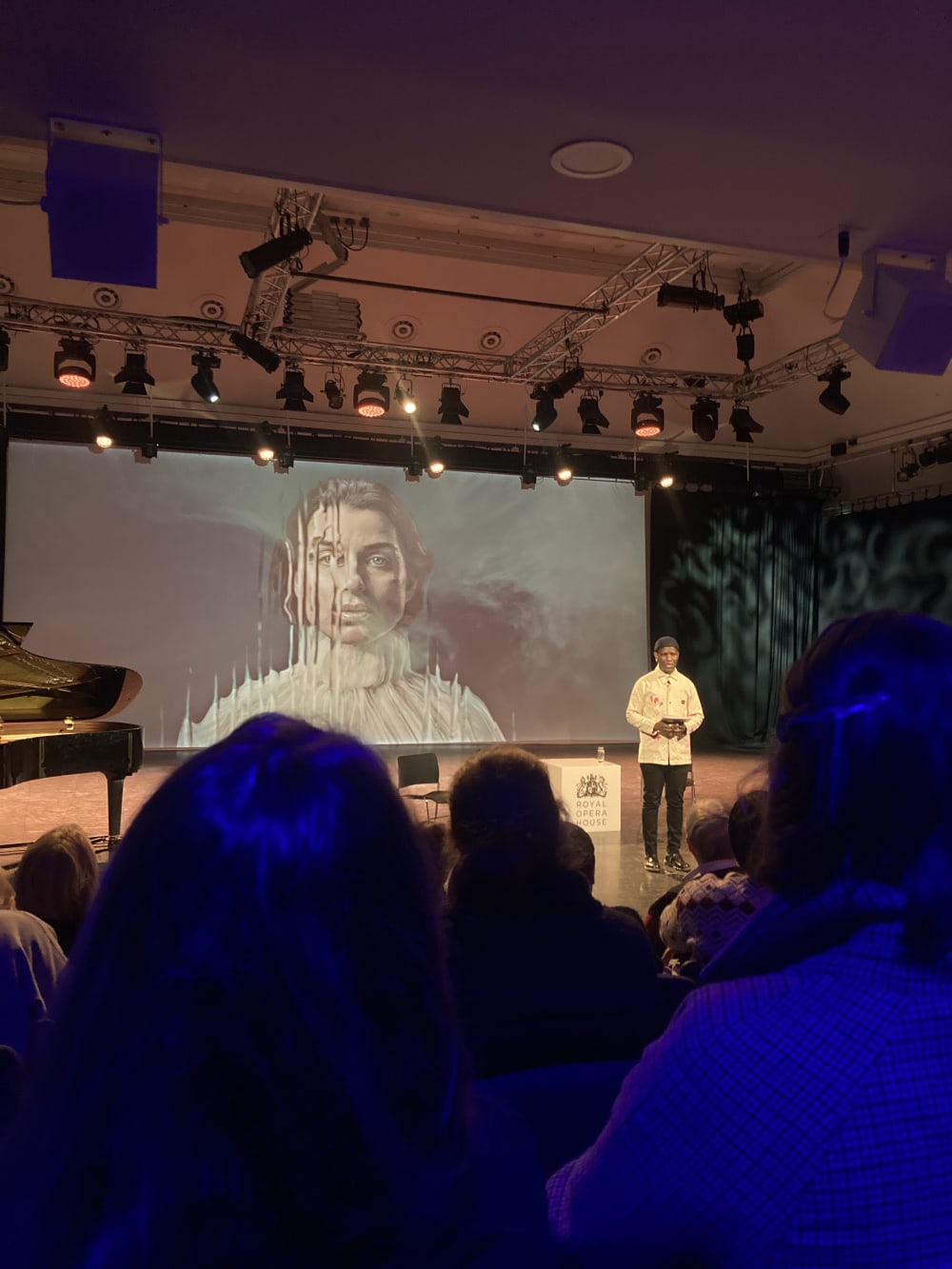
“Could I actually cycle to The Royal Opera House?” was the first question which popped up in my head before attending the event ‘Insights: Rusalka - Creating Theatre In A Climate Crisis’ in the heart of Covent Garden. I love to cycle through London but cycling to an opera house felt new to me. This event on Tuesday 24 January 2023 discussed the decarbonisation of the theatre industry and brought different voices of leading experts together to speak about how we can continue to create compelling stories on stage in a state of climate emergency. Love Ssega, artist and climate activist, hosted this event and invited three panels to examine dramaturgical, technical and production aspects around sustainability in the creative industry.
As a performer and theatre maker, this event felt extremely encouraging and insightful. It reminded me of the power of storytelling and the importance of the decisions we must take to deconstruct dominant narratives and create more sustainable theatre productions.
Rusalka – a new opera interpretation which questions the symbiosis of nature and humanity
The first panel consisted of Oliver Mears, director of the Royal Opera House and Ann Yee, co-director of Dvořák’s opera Rusalka which will premiere on Wednesday 21 February 2023.
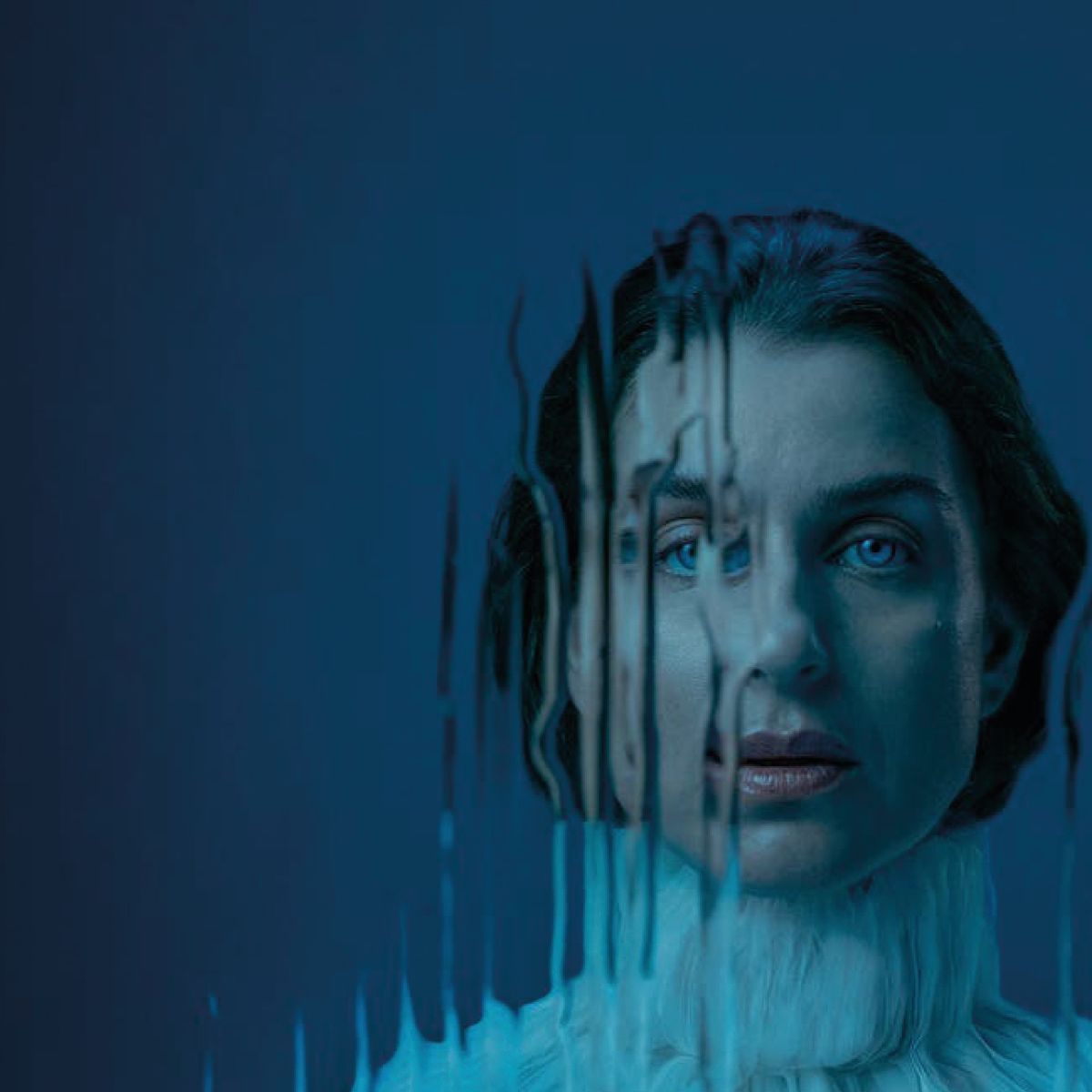
The opera is based on a Czech fairy tale which speaks about love. The protagonist, Rusalka, is a water spirit who falls in love with a human prince and must go through transformations to be seen by humanity. Ann Yee, and co-director Natalie Abrahami’s, newly interpreted Dvořák’s opera and sees Rusalka as water, taking the creative decision to frame the opera as a conversation between nature and humanity set in different time structures. Yee explained that the specific time changes throughout the three acts, allowing us to think about the consequences of today's actions in the future and discuss the destructive strain we put on the environment.
In relation to dramaturgical decisions, Yee further explained that it was extremely important for her and her team to discuss the resources they would need to tell the story and whether they would find ways to make it work by using less. Yee pointed out that the creative team decided to cut the idea of using water on stage because they would not have been able to recycle it, and this would have highly increased the carbon footprint of the production. As imagination and creativity are still the most essential tools for Yee and her team, they found other solutions.
The Royal Opera House (ROH) had planned this production for around 3-4 years. Oliver Mears explained that showing the impact which modern humanity has on nature is a long overdue topic on the opera stage. For Mears, the aim is still to create something which is exciting and fabulous, but with less impact on the environment. The production of Rusalka is not an endpoint for the ROH but a process through which they are learning, explained the director. It further gave Mears and his team the opportunity to employ a new mindset which focuses on questions about sustainable actions such as the reuse of sets or how audiences travel to the production. As I had finally decided to cycle to the event, this was the first moment I started feeling proud of myself by helping to decarbonise the theatre industry a bit that night.
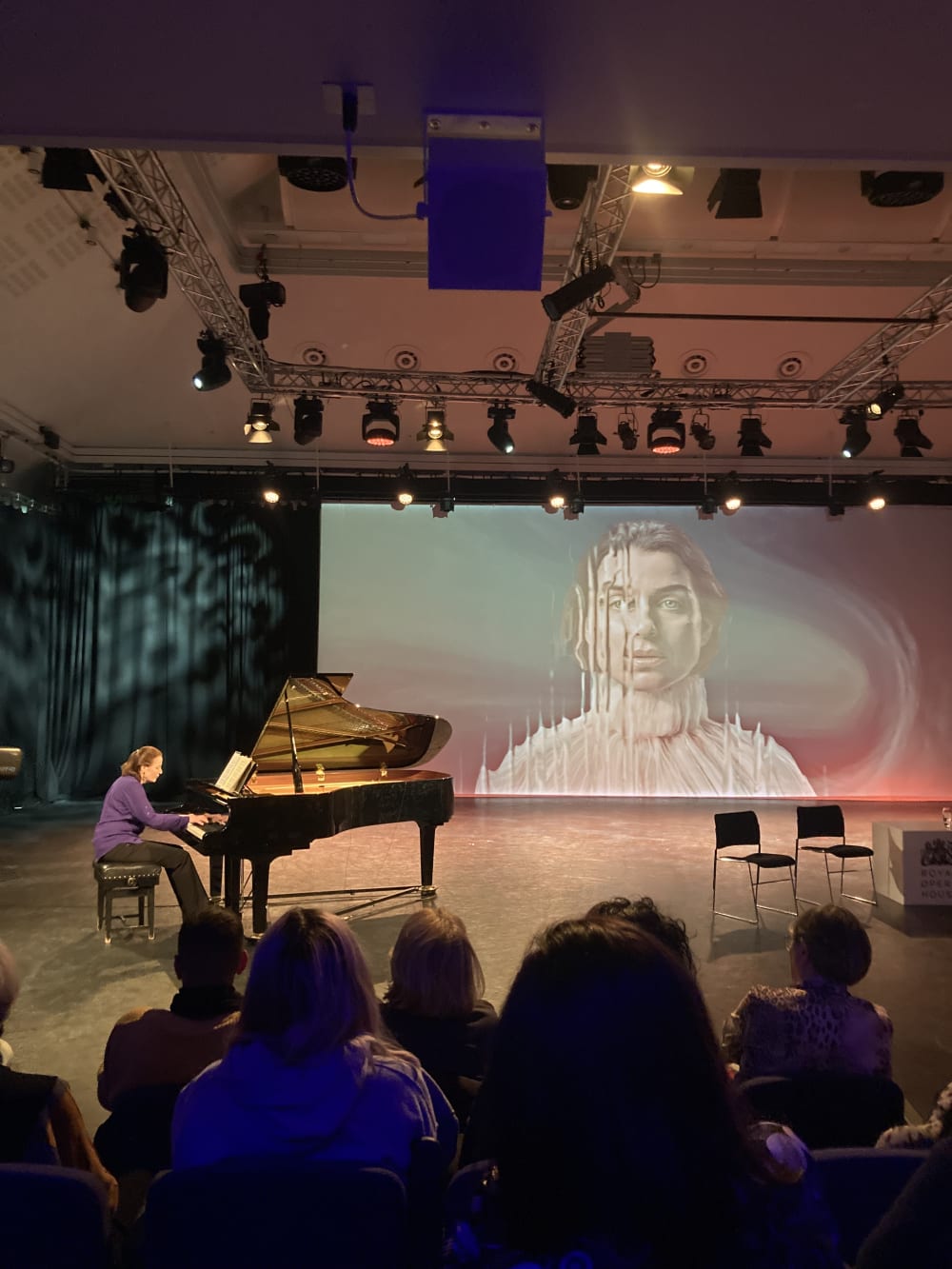
A beautiful instrumental transition to the evening’s second conversation was offered by Susanna Stranders, Chief Repetiteur of Rusalka. She illustrated how storytelling can work via music by playing the overture of Rusalka. Her piano playing revealed how moving Dvořák's score is in drama and storytelling.
The Green Book – Sustainability is, just like health and safety, a key part of everything theatre makers do.
The second part of this evening focused on how theatre makers can make sustainable actions in the industry. To discuss these topics, Love Ssega invited Emma Wilson, Director of Technical Production and Costume, Gemma Swallow, Technical Director, National Theatre of Scotland and Jennifer Taillefer, Certified Carbon Literacy Trainer.
All 3 industry experts gave great insight into their creative expertise and underlined the importance of the Green Book, an initiative between Theatres Trust and the Association of British Theatre Technicians to bring more clarity about sustainable working processes. The Green Book offers all theatre professionals a common language, allows them to work in the same way and shows how sustainable actions can be measured. It offers concrete and practical approaches through terminologies, codifications and understandings of sustainability. Theatre professionals can even use it outside of the UK as it has been translated into different languages and spread throughout Europe.
The Green Book was also used to produce Rusalka. Emma Wilson described a situation where the team decided to cut a certain set design from this production because there was no other option but to use a plastic body. Not wanting to use polycarbonate, which would have been the only option, the team decided to find other solutions. In addition, the costumes and scenic dressings are made from recycled costumes taken from the ROH store.
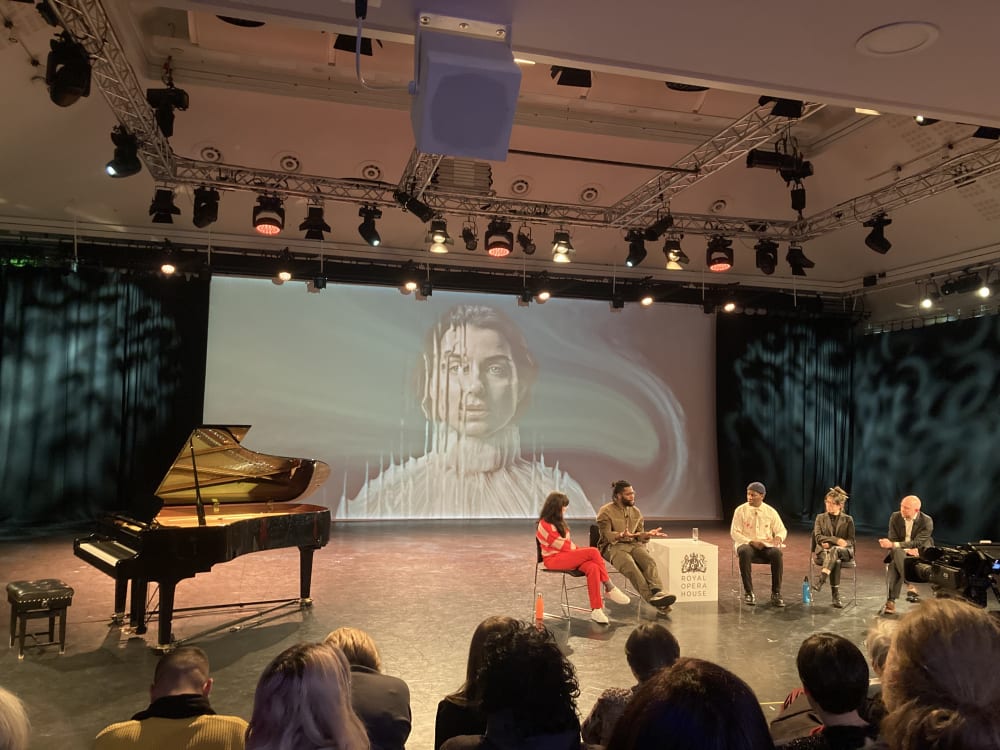
Unlike the ROH, the National Theatre Scotland is a touring theatre operating on a different scale. Gemma Swallow explained that they have been working sustainably for a long time. Her team has been reusing materials or borrowing things from other theatre companies for decades, which not only reduces the carbon footprint but is also cheaper. She also mentioned the importance of engaging with audiences and letting them know what sustainable actions you are taking as a theatre maker. In terms of time and cost, Swallow highlighted that the budget hasn't really changed as it needs more time to discuss concrete sustainable actions. She made it clear that the money ultimately just moves to other parts of the budget. Instead of being spent on things and materials, it is spent on labor and people.
Jennifer Taillefer is a Carbon Literacy Trainer, which means she provides sustainability training specifically tailored to the performing arts industry. 10 years ago, the Carbon Literacy Project started in Manchester, aiming to create the same basis of understanding, knowledge and terminology about climate emergencies. Taillefer's training gives people the knowledge they need in their specific work environment and how to apply it in practice. From her experience, it is a great advantage that all departments speak a common language after the training and have learned the same things, which they can then implement in cross-departmental discussions. Like Wilson and Swallow, Taillefer stated that questions and discussions about sustainability in creative teams are very welcome and important. Protecting the climate is important to theatre makers, but they often don't know how to do it.
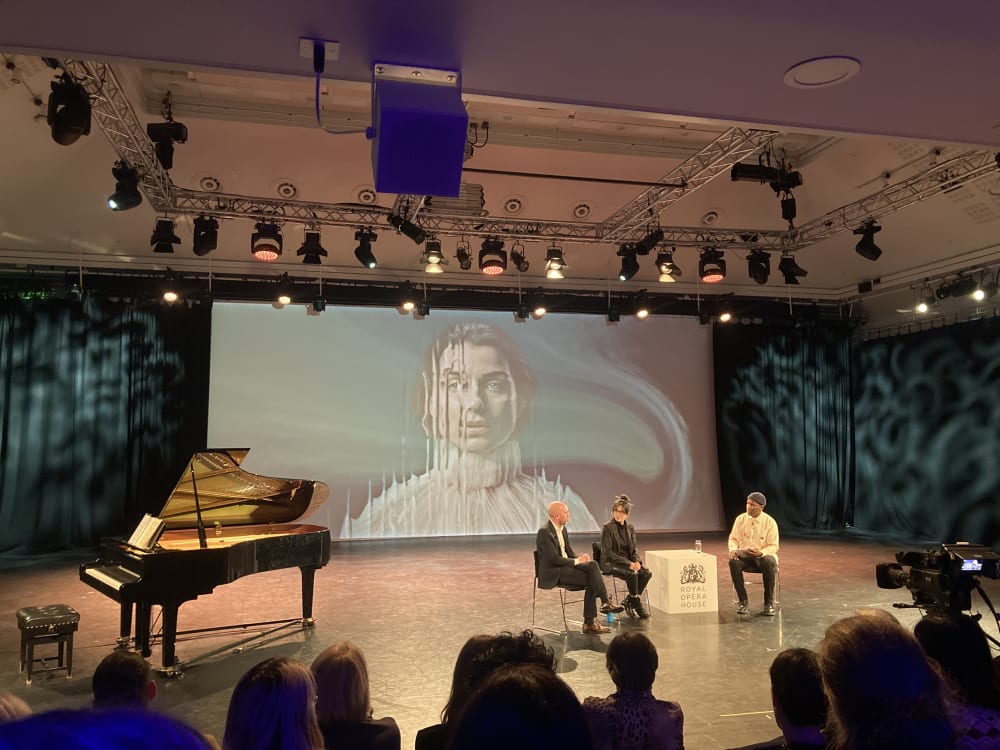
This panel ended with a screening of Live + Breathe by Love Ssega, a beautiful work which he produced for an air pollution awareness campaign in Lambeth and Southwark. Featuring a poem by Jayda David of Poetic Unity Brixton, this video lifts the voices of black and marginalised people.
Telling stories – a powerful tool in and outside of theatres
For the third panel discussion Love Ssega welcomed back Ann Yee and Oliver Mears who were joined by writer and podcaster, Ella Saltmarshe, and actor, Fehinti Balogun, to discuss story telling beyond the now and beyond the stage.
Fehinti Balogun created ‘Can I Live?’, a filmed performance which raises awareness about how people of color have been excluded from environmental activism. With this piece the actor wants to show that climate change, which he describes as a symptom of capitalism, is also about institutional injustice. That's why he also wants to connect different parts of society with this story. During the writing process, Balogun realised the importance of honesty and genuine vulnerability when telling stories about the backdrop of a climate crisis. For him, theatre makers need to tell all sorts of stories, which means telling all kinds of issues, pushing boundaries and challenging narratives. As a student on the MA Performance: Theater Making programme at Wimbledon College of Arts, which allows me to develop my creative and critical theatre and performance practices, I fully endorse his sentiments.
Fehinti Balogun further encouraged theatre makers to be brave and suggested to use community to move forward. For him, community is power and that's why he advised theatre makers to connect with others and work together as a unit. He also explained that it is extremely important to him to give as many people as possible the opportunity to see this work. The moment he mentioned that the filmed performance would be shown at screenings powered by bikes this year, I knew that this event was the right one for me.
Ella Saltmarshe created The Long Time Project, which focuses on collective stories humanity tells and asks how to support and challenge different styles of storytelling. Time became an important theme in the last decade of her work, and she wondered if people would consider themselves as ancestors if they expanded their own sense of time. Saltmarshe believes that considering ourselves as ancestors could help us take more responsibility for ourselves and the environment. She also spoke about the values underlying all our stories, explaining that there are 3 specific values when we think about climate crises:
1. Stories of kinship like Rusalka.
2. Stories from a longer now that help us place our human experiences in a much longer time frame—far back in time and far into the future.
3. Stories that tell us a different version of the good life and that can challenge the dominant narrative.
Saltmarshe also highlighted the role of narrative in systems change, which she understood while working with different communities. For her, there are 3 main ways to tell stories that can transform systems:
1. Stories can be used to show that an existing system is not working.
2. Stories of emerging systems which we want to be created.
3. Stories that take place in the future and show alternative systems.
The writer showed that stories can help people imagine different futures and find their agency.
Oliver Mears sees a great responsibility in what the ROH brings to the stage. It is important to him to tell stories like Rusalka which are about humanity - the relationship between people and the desperate predicaments they find themselves in - because this is what theatre and opera is about. Oliver also mentioned Katie Mitchell, who investigates bicycle-powered theatre shows.
At that precise moment I felt a soft smile on my lips and wanted to raise my hand to offer my own muscle power to create a carbon neutral theatre show, but instead I asked: "What are three things you hope theatre makers attending today take away or do as a result of this conversation?"
Oliver Mears: “Pragmatism, idealism and the sense of believing in things. We cannot solve every problem, but we can take small steps which will change a lot within the bigger picture.”
Ann Yee: “Trust yourself!”
Ella Saltmarshe: “Know your power – stories are the operating systems of our world. The stories we tell shape our policies, laws and technology. Step into your power as a storyteller!”
Fehinti Balogun: “Don’t be afraid to fail. We fail to think beyond failure. In failure lies growth, learning and much more.”
Enriched by the knowledge of these leading experts, I hopped on my bike with an encouraged smile on my face, knowing that cycling to the Royal Opera House may not stop the climate crisis today, but understanding that it is one of the small steps that I can take to make a difference.
Related links
UAL Post-Grad Community
Established in 2013, Post-Grad Community is an inclusive platform for all UAL postgraduate students to share work, find opportunities and connect with other creatives within the UAL and beyond. Find out more