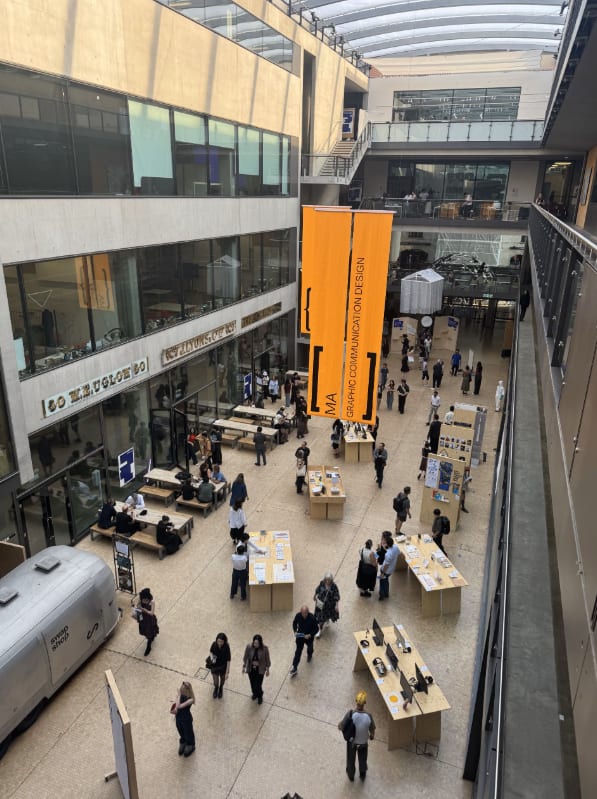
Subverting the archive: a slice of CSM MA Graphic Communication Design’s 2025 show
- Written byMac Clapper
- Published date 15 July 2025
Share story
Post-Grad Ambassador Mac Clapper is reporting from the 2025 CSM Graphic Communications Design Shows.
If I had to sum up the CSM degree shows in one word, it would be ‘Vast’. Across all programmes, students produced highly individual, carefully researched, and specially crafted work. It seemed like themes this year included pride, identity, and a sense of defiant confidence throughout all the work.
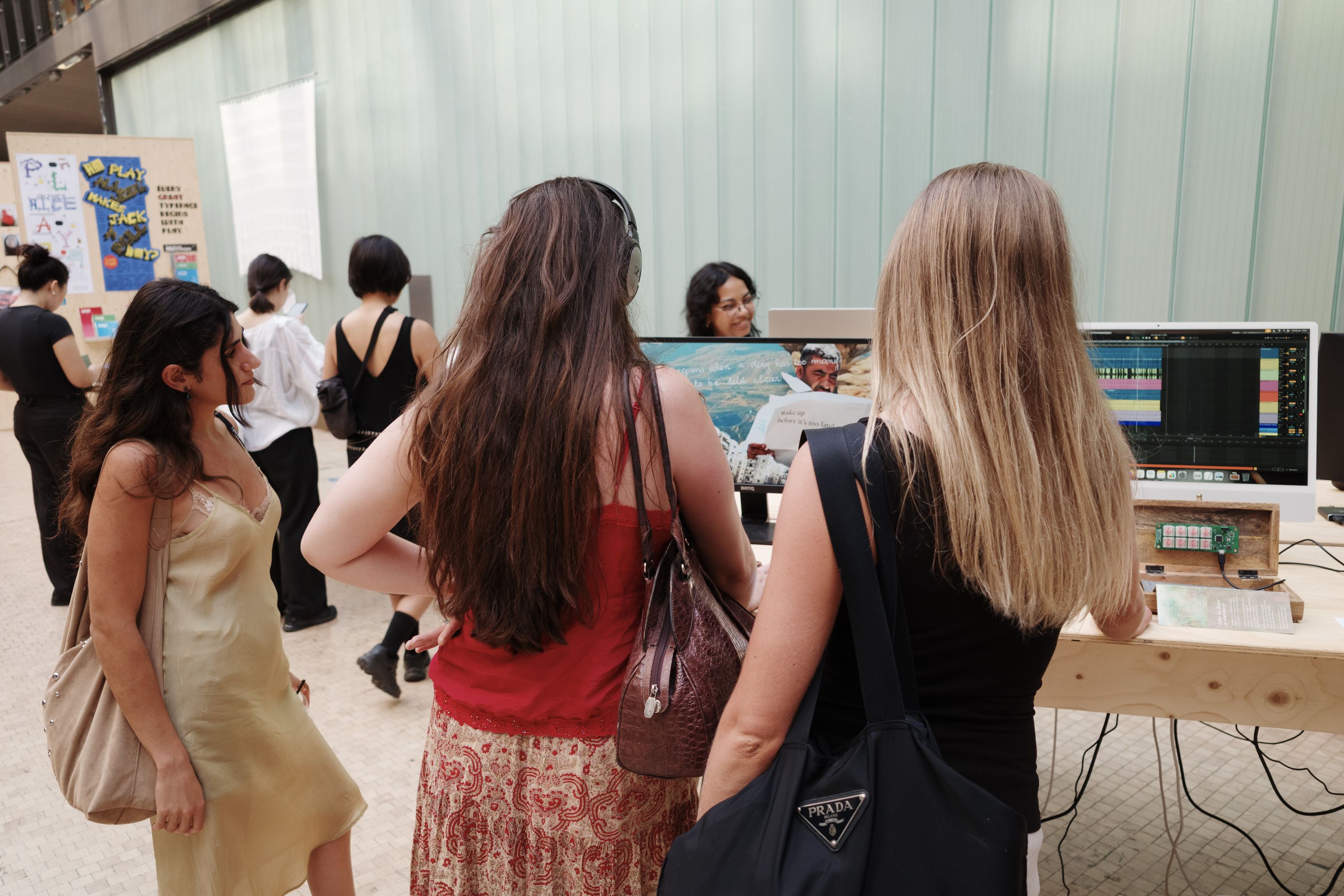
There was one table in particular in the MA Graphic Communication Design programme that refracted these themes in a critical, storied way; it was the table with ‘Zoom In, Zoom Out’ by Chloé Naim, ‘zarnouq: a narrative in collapse’ by Jude Alsalim, and ‘Akhra Re (Meet me at the Akhra)’ by Nikunj Topno
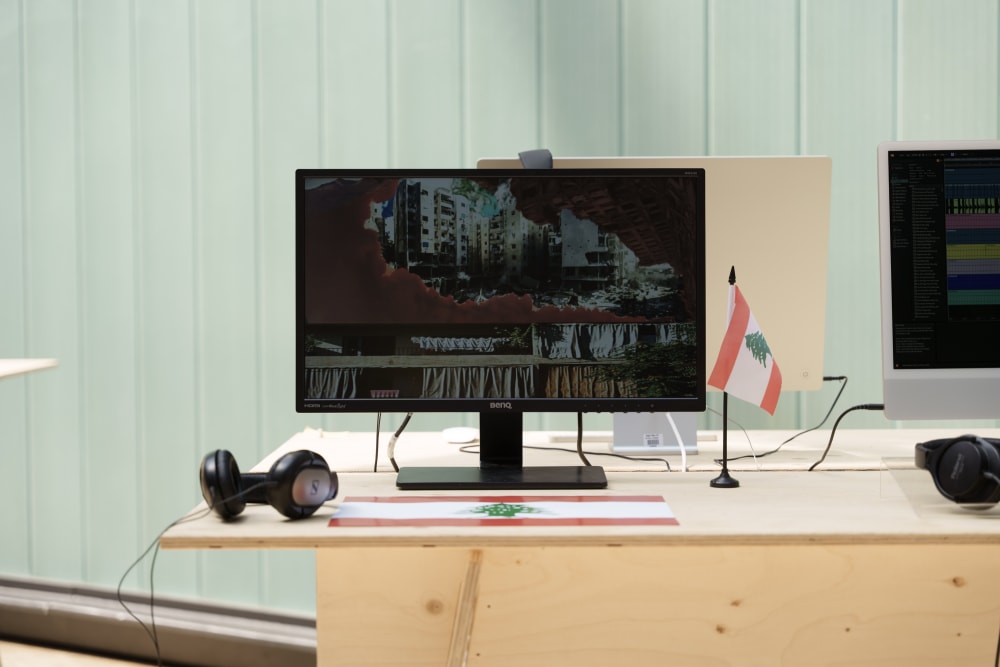
Each of the works interrogates questions about the designer’s motherland and their culture. For instance, in ‘Zoom In, Zoom Out’, Naim investigates how the history of Lebanon is perceived based on who is telling it through collage animation and voiceover. Naim juxtaposes personal archive with images from areas of Lebanon struck by war and violence, keeping both sides of the story loud at the same time. Naim leaves us in an interesting position at the end; she says about her work, ‘Rather than seeking resolution, the work investigates what happens when internal experience and external representation are layered within the same frame.’
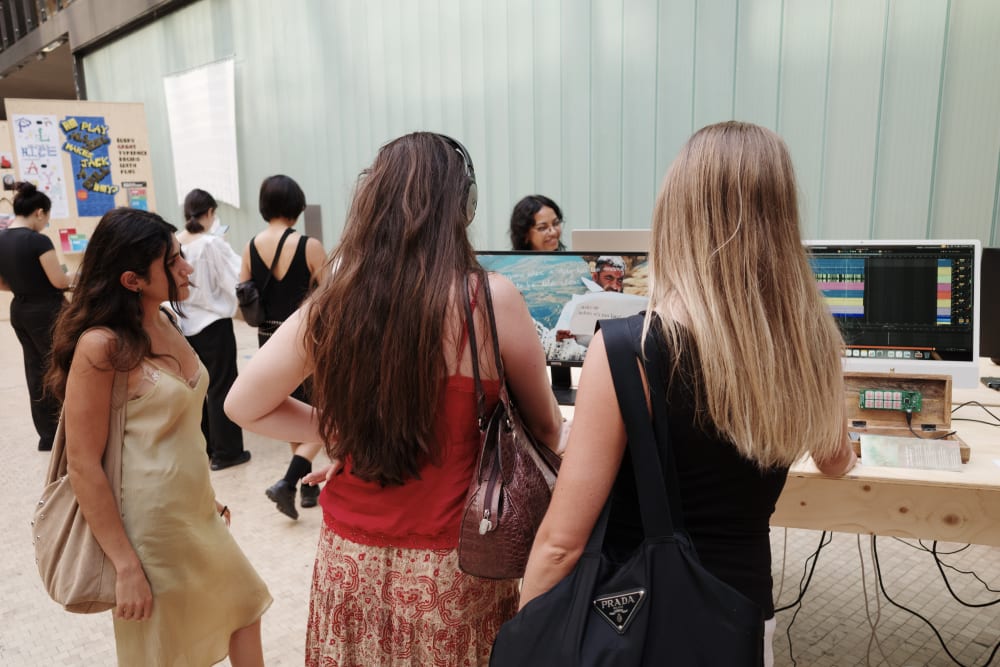
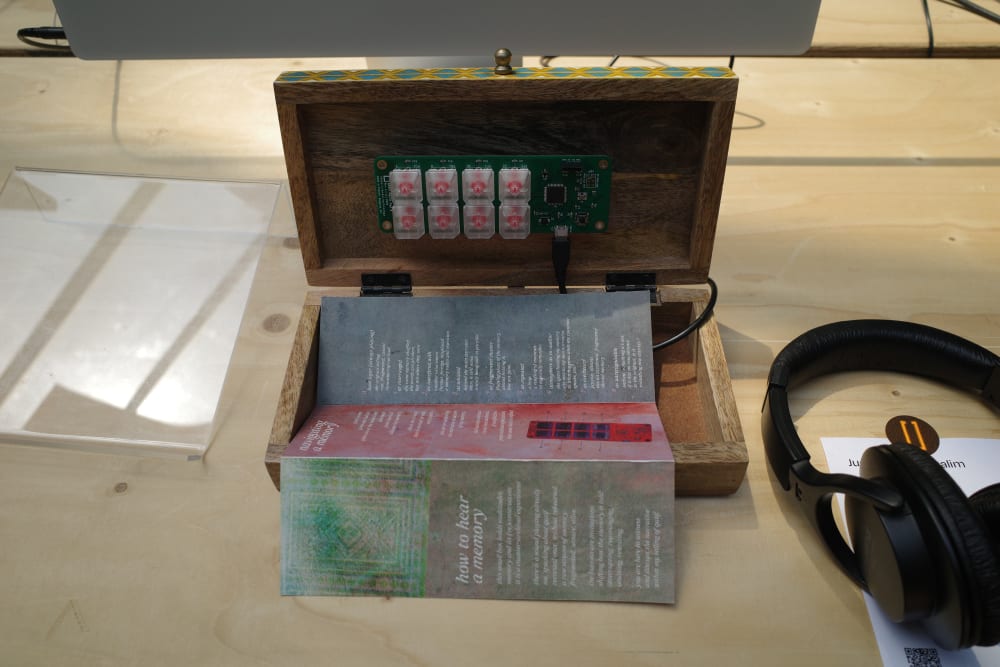
Next to Naim’s work was Jude Alsalim’s ‘zarnouq…’, an interactive sonic archive. Similar to Naim’s work on how truth is remembered through archive, zarnouq investigates a singular memory from ‘AlQatif, a place repeatedly documented through colonial eyes’ as per Alsalim. The memory has been recorded and ocers an ‘alternative form of remembering’ by emphasising the unstable, layered, and alive nature of oral histories. Alsalim has explored these themes by creating a live oral memory, one that can be reimagined by pushing buttons to alter how it sounds. For example, through Ableton software and physical computing, she assigned the buttons to: rearrange, interfere, omit, fragment, and repeat the sound of the memory. Alsalim invites us to question the ‘politics of memory, fragmentation, and narrative interference through sound.’
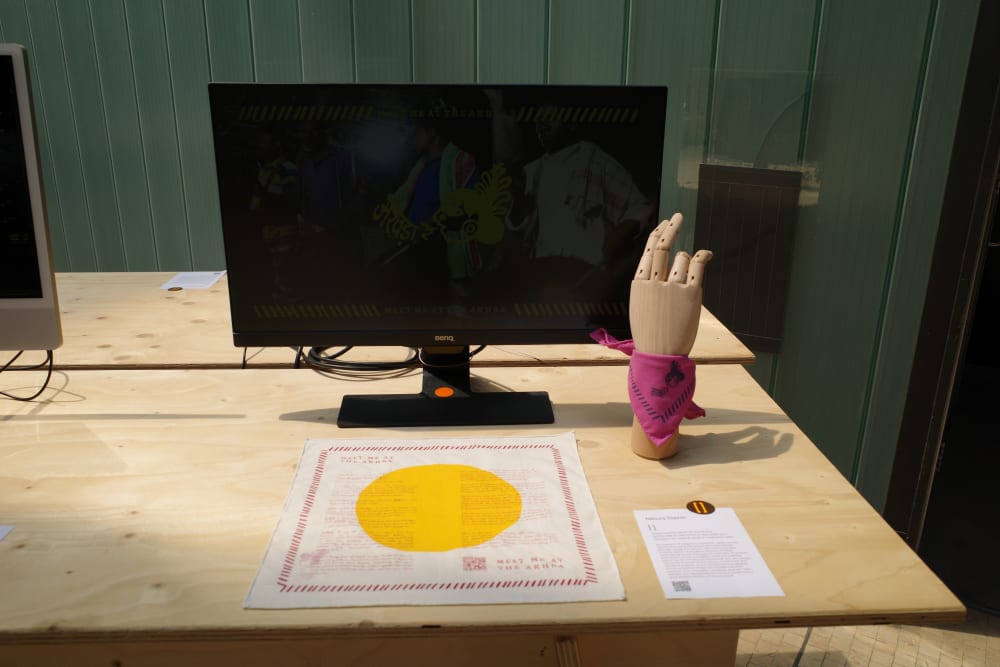
The last piece on the table was Nikunj Topno’s ‘Akhra Re (Meet me at the Akhra)’, which is an examination of how graphic communication design can incorporate Topno’s lived experience of indigenous storytelling traditions into a more visceral storytelling experience. Topno explores this visually by creating an AR experience [link] that teaches the viewer how to dance like the Mundas, but also to create a digital Akhra which was ‘historically an open space in the village for community meanings and entertainment’. As per Topno, ‘this digital Akhra attempts to ocer a space to return, reconnect, and reattune to an indigenous way of knowing.’ Through AR, Topno has ecectively archived her own history, enshrining it in a new digital form, whilst also teaching us about alternative methods of storytelling and knowledge.
Together, these works symbolised the larger themes developed by this year’s cohort of designers. Each project investigates personal, political, and cultural archives to create something new. Through sound, voice, or augmented reality, these designers resist dominant narratives and instead ocer nuanced perspectives and experiences that encourage us to have dialogue with heritage, framing it as something alive and malleable rather than a static, fixed position. Naim, Alsalim, and Topno all have demonstrated how graphic communication design can move beyond just visual solutions and brand identities to become a tool for cultural investigation, resistance, and reimagining.
Post-Grad Stories
Post-Grad Stories is a thriving online platform of postgraduate voices. Here you can share thought-provoking experiences, practices, thoughts and articles about what matters to you.
Download the PDF Guide to writing articles for Post-Grad Stories.
UAL Post-Grad Community
Established in 2013, Post-Grad Community is an inclusive platform for all UAL postgraduate students to share work, find opportunities and connect with other creatives within the UAL and beyond. Find out more.