Reflections: Performance and XR
- Written byTimna Krenn
- Published date 29 July 2024
Share story
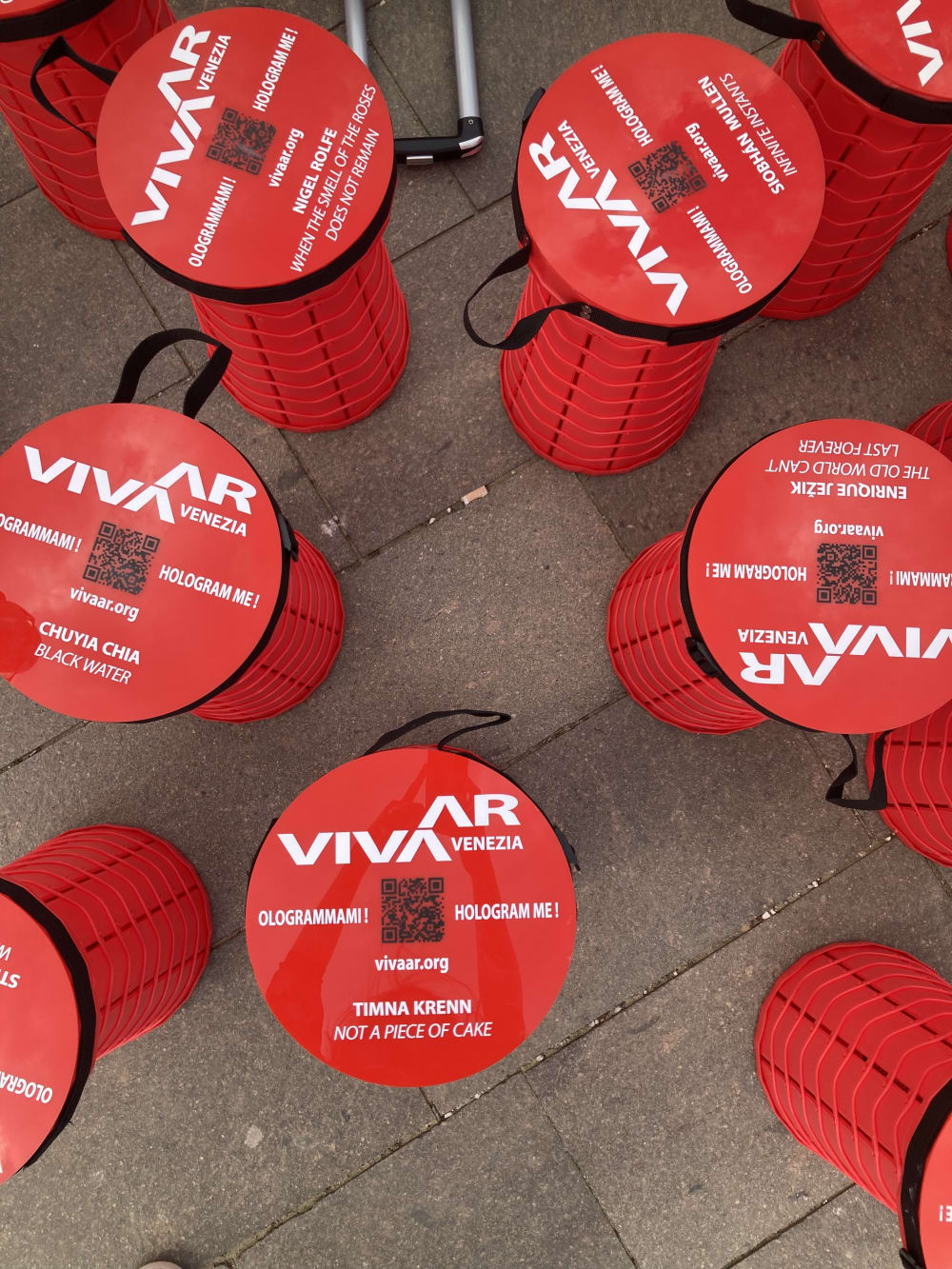
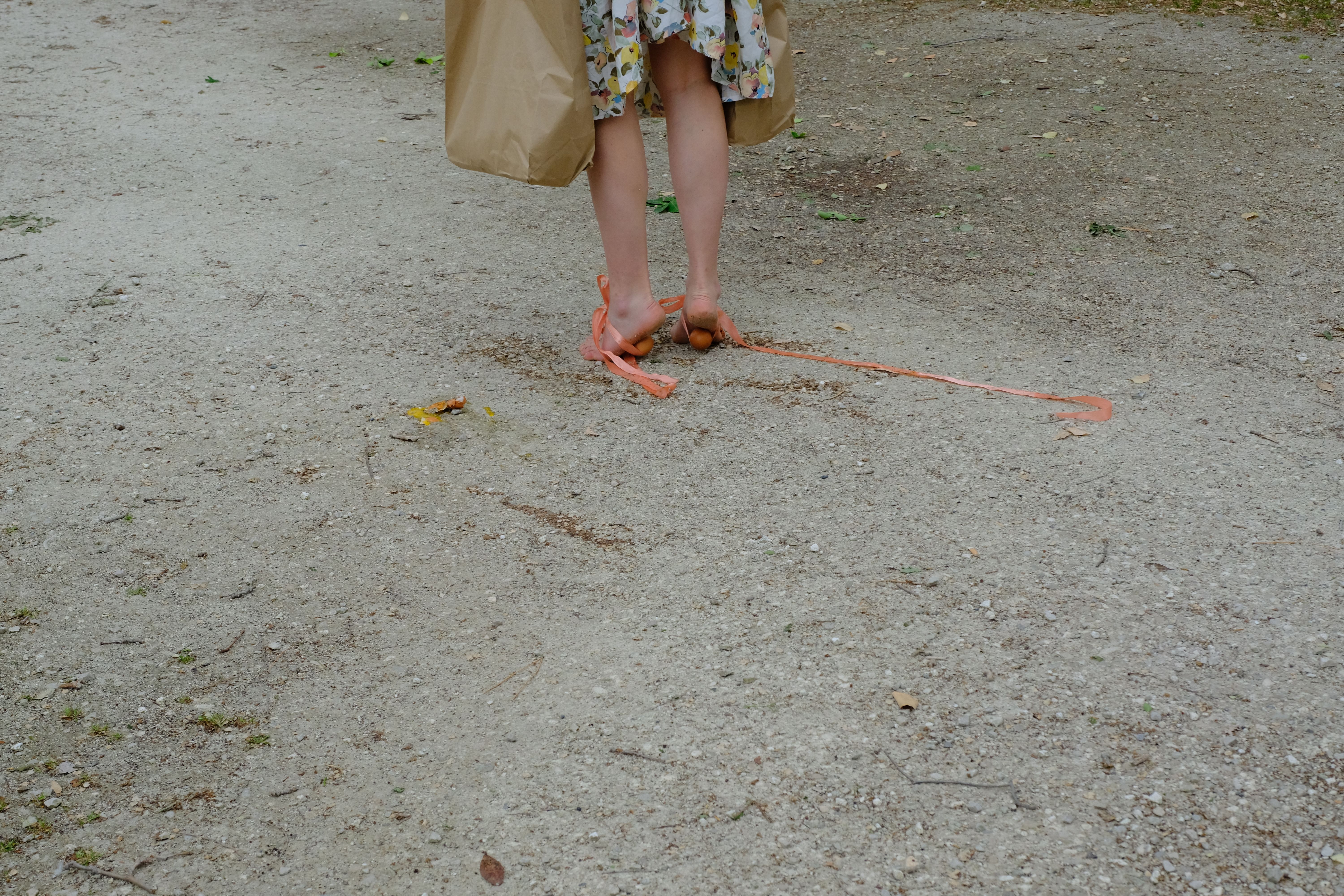
Timna Krenn (2023, MA Performance: Theatre Making, Wimbledon College of Arts) recently took part in 2024's Venice Biennale, with Not a Piece of Cake, a performance over three days at the festival.
I remember when my cohort and I participated in a workshop on Extended Reality (XR) during Unit 1 of my MA, led by Grzesiek Sedek. At the time, I had limited experience with XR, but through responding to various briefs we assigned each other, we managed to create some amazing sketches exploring this medium. We also utilized Virtual Reality gear, sharing virtual tours of our hometowns and playing roller coaster games. I must admit, I could only ride the virtual roller coaster once because the experience was so intense it made me feel nauseous. It felt incredibly real, turning my stomach upside down and almost making me want to vomit. Thankfully, I managed to hold it together.
Learning from these experiences, which gave me an embodied sense of realism, made me realize the potential of XR for performance and theatre making. It could be an effective tool to bring theatre to places without a theatre house. From my perspective, it offers a great opportunity to democratize access to theatre. Building a theatre house can be expensive and less sustainable in many areas. Therefore, VR could provide people with access to theatre without the need to physically visit a theatre.
At the end of the XR workshop, I spoke to Grzesiek about various potentialities, particularly the opportunity to experiment with the absence and presence of elements within theatre and performance making. He immediately told me about the research of Terence Quinn, a PhD candidate at UAL’s Creative Computing Institute and at that time a resident researcher at Wimbledon College of Arts.
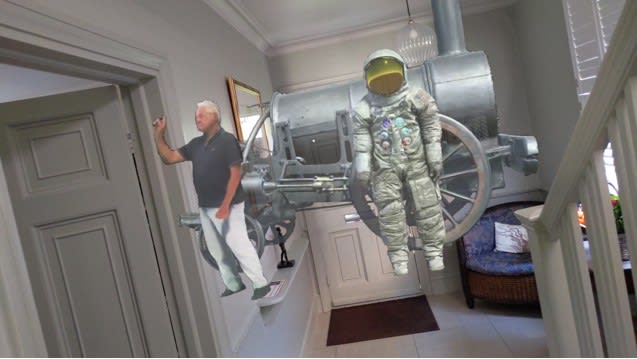
Meeting Terry, who is very passionate about his research in augmented reality, provided me with significant insight into the field. He gave me glasses through which I could see Neil Armstrong’s Apollo mission spacesuit from the Smithsonian Institute and Stevenson’s Rocket from the Science Museum London. Objects that would be invisible without looking through the Microsoft HoloLens2 Mixed Reality Headset. I was immediately mesmerized by the idea of creating elements that only specific parts of the audience could see, offering a different experience to others who wouldn't see the same things. This technology would allow us to craft narratives that could tell different stories by making elements appear or disappear.
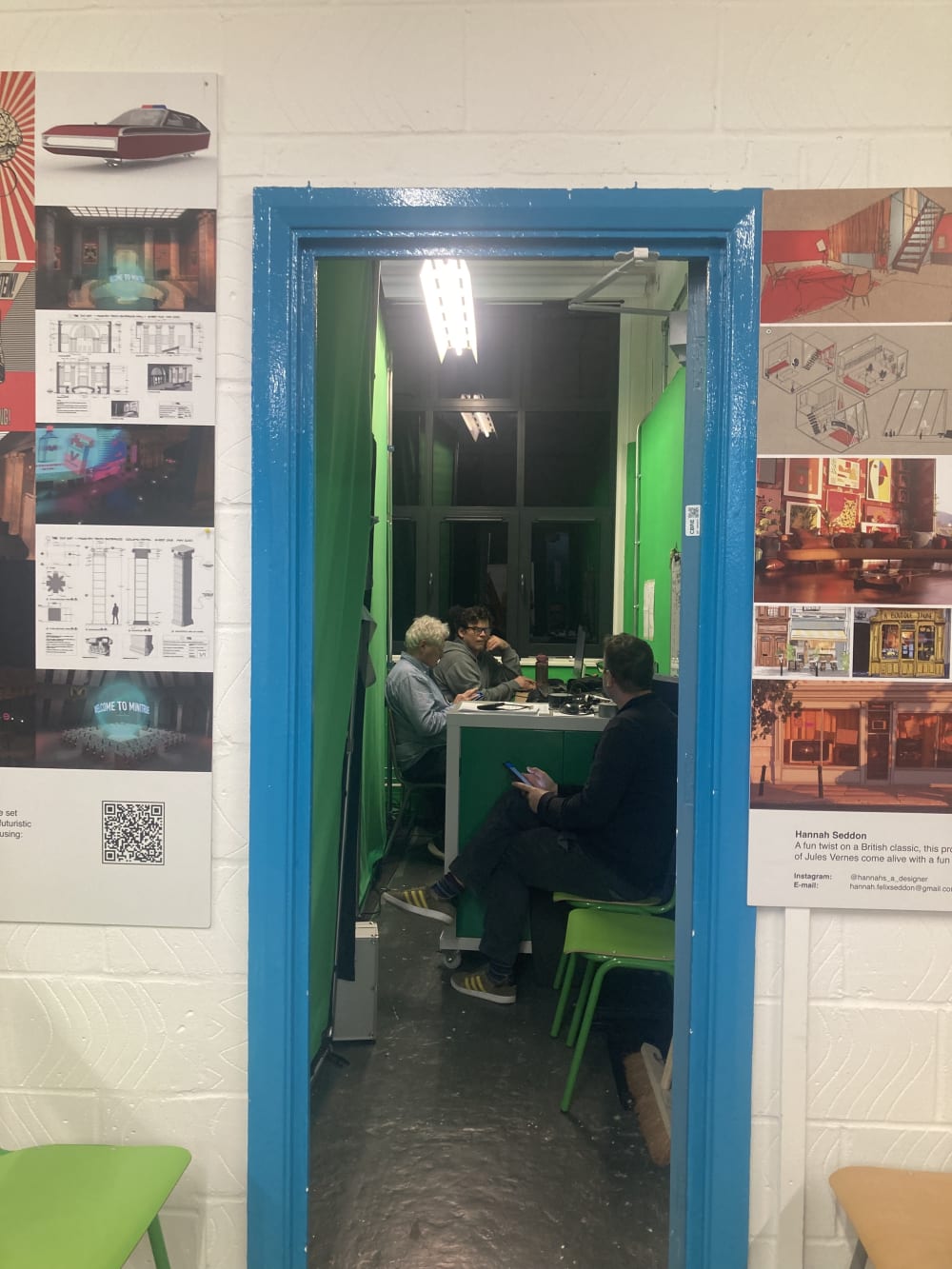
Almost a year later, I received an email from Terry about a potential collaboration for the VIVAAR project, curated by Jonas Stampe and Xiao Ge. After another meeting where Terry provided more details about the project and the opportunity to perform live during the professional preview at the Biennale, I applied with my performance piece "Invisible Targets," the outcome of my practice-based performance research at Wimbledon College of Arts.
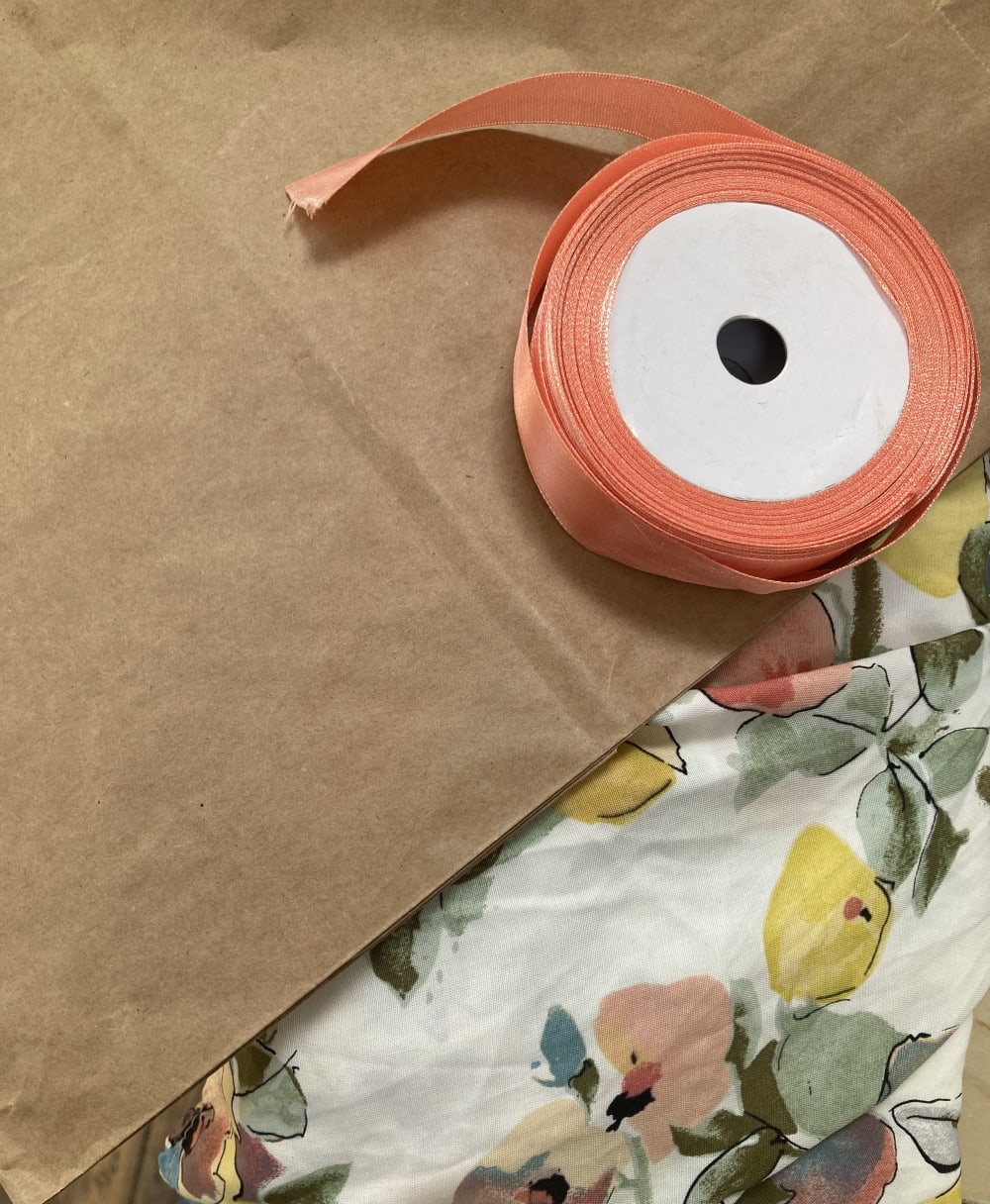
After my application, I remember receiving an email from Jonas asking for more information about myself and my work. Since it was the time between Christmas and New Year, we decided I would send the information via a self-tape, which I recorded during one of the spare calm moments between the festivities. With a feeling of nervousness, I sent my video and received a reply a few days later. Jonas expressed interest in working with me but requested that I create a new performance. From that moment, I found myself on another rollercoaster, but not a VR one. It was a mixed feeling of joy and nervousness. I began working on different ideas and was excited to tackle my first open brief after finishing my MA.

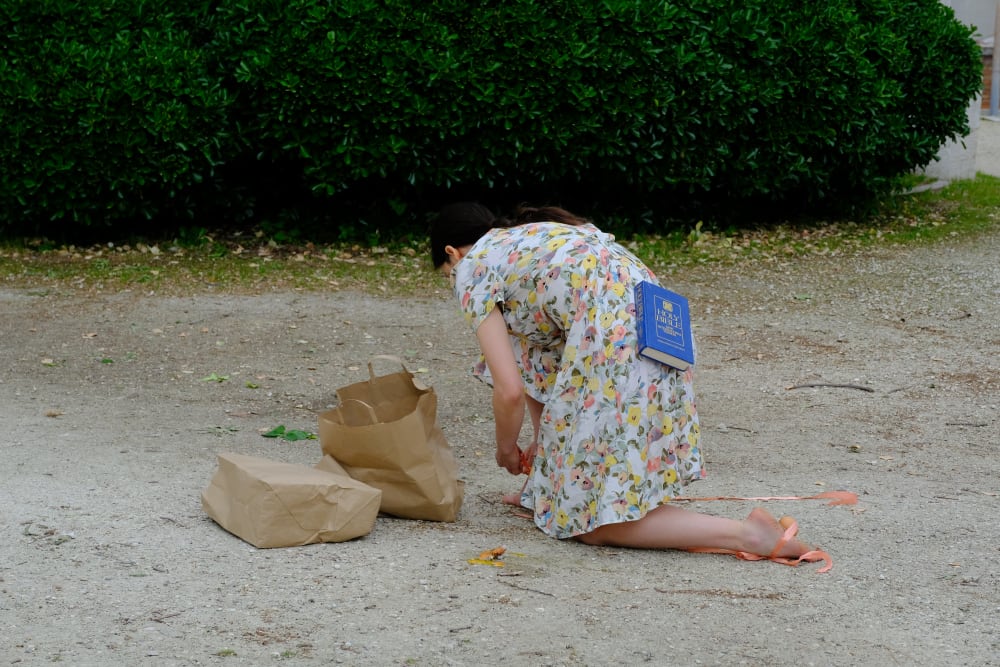
It was an extremely enriching experience because I had the opportunity to work under the guidance of Jonas, a professional curator and art theoretician. I decided to focus on creative research that questions the positionality of women within a patriarchal and Catholic society. The impetus for this research came from stories I heard about my grandmother and my own lived experiences. In the performance, it was important to me to convey the image of a woman who has to bear a lot to receive a piece of the cake, which stands as a metaphor for financial security.
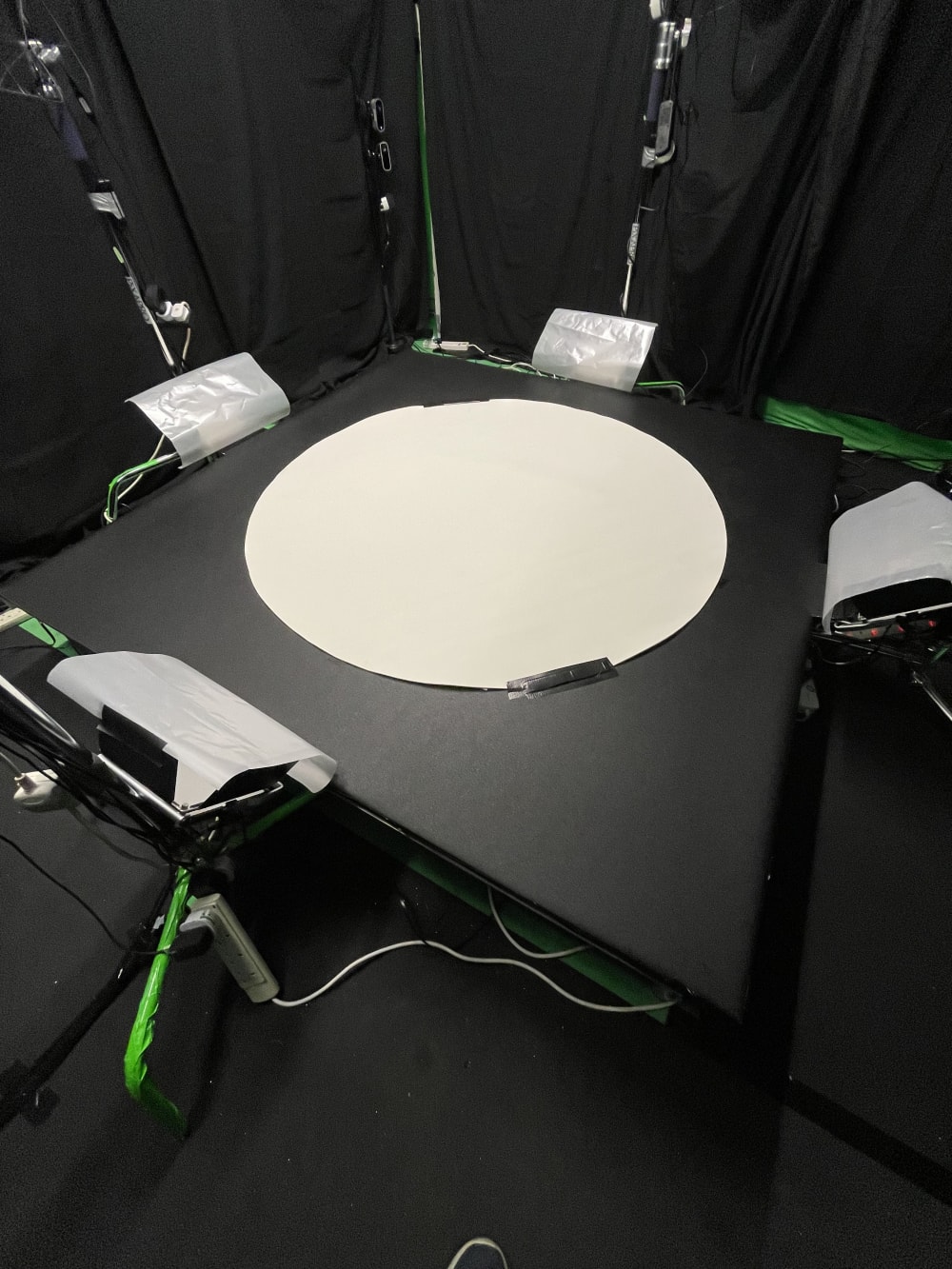
Back in January, I had the opportunity to collaborate with Terry, Chris Follows, and Grzesiek to conduct initial tests for AR performances. While I'm accustomed to performing in front of a camera or even two, it was a completely different experience to perform for 10 cameras capturing my entire performance in 360 degrees. Terry set up a circle with a specific diameter so that the performer could know how far they could reach in every direction. The test runs helped me to better understand the technology and how to work with it, as I learned that movements need to be performed at a slower pace.
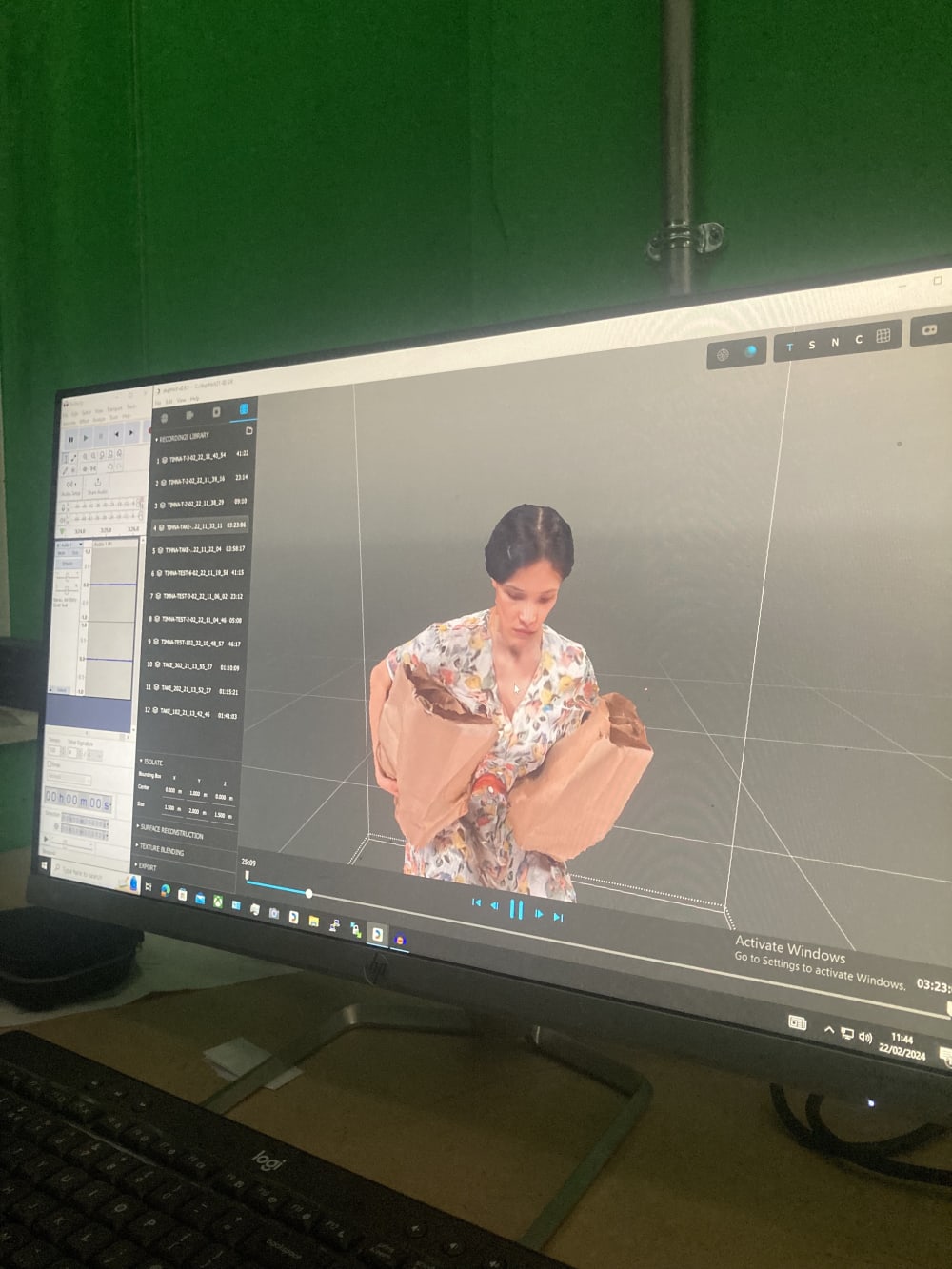
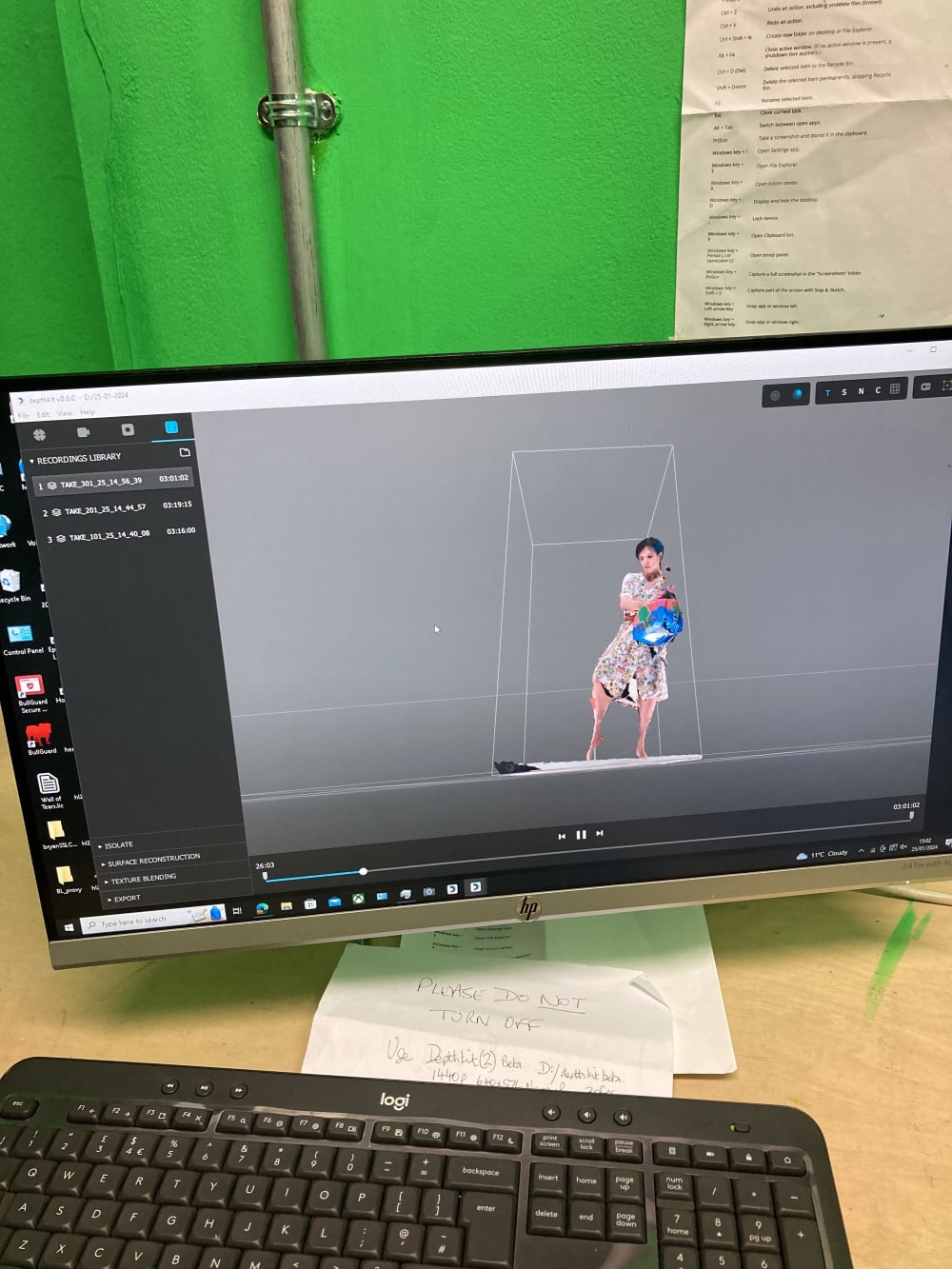
Within this collaboration with these three XR experts, I learned a lot. As an XR newbie, I had many questions, which were patiently answered. My own performance practice typically focuses on movements, text, and working with objects. However, I always allow myself to explore other practices depending on the project's needs. Therefore, working with this team and exploring AR was a great opportunity. Of course, it was also amazing to witness the team's excitement when the recordings turned out particularly well.
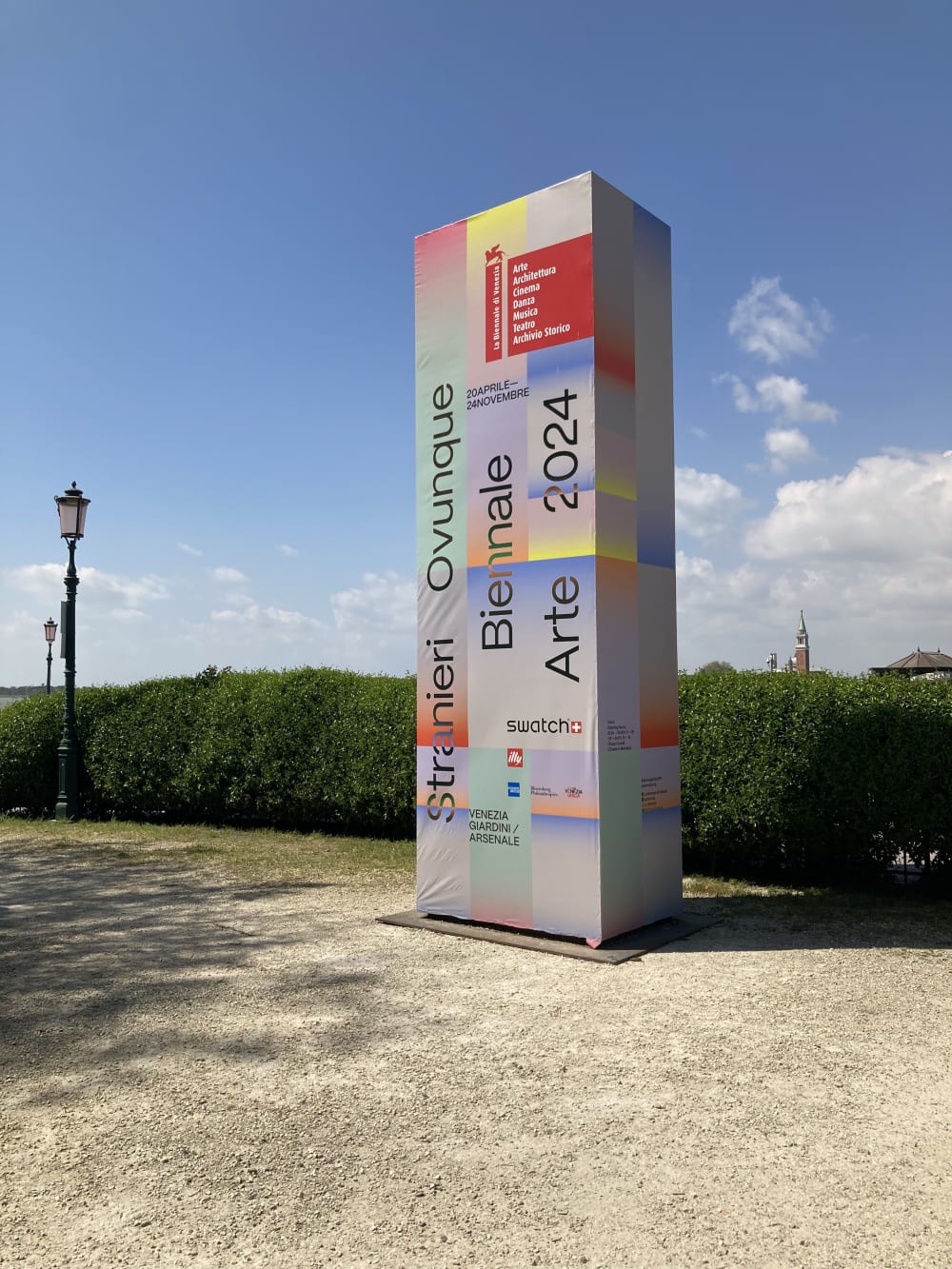
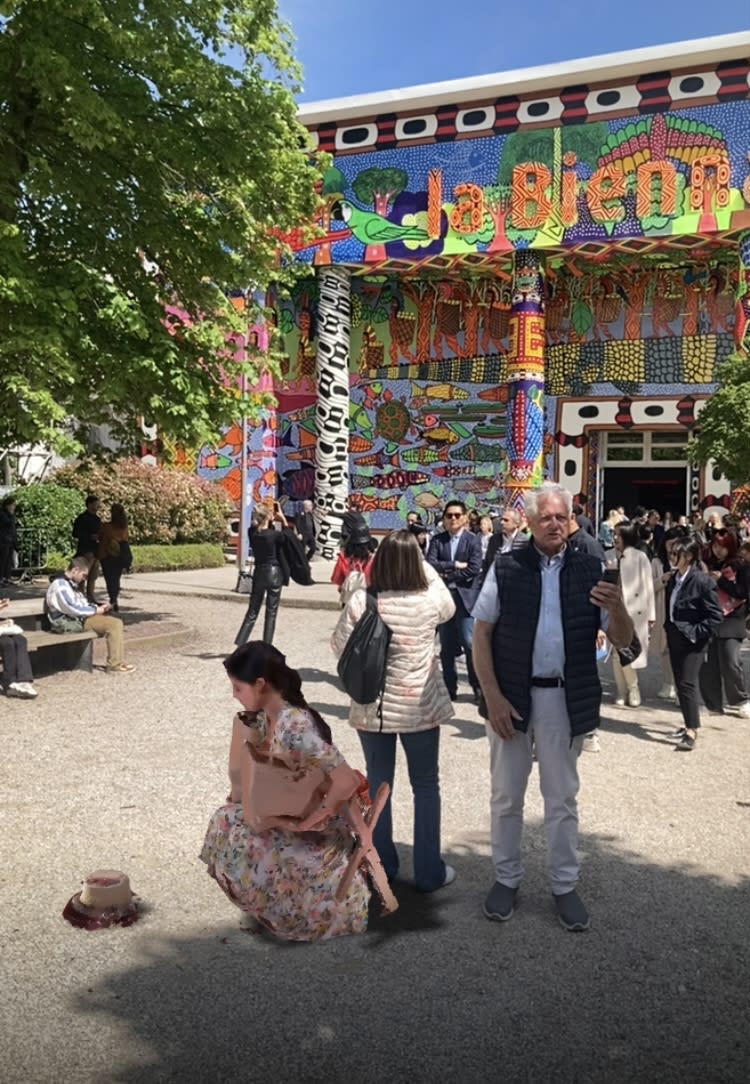
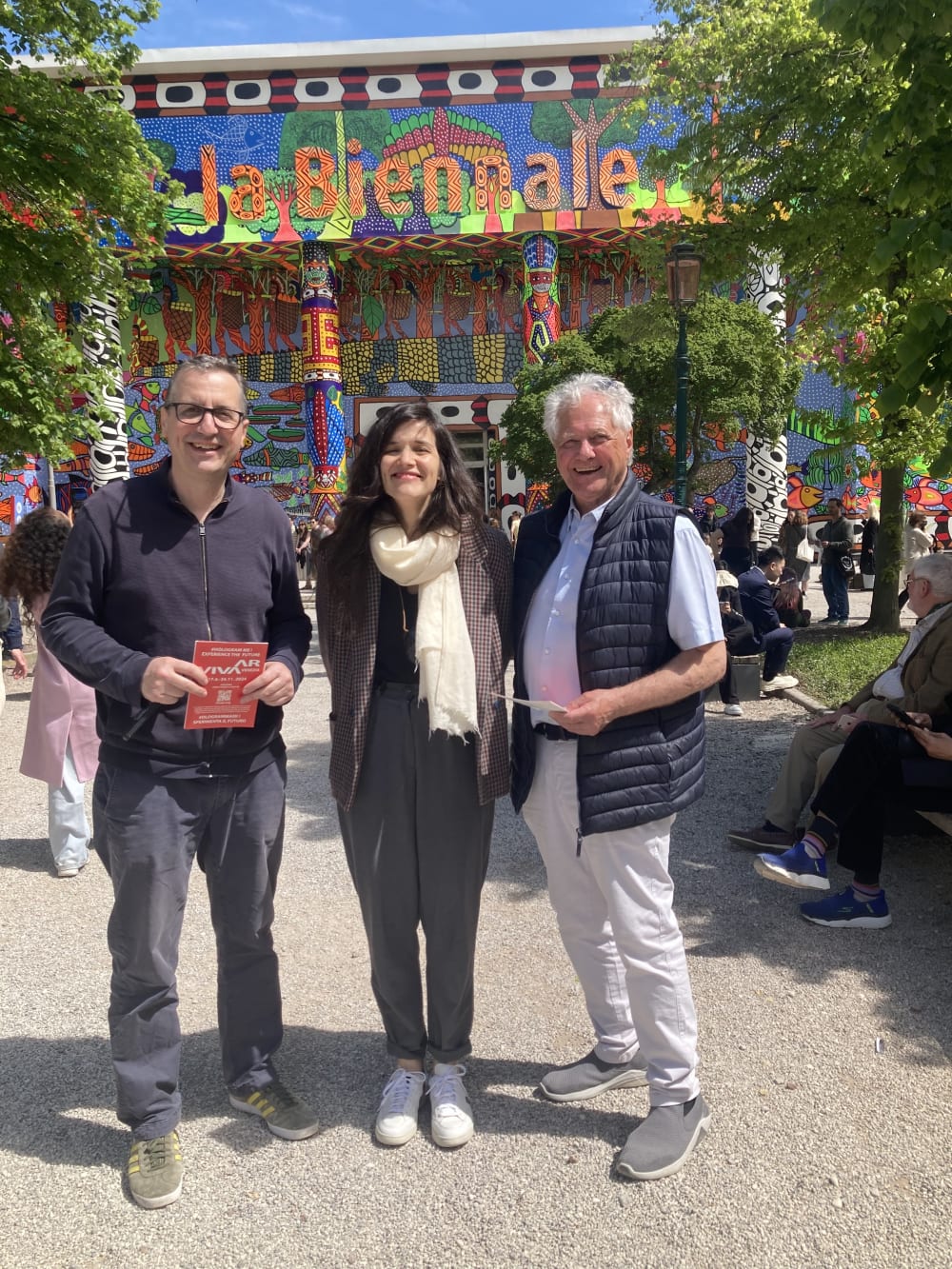
Some months later, I could finally experience my own hologram through my phone in Venice. After having performed live for three days during the professional preview, a part of my performance 'Not a Piece of Cake' can now be seen as an Augmented Reality Version in Venice until November this year.
At the beginning, I wondered what AR could add to a live performance. It is still a relatively expensive medium and requires many resources, such as electric energy. However, after this project, I think very special opportunities can arise from the combination of live performance and AR. It is still exciting for me to see my own hologram performing in front of me. The ability to experience performances in 360 degrees adds another dimension to recorded performances.
On a personal level, I find it fascinating to see something that other people at the very same moment can't see. It is visible to me but invisible, non-existent from other peoples’ perspective. This also creates very exciting moments in which people interact with a hologram. From my point of view, there lies a unique opportunity in combining live performance and Augmented Reality to create new narratives.
Watch a short preview of the project on Linkedin.
Related Links
Post-Grad Stories
Post-Grad Stories is a thriving online platform of postgraduate voices. Here you can share thought-provoking experiences, practices, thoughts and articles about what matters to you.
Download the PDF Guide to writing articles for Post-Grad Stories.
UAL Post-Grad Community
Established in 2013, Post-Grad Community is an inclusive platform for all UAL postgraduate students to share work, find opportunities and connect with other creatives within the UAL and beyond. Find out more.