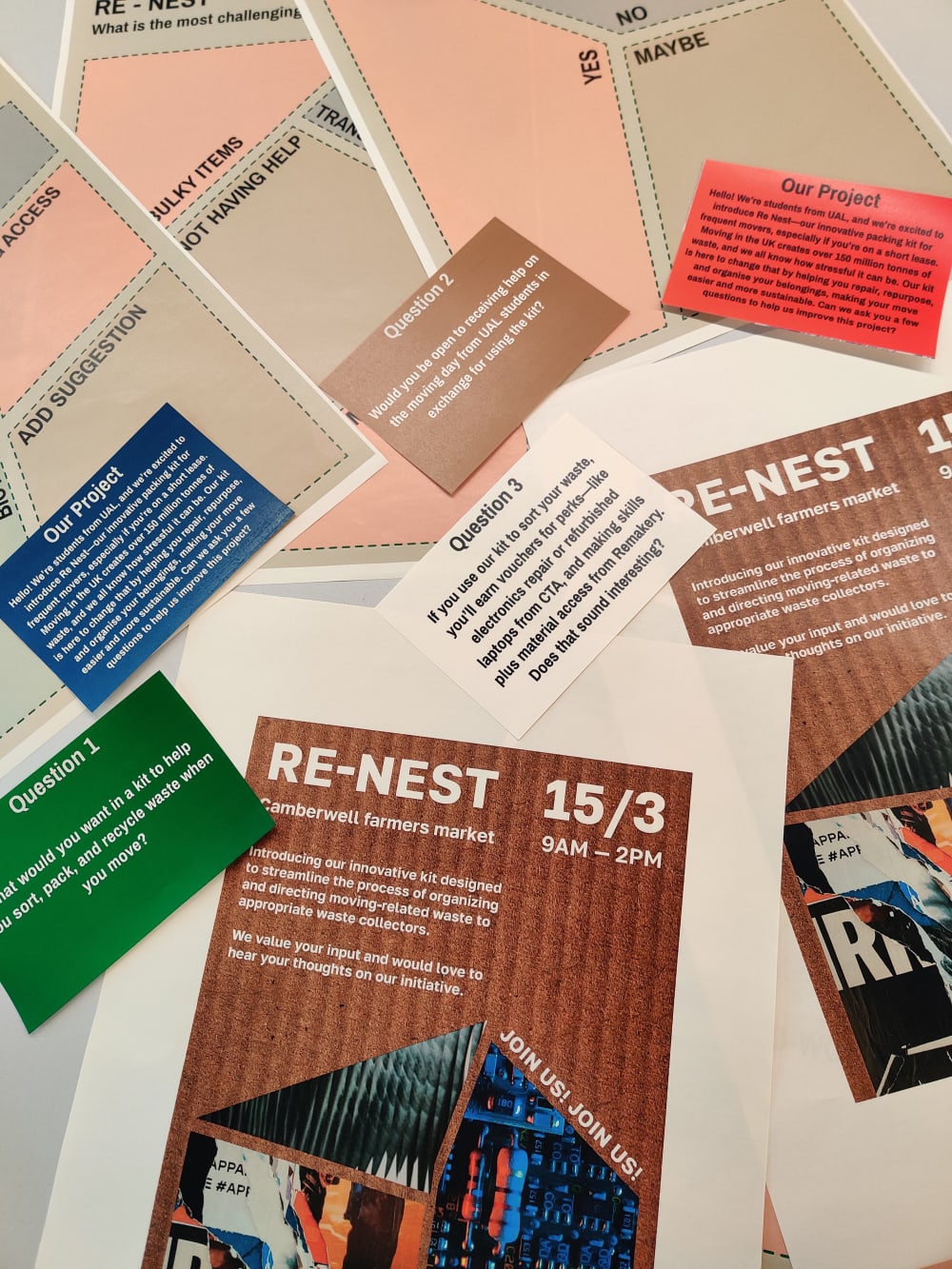
Re-Nest Booth at Camberwell Farmers Market
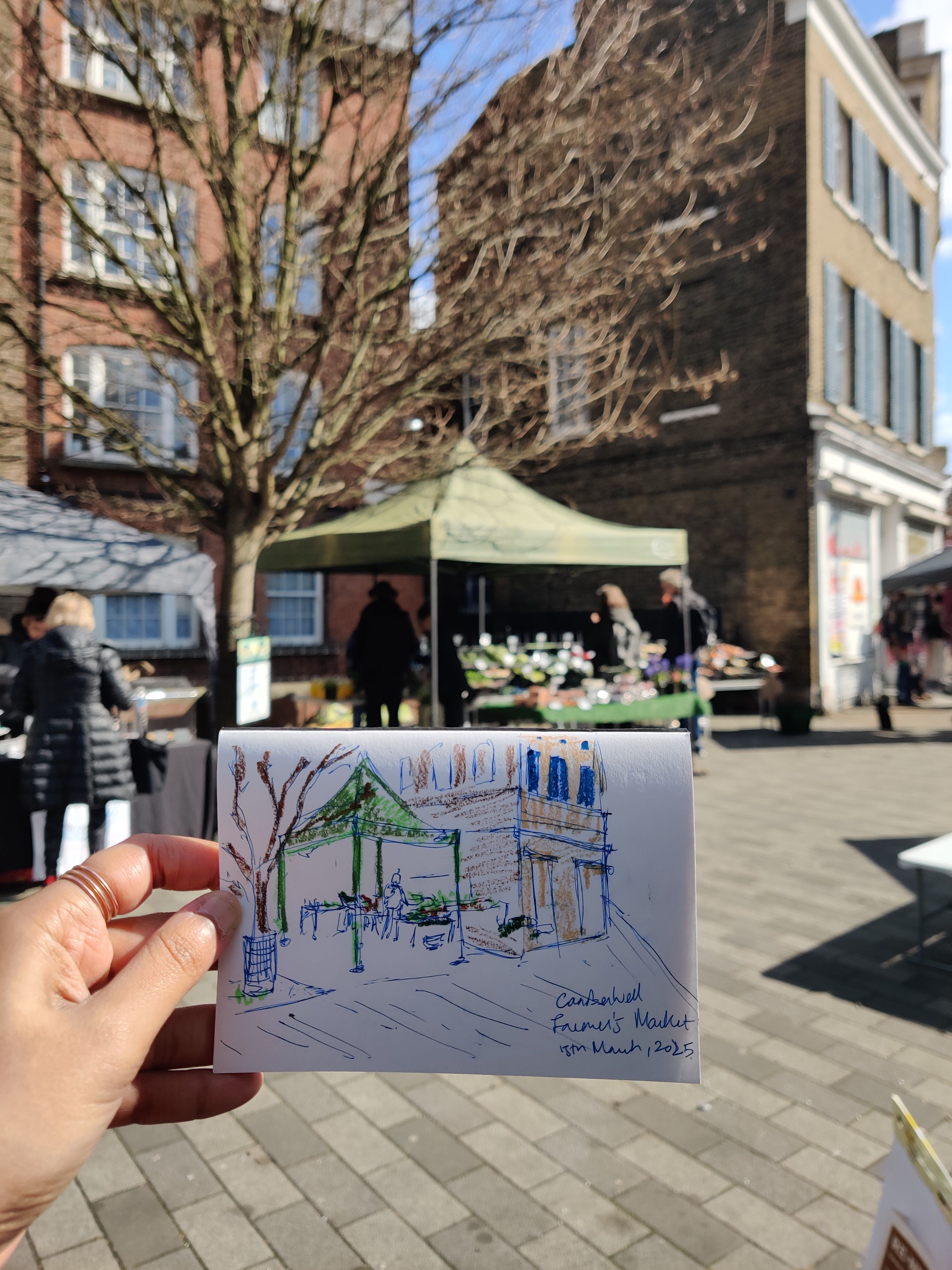
- Written byAnkita Dhal
- Published date 27 June 2025
Share story
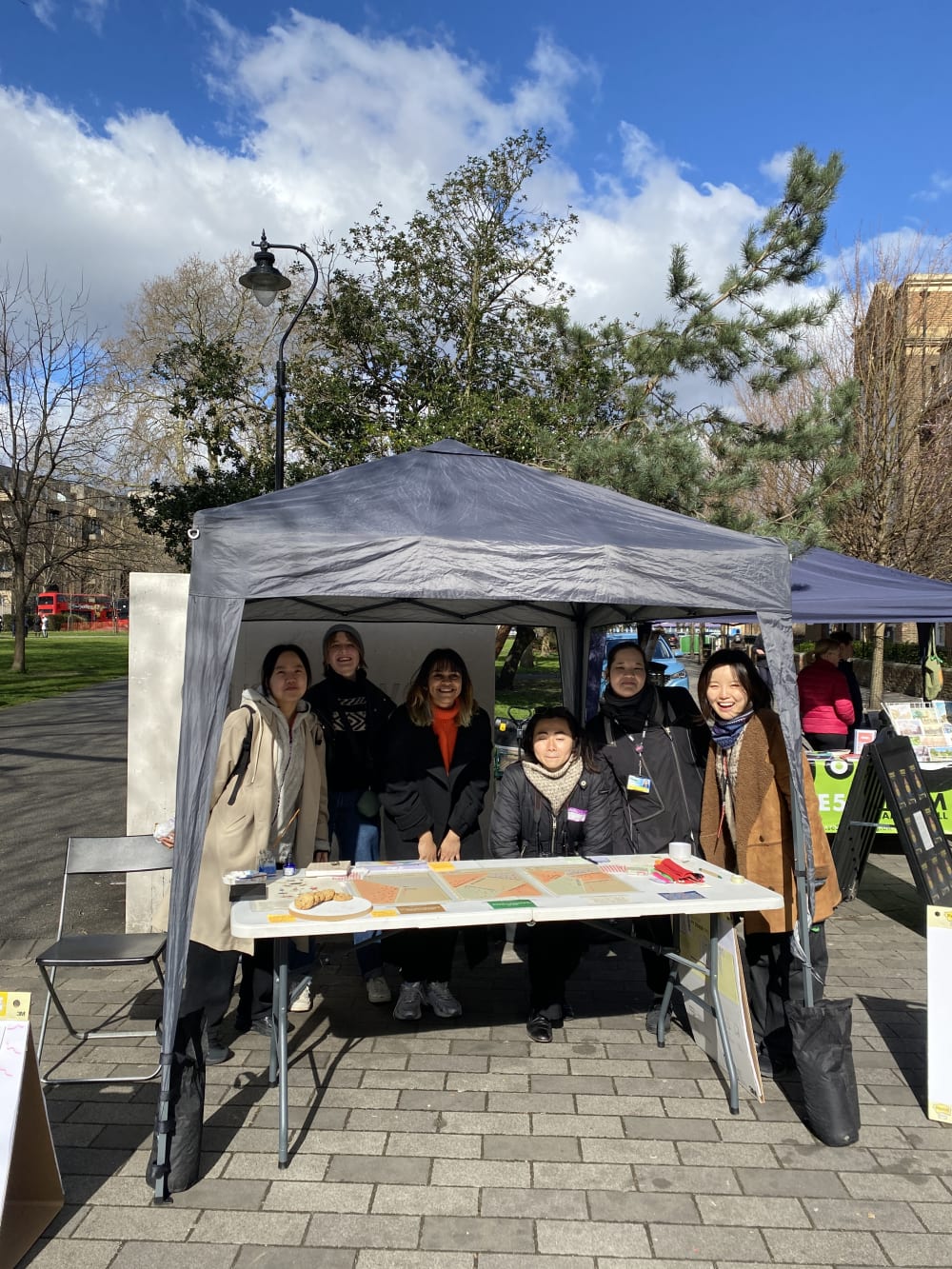
Post-Grad Ambassador Ankita Dhal and MA Global Collaborative Design Practice students arranged a pop up workshop at Camberwell farmer's market to conduct research for their design project titled: Re-Nest.
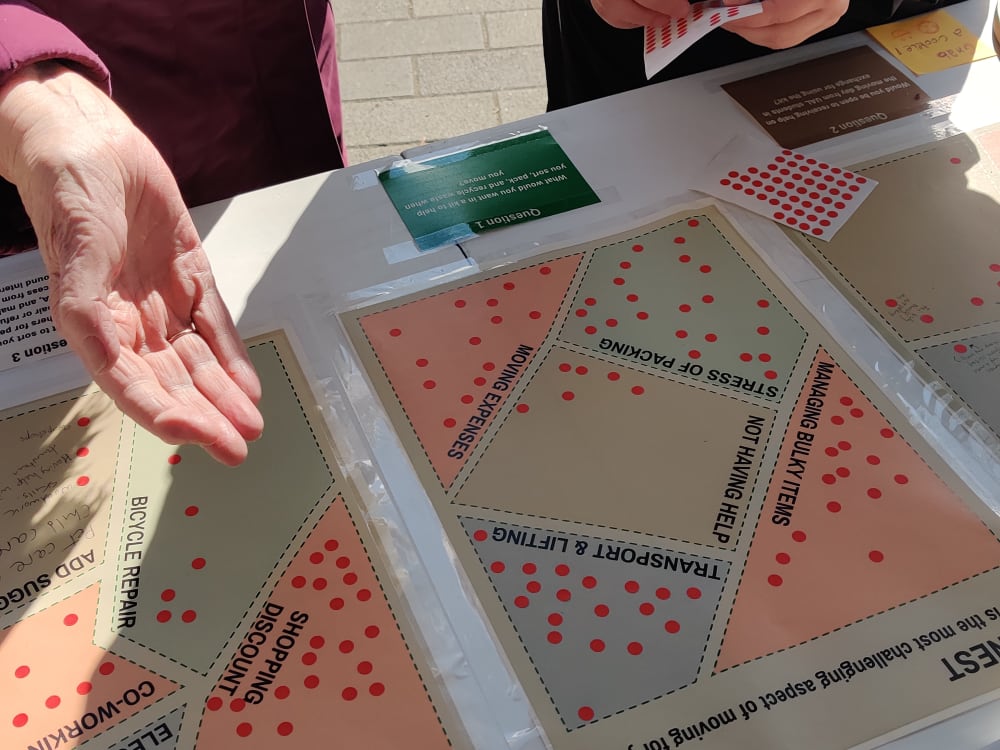
UAL MA dual degree program (Global Collaborative Design Practice) students - Ankita Dhal, Haruka Takami, Guanying Chen, Ku Yoshitomi, Shynara Nygmetova and Valeriya Voronkina recently arranged a pop up workshop at the Camberwell farmers market in March 2025 to conduct research for their design project titled: Re-Nest. GCDP is a multidisciplinary arts and engineering program hosted jointly between Camberwell College of Arts and Kyoto Institute of Technology, focusing on interdisciplinary and collaborative design to respond to some of the most challenging global issues of our time. For their unit 3, they were given the brief of Waste and Consumption, working with Camberwell Society, Community Tech Aid and The Remakery in London. Taking a auto-ethnographic approach with their exchange semester coming up and an inter-country move to Japan, the group decided to focus on the waste generated in the process of moving from house to house.
The project came from the following observation: People in England dispose of over £150 million worth of items each year when moving home (Department of Levelling Up, Housing Communities, 2022). This is due to the stressful and often rushed nature of the moving process. However, they discovered that the citizens of Camberwell share a desire to be less wasteful and to become more educated about repair and reuse. Taking a hyperlocal approach focused solely on Camberwell, the group conducted primary research through a pop-up questionnaire at Camberwell Green Market. They asked the community what tools they needed to better direct their waste streams when moving and what kinds of support they required during this process. By facilitating conversations about how changes to waste habits can be achieved at both the Mentalité and Regime levels, their approach to prototyping responded directly to community needs (Wallace, N. (2021).
The design intervention they developed is ReNest, a packing kit that helps direct waste generated during the moving process into appropriate waste streams or to our partners, Community Tech Aid and the Remakery. The packing kit is aimed at adults who frequently move, often on one-year leases. It would be distributed by landlords and estate agencies one month before the moving date. The kit is designed to prompt responsible waste management and repair habits, build a community sharing system, and help ease recurrent displacement anxiety (Watt, 2018).
The PopUp at Camberwell Farmers Market:
Their objective was to Introduce Re Nest’s vision and gather immediate impressions while keeping interactions brief yet impactful. With the intent to capture rapid feedback on key aspects of the intervention and the potential rewards system, they employed the following easy to follow methods to collect data:
- 3 interactive posters that asked 3 questions respectively.
- The answer template was designed to mimic pieces of waste paper.
- Participants could take a sticker and place it at the respective chosen answer
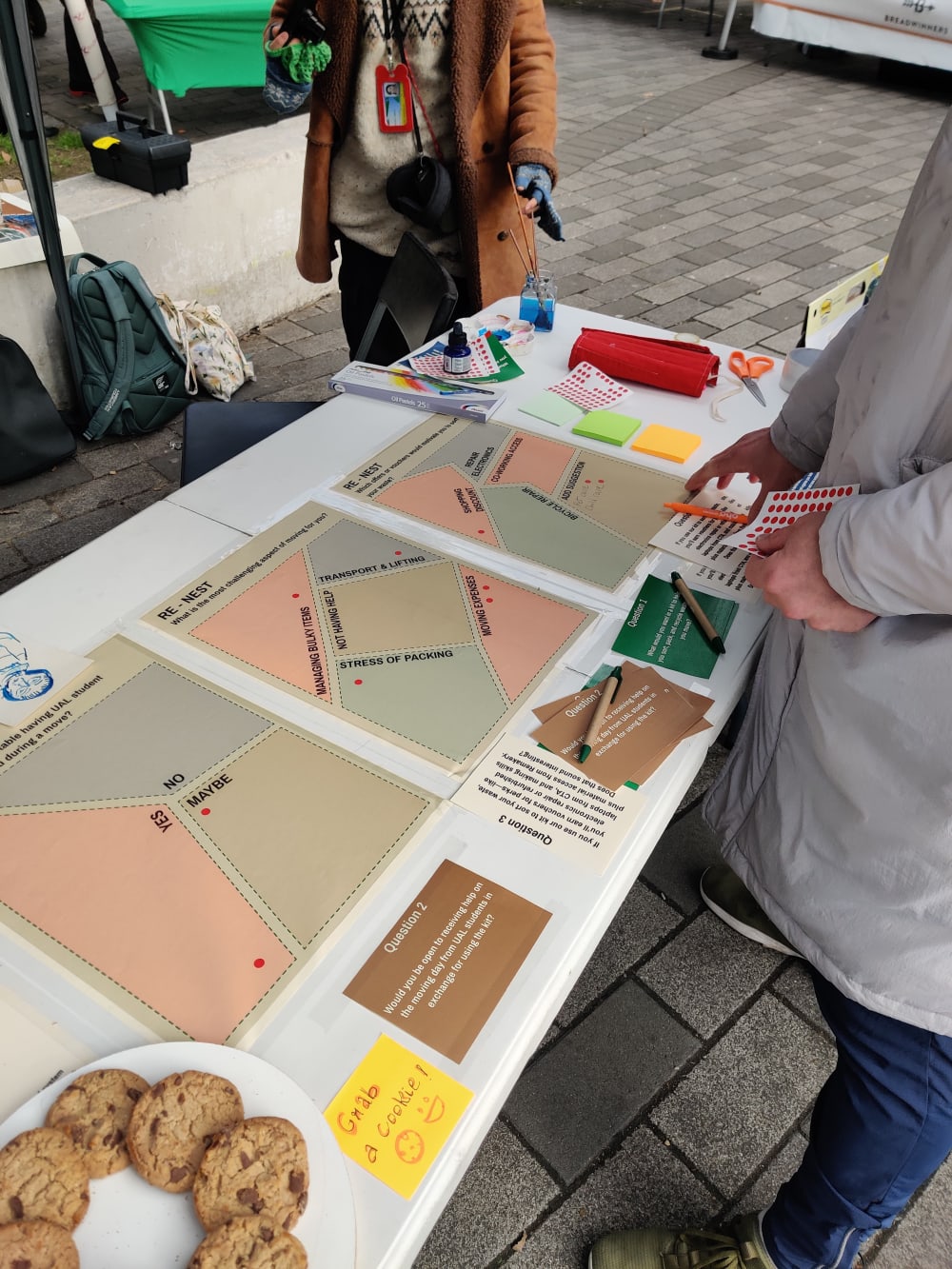
Over 100 individuals engaged with their booth, many staying to ask follow-up questions, reflecting their interest in our project. They received encouragement to develop the product and consider distribution through local councils or UAL. To attract people to our booth they offered free cookies and free doodle portraits if they chose to participate in our survey. People suggested some invaluable inputs to incorporate into the incentivisation system and some even stayed longer to gain a deeper understanding of the project.
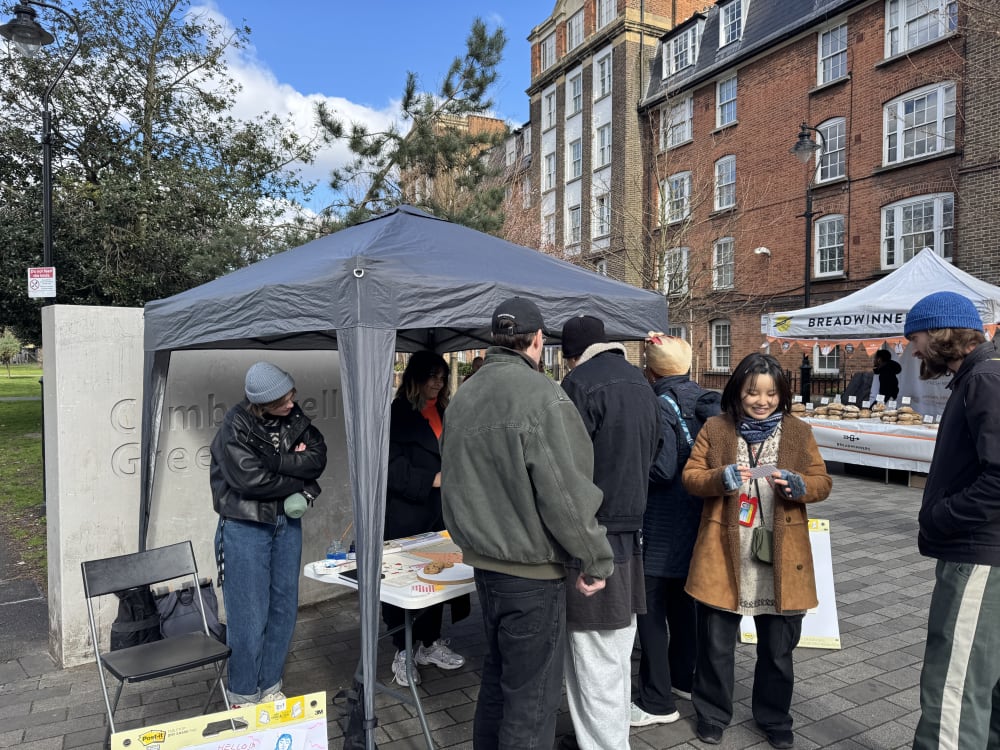
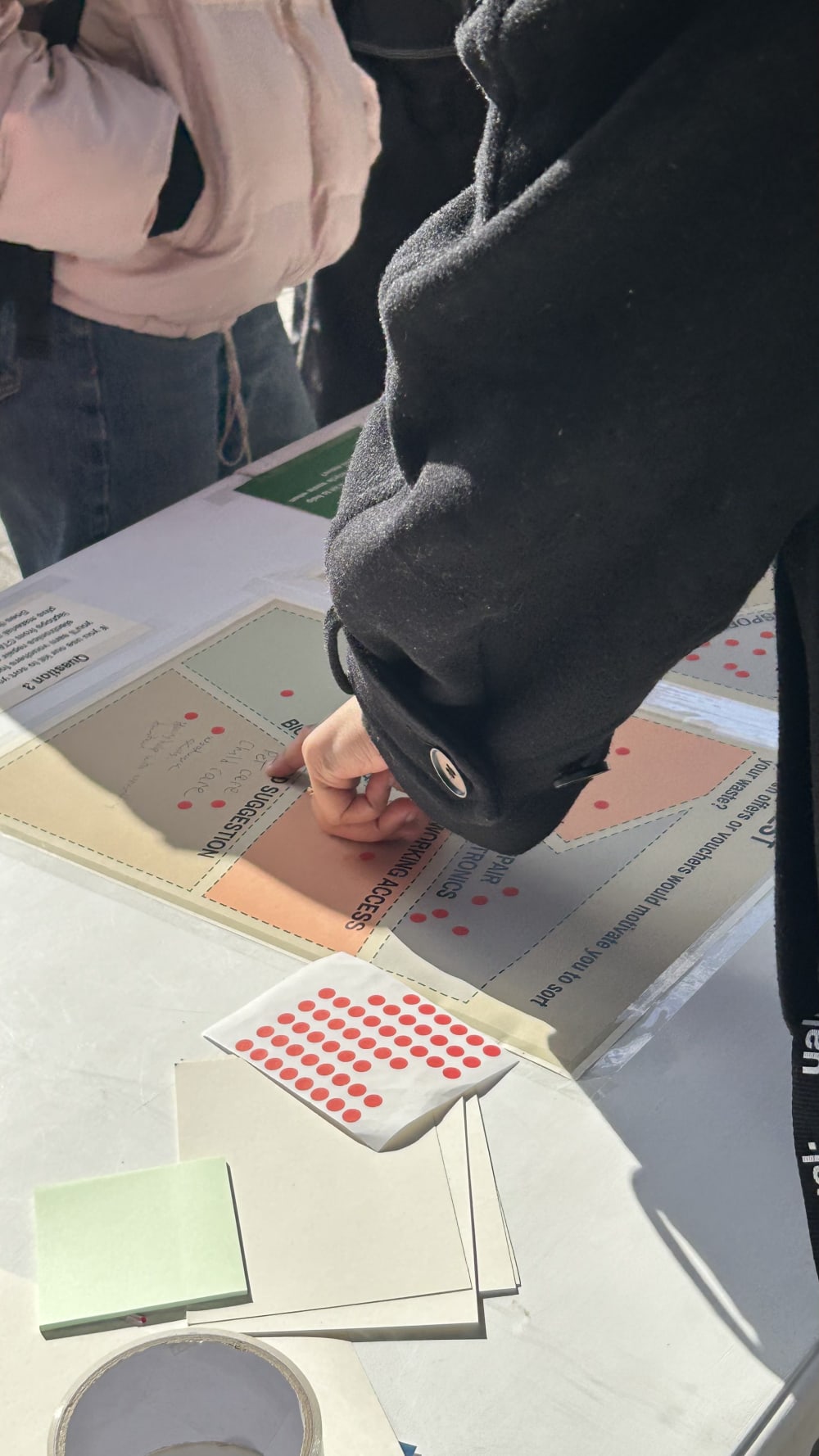
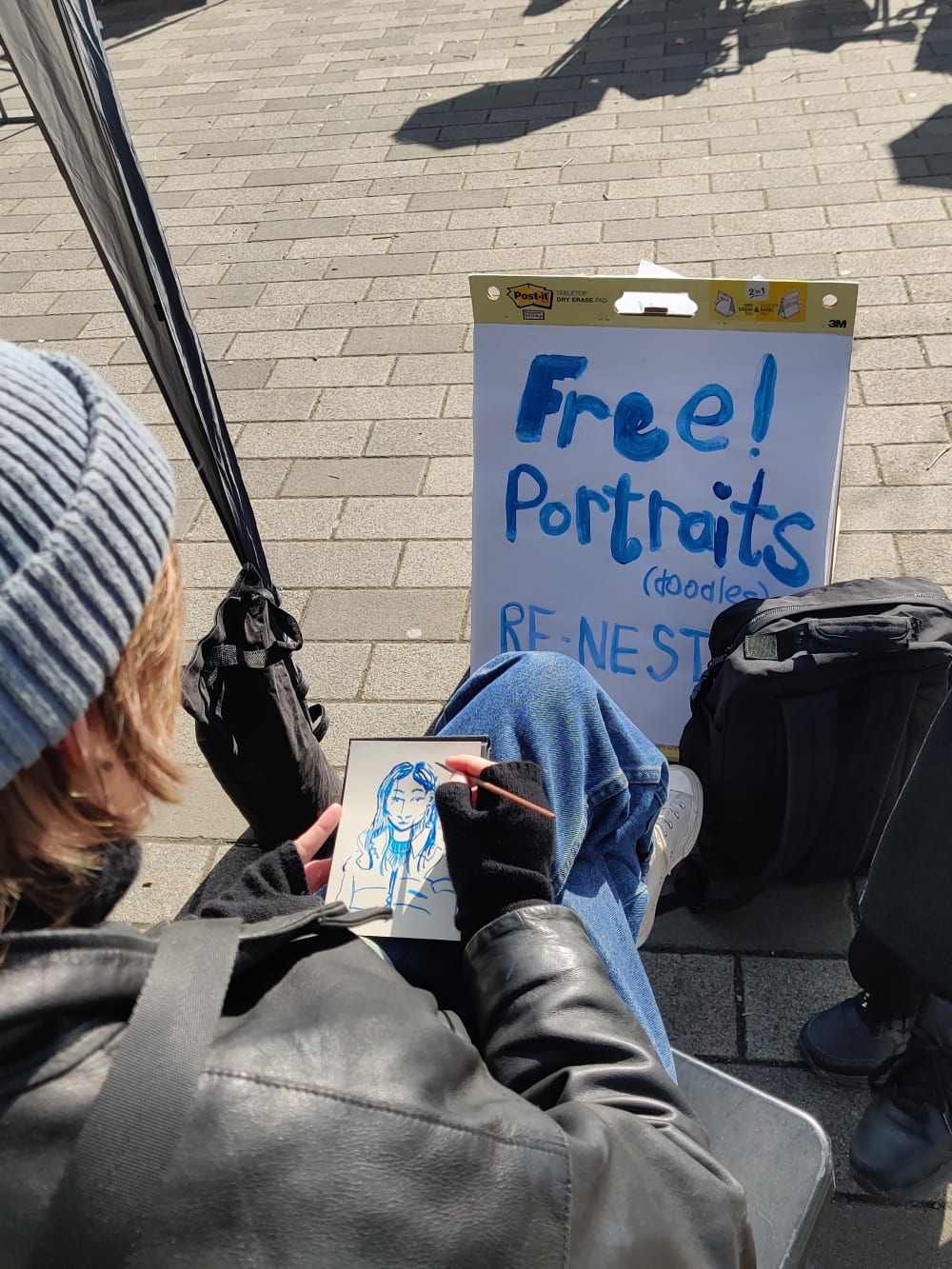
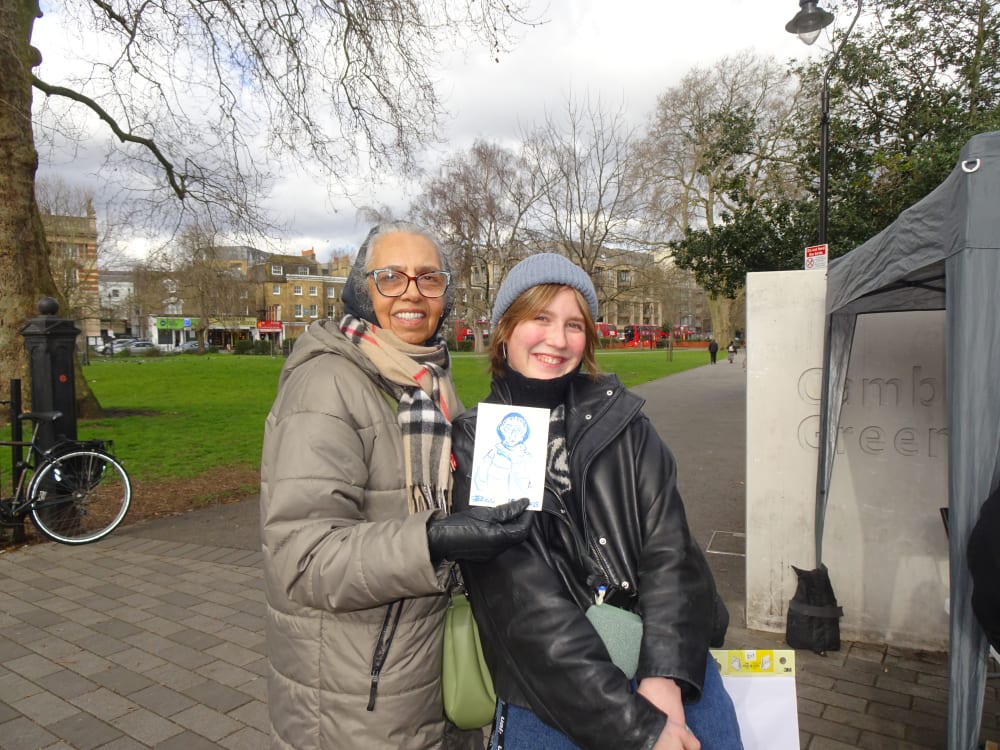
This pop-up aided the team to directly test the product with the local community. Some people even offered to donate and champion the project if they were to get an audience with the local council in the future. This enthusiasm from the community greatly motivated the next phase of the design prototyping stage, during which the kit was tailored to community needs, its action ecosystem more nuanced and finally a promotional short film to pitch to local real estate agencies in the future.
Discover our film here.
Sharing this experience of involving the local community through participatory and co-design approaches is greatly encouraged to fellow UAL students. If you find the project interesting or have questions about the process of setting up a booth, feel free to reach out to the author of this post and Re-Nest member Ankita Dhal at a.dhal0320241@arts.ac.uk .
Post-Grad Stories
Post-Grad Stories is a thriving online platform of postgraduate voices. Here you can share thought-provoking experiences, practices, thoughts and articles about what matters to you.
Download the PDF Guide to writing articles for Post-Grad Stories.
UAL Post-Grad Community
Established in 2013, Post-Grad Community is an inclusive platform for all UAL postgraduate students to share work, find opportunities and connect with other creatives within the UAL and beyond. Find out more.