
By Marie L. Gerard, MFA Fine Art, Wimbledon College of Arts

Millennials spend evermore time browsing the internet on multiple devices. They filter what surrounds them through web pages or phone apps. Like ants with no queen they feed the big pool of digital information without, for most, not exactly knowing who uses the data they are creating. Nonetheless, it doesn’t seem to matter, millennials weave a digital aesthetic where political, consumerist, musical, … information is not clearly categorised, they are mixed with each other to create an unfixed ever growing digital universe.
Millennials evolve within an unclear world, instead of having one field of expertise they have many, like modules which they can choose to become more knowledgeable about different aspects of life. This, keeping the access to extend their research field.
Who are the Millennials? A Millennial is born from the early 1980’s until around 2000. They have grown with multiple fast foods, supermarkets, mega stores, malls, the creation and expansion of the internet. The creation of the digital era. The internet has become the Millennials’ playground. Growing surrounded by the after-war consumerist craze products, millennials ought to invest the digital world with a new ethos. ‘Inc.com’ states that they are “driven more by mission and values than by money. They combine individualism to the authentic addition of value to the world”.
Millennials create online strategies to influence the current world. Let’s take simple examples: Facebook, Instagram, Twitter, Linkedin, Snapchat, … these online platforms have all been created by Millennials.
If Millennials activities are solely online based, how do they influence the real world? .
A millennial loves a selfie. The notion of selfie has for the first time been used… online. The word appeared in September 2002 in an Australian internet forum, ‘Dr Karl Self-Serve Science Forum’. Nathan Hope, who coined the word as being common slang, used to describe a picture of yourself. Nonetheless, Sony felt the photographic revolution and created the Sony Ericsson Z1010 mobile phone with the first front camera.
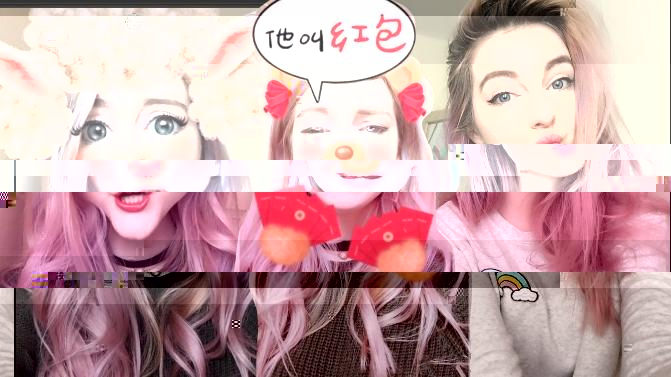
What does a selfie testify? Narcissism? Yes. Ego-centrism? Probably. A selfie is the testimony of our existence as independent. With a camera, you would take a picture representing a landscape, showing a squirrel eat nuts, illustrating a family portrait, … If someone’s takes a picture of you, it breaks your individuality. You need another person to take the picture, to shoot you within a set frame decided by this other person. Having yourself taken in picture by another is full of uncontrolled measures. Having a front camera to take yourself in photo allows you to control your appearance. You can adjust the angle, luminosity and even add a filter to allow you to have bunny ears! Using one of the social media tools created around 2010 you can even show how glamorous you look to all your digital friends or followers. Taking a selfie has also become a proof existence. Thanks to selfies, you can shoot yourself visiting the Niagara falls, poking tongues at the top of the Empire State Building and kissing your beloved one in front of the Eiffel Tower. Selfies are like avatars you model considering the situation.
A millennial would never print a selfie of oneself, make it a physical object. Selfies will solely remain in a digital picture gallery. An avatar is defined as being an icon or figure representing a specific person in a video game, internet forum, etc. A selfie, as subjective representation of oneself destined to be shared online is therefore a neo-avatar.
The artist Amalia Ulman is an Instagram artist who fooled thousands of her followers. In two 2014, the Argentinian artist created an online Instagram profile where she auto-claimed herself as ‘Instagram Girl’ abusing hashtags in the pursuit of micro-celebrity. She represented herself, taking selfies in luxurious lifts, trying on branded clothes in over lit changing rooms, taking posh classic dance lessons, etc. Her Instagram apparition was a performance aiming to denounce how women were representing themselves on social medias. Instagram hit girls, present their glamorous lives in perfect bikinis and represent themselves as commodities. They sell themselves to ‘likes’.

Image sourced from The Telegraph ‘Being a woman is not a natural thing’: scenes from Excellences & Perfections, Amalia Ulman’s selfie-based art work CREDIT: ARCADIA MISSA/AMALIA ULMAN
Amalia Ulman did not tell anyone about the aim of her performance. People she knew in her real life started to hate her but her online community started to grow love for her neo-avatar. She blurred the boundaries between her actual self and her digital self. Her performance demonstrates that online, your neo-avatar is often very different from your actual self and you can manipulate that neo-avatar for it to be perceived in a specific way by a pre-set target online audience. The neo-avatar allows you to be whoever you want if you stage your appearance.
Your online neo-avatar’s identity is nonetheless assessed by algorithms. What your digital self likes, shares, buys, downloads, etc. All of it is part of your digital identity which translates into endlessly growing codes processed by computers locked up in highly secured rooms. Your online identity has blurred online interests as these interests are being resumed in codes following each other and gathered with the codes of someone else’s neo-avatar. The reflection of this identity is then mirrored back to your very own self with the use of tailored advertisements, pop ups, notifications, etc. Indirectly, your neo-avatar testifying of personal interests shapes the evolution of culture. To go back to the description of ‘Inc.com’ description of millennials “They combine individualism to the authentic addition of value to the world”.
Related Links:
The Telegraph article – is this the first Instagram masterpiece – Amalia Ulman