Eleni Maragaki, MA Fine Art student (Central Saint Martins), was selected for the AER Residency at Mahler and LeWitt Studios, Italy. Here she reports back to the Post-Grad Community on her experience.
Set up by Professor Lucy Orta (UAL Chair of Art for the Environment - Centre for Sustainable Fashion) in 2015, The Art for the Environment International Artist Residency Programme (AER) provides UAL graduates with the exceptional opportunity to apply for short residencies at one of our internationally renowned host institutions, to explore concerns that define the 21st century - biodiversity, environmental sustainability, social economy, and human rights.
Eleni's Report
Introduction
Being a resident at Mahler & LeWitt Studios, has encouraged me to develop my practice focusing on two different methods of working: studio based work and physical exploration. I had the opportunity to examine first-hand the dialogue created between the old town of Spoleto and the surrounding natural elements, through a series of walks.
The walks in nature were undertaken collectively, with the active involvement of all residents. This fostered an atmosphere of intercommunication and shared experiences, cultivating a joint connection with the surrounding landscape. My purpose was to incorporate two unfamiliar working methods within my practice: the first one was site-specificity and the second one involved the act of walking as a physical exploration. The intriguing discussions and experiences I exchanged with the other residents, challenged, expanded and enriched my existing notions and concepts.
Walking Practice
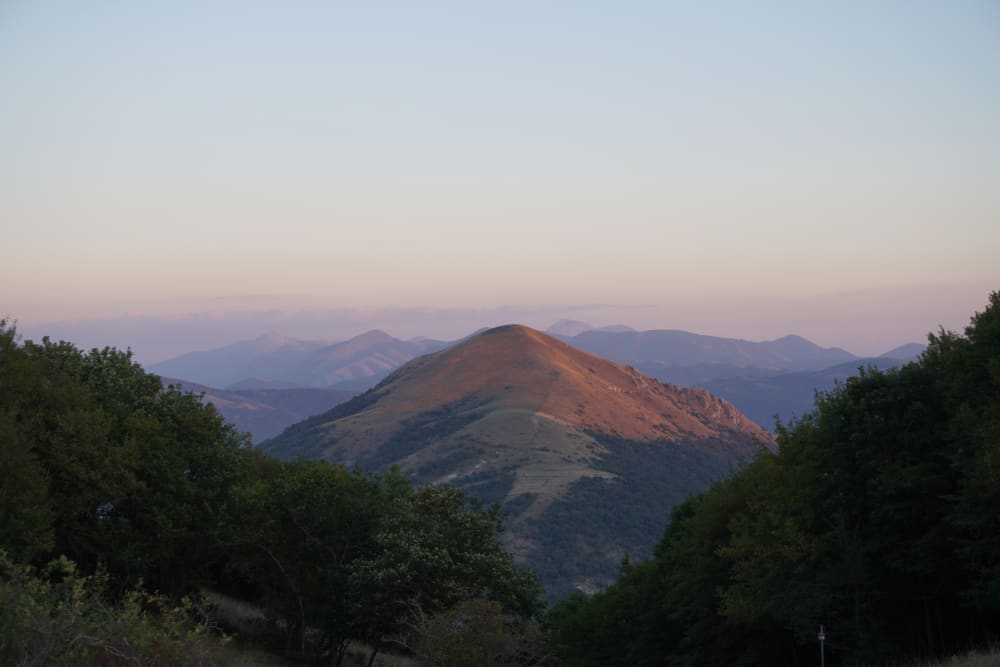
For the first walk, we followed a trail from the old town of Spoleto to the Sacred Forest of Monteluco. I was truly enchanted by the breathtaking landscape on top of the mountain. The serene atmosphere, rich biodiversity, and sweeping vistas left me in awe. Exploring the well-maintained trails was an unforgettable experience. This ancient forest is characterised by peace and quiet for contemplation and is filled with several caves where Saints such as Francesco Baccaria da Pavia, lived as hermits. In this highly spiritual mountain, I got the opportunity to map the unseen biodiversity of the natural elements surrounding Spoleto. I collected information on types of soil, rocks and plants using photographs, texts and by collecting small samples. This research in correlation to the vast panoramic views seen from the top of Monteluco, allowed me to experience the landscape as the boundless entity it really is, consisting of a number of separate microscopic elements.
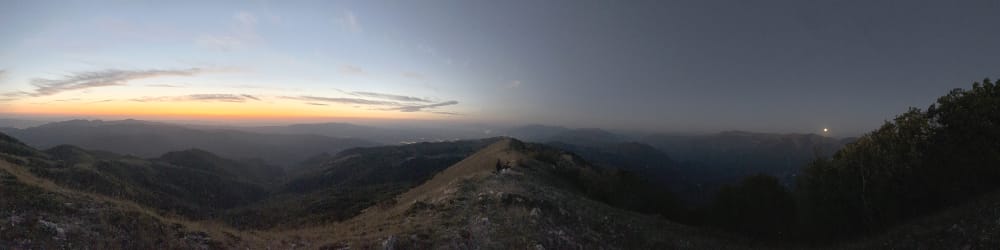
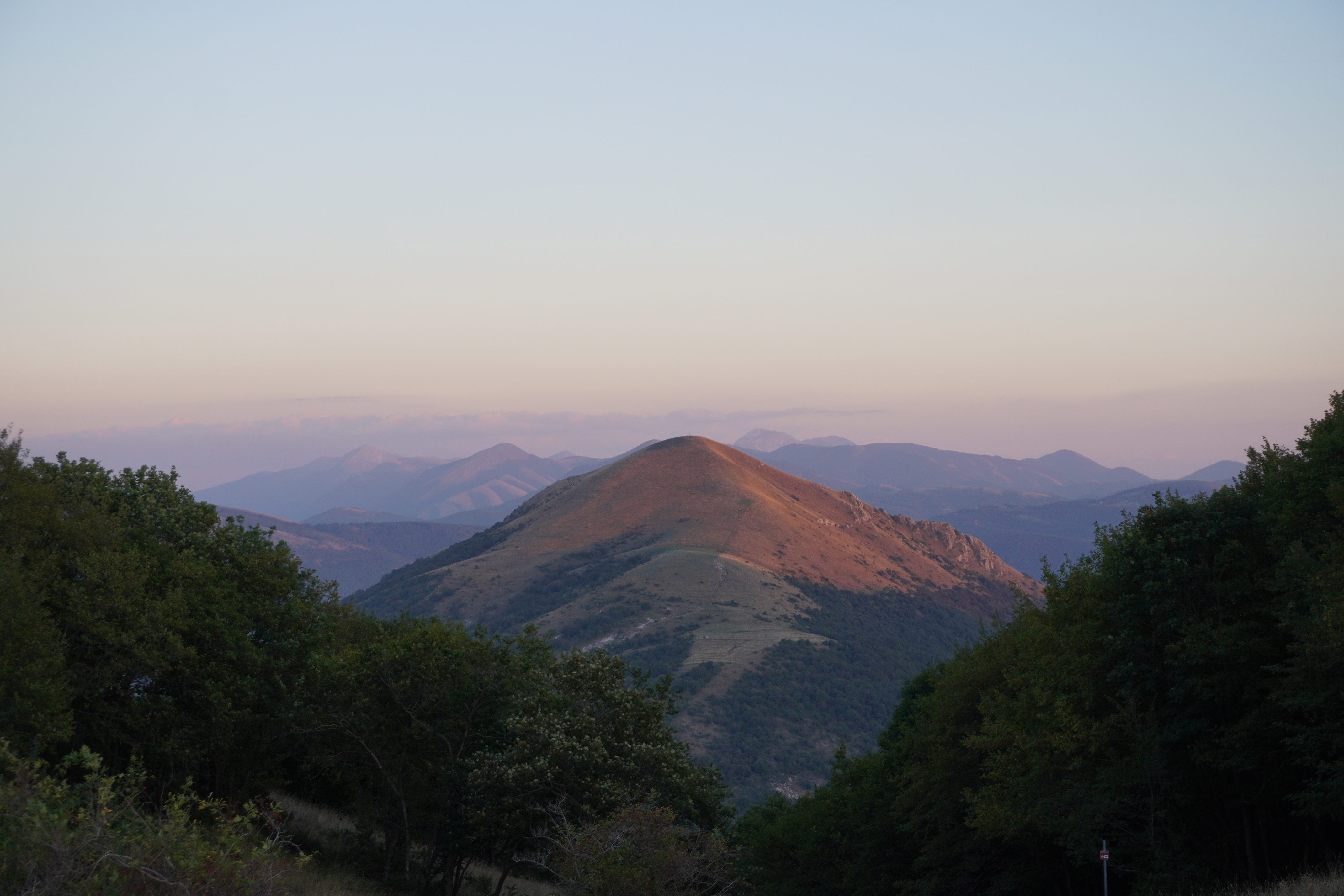
For the second walk we were given the opportunity to experience the sunset and full moon, minutes apart from the top of Monte Fionchi, a peak of Monteluco with elevation of 1,213 meters. This mountain reigns over an untouched wilderness with its imposing pyramid-like stature and unblemished, rugged terrain, where trails were barely visible while approaching the top. Fionchi’s peak provides a seemingly endless 360° view characterized by the monumental summits and expansive vistas of Monteluco. For this particular walk, my purpose was primarily to experience the landscape and focus on the act of walking as a reflection and insight on the symbiotic relationship between myself and my surroundings and therefore, I took much less photographs.
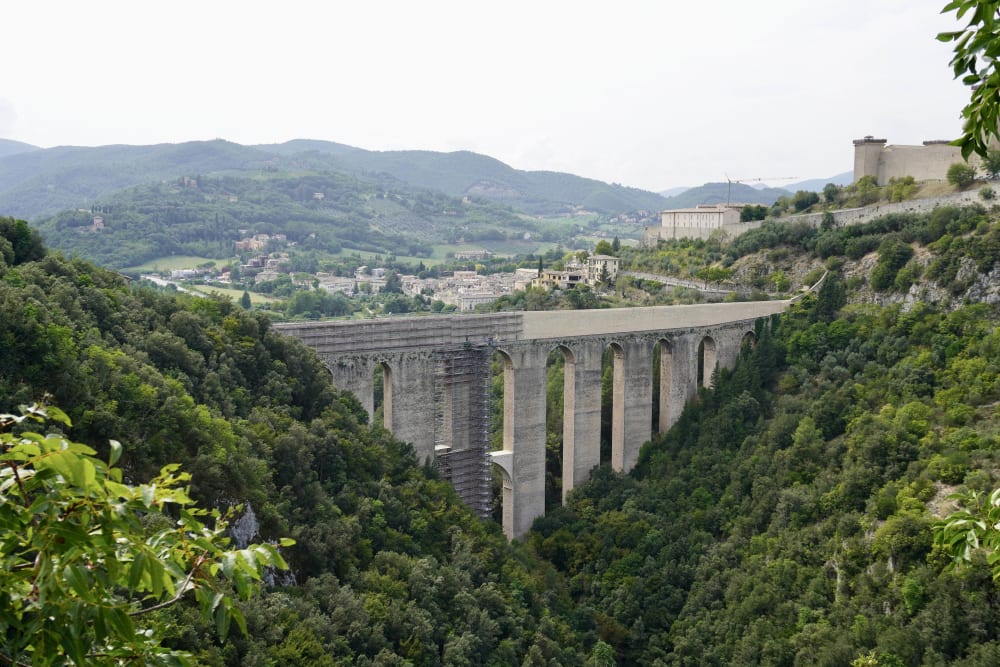
The final walk was solitary and focused on the examination of the old town of Spoleto and how it has evolved in relation to the landscape. The diverse architectural character of the site was of great interest to me as it combines a variety of forms, shapes and structures that span from Roman, Medieval and contemporary buildings such as the Spoletosfera. I was particularly intrigued by the massive structure of Ponte delle Torri, as for me this aqueduct joining Spoleto with Monteluco became a symbol of bridging the gap between urban and natural.
Studio Based Work
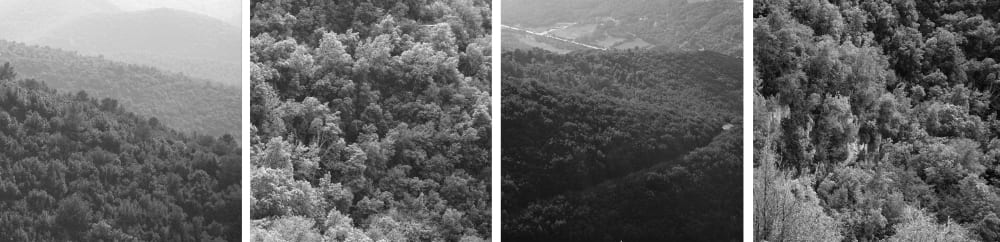
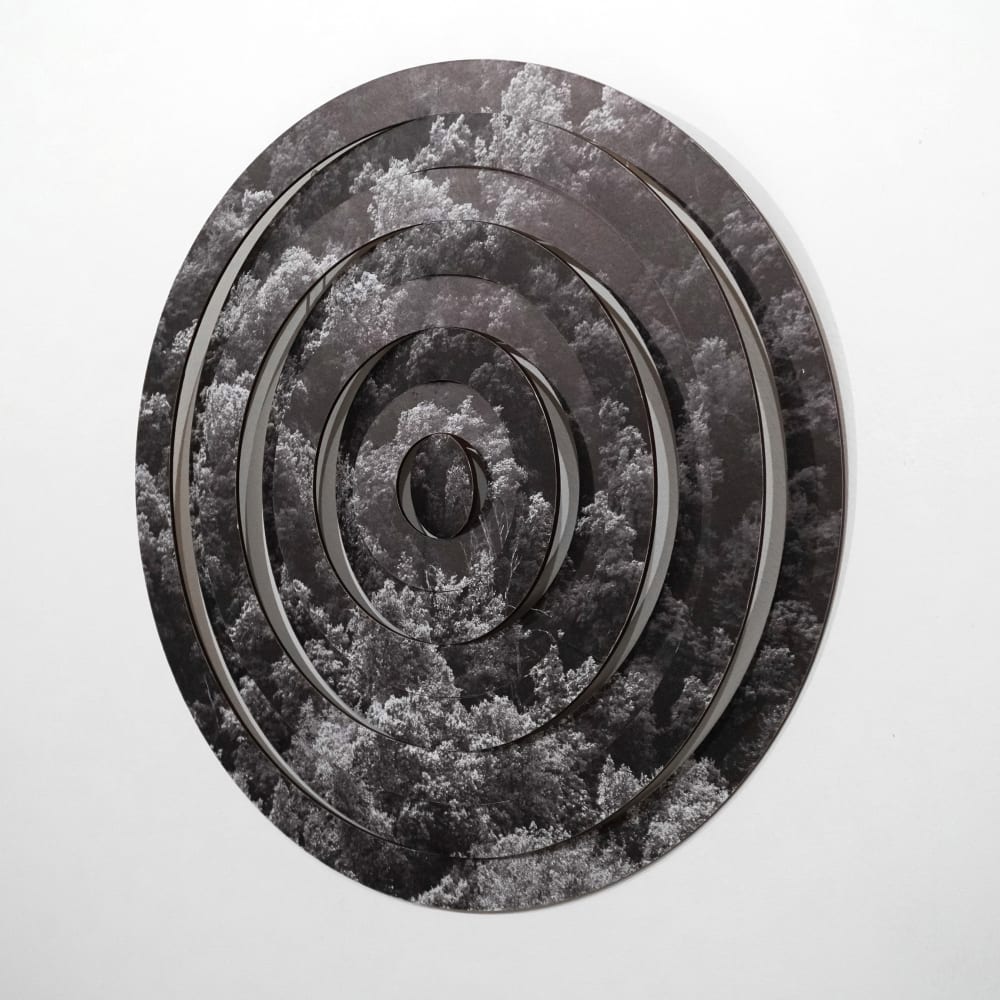
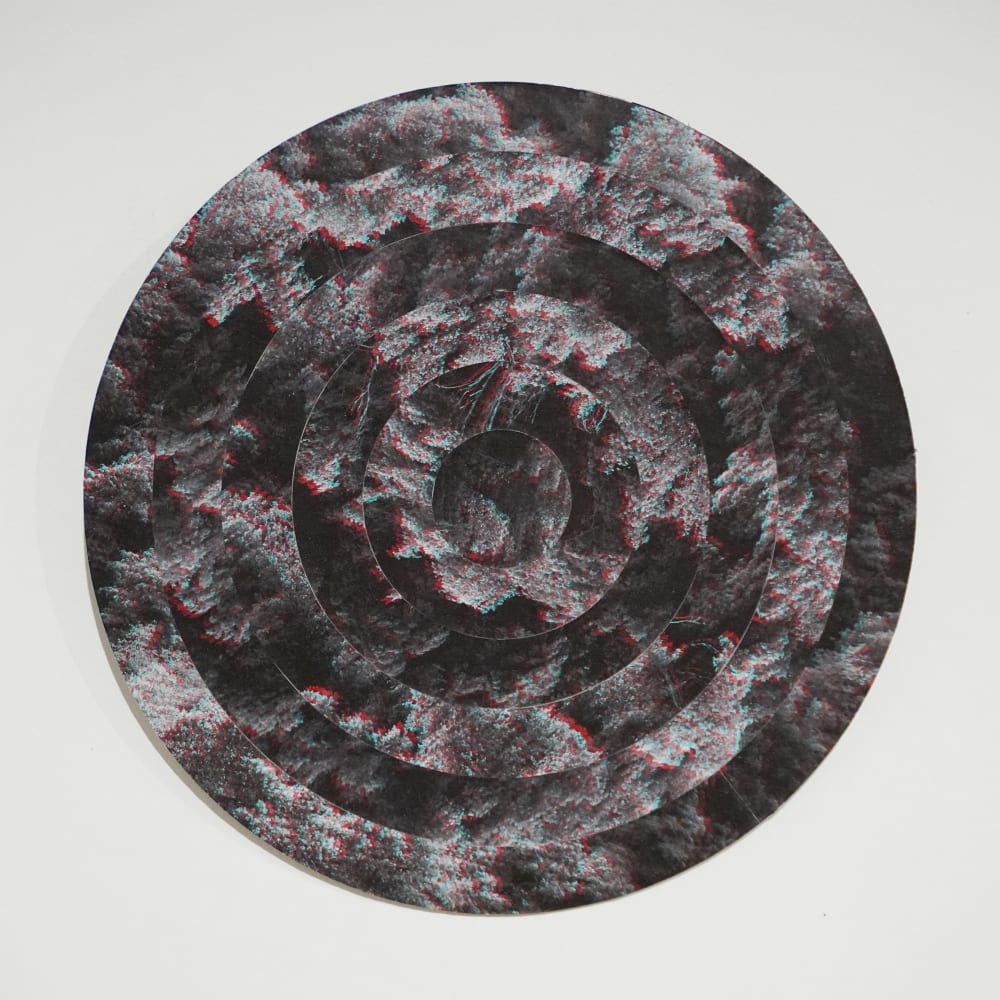
The findings of this research led to the creation of a body of work reflecting my interest in creating a symbolic dialogue between urban construction and the natural environment. I became interested in the notion of distortion of a series of landscape photographs taken during the walks by experimenting with the elements of fragmentation and repetition. The works created merge the immense non-organic flows of life that constitute the landscape, such as mountains and forests with the strict perfection and precision of geometry, as a symbol of the humanmade and the artificial.
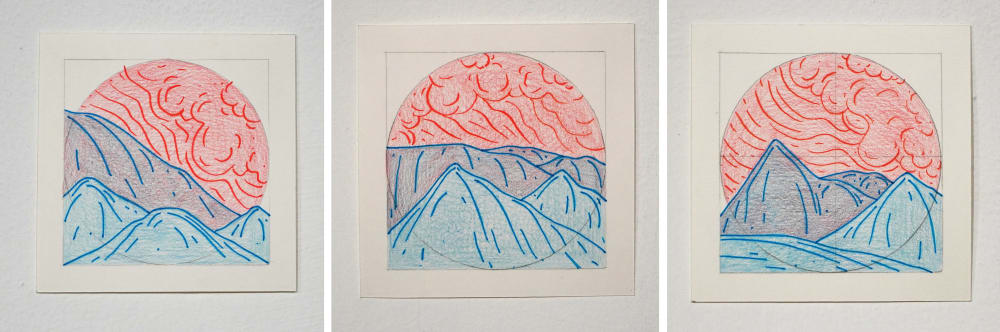
As the visualization of the theoretical research is of equal importance with the practical aspect of my art, my studio-based work begun with several preparatory drawings, including tests, trials and errors related to the creation of artworks, technical information and abstract ideas.
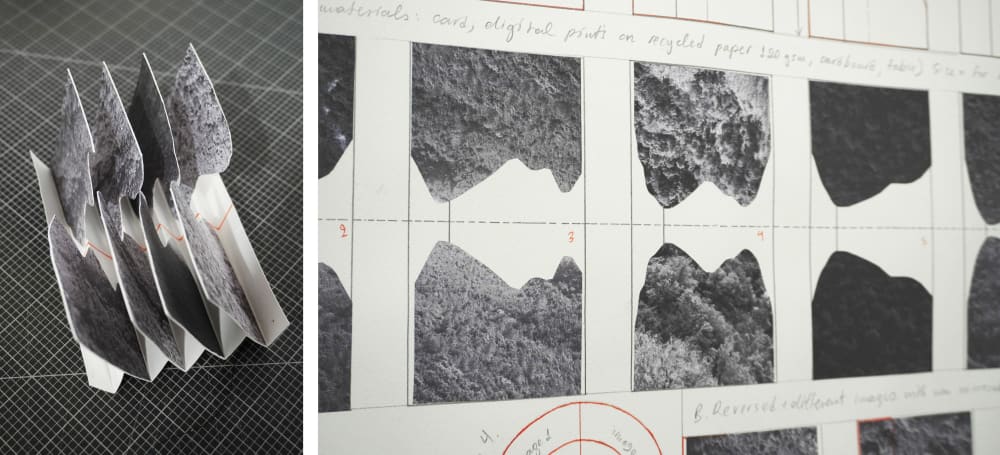
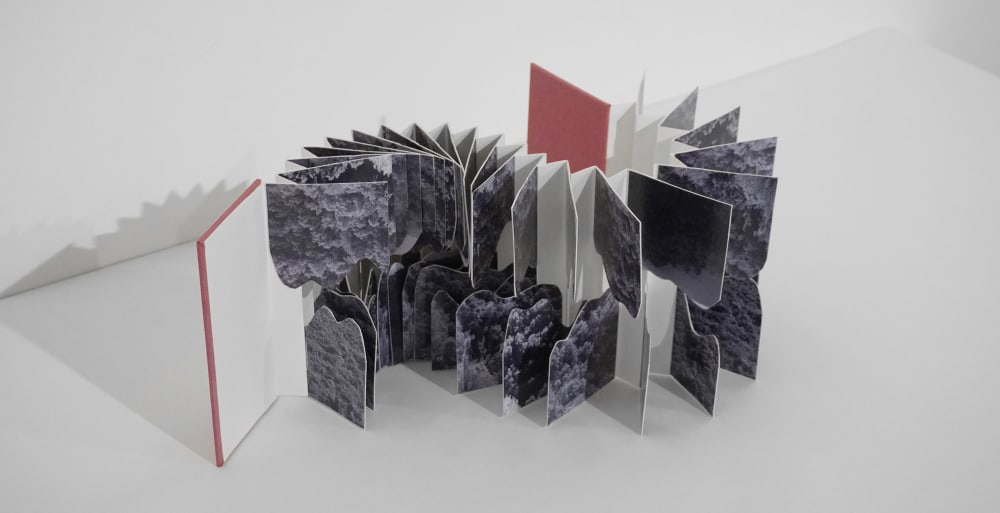
The first outcome of this preparatory work was a handmade flag-book, made using photographs taken as part of my walks in the landscapes of Spoleto. The purpose was to depict the oppositions and connections between the old town and the surrounding hills. The book encompasses two integral elements: repetition, emphasized by the use of photography, and separation, as a result of cutting the paper in identical shapes, with the book form witnessing the meeting points being bound. Therefore, the worksymbolically depicts a city (in the shape of a flag book structure) as a geometric net projected on top of an unrefined natural setting (the landscape photographs). For me, the old town of Spoleto demonstrates the significance of architecture relating to the region’s unique atmosphere, history, and environmental condition. As I am interested in the notion of ‘architectural phenomenology’, I wanted to highlight the importance of urban construction being developed in conversation with the landscape and local history.
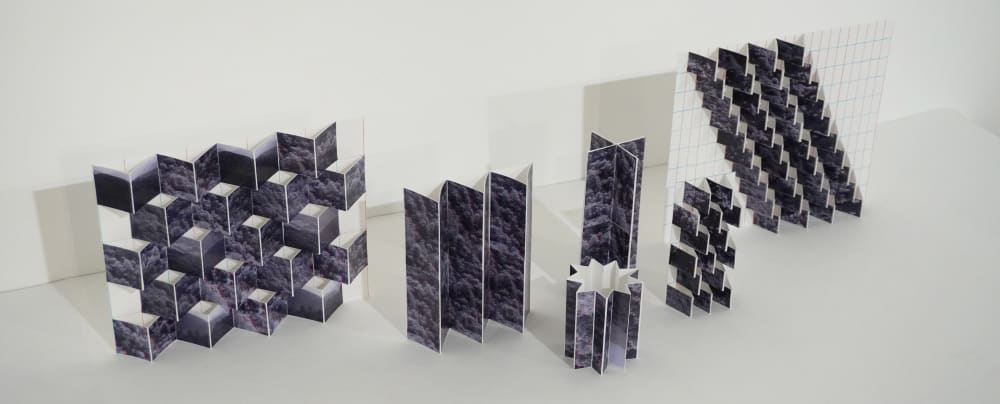
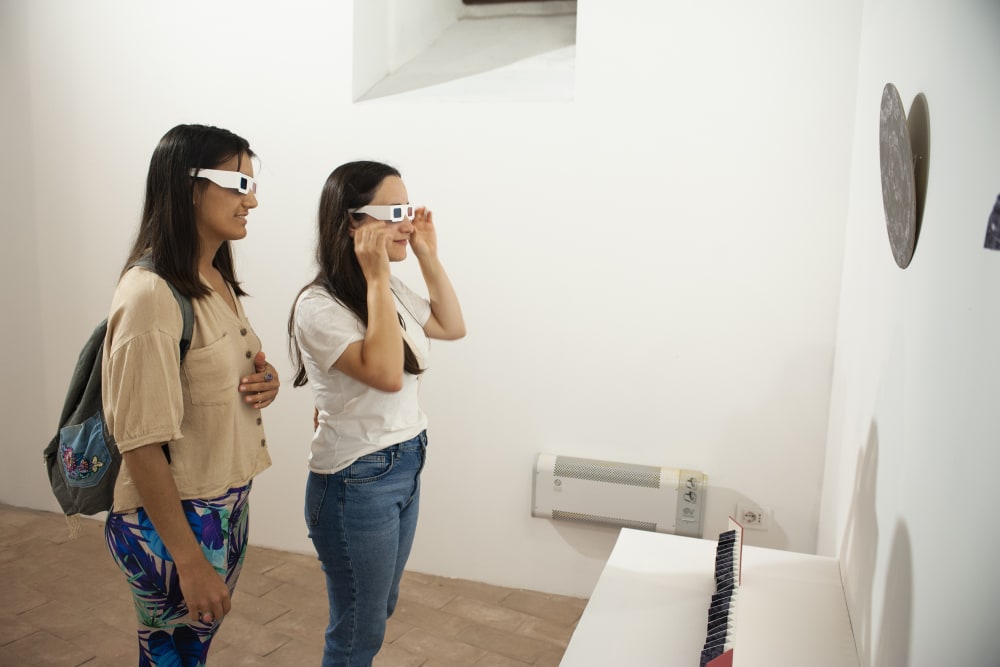
The next step was to create two wall-based pieces, combining the circle as a strict and precise geometric shape and photographs demonstrating panoramic views of the forest. The aerial nature of the photographs, combined with the element of geometry through several concentric rings, gives the impression of never-ending movement and evolution of the landscape. One of the pieces introduces an additional element of distortion, which is the 3D anaglyph. The photograph was digitally processed to create a 3D effect when viewed with cyan and red lenses. As I became particularly intrigued by this notion on the last days of the residency, I created several paper models exploring ideas related to the creation of wall-based artworks, combining geometry, the landscape and digital distortion.
My purpose was to convey the unique atmosphere of the site, as well as experience the ephemerality of the act of walking. Site-specificity was central, with the purpose of communicating a universal idea related to architectural sustainability. I believe that collecting elements to incorporate into my practice from a particular region, allowed me to create a deeper connection with my surroundings and experience first-hand the elements that I explore through my sculpture and printmaking practice.
Open studios and final outcome
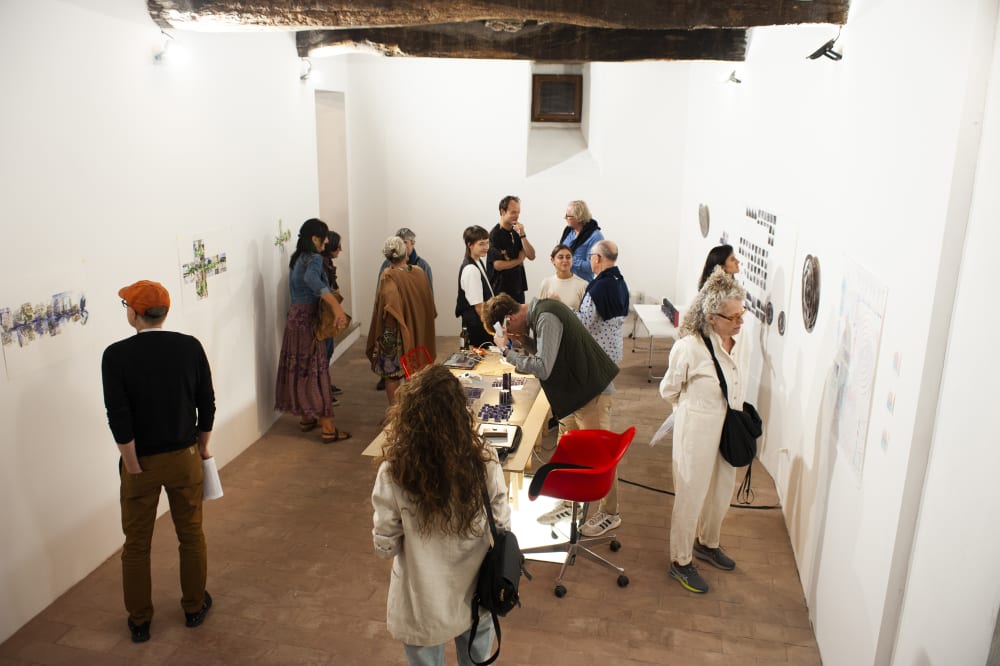
For the open studios, I presented my preparatory drawings, sculptures and exploratory work which will be created in the next coming months in relation to my experience in Spoleto. I consider open studio events very rewarding experiences, as they give me the chance to present my work in all stages of production from beginning to end. I often create work which is meant to be experienced not only through sight, but also touch and play. Therefore, as an artist who often makes interactive objects, it was encouraging to witness the audience feel at ease around my work and explore the 3D elements embedded in some of the pieces, by wearing the 3D anaglyph glasses I had provided. The programme not only provided me with the means to develop new working methods, but also with the opportunity to meet and discuss with the curator and visitors as part of the open studios event, creating a collective environment where conversation was key. I viewed the Residency as a starting point leading to incorporation of unfamiliar ideas and mediums into my practice, such as photography, site-specificity and physical exploration.