Trans Awareness Week and Trans Day of Remembrance
- Written byStudent Communications
- Published date 13 November 2022
Content warning – This story contains references to transphobia, anti-trans and non-binary violence and loss of life.
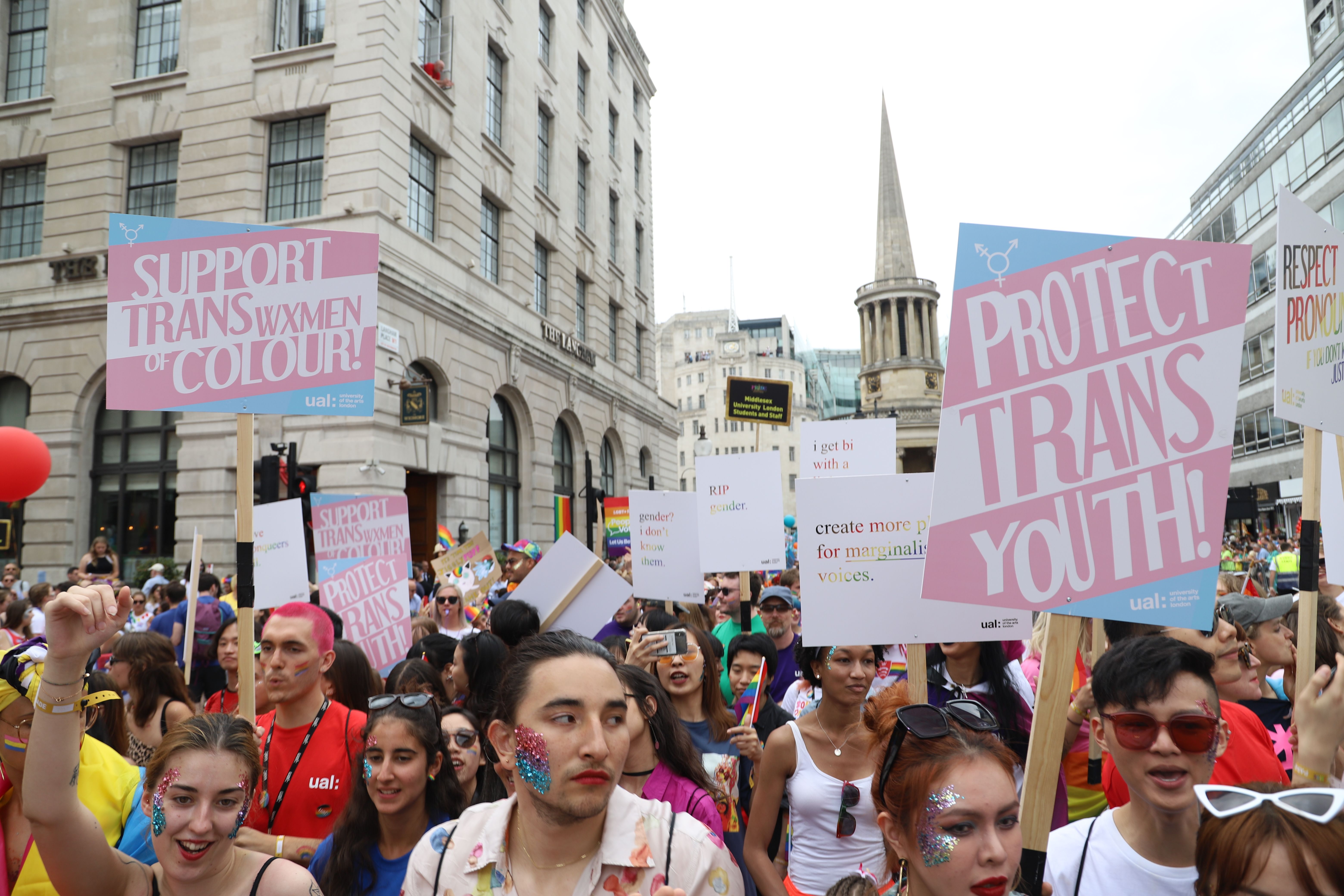
Today marks the start of Trans Awareness Week, providing the opportunity to reflect on the achievements of the trans and non-binary community whilst also raising awareness of the prejudice, bigotry and violence that still plague trans and non-binary people today. We want to use this week to showcase the work of our trans and non-binary community and spotlight the resources and support available to all at UAL. Trans Day of Remembrance will take place on Sunday 20 November to round off the week; a day to honour and remember trans and non-binary people who have been killed.
What is Trans Awareness Week?
Trans Awareness Week takes place each year in the run-up to Trans Day of Remembrance and is described by GLAAD as a week when ‘trans and non-binary people and their allies take action to bring attention to the community by educating the public about who trans and non-binary people are, sharing stories and experiences, and advancing advocacy around the issues of prejudice, discrimination, and violence that affect the trans and non-binary community.’
What is Trans Day of Remembrance?
The first Trans Day of Remembrance took place in 1999, following the 1998 murder of Rita Hester, a Black trans woman living in Boston, USA. It is a day designed to be a vigil for Rita and every other trans person who have been killed by anti-trans violence.
Why are we marking these dates?
It’s important to acknowledge that our society is not always a safe environment for trans and non-binary people, and to work together to educate ourselves and others around us on the issues affecting trans and non-binary people today.
- The reported rates of hate crimes targeting trans people have risen by 56 per cent in the past year.
- Trans people are twice as likely as cis people to be victims of crime in England and Wales.
- 2021 was the ‘deadliest year’ for trans people worldwide since records began.
What this tells us is that there is much work to be done to ensure trans and non-binary people are treated equally with compassion and respect. By actively listening, learning and educating ourselves, we can help to create an environment where trans and non-binary people feel safe, welcome and respected. UAL is committed to providing an inclusive learning environment where trans and non-binary students feel safe and free to be themselves.
What can I do to help?
Keeping an open mind and displaying a willingness to educate yourself and advocate for trans and non-binary people is a brilliant first step.
We also have a number of stories from past campaigns that we recommend exploring and reacquainting yourselves with:
Support for trans and non-binary people
There is a range of support in place at UAL to support our community that we encourage you to be aware of:
- Bullying and harassment information and help
- Please report any incidents via our ‘Tell someone’ reporting service, or talk to your Student Union adviser
- Access UAL’s Student Counselling Service
- Check out our Student Diversity pages for information on changing the details on your personal records and using facilities at UAL.
There are a number of organisations who support trans and non-binary people in the UK and we have identified some below:
- 56 Dean Street: A sexual health clinic with a focus on members of the LGBTQ+ community. Their brand-new pilot service Trans Plus aims to reduce waiting times for Gender Identity Clinics and offer better healthcare options for trans people.
- Black Trans Foundation: A collective that provides 4 months of free therapy to Black trans & non-binary people in the UK.
- CliniQ: Provides health services for trans, non-binary and gender diverse people.
- Galop: An LGBTQ+ anti-violence charity supporting all LGBTQ+ people who've experienced hate crime, domestic abuse or sexual violence. Their helpline number is 0800 999 5428.
- Gendered Intelligence: A trans-led organisation providing support and training for those who work with and support trans people. They work extensively in schools, colleges and universities with both staff and students offering mentoring, workshops and training. They also provide youth groups and support for young trans people up to the age of 25.
- Imaan: A charity that supports LGBTQ+ Muslims and runs a support group for trans Muslims.
- KeshetUK: Their mission is to ensure that Jewish LGBTQ+ people and their families are included throughout Jewish life in the UK.
- Mermaids: A charity that supports gender-diverse children and young people until their 20th birthday, as well as the families and professionals involved in their care.
- Mindline trans +: A support helpline for anyone who is trans, non-binary, gender variant, and their families, friends, colleagues and carers. Their phone line is open Mondays and Fridays, 8pm to midnight. Call 0300 330 5468.
- Spectra: Health and wellbeing services for trans and non-binary people across London. Drop-in groups, counselling, social sexual health services.
- Stonewall Housing: Provides support to approximately 1000 people every year, helping them to find new safe accommodation, sustain their tenancies and develop the skills to gain permanent employment and security.
- Switchboard: Run a LGBTQ+ helpline providing information, support and referral services for lesbian, gay, bi and trans people, and anyone considering questions around their sexuality and/or gender identity. Helpline: 0300 330 0630 (10am–10pm every day).
- TPOCalypse: Gendered Intelligence's youth group and events for trans, gender variant and questioning young People of Colour
- We Exist: A community organisation that manages a national trans healthcare fund for people in the UK.