This series of visiting speakers is co-hosted by LCC’s department of Sound Arts and Design and UAL's research centre for Creative Research into Sound Arts Practice (CRiSAP), and curated by John Wynne.
The sessions take place every Thursday from 2.30 - 4.30pm. The talk on 18 April will take place in Lecture Theatre A, and the rest will be in Lecture Theatre B. The sessions are free and open to all.
18 April – Anne Bean
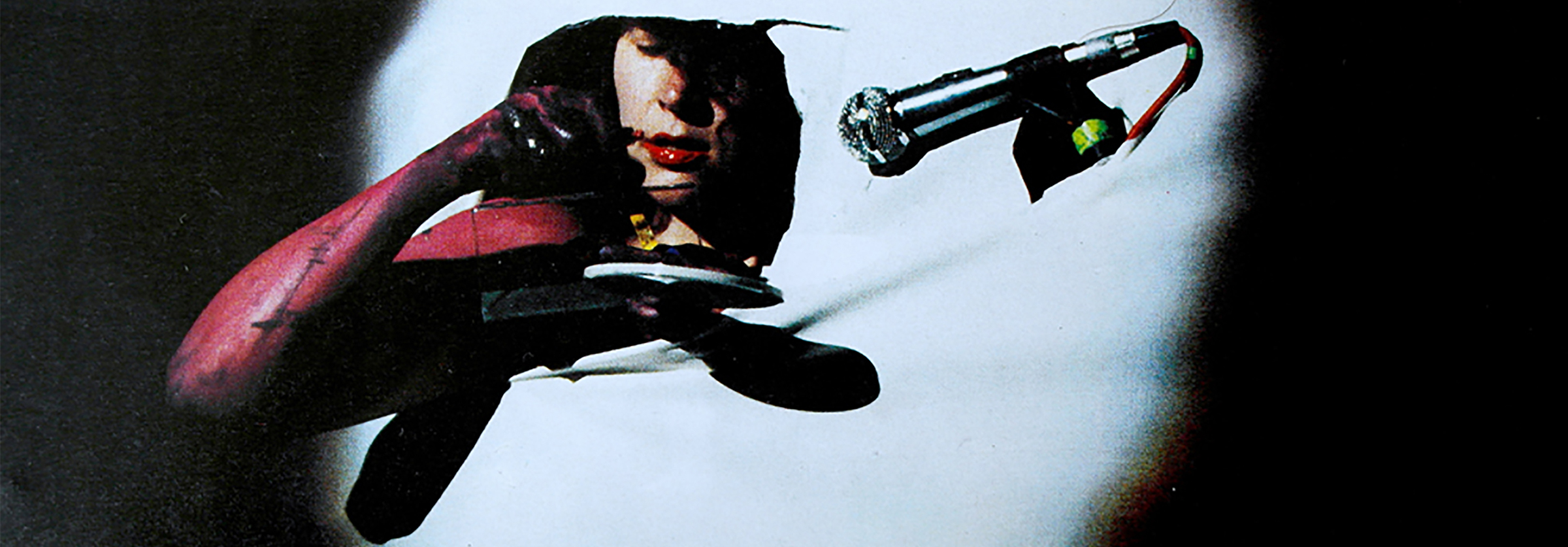
Anne Bean is a London-based artist who has worked in installation, large-scale sculpture, sound art, and performance art continuously for five decades. Informed by improvisational practices that celebrate the chaotic and polyvocal and driven by a deep interest in materials and what they might be able to do, her practice has been influenced by Joseph Beuys’ concept of social sculpture (soziale Plastik) as well as the strange humour associated with the 1970s English performance art scene.
Bean's interest in collaborative processes began with her work with the pioneering performance art group Bernsteins, with Jonathan Harvey, Malcolm Jones, and the Kipper Kids, and continued to develop during her long term working relationship with the drummer-artist Paul Burwell and sculptor Richard Wilson. Together they formed the radical percussion/performance group, Bow Gamelan Ensemble (1983–90).
25 April – Victoria Karlsson and Artur Vidal
Victoria Karlsson is a sound artist interested in the emotional and subjective aspects of sound and art. Investigating sound as both an inner and outer experience, she explores how we think about, remember, and dream about sounds, and how this influences our every day experience of sounds. She is currently undertaking a PhD Research Degree in the CRiSAP research centre at LCC. Her research, with the working title "Mapping experiences of inner sounds", investigates sounds in our thoughts, sounds we ‘hear’ in our mind, and how they affect our experience of physical ‘real’ sounds. Through practice-based research, she aims to investigate strategies of articulating and making inner sounds audible, and to develop a language to externalise and map experiences of inner sounds.
Artur M Vidal is a Spanish-born saxophone player and sound artist who grew up in Paris and currently resides in London. He has performed and recorded extensively in the UK, France and Spain, as well as also being active in Turkey, Mexico and the Czech Republic. His research involves field recordings, sound walks, dance and improvisation. He is an active member of the improv music scene and, with Sébastien Branche, performs as the improvising saxophone duo ‘Relentless’. His research, entitled “The Notion of Silence in Improvised Music and Acoustic Ecology”, attempts to develop new knowledge in both disciplines through the study of their understanding of the notion of silence.
2 May – Antoine Bertin
Antoine Bertin listens his way around science and sensoriality, environment and audio storytelling, data and music composition. He creates experiences combining elements of immersive sound, interactive storytelling and tangible material, both as an artist and as founder of the Paris-based creative studio, Sound Anything. Sound Anything works internationally with commercial brands, artistic institutions, creative agencies and scientific organisations to create innovative sound experiences for a variety of audiences. They are known for their work with binaural audio immersion, site-specific narratives and large spatial audio installations, and have worked with Audible, The Guardian, Palais de Tokyo, Volkswagen Group, Marshmallow Laser Feast, and Tate Britain and more. Antoine graduated from the MA Sound Arts at LCC in 2009 and teaches at SAE Brussels.
9 May – Jennifer Allan and Dan Scott
Jennifer Lucy Allan is a writer and researcher in her final year of a PhD on the social and cultural history of the foghorn, looking at its significance as a massive sonic sound marker along our coasts and at sea. She also runs the record label Arc Light Editions, previously worked as online editor for The Wire magazine, and recently hosted BBC Radio 3’s Late Junction. Her research is entitled Fog Tropes: The social and cultural history of the foghorn 1853 to the present day. The foghorn sounds when visual information is eliminated or reduced, giving primacy to the auditory, and as such has been used to signify complex emotional reactions and represent mental states. Foghorns first appeared as a result of a shipping boom during the industrial revolution, but how does its use in popular culture relate to its history around that time, and beyond? Taking the foghorn as a starting point, she explores the questions of nostalgia, safety and danger, power and melancholy inherent to the call of the foghorn, and crucial to understanding our changing sonic environment.
Dan Scott’s work incorporates installation, performance, and participatory practice and often investigates the politics and poetics of listening. He works as a visiting lecturer at The Royal Central School of Speech and Drama, where he tutors in sound and scenography, and he is currently engaged in a practice-based PhD at CRiSAP. For him, listening is a methodology for developing practice, and his research, entitled Ways of listening in sound art: How can multiple ways of listening inform contemporary sound art practice? proposes the existence of a listening art, distinct from sound art, where listening's various aspects (openness, attention, desire, focus, etc) act as both a medium and a mode of engagement.
Photo: Tina Keane, London College of Printing (now LCC) alumna. Still from Anne Bean performance on 29 March 1985.