Pride 2024: Cameron Carrington on building a safe environment for Black queer lives
- Written byStudent communications
- Published date 10 June 2024
Share story
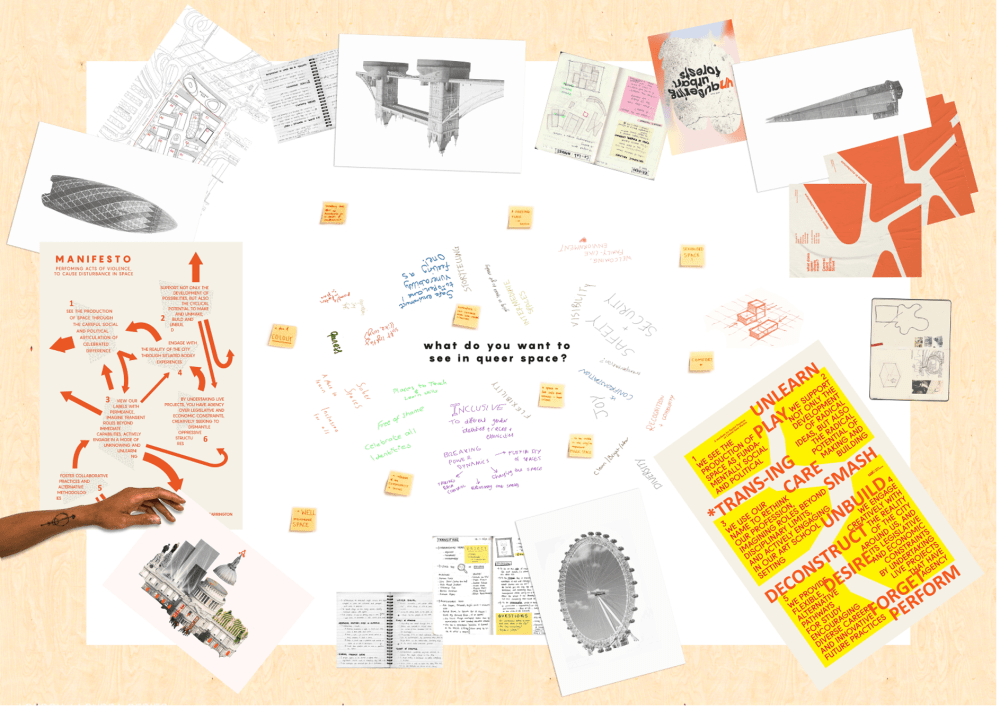
This Pride Month we talked to Cameron Carrington, a CSM M ARCH Architecture graduate who focuses on promoting inclusive spaces for all. We caught up with him to discuss his project, “Space for Black Queer Lives” which is described as a “manifesto for resistance”, designed to foster joyful and safe spaces for the black queer community.
Can you walk us through your project 'Space for Black Queer Lives'?
‘Spaces for Black-Queer Lives’ explores the loss of queer spaces and motivates the emergence of future queer communities, in a mission to champion solidarity among LGBTQIA+ minority groups.
In your manifesto there is a call to “encourage collaborative practices and alternative methodologies”, why do you think these can lead to change?
I encourage collaborative practices and alternative methodologies to question existing power structures in the public arts sector. For too long, access to architecture and the arts has been related to a high quality of life while invisible powers continue to divide and gatekeep resources, knowledge and funding.
New methodologies empower communities and organisations, to critique and allow everyone into the decision-making processes. These messy processes come with failures and learnings that can help move away from the capitalist perspective that focuses on continuous productivity.
In your manifesto, you advocate for "fostering collaborative practices and alternative methodologies." How do you believe these approaches can work together to drive change?
Supporting collaborative and non-hierarchical ways of working empowers communities and organisations, to critique and create permeability in decision making. By embracing the messy art of process, failure, and learning, we can move away from exploitative capitalist approaches that focus solely on premeditated outputs and constant productivity.
Why did you choose St-Paul's cathedral to illustrate “Queer Imaginaries”?
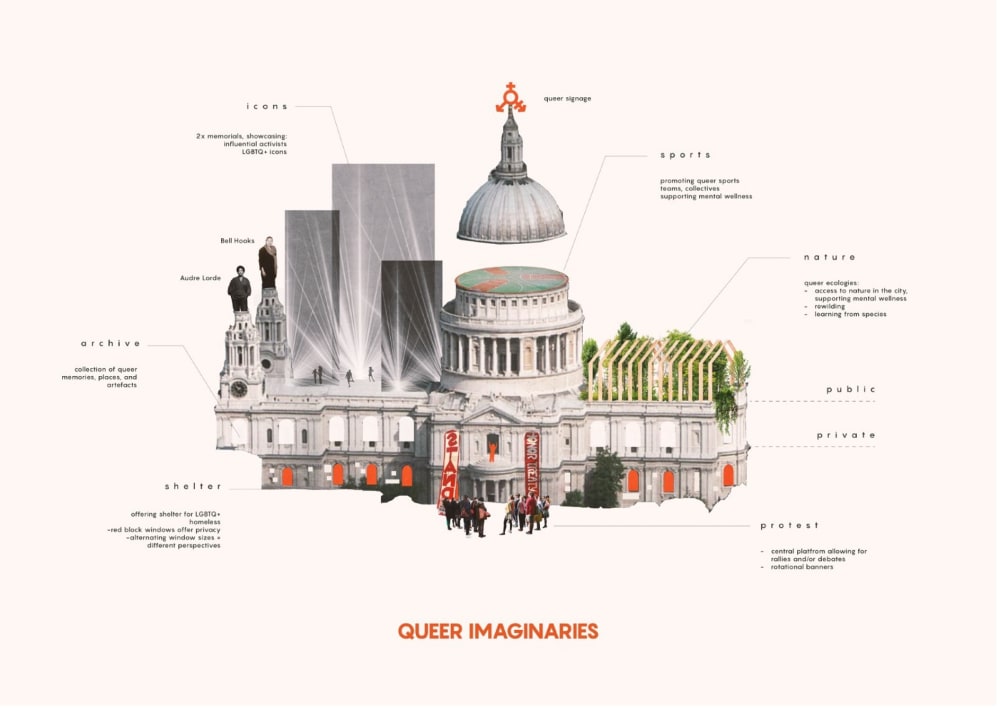
The artwork ‘Queer Imaginaries’ reflects on tensions that are present within western urban contexts. Too often, the LGBTQIA+ community are left with forgotten, unwanted, and dark spaces (railway arches or basements of clubs and bars). St Paul’s Cathedral becomes the parameters for play and signals these tensions as a physical manifestation of power and desire.
Which aspect of your work are you most proud of?
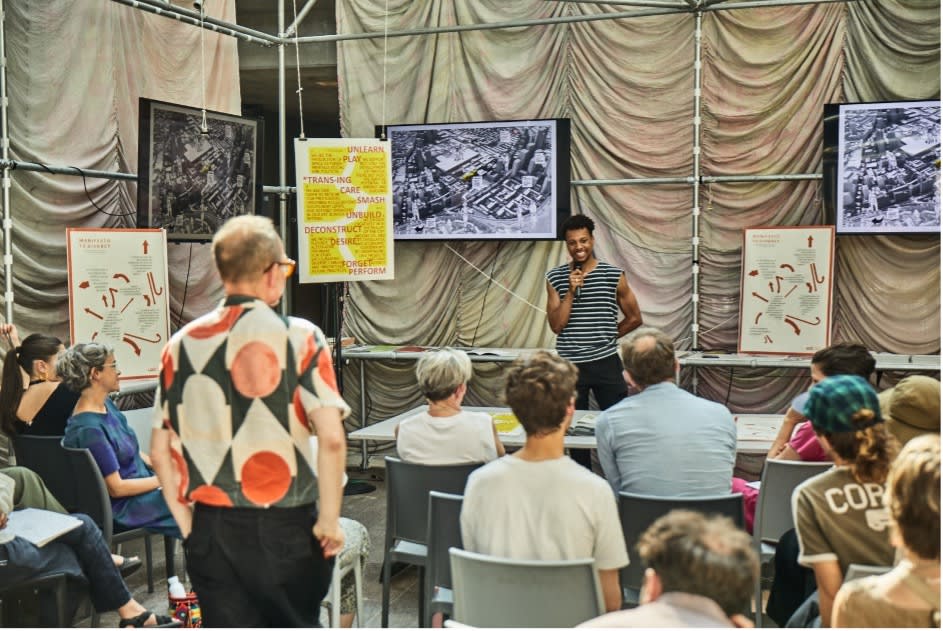
Being part of an academic environment that supported my exploration of identity, politics, and climate justice in architecture helped me to push my boundaries and connect with a wider network. This allowed me to produce my most impactful work through collaborative workshops. I am specifically proud to have applied my artistic practice, influenced by the teachings of Ulrike Stevens and Adesola Akinleye, to the LONDON/LONDRA workshop series held at Queercircle.
Do you have any future plans for your artistic practice that you can share with us?
I am currently working with the National Governing Body for indoor volleyball, beach volleyball and sitting volleyball in England to establish the first ‘Players Community’ across all three disciplines. The initiative aims to motivate decision-making for the players by the players. I am also leading Project Zero, a community group working with young people in Walthamstow through engagement programs with What-If: Projects and Europa to deliver an art commission funded by the London Borough of Waltham Forest.
Finally, can you share what Pride means to you?
To me, PRIDE will always be a place for celebration and contemplation; combating fear by connecting with communities and taking up space in joyous ways. PRIDE commemorates every human who has had experiences overcoming society’s history of gay shame, prejudice, and hatred.