
LGBTQ+ History Month: Dr Lee Campbell on retracing steps and grieving the loss of physical space

- Written byUAL Communications
- Published date 19 February 2025
Share story
As part of LGBTQ+ History Month, we spoke with Dr Lee Campbell, Senior Lecturer, Academic Support at Wimbledon College of Arts, about his short film, ‘See Me: A Walk Through London’s Gay Soho, 1994 and 2020’.
Hi Lee, thanks for chatting with us today. How long have you worked at UAL?
I've worked at UAL for about 15 years now, having started at Central Saint Martins. I moved to CCW about 8 years ago now and I'm a senior lecturer in academic support based at Wimbledon.
Why was it important for you to document the iconic Soho in your film?
When lockdown first hit us in 2020 and all I could do was walk around, I found myself walking through Soho and it was a ghost town. It felt peculiar and dystopian to see it that way. To be in a place that had so much personal history for me, that had helped me to develop my identity and understanding of who I was, and see it so quiet and forgotten, was a discombobulating feeling.
The film touches on your first time in “a place with men like me everywhere”. Just how important is it for queer spaces like this to exist?
When I first visited Soho, I was living in rural Kent and so visiting London was so exciting. I hadn't really worked out what was happening with my identity and sexuality at the time but my feet, let's say, decided to have a walk down Old Compton Street in Soho for the first time. That was quite an experience, seeing men embracing each other and being so open with their sexuality. At that time, I didn’t see myself represented in the media and so it felt like a truly formative experience. Going back home was difficult and I think it demonstrates the significant role that a place can play in terms of how you understand yourself.
To have a space where you can be visible and present is huge. Queer spaces exist because queer people exist, and they need physical spaces to come together and meet others. I think many queer people feel they have had to hide away for most of their lives so it’s incredibly important to have those spaces where they can feel present and free of judgement.

You describe the film as weaving “across sound, image, time, rhythm and place”. Why was this important to you?
Well, my background is in painting and so I studied that before getting into performance and film. I've always thought about creating different layers and I suppose building up those layers like the surface of a painting. When I make my films, I think about the senses, and I like to play around with different aspects of the audio and visual and see how they come together. I'm interested in creating a relationship between what is heard and what is seen.
When I first made ‘See Me’, it wasn’t a poetry film. After showcasing it in several film festivals, someone fed back to me that they didn’t get any sense of ‘me’ and my relationship to Soho. It was great feedback and it got me thinking, “What is my relationship to Soho?” About a year or two later, I wrote the accompanying poetry and added it to the film. It just made absolute sense because it added another layer, allowing the viewer to better understand my personal history with the area in contrast to the contemporary visuals.
I'm really interested in the notion of palimpsest, which is when you develop layer upon layer into something whilst retaining the history below the surface. I think this works well in the film because there are layers such as a cassette from 1994 when I first came to London, contemporary footage of me walking around Soho, and my reflections of who I was then and who I am now.
In the film, you note how Soho has changed and is full of “dead air and boarded up spaces” - How does the changing landscape of Soho make you feel?
Seeing all of those bars closed and boarded up just made me want to go in. It made me want to remember who I was back then, and I couldn’t. I thought about all the times when I could have gone to those places and didn't. Now, finding myself wanting to do so, I couldn’t and that made me very sad.
I considered, “Why does this make me sad?”, and I believe it’s because I found the lack of access quite confronting. It made me reflect on what is important to me and how far I have come, 30-odd years after that first visit to Soho. I think when getting older, you can feel that you’re losing your sense of wonderment and seeing such a significant part of my lived experience boarded up really compounded that.
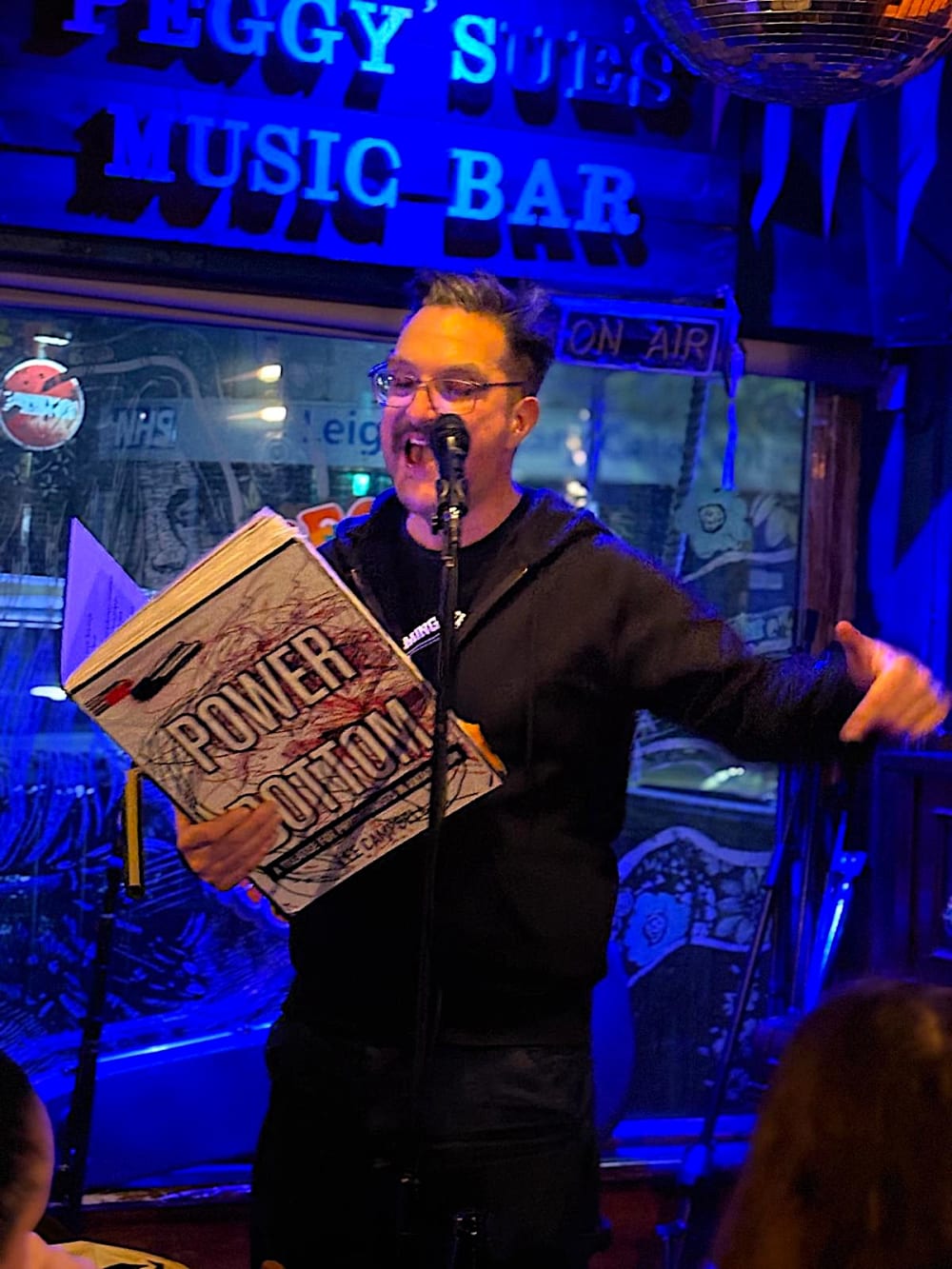
The film touches heavily on themes such as identity and community - why is it important for community to be fostered, especially for those who identify as LGBTQ+?
I think making the decision to go to Old Compton Street and enter those bars and clubs really took bravery. It felt like I was crossing and threshold and making a statement of who I am, and that was not an easy thing to do. But what was amazing was how normal it all felt. I could go in and order a drink like I would anywhere else but this time, I knew I was amongst people like me. I didn’t have to mask and I didn’t feel out of place. At that time, pubs, bars and clubs were non-queer environments and so to be in a space where you could let your hair down and just feel normal was freeing. It means a lot for me to go into a space and feel comfortable with who I am, and the community is a huge part of that.
Where can readers see more of your work?
You can check out my website to see more of my work, from films to publications, to live performances – I enjoy creating lots of different things!