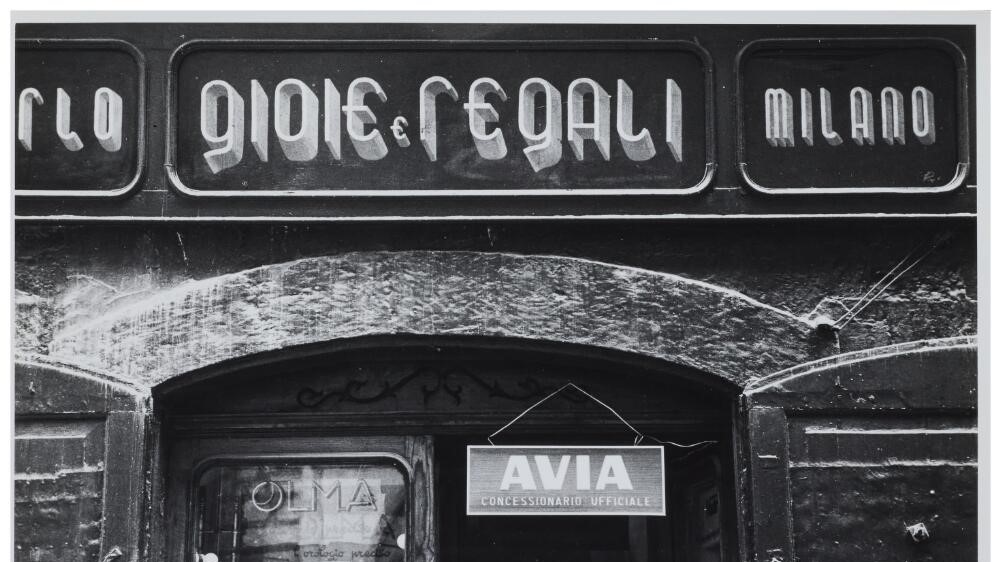
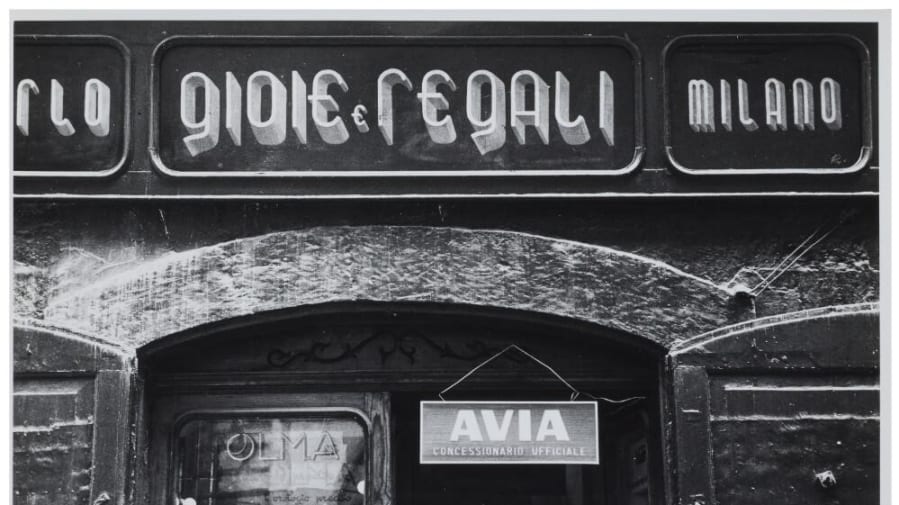
The Central Lettering Record is an incredible, multifaceted resource at Central Saint Martins, gathered over many years.
It started as a teaching collection at the Central School of Arts and Crafts. It was built considerably by Nicolete Gray and Nicholas Biddulph in the 1960s and is now part of the Central Saint Martins Museum & Study Collection, and curated by Catharine Dixon in the CSM Design School.
Over the years, teachers and researchers at the college added to the collection. It contains lettering in many formats, with a focus on 'vernacular' hand crafted examples in public space.
A collection of photographs of lettering taken by typographer, Alan Bartram (1932-2013), which had been donated to the Central Lettering Record, was catalogued by Elena Veguillas for the CSM Museum in 2024. The Archives and Special Collections Centre and the CSM Museum collaborated to digitized them. I have now been working to preserve the digital images and make them available to view on the UAL Digital Collections Platform.
You can view some highlights from it in a new curated collection: Lettering: extraordinary, everyday and ephemeral.
The Alan Bartram Collection
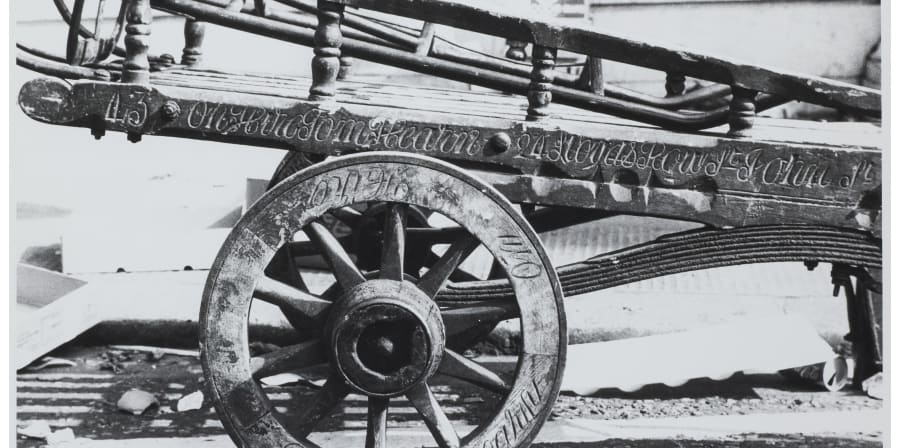
Alan Bartram began a personal photographic survey of vernacular lettering types across the UK and areas of Europe in the 1960s and 1970s.
Bartram, originally trained in painting. But his brother Harold Bartram, a teacher at the London School of Printing (now the London College of Communication), introduced him to typography. Harold, in turn, had learned from Anthony Froshaug and Herbert Spencer at the Central School of Art and Design in London.
As a typographer and lettering expert, he worked at Lund Humphries (a publisher of Art, Architecture and Design books) from about 1967, after working with the famous typographer, Herbert Spencer, for Typographia Magazine.
Alan produced a whole series of books on lettering practices between 1975 and 1986, published by Lund Humphries. A number can be found in UAL libraries, including Lettering in Architecture, Fascia Lettering, Street Name Lettering, Tombstone Lettering in the British Isles and The English Lettering Tradition.
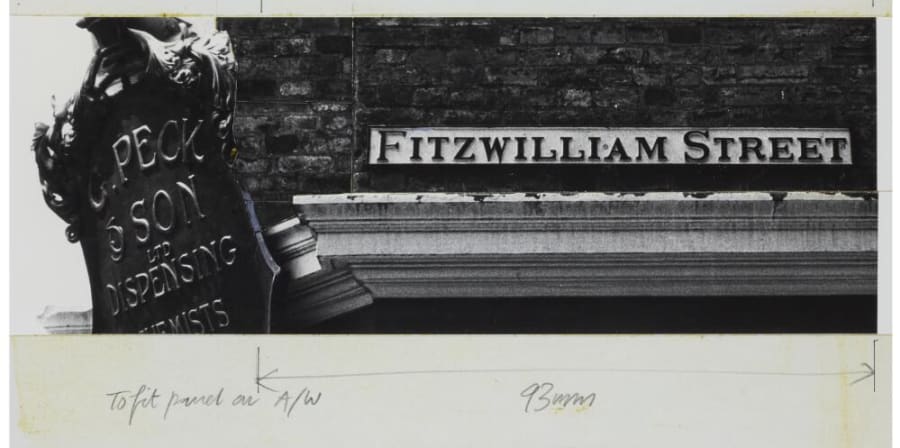
These books used his photographic collection to illustrate different lettering styles. You can tell by the way some of the physical photographs have been cropped, that this happened during the process of book production and layout.
-

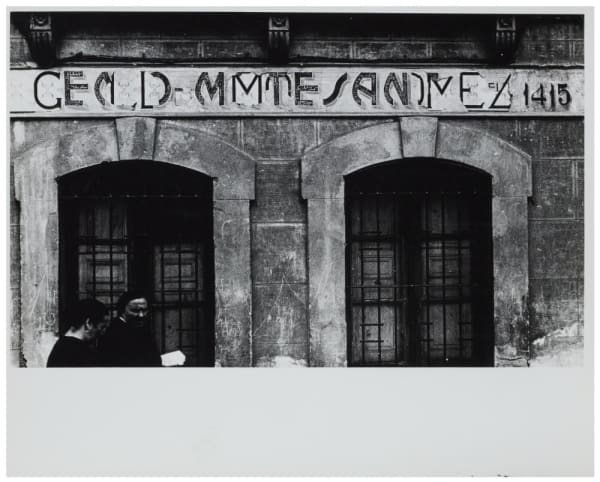
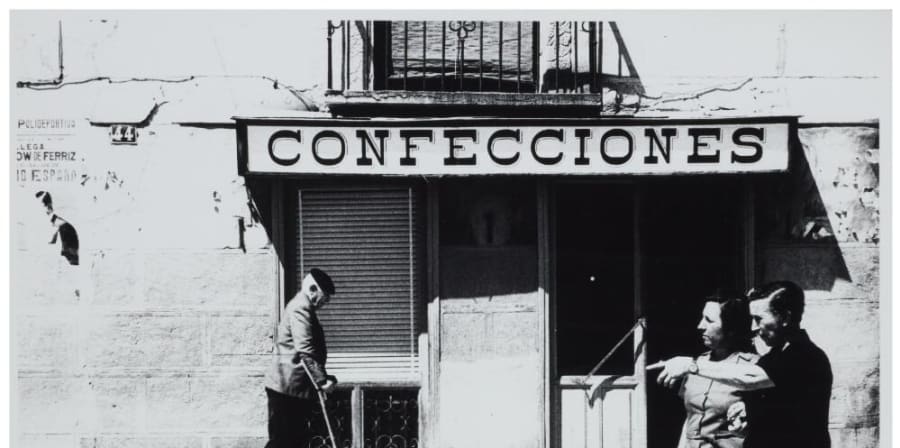
‘Ghost Sign’, Showing different layers of lettering through time. Location: Segovia, Spain, photograph by Alan Bartram, from the Central Lettering Record, Object Ref: CLR.2023.1097.M.1-2 -

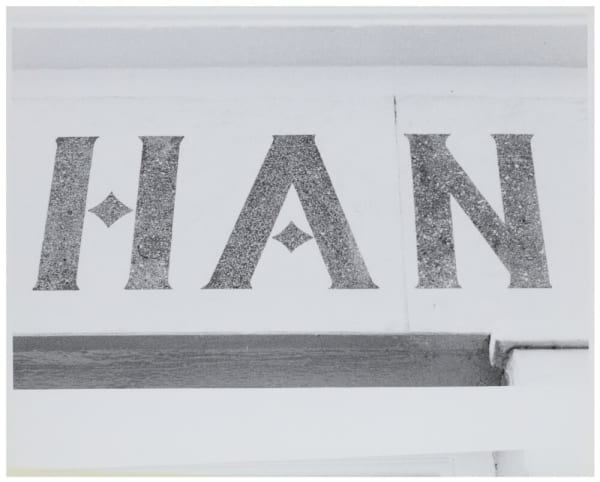
Section of lettering on a pub, capital serif (wedge) low contrast letterforms with horizontal bars replaced by diamonds, reading, ‘Han’. Another image in the collection shows the whole sign reading, ‘HOULIHAN VICTUALLER’. Location: Killorglin, Ireland. Photograph by Alan Bartram, from the Central Lettering Record, Object Ref: CLR.2023.817.M.1-2 -

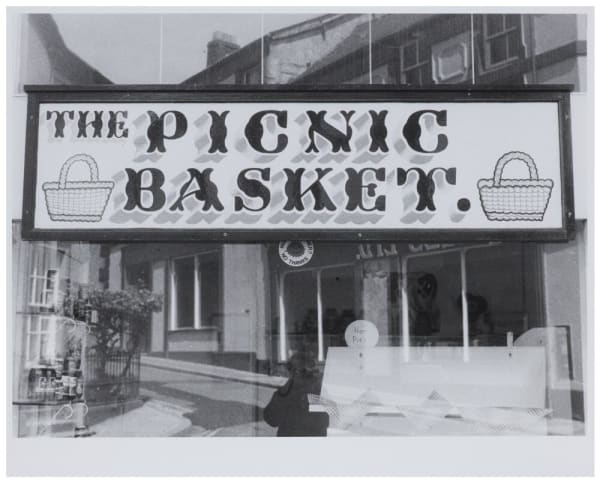
Lettering on a board in a shop or café window, with a three-dimensional effect, reading ’THE PICNIC BASKET’. Location: Ulverston, North West England. The photograph shows the reflection of the photographer. Photograph by Alan Bartram, from the Central Lettering Record, Object Ref: CLR.2023.686.M -

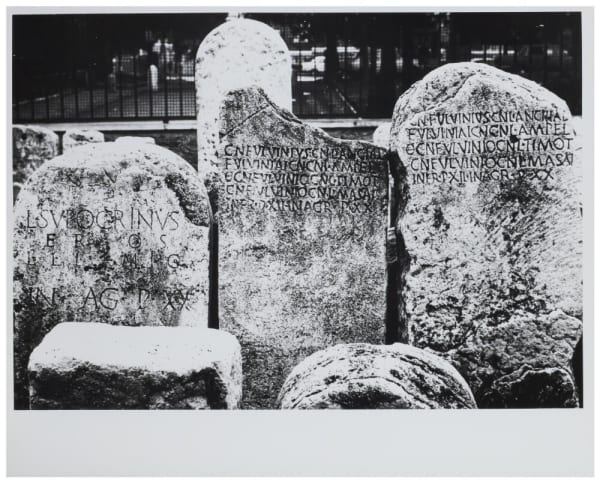
Ancient Roman lettering carved on stones in Latin. Location: Museo delle Terme, Rome, Italy, photograph by Alan Bartram, from the Central Lettering Record, Object Ref: CLR.2023.980.M.1-4
Using the collection
We hope that digitising, and making the collection accessible online allows students to undertake new kinds of visual research with it. We can make new connections between objects, locations, contexts, practices, shapes, forms and materials.
It will also help us to open connections between collections held at different sites across UAL, so that students can make better use of the resources available to them.
The objects as photographs
In processing these materials, I also found myself reflecting on them as photography, thinking about Bartram’s intentions, to collect and clearly depict lettering in public spaces.
But the photographs themselves also document the occasionally unintended: aspects of everyday life seep into the photographs and convey something about context, mood and the moment, captured.
In others, the black and white photography helps to highlight texture, light and shade, creating images with a ‘grain’ to them, characteristic of the analogue photographic process, that you do not get in the same way with digital images.
The selection of images is also telling. They reflect one particular man’s travels in the UK and Europe in the 1970s. Our choice to select them was to test out what might be possible with digitisation. But it raises questions about the gaps in the survey, what is not included. What would you choose to document, if you could?
Find out more
Explore items from the Central Lettering Record on the UAL Digital Collections Platform.
By clicking on individual objects and following to 'more information’, you can discover where the item sits in the museum catalogue.
You can find out how to book an appointment to see the physical Alan Bartram collection at Central Saint Martins.
For any questions about Archives and Special Collections or our digital projects, please email archive-enquiries@arts.ac.uk