

When Medieval Poetry Meets Climate Crisis
What happens when you combine teaching objects from the Inner London Education Authority (ILEA) Collection, AI translation software, and Geoffrey Chaucer?
A new display in the Typo Café at LCC titled Anthropomorphic Chaucer offers a perspective that speaks directly to our climate emergency through medieval storytelling.
From Pandemic to Innovation
Born during COVID-19 lockdowns, Senior Lecturer Colin Priest and MA Interior and Spatial Design students at Camberwell College of Arts turned to the university digital collection to remote-sense objects.
'Subtle Subtitle' masks were improvised using household 'bits and bobs,' with students invited to onomatopoeically subtitle via deliberately glitched virtual recordings; embracing digital imperfection to expand practice around accessible media and inclusive film-space.

Medieval Costume Meets Climate Dialogue
Displaying ILEA's historical objects transformed into experimental subtitled performance.
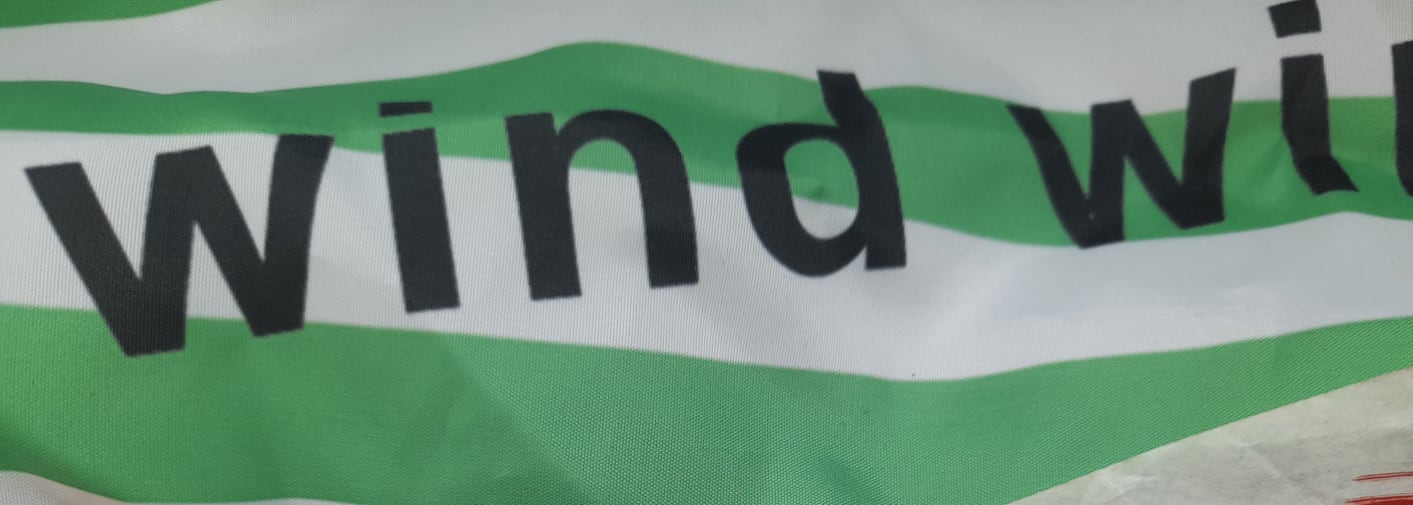
The ceramic bird's colourful palette becomes a mask of ribbons, bamboo and sunglasses. A Foley Bone China door push plate with fool's parsley inspires a chroma-green tunic with tessellated herb patterns, cut like medieval dress but fastened with safety pins. A striped hazmat suit subtitled with 'wind' and gardening gloves complete the green-screen ready ensemble.

AI Translation as Creative Tool
QR codes link to The Wyrtweard's Tale (The Gardener's Tale), a bilingual silent film between bird and plant. AI software converts modern English into edited Middle English, creating linguistic time-collapse that speaks to environmental urgencies. Ornate medieval verses like 'Forsooth, the earth doth weep and mourn' become stark modern statements: 'The earth needs to heal.'
On display from 2nd September - 15th December 2025 in the Typo Café at London College of Communication, Anthropomorphic Chaucer gestures geographical resonance with the nearby Tabard Inn and the landscape that birthed English vernacular poetry.
Find out more
For questions regarding displays or our collections, please email archive-enquiries@arts.ac.uk.