Creativity in Practice: A Conversation at Centre Academy East Anglia
- Written byUAL Awarding Body
- Published date 06 March 2026
Share story
At Centre Academy East Anglia, learning looks a little different from what you would find in a mainstream setting.
The centre works with young people who have a variety of additional learning needs, many of whom have struggled in traditional school environments. Smaller classes and specialist staff place a focus on student wellbeing, helping create a space where they can rebuild confidence and re-engage with education.
Creative subjects play an important role in that environment. Through qualifications delivered with UAL Awarding Body, students are able to develop their own creative voice - often in ways that traditional academic subjects don’t always allow.
During our visit, we spoke with Stephen Lloyd, who leads on art at the centre, about how the provision has evolved and what creative learning looks day-to-day.
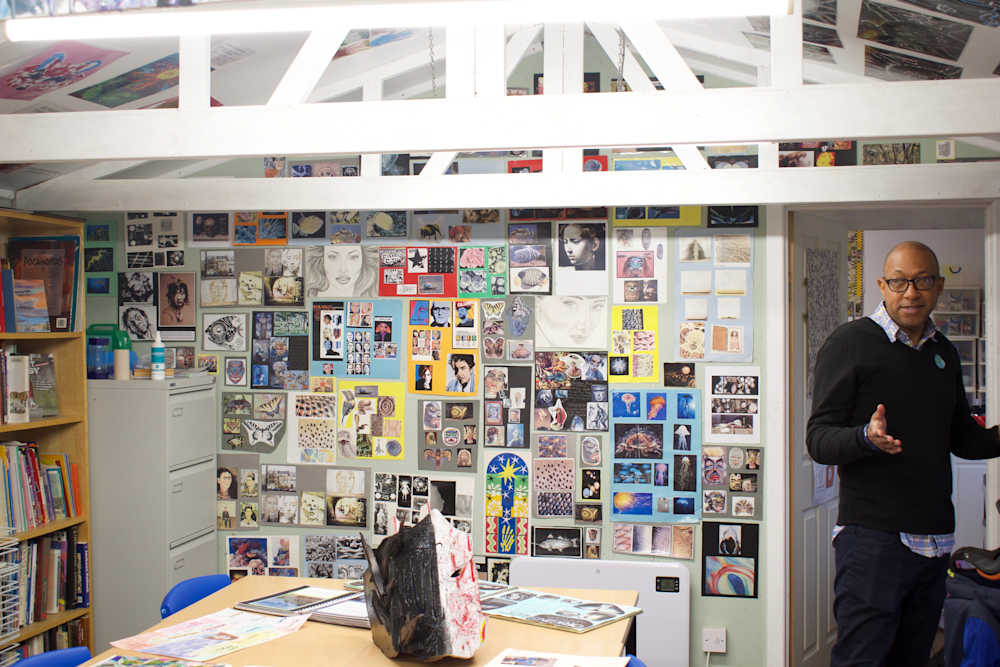
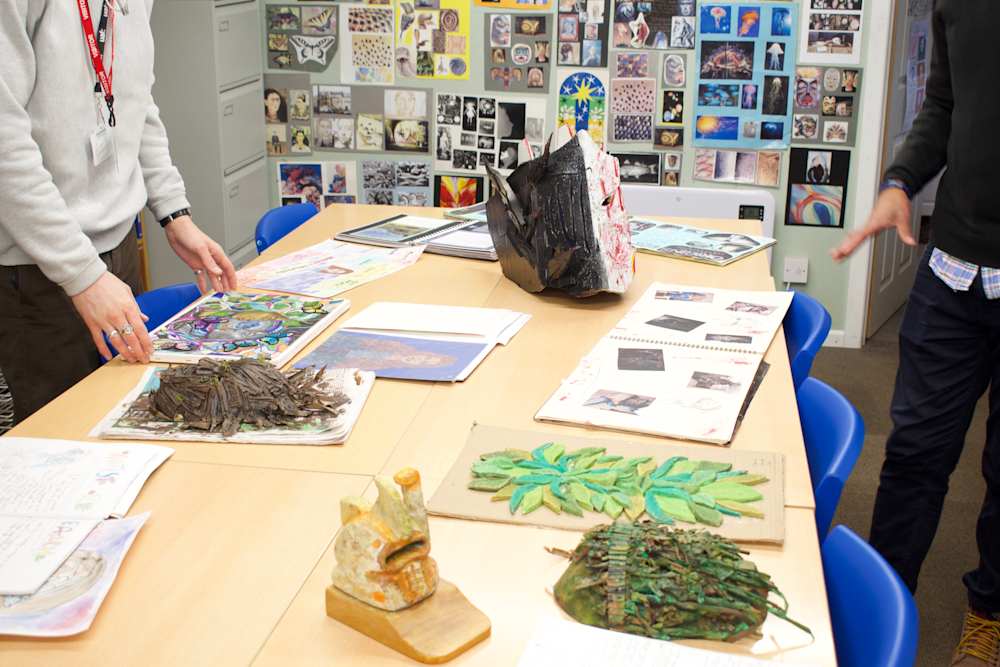
On an especially rainy afternoon, we were guided to the art classroom - a cozy escape from the weather outside. Students’ work lined every corner: colourful bursts of paint across white paper, sculptures hanging gently from the ceiling, clay leaves shaped into masks, and illustrations of purple cars etched into the pages of sketchbooks. From the moment we stepped in, it was clear this was a space where creativity was encouraged and given room to grow.
“When I first came here, I don’t think the provision was really right for SEN students.” Stephen explains. “The first thing for me was trying to tailor it so they actually benefited from it.”
Stephen believes that the programme evolved gradually, with the team adapting approaches until they found what worked best for their learners.
“Eventually that’s why we moved towards UAL. It was a bit of a rollercoaster ride getting there, but since we’ve been with UAL we’ve been really successful. The flexibility is the main thing.”
That flexibility allows projects to be shaped around students’ interests and abilities while still working towards a recognised qualification.
“The students have different subjects through the day,” Stephen tells us. “But when they come into the art room it’s a bit different. As you saw, the space itself is quite unique.”
For many students, the studio environment offers a welcome contrast to more structured lessons.
“It’s a place where they can step away from the academic side of things a bit. They can relax and focus. It’s quite a chilled space.”
The change of pace can help break up the day and make learning feel more manageable, but Stephen is quick to point out that art doesn’t click with everyone.
“With SEN students it can sometimes be difficult to install a level of interest as some just can't see the purpose of doing art."
But for many learners, creative work provides something they struggle to find elsewhere in the curriculum. For others it’s a sanctuary - giving them the chance to express their ideas and experiences. A key reason is that creative work doesn’t rely heavily on writing. This gives students more time to dedicate on projects that draw on personal identity, which often resonate the most.
“Things like self-portrait projects really work,” Stephen expresses. “They can show things visually instead of having to write everything down.
With success in education often being measured by marks or a finished piece of work, Stephen believes that success is about seeing a student enter the art room with a sense of belonging, enjoying ownership of their work and confidently exploring their personal ideas.
Creative learning looks different in every setting. But conversations like this show how, with the right environment and flexibility, creative qualifications can open doors for learners who may not have thrived in more traditional classrooms.
We’re continuing to visit centres and speak with tutors to better understand how creative provision works in SEND and alternative settings - and to share the experiences of the educators making it happen every day.