Digital Shift: Supporting local businesses to innovate in digital marketing and communications
- Written byNicole Horgan
- Published date 01 April 2026
Digital Shift was a digital marketing skills development and support programme for 8 small and medium-sized enterprises (SMEs) and community organisations in Elephant and Castle and Walworth, aligned to Southwark Council’s 2030 strategy and its ambition to help SMEs thrive while navigating their way through the cost-of-living crisis. It was funded by Southwark Council’s Thriving High Streets Fund.
For many local SMEs, it can be challenging to invest in the resources needed for marketing and digital communication to thrive and meet business goals – for example due to the constraints on staffing, time or expertise that running a small- or micro-business often entails. By connecting local organisations to the creativity and expertise of LCC, we offered a programme to support organisations to meet their goals and strengthen resilience through improved digital marketing and communications skills, knowledge and confidence.
To ensure that Digital Shift would offer organisations the practical support they need to meet their specific needs, the programme was co-designed in consultation with local SMEs. A workshop led by Hena Ali, LCC Course Leader in Service Design and Lynsey Fox, LCC Senior Lecturer in Communications and Media Public Relations identified areas of need and activities that would meet SMEs where they are, would be implementable and have lasting impact. The co-design workshop highlighted major barriers for SMEs related to the cost-of-living and post-Covid renewal including resource, cash flow and need for customer growth. The programme delivery model was designed in response to these needs and the themes of Southwark’s Thriving High Streets Fund.
Working in partnership with Southwark Council and the Elephant and Castle Business Forum, LCC recruited 8 organisations across a range of sectors including retail, food and drink, education and social enterprise, to participate. Each of the participating organisations received:
- 2 x academic-led digital marketing skills training workshops
- Individual business consultancy, focused on their marketing and communications priorities
- Student work placements on dedicated marketing and communication projects
Aims
- Help local SMEs thrive while navigating through the cost-of-living crisis and post-Covid economy, through fostering digital skills and innovation capacity
- Enable businesses to better access digital support and skills training to strengthen sustainability, resilience and attract customers, revitalising local high streets in the process
- Provide paid employability opportunities to LCC students, supporting graduate outcomes and strengthening local student-business relationships
Initiatives and activities
Digital skills workshop
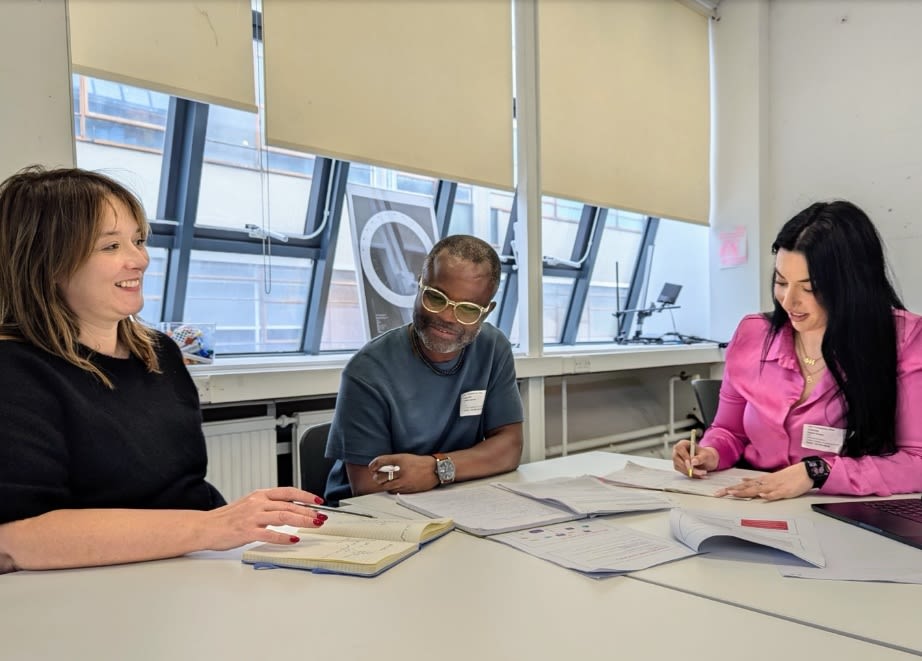
The first part of the programme gave organisations a foundation in relevant, current trends and techniques in digital marketing and communications, with content aligned to the specific needs and knowledge level of the participating organisations. The workshops combined concepts and techniques alongside practical, low-cost tips, tricks and resources. Workshops were held in-person at LCC, and were designed and delivered by Academic Lead Lynsey Fox:
Workshop 1 - Growing your skills:
- Learn skills, tools and tips to transform your communications and marketing.
- Topics covered: Frameworks, Understanding your brand, Audience decision making processes, Content creation and planning, Social media and user engagement
Workshop 2 - Amplifying for the future:
- Digital skills for the future to strengthen your organisational sustainability and resilience.
- Topics covered: User generated content, Community management and personalisation, Content frameworks, Optimising impact and minimising time and budget, Sustainability, AI
1:1 business consultancy
Building on the foundations gained in the workshops, each participating organisation received a 1:1 digital marketing & communications business consultation session, including planning for student placements, with Lynsey Fox. Businesses discussed how to apply the knowledge and skills learned from the workshops to their specific goals, and worked with Lynsey to develop a bespoke job description for student placements.
Student placements
Each organisation hosted 2-3 students on a 2-day per week, 4-week placement. Students were employed via UAL’s in-house creative employment agency Arts Temps, and paid at London Living Wage. Both students and businesses received induction, training and facilitated kick-off sessions from LCC staff to maximize placement impact and experience. During the placements, students worked on a variety of marketing & communications projects specifically tailored to business needs e.g. social media strategy, website design, photography, and email marketing.
Placemaking outcomes
More accessible
More equitable
Working with micro and small organisations that have limited capacity and resources, and who would most benefit from specialised expertise and support. 88% of participating businesses were majority BAME owned/led, and/or owned/led by women or gender minorities - reflecting the diverse business community of Elephant and Castle and Walworth.
More inclusive
Ensuring that prior to hosting student placements, all organisations undertook a new Equity, Diversity and Inclusion (EDI) training module designed to embed social justice in industry placements and embed EDI principles and good practices when working with students.
More sustainable
Local organisations gained new knowledge and skills for sustainable business models, giving them the impetus to take action on improving marketing and communication and improve business resilience.
More innovative
Through co-design methodologies, LCC developed an innovative model that combined training, consultation and placements. Based on real-world needs tailored to the local economy, LCC’s relationship with the local business community is strengthened for future collaboration.
More prosperous
Through a combination of improved skills and knowledge in digital communications and hands-on support with marketing and communications projects, organisations can now better realize potential growth, thrive and support the local economy. Additionally, 6 student employment opportunities with local businesses were created as a result of the programme.
The placements increased students’ confidence in a wide range of areas related to employability and career-readiness, including working with clients and teammates, presenting and showcasing ideas and concepts, working independently, and recovering when things don’t go to plan. By working on self-led digital communications initiatives outside the curriculum with real clients, students gained valuable experience and employability skills.
Nurturing collaborative and sustained engagement
Multistrand, co-designed activities
Fostering student-business relationships
Representative engagement
Approach: Digital Shift worked with partners such as the Elephant and Castle Business Forum to target hyper-local small- and micro-organisations in Elephant and Castle and Walworth, the majority of which are owned/led by BAME or women/gender minority individuals, reflecting the demographics of the local business community.Legacy
Digital Shift’s legacy will be felt in the ways in which organisations were supported to develop skills and knowledge to help meet their goals, and contribute to the continued growth and development of the diverse Elephant and Castle and Walworth’s community of independent businesses, which is fundamental to the identity of the area. By working with local organisations, LCC has supported the local economy and Southwark Council’s 2030 strategy to ensure a strong and fair economy.
Connecting local traders, businesses and organisations to the expertise at LCC provides mutually beneficial opportunities: for SMEs to learn and upskill from LCC experts, and for students to gain paid employment opportunities that challenge them and contribute to the development of professional skills, paving the way for success in their creative careers post-university.
As a result of the programme, LCC’s relationship with the local business community is strengthened, particularly with the opening of LCC’s new campus planned for 2027, there will be increased opportunities to engage with our neighbours including SMEs in the community to further strengthen the ties between the college and the local community.