Meet: Richard Annely
- Written byEleanor Harvey
- Published date 17 February 2025
Share story
Richard Annely’s career has been incredibly varied; from chef and artist in Munich, to student and technician at Chelsea College of Arts. He’s recently moved to Chile to take up the role of Director for the Andes Art Foundation, to promote creative and arts educational activities amongst indigenous and local communities across the Andes in Chile, Bolivia, Argentina and Peru.
He spoke to us recently about his new role and the residency opportunities that the Foundation is establishing.
You studied your MA at Chelsea. Can you tell us about your career/art practice before your masters?
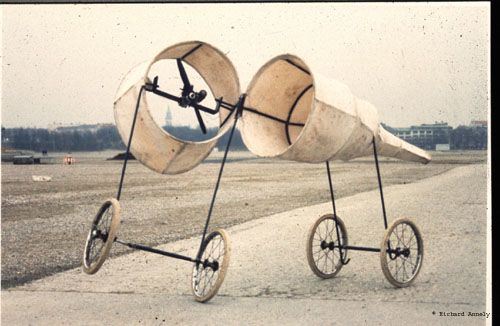
I studied and worked in hospitality in London before travelling to Munich, Germany to work as a chef. There I began making some drawings and decided to study at the Munich and Dusseldorf Art Academies. This was during the good old days when the UK was a member of the European Union. I used the cooking job to support my artistic practice, sometimes integrating them. During my studies in Germany, I worked with lots of international professionals and learnt about different materials and processes; I created a lot and held exhibitions. I decided to do an MA in Chelsea to return to London and to keep up my practice. I was lucky enough to receive a Henry Moore scholarship which made this possible.
What was your experience of the master’s like? Did it have an impact on your work?
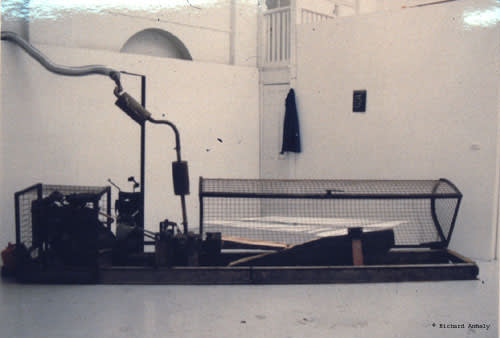
During the MA study I continued making and really enjoyed the discourse with the tutors and students. I was invited by Shelagh Cluett to work as a technician on the MA course and spent the next 5 years working at Chelsea College of Arts. The impact on my work has been enormous: I worked a lot with the great late Darrel Viner, learning to create switching circuits and to play with objects.
I left my job in Chelsea to work at the Instituto Armando Reveron in Caracas, Venezuela, on the ‘Art Councils academic exchange program’. This experience inspired in me an interest in South American cultures.
Can you tell us a bit about your artistic style?
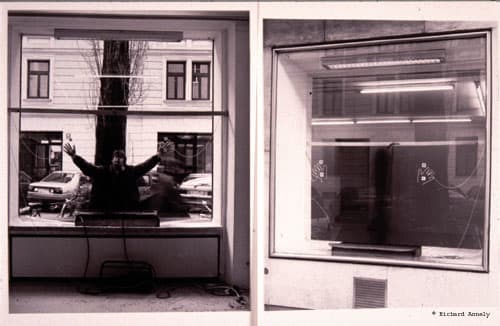
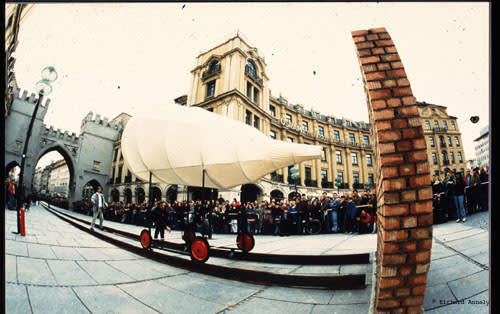
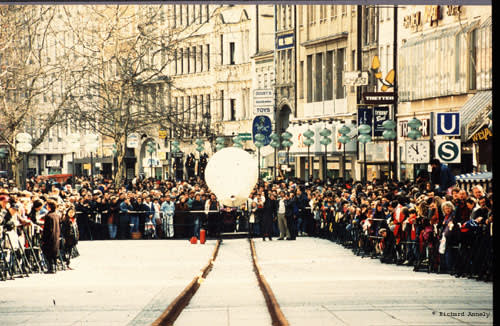
I enjoy engaging with artists and organisations that promote the arts. My work is often situationally orientated. I like to be involved at a community level, and I have carried out arts-based voluntary work for St Mungo’s, Omnibus and for the Friends of Cato Road, as well as ad hoc work and exhibitions. I have continued working with colleagues and developing projects on spatial and environmental concepts.
Since graduating from Chelsea, what’s your career been like?
It’s been amazing, I’ve worked with community organisations and people on supporting the arts with my arts toolkit. I’ve spent 18 years working in a SEN (Special Educational Needs) school as a caretaker and had many opportunities to work with some amazing people. I continue to enjoy making and seeing others do the same. I have found the breadth of diversity within the arts immense, fascinating and ever expanding.
You’ve recently accepted a role as the Director of the Andes Art Foundation. Can you tell us more about the foundation, and your role within it?
The Andes Art Foundation promotes creative and arts educational activities amongst indigenous and local communities across the Andes in Chile, Bolivia, Argentina and Peru. We support communities to engage creatively with each other; and we work within a network of organisations to support both individual and community well-being.
By working within existing cultural frameworks, we’ve discovered what we can do best as an organisation
I want to create revolving residencies operating within Chile, Bolivia, Argentina and Peru, a group of both South American nationals and international artists. These artists will work within local communities delivering workshops and developing their own work to be exhibited in our fantastic new premises in the Atacama.
I have offices in Santiago, Chile and our premises in Poconche, near San Pedro de Atacama. Fundraising is a constant for me. We are a registered charitable organisation and rely on donations to finance our projects. I am creating an organisation that is sustainable and regenerative. Something built on the passion and drive of whole communities to develop a common goal: working together creatively and helping develop more secure and better futures for participants. We want to be a catalyst for artistic activities across the Andes. We bring people together to celebrate the arts, indigenous cultures and our creative identities.
What do you hope the Foundation will achieve and how can people get involved?
Andean communities are as old as mankind and their heritage is a hot topic. Human rights and global environmental pressures have led to massive environmental changes. The Foundation hopes to support the indigenous communities within the Andes, showcasing their traditional arts and crafts as well as juxtaposing this with complimentary artistic responses to these issues. The foundation has taken its first steps into the communities and experienced the excitement of starting our first project.
We are inviting artists of all practices to come and work with us for 8 weeks to help develop our presence here. We are offering participants a space to live and work within the incredible Atacamenian environment. It is an opportunity to develop your work and phase, and to exhibit your work in our new exhibition space. It is hoped that you will take your practice out into communities by holding workshops. We will be able to offer food and living space on site.
Successful applicants will be able to demonstrate their practice, an ability to work together with others in a diverse and sometimes physically demanding environment, and ability to communicate well in the Spanish language.
Our residency program is still in its development phase, so we also want to know what you need here to make your experience a successful one.
Applications and enquiries should be made to residency@andesartfoundation.org.
Connect:
- Explore the work of the Andes Art Foundation
- Learn more about the residency: residency@andesartfoundation.org