Meet: Amber Kim
- Written byGiada Maestra
- Published date 05 November 2025
Share story
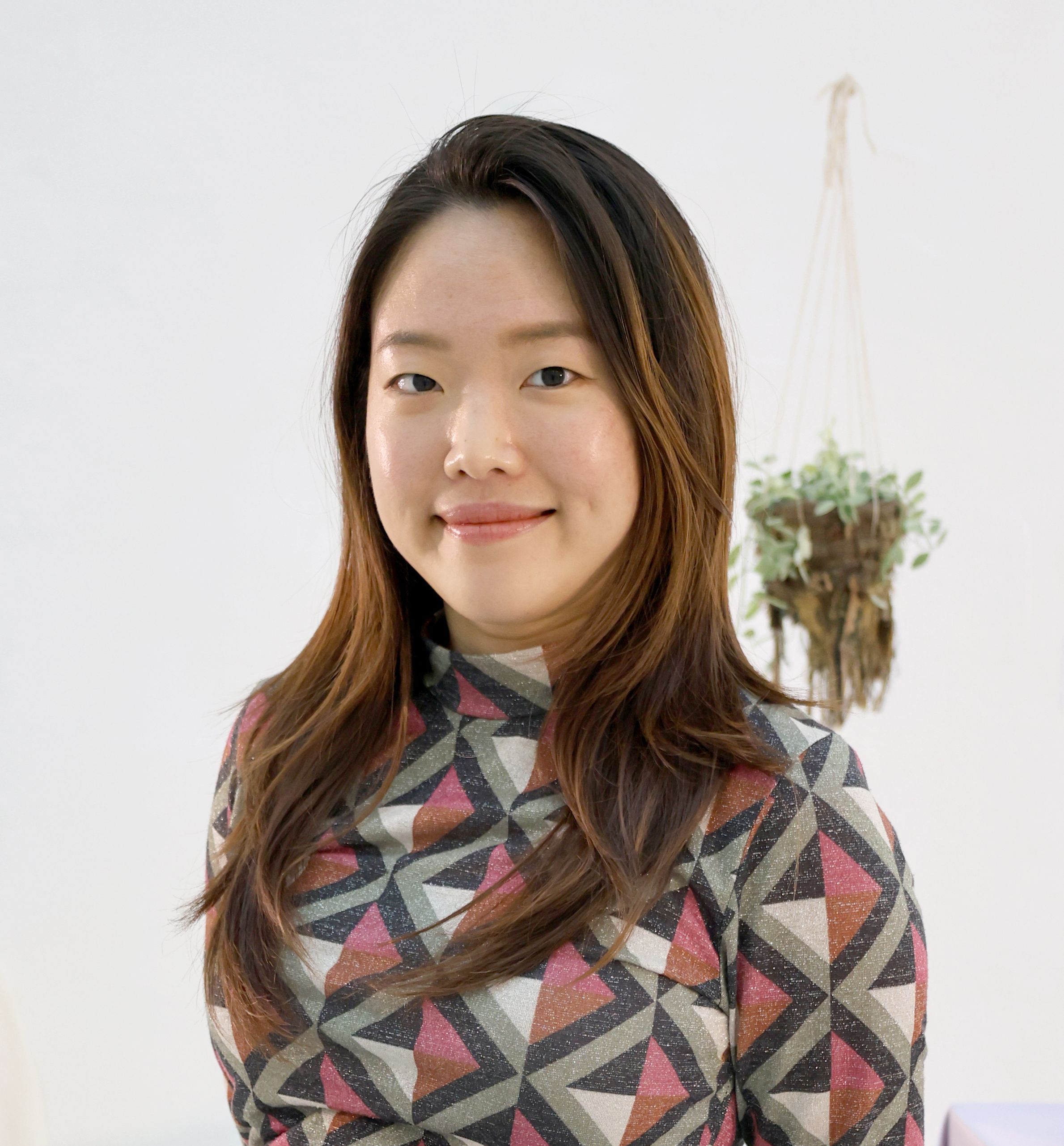
Today we introduce Amber Kim - BA Fashion Design Technology: Womenswear graduate from London College of Fashion and curator.
She is currently Research Events and Communications Coordinator at the V&A and has a lot of experience in organising creative research events with academics, artists and designers, to build a community of creatives who explore their (hi)stories through crafts and design.
You graduated from LCF in 2019. What did you enjoy about studying BA Fashion Design Technology: Womenswear?
The course equipped me to be resilient, independent and open-minded. I found the third year most enjoyable, as it allowed me to take my time and become fully immersed in creating my final collection. I upcycled music festival waste such as tents and sleeping bags and used all the pattern-cutting and experimental techniques I’ve learned over the years to make a full collection. It would be a lie if I said that I was not stressed, but I enjoyed it so much. Also, throughout the course, I did internships at fashion companies during every academic holiday, as I believed it would make me “work ready.” Tom Ford and Chalayan were one of my favourites to work for as they helped me understand what it is like to work within a team!
What was a highlight of your time at LCF?
It was the first time we had a graduate collection catwalk show in Here East, to mark the beginning of the development of the new LCF campus. I was interviewed by BBC Radio 4 Today programme and talked about issues around excessive consumption and how my collection reflected on waste issues. It was such a proud moment, and I think that’s when I realised that I loved public speaking and representing others who also have the advocacy for the same topic.
What drew you to fashion initially?
I grew up reading a biography of Coco Chanel and wanted to become a changemaker through fashion. I thought I was attracted to her fame and legacy, but I came to realise that I was drawn to her innovative thinking and ability to adapt her business to a rapidly changing political and social landscape. Now that I have developed my own vision and ideas of what constitutes important fashion, which responds to the environmental impact of the industry, I am drawn to pioneers and communities I have seen in recent years who are doing their best to make fashion circular. For example, Christopher Raeburn, Centre for Sustainable Fashion, etc.
You’re the Research Events and Communications Coordinator at the Victoria and Albert Museum. Can you tell us more about your role?
I facilitate the effective management and delivery of V&A’s diverse portfolio of research events and communication of project outputs and other activities arising from the V&A Research Institute, National Art Library and Archives. Recently, I’ve organised the ‘Restitution, Repair and the Memory Wars’ lecture in collaboration with Birkbeck, University of London, that debates Nazi violence and questions of remembrance and the ‘VARI(V&A) – TrAIN (UAL) Conversations’ series that discusses decolonisation in the history of art and design. The role allows me to connect with a diverse network of academics, researchers and artists with unique agendas and perspectives on the contemporary concerns around art practice, studies of history and an equitable world.
Your research looks at the role of cultural and heritage sectors in educating the public about the climate crisis. Can you tell us more about this? Do you think there’s more that they can do to educate the public?
Through MA History of Design at V&A/RCA, I investigated the role of cultural institutions in educating the public about environmental and social sustainability through fashion exhibitions and learning programmes. Seeing fashion as a factor of change related to public policy and activism, museums such as the V&A and Fashion for Good have advocated artists and designers with circular design practices in recent years through exhibitions such as Fashioned from Nature (2018) and Knowing Cotton Otherwise (2022). However, sustainability education is now facilitated outside the parameters of an exhibition and more in the public programming sphere that encourages co-creation. Museums can do more by co-designing narratives of sustainable fashion with participating artists and designers from the initial stage at a strategic level. This helps them to move away from a singular and authoritative voice, embrace multiple viewpoints, and take further steps to mark out a space for inclusive fashion education to combat climate change.
Can you tell us about a particular highlight of your career?
Exactly 2 years ago, I was working at Apple Retail as a Business Expert while I was studying Graduate Diploma in Contemporary Art History at Goldsmiths. Although my day-to-day role was to consult business customers and provide them with the best technology solutions to expand their businesses, my passion for a sustainable future was very much well-received at this company that strives for innovation. I ran the Apple Earth Month Programme at the Bromley store, organising creative workshops and volunteering programmes for colleagues. It raised awareness of correct recycling methods and efficient in-store waste management. I just think this is one of the highlights of my career because who would have thought that studying and working in fashion would lead to creating educational programmes for a trillion-dollar tech company? It meant having a clear agenda and vision will lead to opportunities to experiment with sustainability frameworks that can be applied to many different scenarios and settings.
What are you currently working on?
I am currently editing a journal article which has been accepted by the International Journal of Social Sustainability in Economic, Social and Cultural Contexts. It’s great to get my research out there and use this opportunity to reach out to other academics and students who are interested in the same topic. I also have a few exhibition projects coming up in collaboration with some friends so stay tuned!