Postgraduate

MA Comedy Writer-Performer

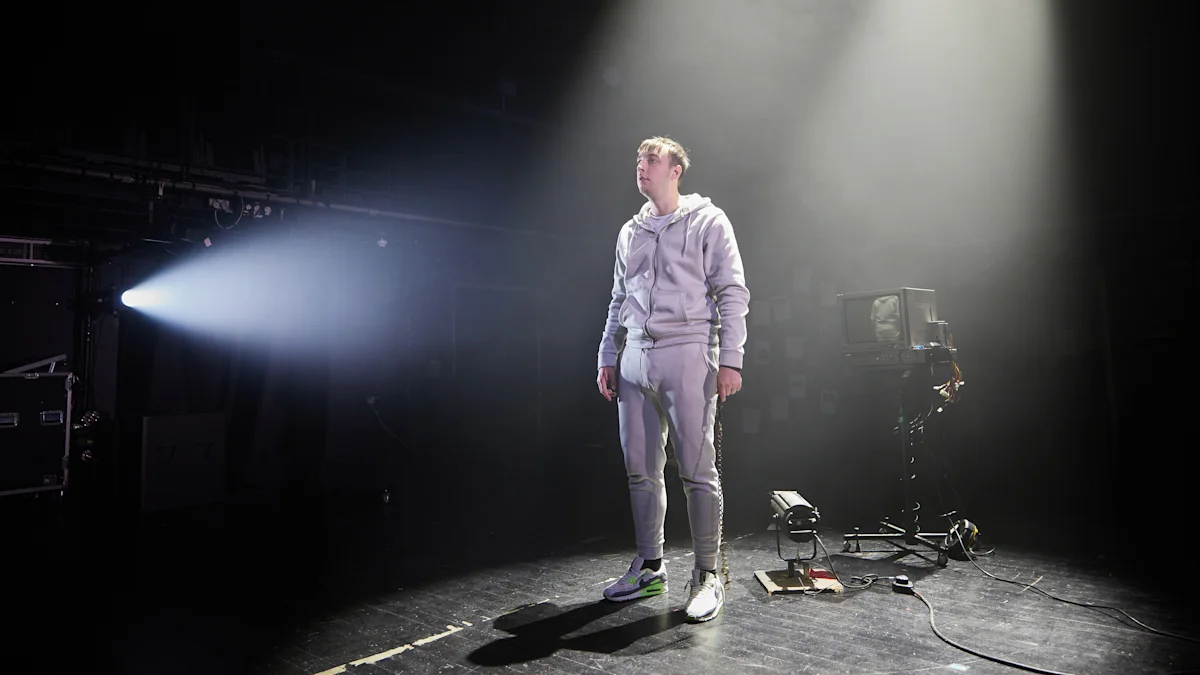
Boy wearing a grey tracksuit and Nike Air Max trainers standing in front of a television monitor.
'Killology', 2022. BA Acting and Performance. Wimbledon College of Arts. Photo by Kristina Sarkisyan
College
Wimbledon College of Arts
Start date
September 2026
Course length
12 months (full time)

MA Comedy Writer-Performer helps you to push the boundaries of comedy writing and performance, and develop the skills required to create and perform your own, innovative work.

Course summary

Apply to start in September 2026

This course has places available for applicants with Home fee status.

We are no longer accepting applications from international students for 2026/27 entry to this course. International applications for 2027/28 entry will open in autumn 2026.

Reapproval

Please note that this course is undergoing reapproval. This is the process by which we ensure the course continues to provide a high-quality academic experience. During reapproval there may be some changes to the course content displayed on this page. Please contact us if you have any questions about the course.

Course overview

Course Intro

MA Comedy Writer-Performer is designed to create opportunities for performers to break into and potentially redefine the industry by developing advanced skills in comedy creation, writing, and performance. With a focus on self-directed work, students gain specialist practical industry knowledge to pitch to producers and agents, build a strong portfolio, and succeed in live performance, TV and digital media. 


Many award-winning performers across the comedy industry didn't wait to be handed a role. By devising, developing and writing their own comedy works, they took control of their careers, created opportunities to break into the industry, and gained success.


The comedy industry needs new  distinctive voices. This course builds skills and confidence in comedy to best fill this need, find your voice, understand wider comedy ecosystems and begin your professional career.

What to expect  

  • Find your voice as a writer-performer: You’ll improve your skills in both writing and performance to discover your own distinctive comedy voice.
  • Create: Develop memorable new comic characters and personas to showcase your performing skills.
  • Build technical skills: You’ll develop transferable skills, techniques and approaches in the creation of content for a range of media and audiences.
  • Navigate the industry: Learn how to identify, create, and take advantage of professional opportunities for yourself in comedy.
  • Portfolio: You’ll create a portfolio of performance and writing across media.
  • Stress-test your comedy development: Learn to enhance your writing and performance skills through public scratch nights.
  • Critical writing and research: You’ll critically examine the comedy industry, reflecting on, examining and addressing ideas around audiences, diversity and inclusivity, the ethics of comedy. You will reflect on your own subjectivity in relation to current practice, critically and contextually framing your own work.
  • Cultivate networks: You’ll build and develop your own professional networks across the course through public performances, with your peers, and via course tutors where possible.
  • Showcase: Put your talents on show for industry at the end of your course.
  • Access to Wimbledon's shared spaces - view the Wimbledon facilities - and develop your own network of complimentary expertise across the College’s student and staff community. 

Work experience and opportunities

The course is designed to be explicitly industry-facing, and you’ll benefit from industry inputs from professionals to aid you in the development of your comedy skills from a practical perspective. The programme has been developed with industry in mind and taken direction from producers and professionals in its construction.

Assessments have been tailored with employability in mind, with a focus on building skills as well as building a portfolio of high-quality work across the Master's programme. Course tutors will endeavour to facilitate work experience opportunities wherever possible. 

Mode of study  

MA Comedy Writer-Performer is offered in full-time mode and runs for 45 weeks over 12 months. You will be expected to commit an average of 40 hours per week to your course, including teaching hours and independent study.


Contact us

Register your interest to receive information and updates about studying at UAL.

Contact us to make an enquiry.

College Tours

Come and see our facilities and workshops.

Book a tour

Course units

Unit 1: Comedy and play

This unit utilises and develops playful methods of creating performance and sees you testing new comedy works at ‘scratch nights’, as well as the skills needed to write and develop your own short scripts You will develop and refine new comedy across performance and writing workshops through tutor, peer, and—crucially—audience feedback.

Unit 2: Comedy and media

Having developed comedy skills in live performance and writing, this unit sees you creating comedy for a range of formats and social media platforms. Throughout the unit you will build a portfolio of short-form comedy work—as well as analysing and understanding digital comedy content—developing one of these works into a portfolio of writing and pitching materials for a series.

Unit 3: Research through practice

In this unit, you will develop your practice through a collaborative research project with other Wimbledon MA performance-based courses. Focusing on a specific area of interest, you will undertake a collaborative creative research project which could serve as a foundation for your practical and/or written work in Unit 4.

Unit 4: Final Major Project: Your comedy voice

Consolidating your learning across the Masters programme so far, this unit sees you drawing together your skills into two professional standard portfolios that exemplify your comedy voice. The unit culminates in an industry showcase to which producers, agents, and commissioners will be invited.


Key terms:

Scratch nights:  These are nights of performance for the showing of “works in progress” in front of live audiences to cultivate feedback. “Campfire” sessions: Collaborative group discussion sessions aimed to build belonging, community, and initiate critical analysis and academically-informed discussion of the comedy landscape.

Learning and teaching methods

  • Performance and writing workshops.
  • Seminar group discussions.
  • Online and in-person lectures.
  • One-to-one tutorials.
  • “Campfire” sessions,
  • Scratch nights
  • Industry talks and workshops with comedy industry figures – writers, performers, producers.
  • Industry workshops: giving students the opportunity to test what they’ve learned, via real-world industry feedback.

The teaching content and course material will be organised in UAL’s online platform, while online teaching sessions will be run through Microsoft Teams.

Assessment methods

  • Comedy performances (live and recorded)
  • Comedy writing
  • Creative journal
  • Portfolios
  • Essays

MA Comedy Writer-Performer | Course Introduction

MA Comedy Writer-Performer at Wimbledon College of Arts

Staff

Fees and funding

Home fee

£14,420

This fee is correct for 2026/27 entry and is subject to change for 2027/28 entry.

Tuition fees may increase in future years for new and continuing students on courses lasting more than one year. For this course, you can pay tuition fees in instalments.

Students from countries outside of the UK will generally be charged international fees. The rules are complex so read more about tuition fees and determining your fee status.

International fee

£30,890

This fee is correct for 2026/27 entry and is subject to change for 2027/28 entry.

Tuition fees may increase in future years for new and continuing students on courses lasting more than one year. For this course, you can pay tuition fees in instalments.

Students from countries outside of the UK will generally be charged international fees. The rules are complex so read more about tuition fees and determining your fee status.

Additional costs

You may need to cover additional costs which are not included in your tuition fees, such as materials and equipment specific to your course. For a list of general digital equipment you may need (and how you can borrow equipment), visit our Study costs page.

Accommodation

Find out about accommodation options and how much they will cost, and other living expenses you’ll need to consider.

Scholarships, bursaries and awards

If you’ve completed a qualifying course at UAL, you may be eligible for a tuition fee discount on this course. Find out more about our Progression discount.

You can also find out more about the Postgraduate Masters Loan (Home students only) and scholarships for Home and International students. Discover more about student funding.

If you’re based in the UK and plan to visit UAL for an Open Event, check if you’re eligible for our UAL Travel Bursary. This covers the costs of mainland train or airline travel to visit UAL.

How to pay

Find out how you can pay your tuition fees.

Scholarship search

Entry requirements

The standard minimum entry requirements for this course are:

  • BA (Hons) degree in either humanities or performance disciplines, including creative writing, script and theatre/media production
  • Alternative qualifications and experience will also be taken into consideration
  • Personal statement
  • Portfolio of written work and/or evidence of performing. This may include a writing sample or comic monologue performance.

Entry to this course will also be determined by the quality of application, looking primarily at the portfolio of work and personal statement.

APEL - Accreditation of Prior (Experiential) Learning

Applicants who do not meet these course entry requirements may still be considered in exceptional cases. The course team will consider each application that demonstrates additional strengths and alternative evidence. This might, for example, be demonstrated by:

  • related academic or work experience – for instance experience producing comedic scripts, stand-up comedy experience or other practical examples of engaging with the discipline
  • the quality of the personal statement
  • a strong academic or other professional reference
  • a combination of these factors.

Each application will be considered on its own merit but we cannot guarantee an offer in each case.

English language requirements

All classes are taught in English. If English isn't your first language you must provide evidence at enrolment of the following: 

Selection criteria

We look for:

  • Commitment and motivation for studying the subject at Masters level (Level 7)
  • Evidence of interest in the discipline: A passion and aptitude for comedy writing and performance. This could be producing scripts, evidence of delivering stand-up comedy or similar performance-related experience. We would like to see examples of your engagement with the discipline.
  • A keenness to learn: A driven but positive attitude.
  • Existing skills to build on: Experience of writing and/or performing.

The course team will consider applications that demonstrates additional strengths and alternative evidence. This might, for example, be demonstrated by:

  • related academic or work experience
  • the quality of the personal statement
  • a strong academic or other professional reference
  • a combination of these factors.

Information for disabled applicants

UAL is committed to achieving inclusion and equality for disabled students. This includes students who have:

     
  • Dyslexia or another Specific Learning Difference
  • A sensory impairment
  • A physical impairment
  • A long-term health or mental health condition
  • Autism
  • Another long-term condition which has an impact on your day-to-day life

Our Disability Service arranges adjustments and support for disabled applicants and students.

Read our Disability and dyslexia: applying for a course and joining UAL information.

Apply now

Application deadline

Deadline

Round 1:

2 December 2025 at 1pm (UK time)

Round 2:

18 March 2026 at 1pm (UK time)

Video task deadline

Round 1:

16 December 2025 at 1pm (UK time)

Round 2:

31 March 2026 at 1pm (UK time)

Decision outcome

Round 1:

20 March 2026

Round 2:

19 June 2026

Round 1
Round 2
Deadline
2 December 2025 at 1pm (UK time)
18 March 2026 at 1pm (UK time)
Video task deadline
16 December 2025 at 1pm (UK time)
31 March 2026 at 1pm (UK time)
Decision outcome
20 March 2026
19 June 2026

This course is still open to applicants with Home fee status and will remain open until all places are filled.

Read more about deadlines

Apply now

Application deadline

Deadline

Round 1:

2 December 2025 at 1pm (UK time)

Round 2:

18 March 2026 at 1pm (UK time)

Video task deadline

Round 1:

16 December 2025 at 1pm (UK time)

Round 2:

31 March 2026 at 1pm (UK time)

Decision outcome

Round 1:

20 March 2026

Round 2:

19 June 2026

Round 1
Round 2
Deadline
2 December 2025 at 1pm (UK time)
18 March 2026 at 1pm (UK time)
Video task deadline
16 December 2025 at 1pm (UK time)
31 March 2026 at 1pm (UK time)
Decision outcome
20 March 2026
19 June 2026

We are no longer accepting applications to this course for 2026/27 entry from international applicants. Applications for 2027/28 entry will open in autumn 2026.

Read more about deadlines

How to apply

Follow this step-by-step guide to apply for this course

Step 1: Initial application

You will need to submit an initial application including your personal statement, CV and a written task.

Personal statement advice

Your personal statement should be maximum 500 words and include:

  • your reasons for choosing the course
  • your current creative practice and how this course will help you achieve your future plans
  • any relevant education and experience, especially if you do not have any formal academic qualifications.

CV advice

Please provide a CV detailing your education, qualifications and any relevant work or voluntary experience. If you have any web projects or other media that you would like to share, please include links in your CV. If English is not your first language, please also include your most recent English language test score.

Read our advice on preparing the tasks and documents for your initial application.

Written task advice

Please submit a 5-page sample of writing, which must feature a central comic character that you’ve created. This writing can be:

  • a monologue, scene or sketch
  • or an extract taken from a larger script.

This is an opportunity for you to show off your sense of humour and written voice to us.

Step 2: Video task

We will review your initial application. If you have met the standard entry requirements, we will ask you to submit a video task.

You’ll need to submit this via PebblePad, our online portfolio tool. Please submit your video task on the first page.

Video task advice

The video task requires the submission of a video of you performing a short monologue from a comedy play written since 2000, delivered in English.

We will be assessing your video monologue for:

  • a demonstration of a strong sense of character
  • clear and considered storytelling
  • good comic timing.

Try to choose a text that you feel allows you to demonstrate your range as a performer.

Find advice on how to plan and film your video task. Then read our guidance on how to submit your video task, including the file types we accept.

Step 3: Interview

You may be invited to an interview following our review of your application. All interviews are held online and last 15 to 20 minutes.

For top tips, see our Interview advice.

Careers